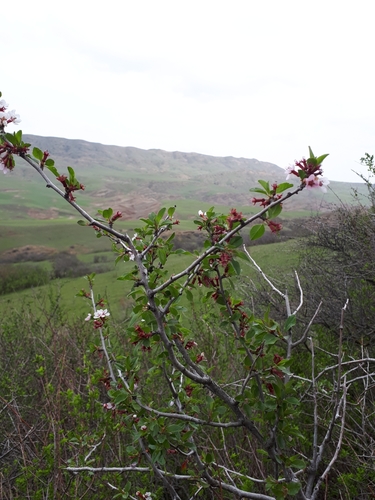
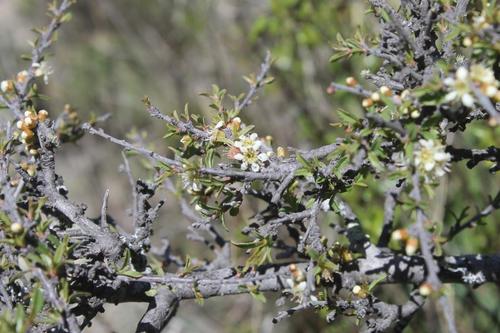
Amelanchier arborea
(F. Michx.) Fernald.
Downy serviceberry, Shadbush, Canadian Service-berry, Juneberry, Shadblow
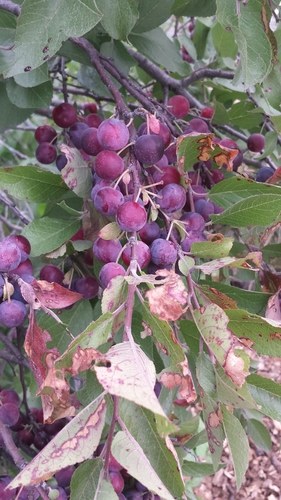
iNaturalist· cc-by-sa
(c) Douglas Goldman, some rights reserved (CC BY-SA), uploaded by Douglas Goldman
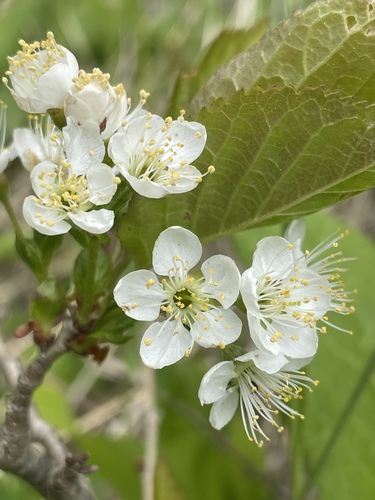
iNaturalist· cc-by-nc
(c) Bonnie Kinder, some rights reserved (CC BY-NC), uploaded by Bonnie Kinder
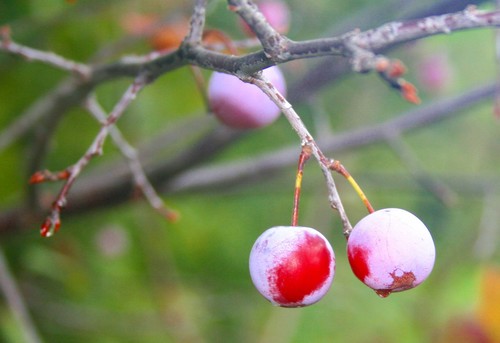
iNaturalist· cc-by-nc
(c) Steve Waller, some rights reserved (CC BY-NC), uploaded by Steve Waller
Summary
Source: WikipediaAmelanchier arborea (downy serviceberry or common serviceberry), is a small tree native to eastern North America from the Gulf Coast north to Thunder Bay in Ontario and Lake St. John in Quebec, and west to Texas and Minnesota. Other common names are "shadberries" (as their blossoming coincides with the shad runs in New England), "Juneberries" (because the berries usually set on in June), and "Service" or "Sarvice" berries because their blooms mean that the muddy back roads into the "coves and hollers" of Appalachia will soon be passable for circuit-riding preachers and the communities will be able to have Sunday services again. (Some say, more morbidly, that it means the ground is soft enough to dig, which means that those who died over winter can be buried and have services said over them.)
Description
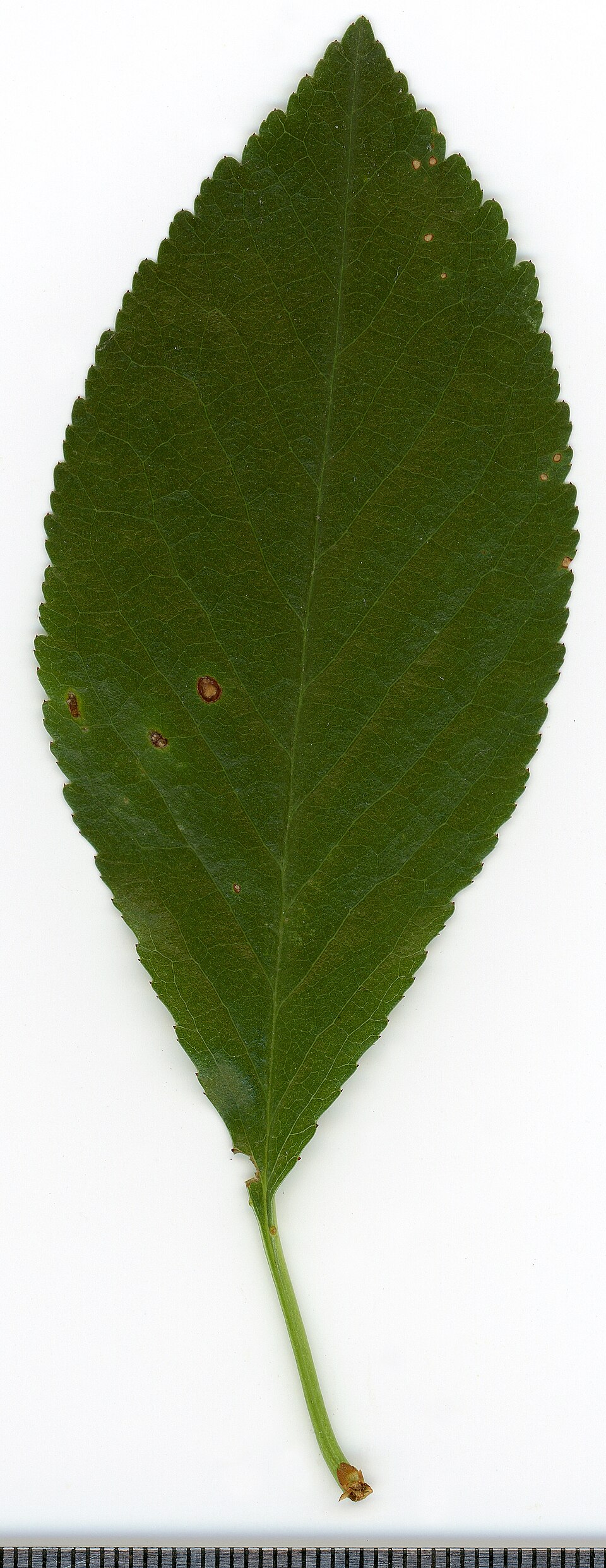
A deciduous tree. It grows to 10 m tall and spreads to 12 m wide. The crown is narrow. The lower branches droop. The bark is grey and smooth when young and becomes ridged and scaly with age. The leaves are oval and 7.5 cm long and 4 cm wide. The leaves have fine teeth. The leaves are rounded and heart shaped at the base and pointed at the tip. They are covered with white down as they emerge. The leaves turn red, orange or yellow in autumn. The flowers occur in profuse upright sprays. The fruit are borne in small clusters and are 10 mm across.
Edible Uses
The fruit is edible raw or cooked, up to 10mm in diameter, and borne in small clusters. Quality varies: some forms are dry and tasteless while others are sweet and juicy, with a few small seeds at the centre. The fruit ripens unevenly over 2–3 weeks and is very attractive to birds, making it difficult to harvest in quantity. It is rich in iron and copper.
Traditional Uses
The fruit are eaten raw or cooked. They can be dried. The leaves are dried for tea.
This uses section is brief — help expand it
Medicinal Uses
A compound infusion of the plant has been used as an anthelmintic, in the treatment of diarrhoea, and as a spring tonic. An infusion of the bark has been used in the treatment of gonorrhoea.
Distribution
It is a temperate plant. It grows naturally in Eastern North America. It grows in woods and thickets on moist soil. It suits hardiness zones 4-9. Arboretum Tasmania.
Where It Grows
Australia, Canada, North America, Tasmania, USA,
Cultivation
It can be grown from seed, layering or suckers. Seed can take 18 months to germinate and layers can take 18 months to form roots.
Propagation
Seed is best harvested green — when fully formed but before the seed coat has hardened — and sown immediately in pots outdoors or in a cold frame. Stored seed obtained early in autumn can be given 4 weeks of warm stratification before being left outside over winter to germinate in spring; otherwise seed can be very slow, taking 18 months or more. Prick seedlings out into individual pots when large enough to handle and grow on in a sheltered outdoor position, planting out once they reach 20cm or more. Where sufficient seed is available, sow thinly in an outdoor seedbed and grow on for two years before planting into permanent positions during winter. Layering in spring takes 18 months. Suckers can be divided in late winter, but must have been growing for 2 years before lifting to ensure they have formed roots; they can be planted directly into permanent positions if needed.
Other Uses
The trees have an extensive root system and can be planted on banks for erosion control. The wood is close-grained, hard, strong, tough, and elastic — one of the heaviest woods in North America at 49lb per cubic foot. Too small for commercial use, it is sometimes made into handles.
Notes
There are about 25-30 Amelanchier species.
Synonyms
References (20)
- Bircher, A. G. & Bircher, W. H., 2000, Encyclopedia of Fruit Trees and Edible Flowering Plants in Egypt and the Subtropics. AUC Press. p 23
- Coombes, A.J., 2000, Trees. Dorling Kindersley Handbooks. p 238
- Cundall, P., (ed.), 2004, Gardening Australia: flora: the gardener's bible. ABC Books. p 145
- Elias, T.S. & Dykeman P.A., 1990, Edible Wild Plants. A North American Field guide. Sterling, New York p 207
- Esperanca, M. J., 1988. Surviving in the wild. A glance at the wild plants and their uses. Vol. 1. p 316
Show all 20 references Hide references
- Facciola, S., 1998, Cornucopia 2: a Source Book of Edible Plants. Kampong Publications, p 192
- Farrar, J.L., 1995, Trees of the Northern United States and Canada. Iowa State University press/Ames p 365
- Fisk, J. R. & Hoover, E., 2015, Wild Fruits of Minnesota. A Filed Guide. University of Minnesota p 8
- Grandtner, M. M., 2008, World Dictionary of Trees. Wood and Forest Science Department. Laval University, Quebec, Qc Canada. (Internet database http://www.WDT.QC.ca)
- Illustrated Flora of Central Texas p 940
- Little, E.L., 1980, National Audubon Society Field Guide to North American Trees. Alfred A. Knopf. p 460
- MacKinnon, A., et al, 2009, Edible & Medicinal Plants of Canada. Lone Pine. p 109
- Plants for a Future database, The Field, Penpol, Lostwithiel, Cornwall, PL22 0NG, UK. http://www.scs.leeds.ac.uk/pfaf/.
- Rhodora 43:563. 1941
- Toupal, R. S. & Hollenback, K., 2009, An Ethnobotany of Indiana Dunes National Lakeshore: Plant Uses of the Ojibwa People. Bureau of Applied research in Anthropology. University of Arizona
- USDA, ARS, National Genetic Resources Program. Germplasm Resources Information Network - (GRIN). [Online Database] National Germplasm Resources Laboratory, Beltsville, Maryland. Available: www.ars-grin.gov/cgi-bin/npgs/html/econ.pl (10 April 2000)
- Wiersema, J. H. & Leon, B., 2013, World Economic Plants. A Standard Reference CRC Press. 2nd Ed. p 46
- Wild Edible Plants of the Whitmire Wildflower Garden. Missouri Botanical Gardens.
- World Checklist of Useful Plant Species 2020. Royal Botanic Gardens, Kew
- Young, J., (Ed.), 2001, Botanica's Pocket Trees and Shrubs. Random House. p 89