Amaranthus hybridus
L.
Amaranth Greens, Wild Cabbage, Slim Amaranth
iNaturalist· cc-by-nc
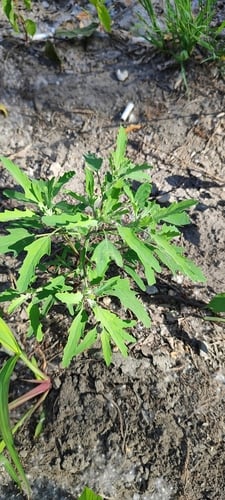
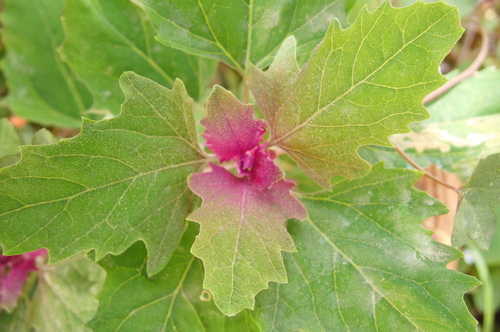
(c) Chris Buddenhagen, some rights reserved (CC BY-NC), uploaded by Chris Buddenhagen
iNaturalist· cc-by-nc
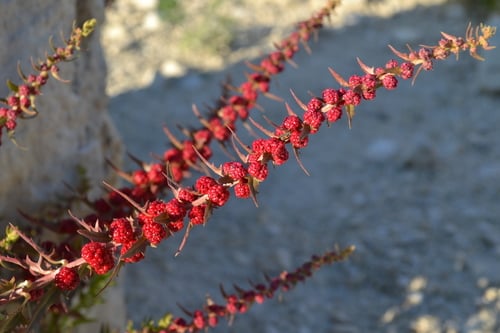
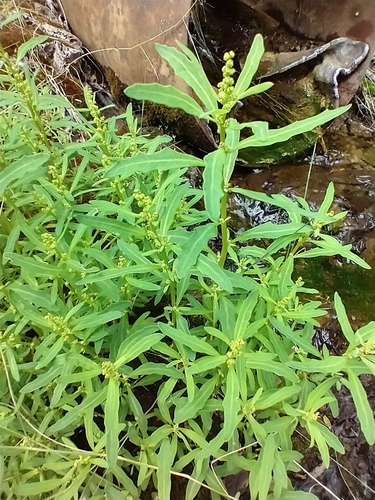
(c) Nestor Herrera, some rights reserved (CC BY-NC), uploaded by Nestor Herrera
iNaturalist· cc-by
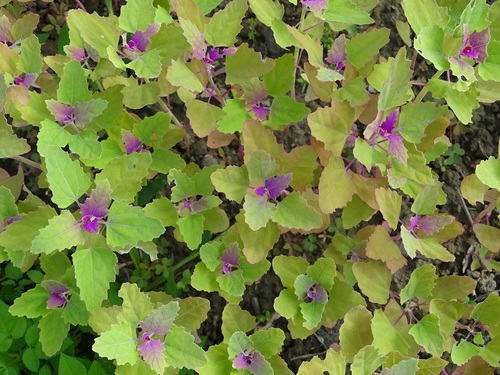
(c) Kevin Faccenda, some rights reserved (CC BY), uploaded by Kevin Faccenda
Summary
Source: WikipediaAmaranthus hybridus, commonly called green amaranth, slim amaranth, smooth amaranth, smooth pigweed, or red amaranth, is a species of annual flowering plant. It is a weedy species found now over much of North America and introduced into Europe and Eurasia.
Description
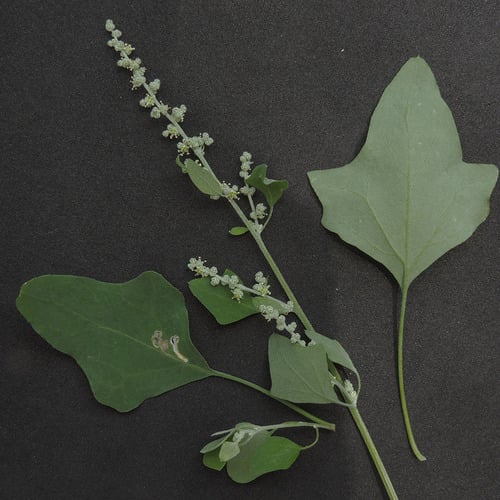
An annual herb. It is an upright plant. It grows 80 cm to 2 m tall. It is often green but can be dark red. The leaves are simple and alternate. The leaves are oval shaped and can be 15 cm long. The flowers can be red, yellow or white. They are in spikes at the top of the plant and in the axils of leaves. The seeds are small and shiny and black.
Edible Uses
Young leaves and seedlings can be eaten raw or cooked as a spinach, added to soups, or used in other dishes. The leaves are nutritious with a mild flavour. The seeds can be eaten raw or cooked as a cereal substitute, and are typically ground into flour for use in porridges, breads, and similar preparations. About 1mm in diameter, they are small but easy to harvest and very nutritious. When cooked whole the seeds become very gelatinous, but because they are difficult to crush completely in the mouth, some will pass through the digestive system without being fully assimilated.
Traditional Uses
The leaves and young shoots are cooked and eaten. They are also dried. The leaves and stems are chopped and added to pastries and salads. They are also fried with eggs.
Medicinal Uses
A tea made from the leaves is astringent and is used in the treatment of intestinal bleeding, diarrhoea, and excessive menstruation.
Known Hazards
No members of this genus are known to be poisonous, but when grown on nitrogen-rich soils they are known to concentrate nitrates in the leaves. This is especially noticeable on land where chemical fertilizers are used. Nitrates are implicated in stomach cancers, blue babies and some other health problems. It is inadvisable, therefore, to eat this plant if it is grown inorganically.
Distribution
A tropical plant. It grows well in fertile soil. It can grow in warm temperate places as well as the tropics. In Kenya it grows between 900-2,600 m above sea level.
Where It Grows
Afghanistan, Africa, Albania, Algeria, Andorra, Angola, Argentina, Asia, Australia, Austria, Bahamas, Belgium, Belize, Benin, Bermuda, Bhutan, Bolivia, Botswana, Brazil, Britain, Bulgaria, Burkina Faso, Cambodia, Cameroon, Canada, Canary Is., Caucasus, Central Africa, Central African Republic, CAR, Central America*, Chad, Chile, China, Colombia, Comoros, Congo DR, Congo R, Costa Rica, Crete, Cuba, Cyprus, Czech Republic, Denmark, Dominican Republic, East Africa, Ecuador, Egypt, El Salvador, Eritrea, Eswatini, Ethiopia, Europe, Fiji, Finland, France, Gambia, Germany, Ghana, Greece, Guatemala, Guiana, Guianas, Guinea, Guinée, Guinea-Bissau, Guyana, Hawaii, Himalayas, Honduras, Hungary, India, Indochina, Indonesia, Iran, Iraq, Ireland, Italy, Ivory Coast, Japan, Kenya, Korea, Laos, Lebanon, Leeward Is., Lesotho, LIberia, Libya, Madagascar, Malawi, Mali, Mauritius, Mediterranean, Mexico, Morocco, Mozambique, Namibia, Nepal, New Zealand, Nicaragua, Nigeria, North America, Northeastern India, Norway, Oman, Pacific, Pakistan, Panama, Paraguay, Peru, Poland, Portugal, Reunion, Romania, Rwanda, Russia, Saudi Arabia, SE Asia, Senegal, Sicily, Sierra Leone, Sikkim, Sinai, Slovenia, South Africa, Southern Africa, South America*, South Sudan, Spain, Sri Lanka, Suriname, Syria, Swaziland, Switzerland, Taiwan, Tanzania, Tasmania, Thailand, Togo, Tunisia, Turkey, Türkiye, Uganda, Uruguay, USA, Venezuela, Vietnam, West Africa, West Indies, Yemen, Zambia, Zimbabwe,
Cultivation
Prefers a well-drained fertile soil in a sunny position. Requires a hot sheltered position if it is to do well. Plants should not be given inorganic fertilizers, see notes above on toxicity. Cultivated as a food crop in India, there are many named forms. This species has the potential, through crossbreeding, of imparting early maturity to the white seeded grain amaranths. Most if not all members of this genus photosynthesize by a more efficient method than most plants. Called the 'C4 carbon-fixation pathway', this process is particularly efficient at high temperatures, in bright sunlight and under dry conditions. In garden design, as well as the above-ground architecture of a plant, root structure considerations help in choosing plants that work together for their optimal soil requirements including nutrients and water. The predictable growth behaviour makes it easier to maintain without having to apply containment methods.
Propagation
Sow seed in late spring directly in situ. For an earlier start, sow in a greenhouse and transplant after the last expected frosts. Germination is usually rapid and good when the soil is warm, and a drop in temperature overnight aids the process. Cuttings of growing plants root easily.
Other Uses
Yellow and green dyes can be obtained from the whole plant. The plant is also noted as a dynamic accumulator and has a role in food forest systems.
Other Information
It is a commercially cultivated vegetable. It is sold in local markets.
Notes
There are about 60 Amaranthus species.
Nutrition
| Part | Moisture | kJ | kcal | Protein | Vit A | Vit C | Iron | Zinc |
|---|---|---|---|---|---|---|---|---|
| Leaves | 87.4 | 189 | 45 | 4.9 | — | 108 | 5.7 | — |
| Stem | — | — | — | — | — | — | — | — |
| Leaves | — | — | — | — | — | — | — | — |
| 86.1 | — | — | — | — | 68 | 4.6 | — | — |
| Seeds | — | — | — | — | — | — | — | — |
Synonyms
Also Known As
Anamena, Ataco, Ataku, Ataqu, Bayam, Bayem abang, Bayem selasi, Bederere, Bledo, Bonde, Bondokhotwe, Bonongue, Bredi-vermelho, Bredo-femea, Caruru-roxo, Celuanta, Chichimeca, Chorao, Crista-de-galo, Dahka, Den duoi chon, Doodo omutukuliki, Etang, Gannar, Ganaara, Goyi, Goi, Hanekam, Huisquilite, Imbuya, Isheke, Ityuthu, Izrodni ščir, Karuruwasu, Kenjele, Kpedekpede, Laal matnu, Lal cholai, Lisheke, Lu sui xian, M'boa, Mbuya, Mchicha, Moco de pavo, Mohok, Mowa, Ndangale, Ntatasika, Pasa, Penacho, Qing xian, Quelite, Quelite tintonil, Quintonil, Rough pigweed, Sarakh, Sariyara, Siarum, Sirken, Sorsork, Tamarayo, Telele, Terere, Tete abalaye, Theepe, Thepe, Tsunata, Umfino, Umtyuthu, Unomdlomboyi, Umbuya, Vowa, Wahkilitl istak, W'oa, Zumaraga
References (119)
- Abbiw, D.K., 1990, Useful Plants of Ghana. West African uses of wild and cultivated plants. Intermediate Technology Publications and the Royal Botanic Gardens, Kew. p 40 (As Amaranthus hybridus subsp. incurvatus)
- Addis, G., Asfaw, Z & Woldu, Z., 2013, Ethnobotany of Wild and Semi-wild Edible Plants of Konso Ethnic Community, South Ethiopia. Ethnobotany Research and Applications. 11:121-141
- Amin, M. et al, 2023, Edible wild plant species used by different linguistic groups of Kohistan Upper Khyber Pakhtunkhwa (KP), Pakistan. Journal of Ethnobiology and Ethnomedicine 19:6 p 8
- Asfaw, Z. and Tadesse, M., 2001, Prospects for Sustainable Use and Development of Wild Food Plants in Ethiopia. Economic Botany, Vol. 55, No. 1, pp. 47-62
- Awas, T., 1997, A Study on the Ecology and Ethnobotany of Non-cultivated Food Plants and Wild Relatives of Cultivated crops in Gambella Region, Southwestern Ethiopia. Addis Ababa University. p 36
Show all 119 references Hide references
- Bao Bojian; Steve Clemants, Thomas Borsch, Amaranthaceae [Draft], Flora of China and (Also as Amaranthus patulus)
- Beckstrom-Sternberg, Stephen M., and James A. Duke. "The Foodplant Database." http://probe.nalusda.gov:8300/cgi-bin/browse/foodplantdb.(ACEDB version 4.0 - data version July 1994)
- Belem, M., et al, 2017, Strategy of Conservation and Protection of Wild Edible Plants Diversity in Burkina Faso. ANADOLU 27 (2) 2017, 82- 90
- Bentley, J., Nina, S & Perez, S., 2001, Ethnobotany of Weeds in Cochabamba
- Berihun, T., & Molla, E., 2017, Study on the Diversity and Use of Wild Edible Plants in Bullen District Northwest Ethiopia. Hindawi Journal of Botany.Article ID 8383468
- Blamey, M and Grey-Wilson, C., 2005, Wild flowers of the Mediterranean. A & C Black London. p 41
- Burkill, H. M., 1985, The useful plants of west tropical Africa, Vol. 1. Kew. (As Amaranthus hybridus subsp. incurvatus)
- Caballero, J. N., & Mapes, C. S., 1985, Gathering and Subsistence Patterns among the P'urhepecha Indians of Mexico. J. Ethnol. 5(1): 31-47
- Casas, A., et al, 1996, Plant Management Among the Nahua and the Mixtec in the Balsas River Basin, Mexico: An Ethnobotanical Approach to the Study of Plant Domestication. Human Ecology, Vol. 24, No. 4 pp. 455-478
- Catarino, L. et al, 2019, Edible Leafy Vegetables from West Africa (Guinea-Bissau): Consumption, Trade and Food Potential. Foods 2019, 8, 493
- Chauhan, S. H., et al, 2018, Consumption patterns of wild edibles by the Vasavas: a case study from Gujarat, India. Journal of Ethnobiology and Ethnomedicine (2018) 14:57
- Checklist of NT Vascular Plant Species. January 2003.
- Comm. itin. neapol. 19, 171, t. 2. 1837 (As Amaranthus patulus)
- Cooper, W. and Cooper, W., 2004, Fruits of the Australian Tropical Rainforest. Nokomis Editions, Victoria, Australia. p 14
- Curtis, W.M., 1993, The Student's Flora of Tasmania. Part 3 St David's Park Publishing, Tasmania, p 560
- Diaz-Betancourt, M., et al, 1999, Weeds as a future source for human consumption. Rev. Biol. Trop. 47(3):329-338
- Diaz-Jose, J., et al, 2019, Traditional Knowledge of Edible Wild Plants Used by Indigenous Communities in Zongolica, Mexico. Ecology of Food and Nutrition.
- Diouf, M., et al, Leafy Vegetables in Senegal. Bioversity webite
- Ertug, F., 2004, Wild Edible Plants of the Bodrum Area. (Mugla, Turkey). Turk. J. Bot. 28 (2004): 161-174 (As Amaranthus chlorostachys)
- Ertug, F, Yenen Bitkiler. Resimli Türkiye Florası -I- Flora of Turkey - Ethnobotany supplement
- Esperanca, M. J., 1988. Surviving in the wild. A glance at the wild plants and their uses. Vol. 1. p 400
- Facciola, S., 1998, Cornucopia 2: a Source Book of Edible Plants. Kampong Publications, p 8 (Also as Amaranthus patulus)
- Flora of Taiwan Vol 2:398 (As Amaranthus patulus)
- Flores, M. P., et al, 2007, Estudio Etnobotanico De Zapotitlan Salinas, Puebla, Acta Botanica Mexicana, Mexico. p 22
- Flyman, M. V. & Afolayan, A. J., 2006, A Survey of plants used as wild vegetables in four districts of Botswana. Ecology of Food and Nutrition, 45:405-415
- Fongnzossie Fedoung, E., et al, 2020, Wild edible plants and mushrooms of the Bamenda Highlands in Cameroon: ethnobotanical assessment and potentials for enhancing food security. Journal of Ethnobiology and Ethnomedicine 16:12
- Fowler, D. G., 2007, Zambian Plants: Their Vernacular Names and Uses. Kew. p 7
- Fox, F. W. & Young, M. E. N., 1982, Food from the Veld. Delta Books. p 68
- Gallagher, D. E., 2010, Farming beyond the escarpment: Society, Environment, and Mobility in Precolonial Southeastern Burkina Faso. PhD University of Michigan.
- Gangwar, A. K. & Ramakrishnan, P. S., 1990, Ethnobotanical Notes on Some Tribes of Arunachal Pradesh, Northeastern India. Economic Botany, Vol. 44, No. 1 pp. 94-105
- Goode, P., 1989, Edible Plants of Uganda. FAO p 39 and p 26 (As Amaranthus hybridus subsp. incurvatus)
- Grivetti, L. E., 1980, Agricultural development: present and potential role of edible wild plants. Part 2: Sub-Saharan Africa, Report to the Department of State Agency for International Development. p 47 (As Amaranthus patulus)
- Hancer, C. K., et al, 2020, Traditional Knowledge of Wild Edible Plants of Biga (Çanakkale), Turkey. Acta Societatis Botanicorum Poloniae / 2020 / Volume 89 / Issue 1 / Article 8914
- Harkonen, M. & Vainio-Mattila, K., 1998, Some examples of Natural Products in the Eastern Arc Mountains. Journal of East African Natural History 87:265-278
- High, C. & Shackleton, C. M., 2000, The comparative value of wild and domestic plants in home gardens of a South African rural village. Agroforestry Systems 48: 141–156, 2000
- Hist. Amaranth. 34, t. 10, fig. 19. 1790 (As Amaranthus chlorostachys)
- Hussey, B.M.J., Keighery, G.J., Cousens, R.D., Dodd, J., Lloyd, S.G., 1997, Western Weeds. A guide to the weeds of Western Australia. Plant Protection Society of Western Australia. p 80
- Irving, M., 2009, The Forager Handbook, A Guide to the Edible Plants of Britain. Ebury Press p 44
- Jardin, C., 1970, List of Foods Used In Africa, FAO Nutrition Information Document Series No 2.p 38, 54 (Also as Amaranthus chlorostachys and Amaranthus hybridus subsp. incurvatus)
- Kargioglu, M. et al, 2010, Traditional Uses of Wild Plants in the Middle Aegean Region. Human Ecology 38:429-450 (As Amaranthus chlorostachys)
- Kays, S. J., and Dias, J. C. S., 1995, Common Names of Commercially Cultivated Vegetables of the World in 15 languages. Economic Botany, Vol. 49, No. 2, pp. 115-152
- Kebebew, M. & Leta, G., 2016, Wild Edible Plant Bio-diversity and Utilization System in Nech Sar National Park, Ethiopia. International Journal of Bio-resource and Stress Management 2016, 7(4):885-896
- Kenneally, K.E., Edinger, D. C., and Willing T., 1996, Broome and Beyond, Plants and People of the Dampier Peninsula, Kimberley, Western Australia. Department of Conservation and Land Management. p 55
- Kepe, T., 2008, Social Dynamics of the Value of Wild Edible Leaves (Imifino) in a South African Rural Area. Ecology of Food and Nutrition, 47:531-558
- Kew Plants of the World Online
- Kinupp, V. F., 2007, Plantas alimenticias nao-convencionais da regiao metropolitana de Porto Alegre, RS, Brazil p 57
- Kizilarslan, C. & Ozhatay, N., 2012, An ethnobotanical study of the useful and edible plants of İzmit. Marmara Pharmaceutical Journal 16: 134-140, 2012.
- Lazarides, M. & Hince, B., 1993, Handbook of Economic Plants of Australia, CSIRO. p 17
- Leger, S., 1997, A Description of Today's Use of Plants in West Bushmanland (Namibia). German Development Service. PO Box 220035, 14061 Berlin, Germany. http://www.sigridleger.de/book/
- Lembogi Biologi Nasional, 1980m Sayur-sayuran. Balai Pustaka, Jakarta. p 14
- Long, C., 2005, Swaziland's Flora - siSwati names and Uses http://www.sntc.org.sz/flora/
- Lulekal, E., et al, 2011, Wild edible plants in Ethiopia: a review on their potential to combat food insecurity. Afrika Focus - Vol. 24, No 2. pp 71-121
- Lyimo, M., et al, 2003, Identification and nutrient composition of indigenous vegetables of Tanzania. Plant Foods for Human Nutrition. 58: 85-92
- MacKinnon, A., et al, 2009, Edible & Medicinal Plants of Canada. Lone Pine. p 311
- Macmillan, H.F. (Revised Barlow, H.S., et al), 1991, Tropical Planting and Gardening. Sixth edition. Malayan Nature Society. Kuala Lumpur. p 351
- Mahklouf, M. H., 2019, Ethnobotanical Study of Edible Wild Plants in Libya. European Journal of Ecology. 5(2): 30-40
- Malezas Comestibles del Cono Sur, INTA, 2009, Buernos Aires
- Manzanero-Medina, G. I., et al, 2020, Ethnobotany of food plants (quelites) sold in two traditional markets of Oaxaca, Mexico. South African Journal of Botany. 130 (2020) 215-223
- Mapes, C. & Basurto, F., 2016, Biodiversity and Edible Plants of Mexico. Chapter 5 in R. Lira, et al. (eds.), Ethnobotany of Mexico, Ethnobiology, Springer. p 114
- Maroyi, A., 2011, The Gathering and Consumption of Wild Edible Plants in Nhema Communal Area, Midlands Province, Zimbabwe. Ecology of Food and Nutrition 50:6, 506-525
- Maroyi, A., 2013, Use of weeds as traditional vegetables in Shurugwi District, Zimbabwe. Journal of Ethnobiology and Ethnomedicine 9:60
- Martin, F.W. & Ruberte, R.M., 1979, Edible Leaves of the Tropics. Antillian College Press, Mayaguez, Puerto Rico. p 173 (Also as Amaranthus chlorostachys and Amaranthus patulus)
- Marshall, F., Agriculture and Use of Wild and Weedy Greens by the Piik ap Oom Okiek of Kenya. Economic Botany, Vo. 55, No. 1, pp. 32-47
- Maundu, P. et al, 1999, Traditional Food Plants of Kenya. National Museum of Kenya. p 60
- Mbuvi, M. T. E., et al, 2019, Annonated checklist of plant species of Loita Forest Narok County, Kenya. Int. J. Adv. Res. Biol. Sci. (2019). 6(3): 54-110
- Mertz, O., Lykke, A. M., and Reenberg, A., 2001, Importance and Seasonality of Vegetable Consumption and Marketing in Burkina Faso. Economic Botany, 55(2):276-289
- Montani, M. C. & Scarpa, G. F., 2016, Recursos vegetales y prácticas alimentarias entre indígenas tapiete del noreste de la provincia de Salta, Argentina. Darwiniana, nueva serie vol.4 no.1 San Isidro jul. 2016
- Morton, 1977,
- Mutie, F. G., 2020, Conservation of Wild Food Plants and Their Potential for Combatting Food Insecurity in Kenya as Exemplified by the Drylands of Kitui County. Plants 2020, 9, 1017
- Mutie, F. M., et al, 2023, Important Medicinal and Food Taxa (Orders and Families) in Kenya, Based on Three Quantitative Approaches. Plants 2023, 12, 1145
- Nyadanu, D., et al, 2015, Agro-biodiversity and challenges of on-farm conservation: the case of plant genetic resources of neglected and underutilized crop species in Ghana. Genet. Resourc. Crop Evol. 62(7):
- Ochse, J.J. et al, 1931, Vegetables of the Dutch East Indies. Asher reprint. p 20
- Ojelel, S., et al, 2019, Wild edible plants used by communities in and around selected forest reserves of Teso-Karamoja region, Uganda. Journal of Ethnobiology and Ethnomedicine (2019) 15:3
- Onuminya, T. O., et al, 2017, Comparative proximate and Phytochemical Analysis of leafy vegetables in Lagos State. Nig. J. Pure and Applied Sci. Vol. 30 Issue 3: p 3097f
- Paczkowska, G. & Chapman, A.R., 2000, The Western Australian Flora. A Descriptive Catalogue. Western Australian Herbarium. p 136
- Pascual-Mendoza, S. et al, 2021, Traditional knowledge of edible plants in an indigenous community in the Sierra Norte of Oaxaca, Mexico. Plant Biosystems - An International Journal Dealing with all Aspects of Plant Biology
- Pawera, L., et al, 2020, Wild Food Plants and Trends in Their Use: From Knowledge and Perceptions to Drivers of Change in West Sumatra, Indonesia, Foods. 2020, 9, 1240
- Pena, F. B., et al, 1998, Los quelites de la Sierra Norte de Puebla, Mexico: Inventory Y Formas de Preparacion. Bol. Soc. Bot. Mexico 62:49-62
- Pham-Hoang Ho, 1999, An Illustrated Flora of Vietnam. Nha Xuat Ban Tre. p 727
- Pickering, H., & Roe, E., 2009, Wild Flowers of the Victoria Falls Area. Helen Pickering, London. p 21
- Piedra-Malagón, E. M. et al, 2022, Edible native plants of the Gulf of Mexico Province. Biodiversity Data Journal 10: e80565 p 8
- Plants for a Future database, The Field, Penpol, Lostwithiel, Cornwall, PL22 0NG, UK. http://www.scs.leeds.ac.uk/pfaf/
- Plowes, N. J. & Taylor, F. W., 1997, The Processing of Indigenous Fruits and other Wildfoods of Southern Africa. in Smartt, L. & Haq. (Eds) Domestication, Production and Utilization of New Crops. ICUC p 185
- Prafulla, S., 2017, Wild Food Diversity of Nawegaon-Nagzira Tiger Reserve in Gondia-Bhandara district of Maharashtra, India. Int. J. of Life Sciences, 2017, Vol. 5 (4): 620-626
- Rangel-Landa, S., et al, 2017, Sociocultural and ecological factors influencing management of edible and non-edible plants: the case of Ixcatlan, Mexico. Journal of Ethnobiology and Ethnomedicine. 13:59
- Razanameharizaka, J., et al, 2022, Catalogue Legumes Traditionnels de Madagascar. Université d’Antananarivo, Antananarivo (101), Madagascar. Vol. 1. p 12
- Reis, S. V. and Lipp, F. L., 1982, New Plant Sources for Drugs and Foods from the New York Botanical Garden herbarium. Harvard. p 53
- Rubaihayo, E. B., Conservation and use of traditional vegetables in Uganda. Bioversity International. (Also as Amaranthus hybridus subsp. incurvatus)
- Ruiters-Welcome, A. K., 2019, Food plants of southern Africa. Ph.D. thesis. Univ. of Johannesburg p 10
- SAXENA,
- Scarpa, G. F., 2009, Wild food plants used by the indigenous peoples of South American Gran Chaco: A general synopsis and intercultural comparison. Journal of Applied Botany and Food Quality 83:90-101
- Self, M., 1999, Phoenix Seeds Catalogue p 3
- Shackleton, S. E., et al, 1998, Use and Trading of Wild Edible Herbs in the Central Lowveld Savanna Region, South Africa. Economic Botany, Vol. 52, No. 3, pp. 251-259
- SHANKARNARAYAN & SAXENA
- Shava, S., 2000, The Use of Indigenous Plants as Food by a Rural Community in the Eastern Cape: an Educational Exploration. Masters Thesis Rhodes University. p 63
- Shava, S., et al, 2009, Traditional food crops as a source of community resilience in Zimbabwe. International Journal of the African Renaissance 4(1)
- Singh, A., 2009, Bioactivity of Famine Food Plants from the family: Amaranthaceae. University of Technology, Durban, South Africa. Masters Degree Thesis. pp 1-116
- Sp. pl. 2:990. 1753
- Steenbeeke, Greg as part of the Plants Directory project. List of plant species from northern NSW that may be used as food plants p 5
- Tanaka, Y. & Van Ke, N., 2007, Edible Wild Plants of Vietnam: The bountiful garden. Orchid books. p 21
- Tareen, N. M., et al, 2016, Ethnomedicinal Utilization of Wild Edible Vegetables in District Harnai of Balochistan Province - Pakistan. Pakistan Journal of Botany 48(3): 1159-1171
- Terra, G.J.A., 1973, Tropical Vegetables. Communication 54e Royal Tropical Institute, Amsterdam, p 24 and p 21 (As Amaranthus chlorostachys and Amaranthus patulus)
- Torre, de la L., et al, 2008, Enciclopedia de las Plantas Útiles del Ecuador. Herbario QCA. Pontificia Universidad Católica del Ecuador. p 155
- Tredgold, M.H., 1986, Food Plants of Zimbabwe. Mambo Press. p 33
- Turreira-Garcia, N., et al, 2015, Wild edible plant knowledge, distribution and transmission: a case study of the Achi Mayans of Guatemala. Journal of Ethnobiology and Ethnomedicine. 11:52
- Van den Eynden, V., et al, 2003, Wild Foods from South Ecuador. Economic Botany 57(4): 576-603
- Vazquez-Garcia. V., 2008, Gender, ethnicity, and economic status in plant management: Uncultivated edible plants among the Nahuas and Popolucas of veracruz, Mexico. Agriculture and Human Values 25: 65-77
- Vernon, R., 1983, Field Guide to Important Arable Weeds of Zambia. Dept of Agriculture, Chilanga, Zambia. p 26
- Vieyra-Odilon, L and Vibrans, H., 2001, Weeds as Crops: The Value of Maize Field Weeds in the Valley of Toluca, Mexico. Economic Botany 55(3):426-443
- Welcome, A. K. & Van Wyk, B.-E., 2019, An inventory and analysis of the food plants of southern Africa. South African Journal of Botany 122 (2019) 136–179
- Wiersema, J. H. & Leon, B., 2013, World Economic Plants. A Standard Reference CRC Press. 2nd Ed. p 44
- Wild edible plants of Himachal Pradesh
- Williamson, J., 2005, Useful Plants of Malawi. 3rd. Edition. Mdadzi Book Trust. p 20
- World Checklist of Useful Plant Species 2020. Royal Botanic Gardens, Kew