Amaranthus caudatus
L.
Grain Amaranth, Foxtail amaranth
iNaturalist· cc-by-nc
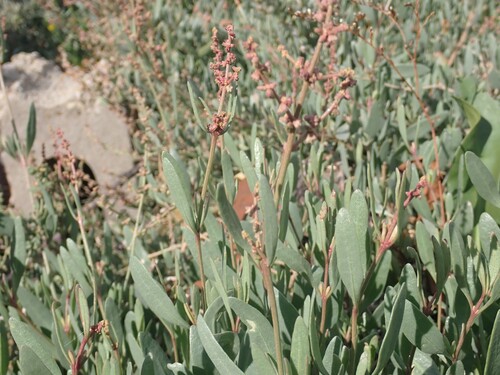
(c) Biopix, some rights reserved (CC BY-NC)
iNaturalist· cc-by-sa
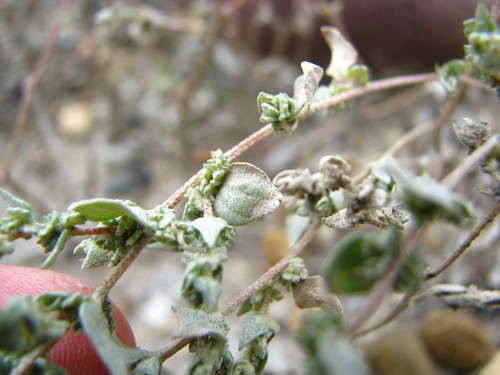
(c) anonymous, some rights reserved (CC BY-SA)
iNaturalist· cc-by-nc-sa
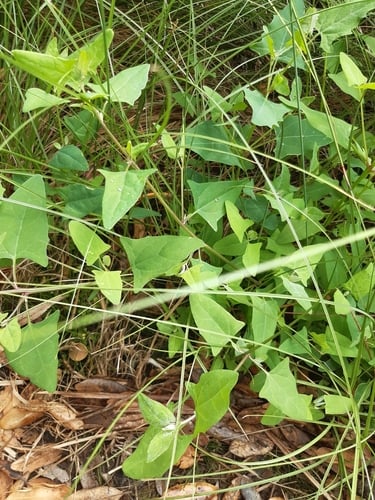
(c) saba, some rights reserved (CC BY-NC-SA), uploaded by saba
Summary
Source: WikipediaAmaranthus caudatus (also known as Amaranthus edulis and Amaranthus mantegazzianus) is a species of annual flowering plant. It goes by common names such as love-lies-bleeding, pendant amaranth, tassel flower, velvet flower, and foxtail amaranth. To the Quechua people of South America, A. caudatus is referred to as kiwicha, quihuicha, inca jataco; ataco, ataku, sankurachi, jaguarcha (Ecuador), millmi, or coimi. While to the Aymara people, who are native to the Andes and Altiplano regions of South America, A. caudatus is known as qamasa. Many parts of the plant, including the leaves and seeds, are edible, and are frequently used as a source of food in India as well as in South America, where it is the most important Andean species of Amaranthus, known as kiwicha. (See also amaranth seed and Andean ancient plants.) This species, as with many other amaranths, is originally from the American tropics. The exact origin is unknown, as A. caudatus is believed to be a wild Amaranthus hybridus aggregate. In indigenous agriculture, A. cruentus is the Central American counterpart to South American A. caudatus.
Description
An annual plant which can be 2 m high and 45 cm across. The stems are angular and it can have a single stem or be branched. It is often limp in the upper parts. Plants are hairy at first but become smooth. Often they are tinged purple. Leaves are 2-4 cm long by 0.7-1.6 cm wide on a leaf stalk 0.5-1.5 cm long. Leaves can taper to a tip at the end. They can also thin towards the base. The veins are pale underneath. The flower clusters are in spikes on the side or top branches. The flowers are sometimes branched and can droop over. They can be 45 cm long. The fruit is oval. Seed are 1-1.3 mm across.
Edible Uses
Leaves can be eaten raw or cooked as a spinach, or added to soups. They are mild in flavour and rich in vitamins and minerals. The seed, though very small, is easy to harvest and highly nutritious — individual plants can bear up to 100,000 seeds. Seeds can be eaten cooked, ground into a powder for baking, or popped like popcorn. When cooked whole the seed becomes very gelatinous, but it is difficult to crush all the tiny seeds in the mouth, so some will pass through the digestive system unassimilated. The seed contains 13–18% high-quality protein that is rich in the amino acid lysine, along with good quantities of calcium, phosphorus, iron, potassium, zinc, vitamin E, and the vitamin B complex. A red food colouring called 'betalaina' is obtained from red cultivars.
Traditional Uses
The leaves and young plant are eaten cooked. They are also used in stir fries and added to soups. The seeds are ground into flour and used to make bread. CAUTION: This plant can accumulate nitrates if grown with high nitrogen inorganic fertilisers and these are poisonous.
Medicinal Uses
The plant is astringent, anthelmintic, and diuretic. It is used in the treatment of stranguary and applied externally to scrofulous sores.
Known Hazards
No members of this genus are known to be poisonous, but when grown on nitrogen-rich soils they are known to concentrate nitrates in the leaves. This is especially noticeable on land where chemical fertilizers are used. Nitrates are implicated in stomach cancers, blue babies and some other health problems. It is inadvisable, therefore, to eat this plant if it is grown inorganically.
Distribution
A tropical plant. It can grow in warm temperate places. It cannot tolerate frost. Plants do best under high light, warm conditions and dry conditions. They need a well drained soil. Some varieties can tolerate pH up to 8.5 and there is some salt tolerance. It can grow in arid places. In the Andes it grows between 500-3,000 m above sea level. In PNG it grows best between 1,600-2,400 m above sea level. It suits hardiness zones 8-11.
Where It Grows
Africa, Andes, Angola, Argentina, Asia, Australia, Bolivia, Brazil, Cameroon, Canada, Cape Verde, Central Africa, Central African Republic, CAR, Central Asia, China, Colombia, Congo, East Africa, East Timor, Ecuador, Eritrea, Eswatini, Ethiopia, Europe, Gabon, Guiana, Guianas, Himalayas, India, Indochina, Indonesia, Kenya, Korea, Madagascar, Malawi, Malaysia, Maldives, Mozambique, Myanmar, Nepal, Niger, Nigeria, North America, Northeastern India, NW India, Pacific, Pakistan, Papua New Guinea, PNG, Peru, Philippines, Sahel, Sao Tome and Principe, SE Asia, Sierra Leone, Sikkim, Slovenia, South Africa, Southern Africa, South America, Spain, Suriname, Swaziland, Tajikistan, Thailand, Tibet, Timor-Leste, Turkey, Türkiye, Uganda, Vietnam, West Africa, Zambia,
Cultivation
Plants can be grown from seed if the soil is warm. Seeds are small and grow easily. Cuttings of growing plants root easily. Amaranths are mostly grown from seeds. The seeds are collected from a mature dry seed head of an old plant. These dry flower stalks are stored and then the flowers rubbed between the hands over the garden site. Collecting the seeds is fairly easy by banging flower heads on a mat or piece of cloth then the rubbish can be blown out of this mixture by dropping it and blowing gently as it falls. The very small seeds of these plants are scattered over the ashes or fine soil in fertile ground. Some types are self sown. Amaranthus seeds are very small. A thousand seeds weigh about 0.3 g. It is very difficult to sow such small seeds evenly over the ground. So there are a few different methods you can use to try and get the plants well spaced. One way is to mix the seeds with some sand and then when you sprinkle this along a row it will only contain a few seeds among the sand. The other way is to throw the seeds over a small plot of ground which will be a nursery. After 2 or 3 weeks the seedlings can be transplanted into the garden bed where they are to grow. If the seeds are just scattered over the garden, the small seedlings can be thinned out and either eaten of transplanted to a different spot. Seedlings are transplanted when about 5-7 cm tall. Plants can be harvested when small by thinning out and either transplanted or eaten cooked. Plants can be harvested whole or have top leaves harvested several times. Harvesting begins after 4-7 weeks and can continue over 2 months. A spacing of about 8 cm x 8 cm is used if the plants are to be harvested by pulling up the whole plant. If the harvesting is to be done by picking off the top leaves, a wider spacing is normally used. When the tops are picked out 3 or 4 times over the life of the one plant, a spacing about 30 cm x 30 cm is used. As far as producing a large amount of food is concerned, the spacing is not very important. Having between 200 and 1,000 plants per square metre gives about the same total amount of food. The main thing that varies is the size of the leaves. Mostly people like larger leaves so a wider spacing of 8 cm to 10 cm for plants to be pulled out is suitable. For plants to be harvested by picking out the tops, they can be picked down to about 15 cm high. Picking lower makes the plant flower later, but it also recovers more slowly from picking. Amaranths grow quickly. Seedlings come up above the ground in 3 to 5 days. They are 5 to 7 cm high and big enough for transplanting after about 20 days. The plants can be pulled out and used after 6 weeks. If they are harvested by picking out the tops, this can be started at 5 to 7 weeks and continued 3 or 4 times over the next 2 months. Amaranths eventually stop producing leaves and grow flowers. Flowering occurs after about 3 months and seed can be recollected about a month later. Amaranths are called day-length neutral plants because they still produce flowers at about the same stage, irrespective of whether there are many or few hours of daylight. Because flowering stops harvesting of leaves, it is a problem, but there does not seem to be any easy way of slowing down flowering. Flowering can be delayed a little by picking out the tops down to a lower level. Also it is made a little later if plants are grown in the shade. But lower picking and growing in the shade mean the plants produce less food, so there is no point. Plants need to be harvested and used when they are ready. If plants are left growing the amount of harvestable leaf gets less and the quality gets poorer. Nitrogen deficiency shows as the oldest leaves near the bottom of the plant going yellow. This is because the plant needs more nitrogen to grow more new leaves at the top and there is not enough nitrogen in the soil for it to get it from there. So it reuses the nitrogen it used in the oldest leaves. These leaves therefore go yellow. Potassium deficiency shows as the edges of the oldest leaves going yellow. These shortages of nutrients could be corrected by adding some nitrogen or potash fertiliser but it is most likely too late for the current crop.
Propagation
Sow seed in late spring in situ. An earlier sowing can be made in a greenhouse, with plants moved outside after the last expected frosts. Germination is usually rapid and good in warm soil; a drop in temperature overnight aids germination. Cuttings of growing plants root easily.
Other Uses
Yellow and green dyes can be obtained from the whole plant. The plant is also used as a dynamic accumulator and is suitable for food forest systems.
Production
Plants take 4 - 6 months from sowing to harvesting the seed, but up to 10 months in some Andean highland regions. Yields from 1-3 or 5 tonnes per hectare of seed are common. Yields of up to one kilogram of edible leaves have been harvested by pulling out plants from an area of one square metre. The young leaves or whole plants are eaten cooked. If plants are picked 3 or 4 times over 6-8 weeks then two kilograms of edible leaves can be harvested. From a plant that grows so quickly and is such good quality food this is a very high production.
Other Information
This species is cultivated and important for its edible seed and leaves in the Andes. It is sold in markets. It is a commercially cultivated vegetable. Seed varieties have been introduced to Papua New Guinea.
Notes
Seed (Fresh weight) Protein: 18. There are about 60 Amaranthus species. The protein is high in lysine. It is a C4 plant. Seed is high in protein.
Nutrition
| Part | Moisture | kJ | kcal | Protein | Vit A | Vit C | Iron | Zinc |
|---|---|---|---|---|---|---|---|---|
| Leaves dry | 6 | 1034 | — | 28.8 | 33 | — | 23.2 | 5.5 |
| Leaves | 80 | 241 | 59 | 5.4 | — | — | 468 | — |
| Seeds | — | — | 13 | — | — | — | — | — |
| Stem | — | — | — | — | — | — | — | — |
Synonyms
Also Known As
Alayyafoo, Anantmul, Anapatsa, Ataku, Bayam selaseh, Bayam, Biteku teku, Bonoongue, Bowa, Chalwai, Champayang, Chapata, Chailai, Damkhon, Dankhar, Den duoi-ngan, Diega krakoen, Eyasu, Gegebsa, Gimboa, Inca wheat, Jaky fotsy, Kattucheera, Kedar chua, Keikera, Kempukeere soppu, Kiwicha, Kyet-mauk, Latte sag, Libondwe, Lishalisho, Love-lies-bleeding, Lunde, Massaagu, Mboamanga, Moricha sak, Ocobo, Palengsag, Pendant amaranth, Prince-of-Wales Feather, Quinoa de castilla, Qunembi, Raafuu, Ram dana, Raso, Repati ščir, Sigappu thandu keerai, Siru kiray, Tassel Flower, Thandu keerai, Thota kura, Tianximi, Wei sui xian, Ximi, Yani
References (112)
- Agong, S.G., 2006. Amaranthus caudatus L. [Internet] Record from Protabase. Brink, M. & Belay, G. (Editors). PROTA (Plant Resources of Tropical Africa / Ressources végétales de l’Afrique tropicale), Wageningen, Netherlands. < http://database.prota.org/search.htm>. Accessed 13 October 2009.
- Asfaw, Z. and Tadesse, M., 2001, Prospects for Sustainable Use and Development of Wild Food Plants in Ethiopia. Economic Botany, Vol. 55, No. 1, pp. 47-62
- Ambasta S.P. (Ed.), 2000, The Useful Plants of India. CSIR India. p 33
- Ashagre, M., et al, 2016, Ethnobotanical study of wild edible plants in Burji District, Segan Area Zone of Southern Nations, Nationalities and Peoples Region (SNNPR), Ethiopia. Journal of Ethnobiology and Ethnomedicine (2016) 12:32
- Balemie, K., & Kebebew, F., 2006, Ethnobotanical study of wild edible plants in Derashe and Kucha Districts, South Ethiopia. Journal of Ethnobiology and Ethnomedicine.
Show all 112 references Hide references
- Bao Bojian; Steve Clemants, Thomas Borsch, Amaranthaceae [Draft], Flora of China
- Barkatullah & Ibrar, M., 2011, Plants profile of Malakand Pass Hills, District Malakand, Pakistan. African Journal of Biotechnology Vol. 10(73) pp. 16521-16535
- Berihun, T., & Molla, E., 2017, Study on the Diversity and Use of Wild Edible Plants in Bullen District Northwest Ethiopia. Hindawi Journal of Botany.Article ID 8383468
- Bernholt, H. et al, 2009, Plant species richness and diversity in urban and peri-urban gardens of Niamey, Niger. Agroforestry Systems 77:159-179
- Bodkin, F., 1991, Encyclopedia Botanica. Cornstalk publishing, p 74
- Bourke, R. M., Altitudinal limits of 230 economic crop species in Papua New Guinea. Terra australis 32.
- Brickell, C. (Ed.), 1999, The Royal Horticultural Society A-Z Encyclopedia of Garden Plants. Convent Garden Books. p 106
- Burkill, I.H., 1966, A Dictionary of the Economic Products of the Malay Peninsula. Ministry of Agriculture and Cooperatives, Kuala Lumpur, Malaysia. Vol 1 (A-H) p 127
- Burnie, G. (Ed.), 2003, Annuals and Bulbs. The Gardener's Handbooks. Fog City Press. p 117
- Cundall, P., (ed.), 2004, Gardening Australia: flora: the gardener's bible. ABC Books. p 144
- Dangol, D. R. et al, 2017, Wild Edible Plants in Nepal. Proceedings of 2nd National Workshop on CUAOGR, 2017.
- Demise, S. & Asfaw, Z., 2020, Ethno Botanical Study of Wild Edible Plants in Adola District, Southern, Ethiopia. International Journal of Research and Analytical Reviews (IJRAR) 7(2).
- Dobriyal, M. J. R. & Dobriyal, R., 2014, Non Wood Forest Produce an Option for Ethnic Food and Nutritional Security in India. Int. J. of Usuf. Mngt. 15(1):17-37
- Duarte, M. C., et al, 2022, Diversity of Useful Plants in Cabo Verde Islands: A Biogeographic and Conservation Perspective. Plants 2022, 11, 1313 p 8
- Facciola, S., 1998, Cornucopia 2: a Source Book of Edible Plants. Kampong Publications, p 8
- Facciola, S., 1998, Cornucopia 2: a Source Book of Edible Plants. Kampong Publications, p 8 (As Amaranthus mantegazzianus)
- FAO, 1988, Traditional Food Plants, FAO Food and Nutrition Paper 42. FAO Rome p 71
- Flora of the Guianas.
- Fox, F. W. & Young, M. E. N., 1982, Food from the Veld. Delta Books. p 68
- French, B., 1986, Food Plants of Papua New Guinea, Asia Pacific Science Foundation p 55
- Gautam, R. S., et al, 2022, Ethnobotanical Review of Wild Edible Plants of Nepal. Journal of Natural History Museum Volume 32, 2021-22 p 101
- Gori, B., et al, 2022, Understanding the diversity and biogeography of Colombian edible plants. Scientific Reports 12:7835
- Guil-Guerrero, J. L., et al, 2001, Edible Wild Plants. in Recent Progress in Medicinal Plants Vol. 8 Sci. Tech publishing, Texas
- Haj, F., et al, 2012, Species Diversity and Ethno Botanical Classes of the Flora of Allai Valley District Battagram Pakistan. International Journal of Plant Research 2012, 2(4): 111-123
- Harisha, R. P. & Padmavathy, S., 2013, Knowledge and Use of Wild Edible Plants in Two Communities in Malai Madeshwara Hills, Southern India. International Journal of Botany 9(2): 64-72.
- Harter, J.(Ed.), 1988, Plants. 2400 copyright free illustrations. Dover p 16.1, 16.10
- Hermandez Bermejo, J.E., and Leon, J. (Eds.), 1994, Neglected Crops. 1492 from a different perspective. FAO Plant Production and Protection Series No 26. FAO, Rome. p 12, 144
- Heywood, V.H., Brummitt, R.K., Culham, A., and Seberg, O. 2007, Flowering Plant Families of the World. Royal Botanical Gardens, Kew. p 29
- Hussey, B.M.J., Keighery, G.J., Cousens, R.D., Dodd, J., Lloyd, S.G., 1997, Western Weeds. A guide to the weeds of Western Australia. Plant Protection Society of Western Australia. p 80
- Hu, Shiu-ying, 2005, Food Plants of China. The Chinese University Press. p 380
- Ind. sem. hort. bot. Parma 4. 1865 (As Amaranthus mantegazzianus)
- Jardin, C., 1970, List of Foods Used In Africa, FAO Nutrition Information Document Series No 2.p 54
- Joyce, D., 1998, The Garden Plant Selector. Ryland, Peters and Small. p 312
- Ju, Y., et al, 2013, Eating from the wild: diversity of wild edible plants used by Tibetans in Shangri-la region, Yunnan, China, Journal of Ethnobiology and Ethno medicine 9:28
- Kang, Y., et al, 2012, Wild food plants and wild edible fungi in two valleys on the Qinling Mountains (Shaanxi, central China) Journal of Ethnobiology and Ethnomedicine; 9:26
- Kanis, A in Womersley, J.S., (Ed), 1978, Handbooks of the Flora of Papua New Guinea. Melbourne University Press. Vol 1. p 22
- Kays, S. J., and Dias, J. C. S., 1995, Common Names of Commercially Cultivated Vegetables of the World in 15 languages. Economic Botany, Vol. 49, No. 2, pp. 115-152
- Kebebew, M. & Leta, G., 2016, Wild Edible Plant Bio-diversity and Utilization System in Nech Sar National Park, Ethiopia. International Journal of Bio-resource and Stress Management 2016, 7(4):885-896
- Kiple, K.F. & Ornelas, K.C., (eds), 2000, The Cambridge World History of Food. CUP p 1717
- Kishor, A., et al, 2018, Wild Food Plants of Himachal Pradesh: A Review. Plant Archives Vol. 18 No.2 pp. 2737-2751
- Kohila, A. & Kensa, V. M., 2019, Survey of Wild Edible Plants of Dhanakarkulam Panchayath, Tirunelveli District, Tamil Nadu, India. Kong. Res. J. 6(2): 20-27, 2019
- Krishna, B., & Singh, S., 1987, Ethnobotanical Observations in Sikkim. J. Econ. Tax. Bot. Vol. 9 No. 1 pp 1-7
- Lamberton, K (Ed.), 2004, The Australian gardening encyclodepia. Murdoch Books, NSW Australia. p 163
- Lautenschläger, T., et al, 2018, First large-scale ethnobotanical survey in the province of Uíge, northern Angola. Journal of Ethnobiology and Ethnomedicine (2018) 14:51
- Lazarides, M. & Hince, B., 1993, Handbook of Economic Plants of Australia, CSIRO. p 16
- Long, C., 2005, Swaziland's Flora - siSwati names and Uses http://www.sntc.org.sz/flora/
- Lucas de Arellano, M., et al, 1992, Amaranthus mantegazzianus. Chemical composition and protein biological value. (In Spanish). Arch. Latinoam Nutr. Mar: 42(1):41-5
- Lulekal, E., et al, 2011, Wild edible plants in Ethiopia: a review on their potential to combat food insecurity. Afrika Focus - Vol. 24, No 2. pp 71-121
- Macmillan, H.F. (Revised Barlow, H.S., et al), 1991, Tropical Planting and Gardening. Sixth edition. Malayan Nature Society. Kuala Lumpur. p 351
- Malaisse, F., 1997, Se nourrir en floret claire africaine. Approche ecologique et nutritionnelle. CTA., p 57
- Malaisse, F., 2010, How to live and survive in Zambezian open forest (Miombo Ecoregion). Les Presses Agronomiques de Gembloux.
- Martin, F.W. & Ruberte, R.M., 1979, Edible Leaves of the Tropics. Antillian College Press, Mayaguez, Puerto Rico. p 173
- Masters, T., 2021, Traditional food plants of the upper Aswa River catchment of northern Uganda—a cultural crossroads. Journal of Ethnobiology and Ethnomedicine (2021) 17:24
- Molla, A., Ethiopian Plant Names. http://www.ethiopic.com/aplants.htm
- Mutie, F. M., et al, 2023, Important Medicinal and Food Taxa (Orders and Families) in Kenya, Based on Three Quantitative Approaches. Plants 2023, 12, 1145
- Narayanan Ratheesh, M. K. et al, 2011, Wild edible plants used by the Kattunaikka, Paniya and Kuruma tribes of Wayanad District, Kerala, India. Journal of Medicinal Plants Research Vol. 5(15), pp. 3520-3529
- Negi, P. S. & Subramani, S. P., 2015, Wild Edible Plant Genetic Resources for Sustainable Food Security and Livelihood of Kinnaur District, Himachal Pradesh, India, International Journal of Conservation Science. 6 (4): 657-668
- Ochse, J.J. et al, 1931, Vegetables of the Dutch East Indies. Asher reprint. p 21
- Ogle, B. M., et al, 2003, Food, Feed or Medicine: The Multiple Functions of Edible Wild Plants in Vietnam. Economic Botany 57(1): 103-117
- Paczkowska, G. & Chapman, A.R., 2000, The Western Australian Flora. A Descriptive Catalogue. Western Australian Herbarium. p 136
- Peekel, P.G., 1984, (Translation E.E.Henty), Flora of the Bismarck Archipelago for Naturalists, Division of Botany, Lae, PNG. p 164, 165
- Pegu, R., et al, 2013, Ethnobotanical study of Wild Edible Plants in Poba Reserved Forest, Assam, India. Research Journal of Agriculture and Forestry Sciences 1(3):1-10
- Pham-Hoang Ho, 1999, An Illustrated Flora of Vietnam. Nha Xuat Ban Tre. p 727
- Plants for a Future database, The Field, Penpol, Lostwithiel, Cornwall, PL22 0NG, UK. http://www.scs.leeds.ac.uk/pfaf/
- Plants for a Future database, The Field, Penpol, Lostwithiel, Cornwall, PL22 0NG, UK. (Also as Amaranthus edulis) (As Amaranthus mantegazzianus)
- Plowes, N. J. & Taylor, F. W., 1997, The Processing of Indigenous Fruits and other Wildfoods of Southern Africa. in Smartt, L. & Haq. (Eds) Domestication, Production and Utilization of New Crops. ICUC p 185
- Polunin, O., & Stainton, A., 2006, Flowers of the Himalaya, Oxford India Paperbacks. p 339
- Pradhan, R., et al, 2020, Potential Wild Edible Plants and its Significance in Livelihood of Indigenous People of Male Mahadeshwara Hills, Karnataka. Economic Affairs Vol. 64, No. 4 pp. 01-14
- PROSEA (Plant Resources of South East Asia) handbook Volume 10 Cereals. p 75
- Purseglove, J.W., 1968, Tropical Crops Dicotyledons, Longmans. p 624
- Quintana, C. M., 2010, Wild Plants in the Dry Valleys around Quito Ecuador. Publicaciones del Herbario QCA,PUCE Quito-Ecuador, p 58
- Radha, B., et al, 2013, Wild Edible Plant Resources of the Lohba Range of Kedarnath Forest Division (KFD), Garhwal Himalaya, India. Int. Res J. Biological Sci. Vol. 2 (11), 65-73
- Rana, J.C. et al, 2011, Genetic resources of wild edible plants and their uses among tribal communities of cold arid regions of India. Genetic Resources and Crop Evolution. 59:135-149
- Rao, M. L. S., et al, 2014, Indigenous Plant Foods which are commonly consumed by the tribal communities in Dumbriguda Area of Visakhapatnam District, Andhra Pradesh, India. Biolife. Vol 2, Issue 3
- Raponda-Walker, A & Sillans, R., 1961, Les Plantes Utiles du Gabon. Editions Paul Lechevalier, Paris. p 48
- Rashid, A., Anand, V.K. & Serwar, J., 2008, Less Known Wild Plants Used by the Gujjar Tribe of District Rajouri, Jammu and Kashmir State. International Journal of Botany 4(2):219-244
- Rasingam, L., 2012, Ethnobotanical studies on the wild edible plants of Irula tribes of Pillur Valley, Coimbatore district, Tamil Nadu, India. Asian Pacific Journal of Tropical Biomedicine. (2012) S1493-S1497
- Razanameharizaka, J., et al, 2022, Catalogue Legumes Traditionnels de Madagascar. Université d’Antananarivo, Antananarivo (101), Madagascar. Vol. 1. p 10
- Regassa, T., et al, 2014, Ethnobotany of Wild and Semi-Wild Edible Plants of Chelia District, West-Central Ethiopia. Science, Technology and Arts Research Journal. 3(4): 122-134
- Royal Botanic Gardens, Kew (1999). Survey of Economic Plants for Arid and Semi-Arid Lands (SEPASAL) database. Published on the Internet; http://www.rbgkew.org.uk/ceb/sepasal/internet [Accessed 24th March 2011]
- Ruiters-Welcome, A. K., 2019, Food plants of southern Africa. Ph.D. thesis. Univ. of Johannesburg p 10
- Sasi, R. et al, 2011, Wild edible plant Diversity of Kotagiri Hills - a Part of Nilgiri Biosphere Reserve, Southern India. Journal of Research in Biology. Vol. 1 No. 2, pp 80-87
- Saur, J.D., Grain amaranths, in Simmonds, N.W., (Ed.), 1979, Evolution of Crop Plants. Longman. p 4
- Savita, et al, 2006, Studies on wild edible plants of ethnic people in east Sikkim. Asian J. of Bio Sci. (2006) Vol. 1 No. 2 : 117-125
- Shah, S. K., 2014, Dietary contribution of underutilized minor crops and indigenous plants collected from uncultivated lands and forests in Nepal. in Promotion of Underutilized Indigenous Food Resources for Food Security and Nutrition in Asia and Pacific. FAO. Bangkok p 64
- Sharma, B.B., 2005, Growing fruits and vegetables. Publications Division. Ministry of Information and broadcasting. India. p 189
- Shrestha, S., 2021, Wild Edible Plants of Dhankuta, Eastern Nepal. Rupantaran : A Multidisciplinary Journal Vol. V : pp 100-109, September, 2021 p 102
- Sillitoe, P. 1995, An Ethnobotanical Account of the Plant Resources of the Wola Region, Southern Highlands Province, Papua New Guinea. J. Ethnobiol. 15(2): 201-235
- Small, E., 2009, Top 100 Food Plants. The world's most important culinary crops. NRC Research Press. p 69
- Sp. pl. 2:990. 1753
- Sujanapal, P., & Sankaran, K. V., 2016, Common Plants of Maldives. FAO & Kerala FRI, p 31
- Swaziland's Flora Database http://www.sntc.org.sz/flora
- Tapia, M. E., The role of under-utilised plant species with regard to increased food security and improved health of poor poeople, in mountain regions. IIAP-PNUD/Peru
- Terra, G.J.A., 1973, Tropical Vegetables. Communication 54e Royal Tropical Institute, Amsterdam, p 21
- Thitiprasert, W., et al, 2007, Country report on the State of Plant Genetic Resources for Food and Agriculture in Thailand (1997-2004). FAO p 95
- Tindall, H.D., 1983, Vegetables in the tropics. Macmillan p. 36
- Torre, de la L., et al, 2008, Enciclopedia de las Plantas Útiles del Ecuador. Herbario QCA. Pontificia Universidad Católica del Ecuador. p 155
- Ulian, T., et al, 2020, Unlocking plant resources to support food security and promote sustainable agriculture. Plants, People, Planet. 2020;2:421–445.
- USDA, ARS, National Genetic Resources Program. Germplasm Resources Information Network - (GRIN). [Online Database] National Germplasm Resources Laboratory, Beltsville, Maryland. Available: www.ars-grin.gov/cgi-bin/npgs/html/econ.pl (10 April 2000)
- van Wyk, B., 2005, Food Plants of the World. An illustrated guide. Timber press. p 55
- van Wyk, Be., & Gericke, N., 2007, People's plants. A Guide to Useful Plants of Southern Africa. Briza. p 64
- Welcome, A. K. & Van Wyk, B.-E., 2019, An inventory and analysis of the food plants of southern Africa. South African Journal of Botany 122 (2019) 136–179
- Wiersema, J. H. & Leon, B., 2013, World Economic Plants. A Standard Reference CRC Press. 2nd Ed. p 43
- Wild edible plants of Himachal Pradesh
- World Checklist of Useful Plant Species 2020. Royal Botanic Gardens, Kew
- www.eFloras.org Flora of China
- www.pngplants.org