Allium vineale
L.
Crow garlic, Field Garlic, Onion grass
iNaturalist· cc-by-nc
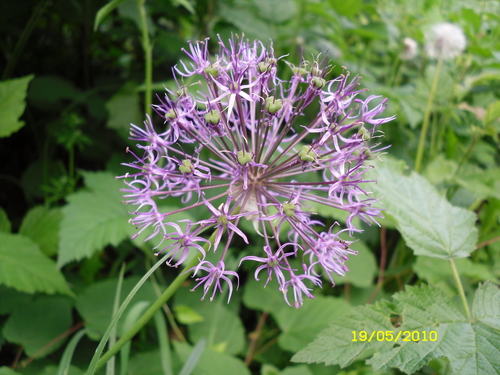
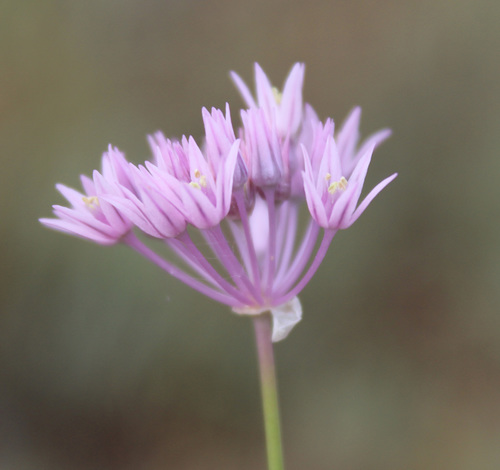
(c) Ángel Fernández Cancio, some rights reserved (CC BY-NC), uploaded by Ángel Fernández Cancio
iNaturalist· cc-by-nc
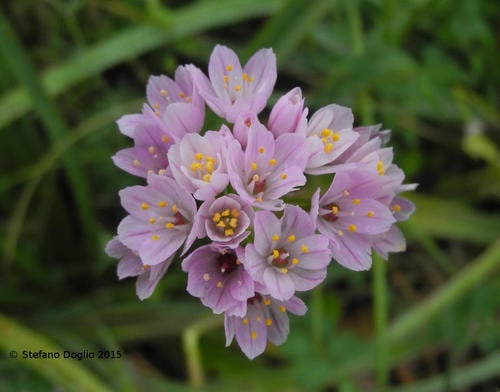
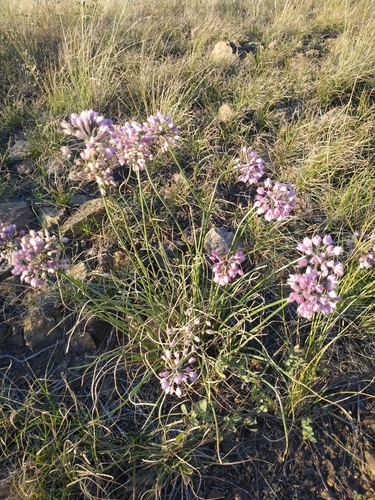
(c) John Beetham, some rights reserved (CC BY-NC), uploaded by John Beetham
iNaturalist· cc-by-nc
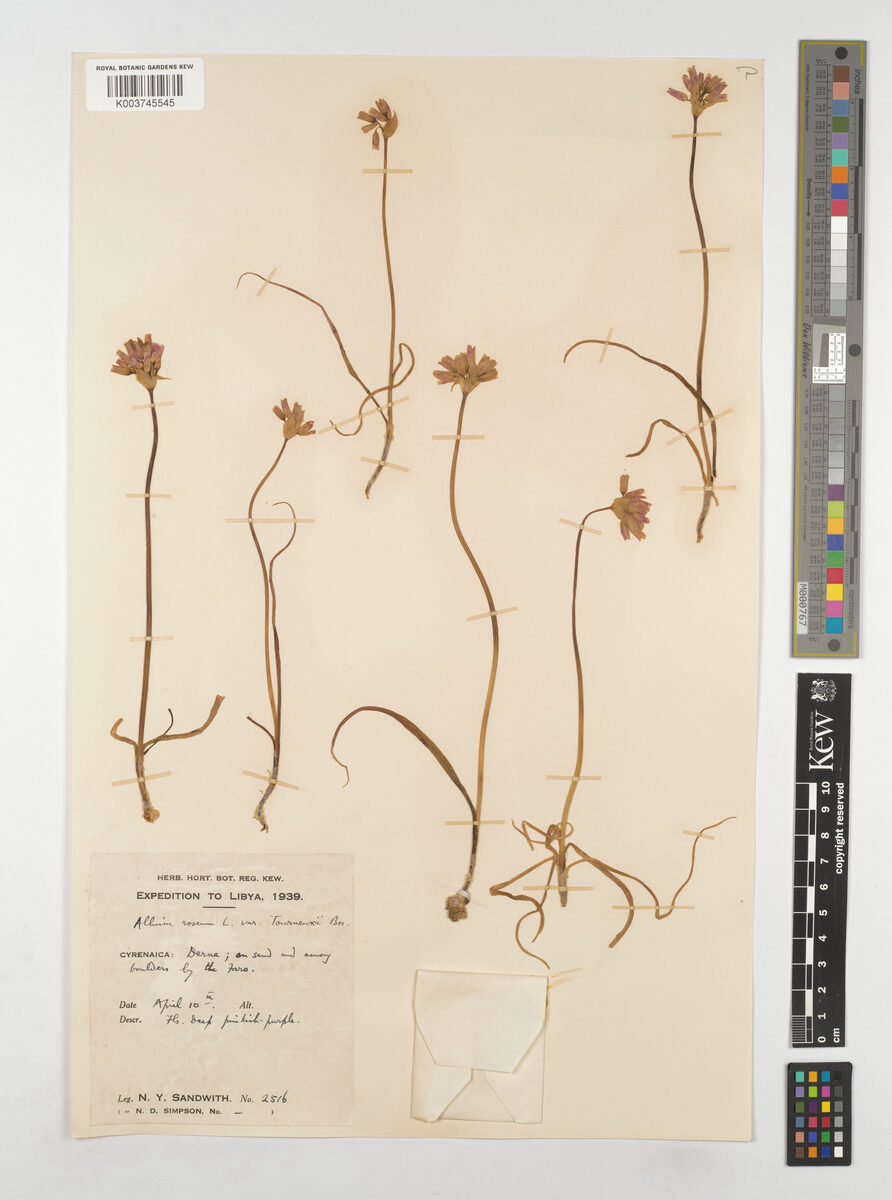
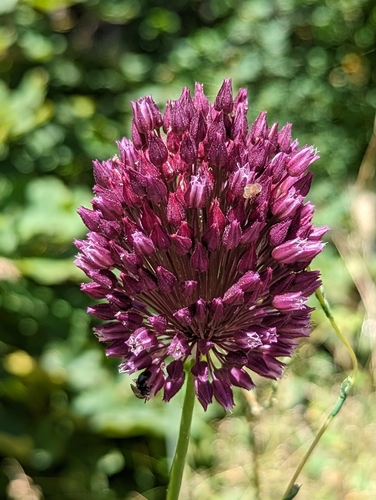
(c) Sandro Bogdanović, some rights reserved (CC BY-NC), uploaded by Sandro Bogdanović
Summary
Source: WikipediaAllium vineale (wild garlic, onion grass, crow garlic or stag's garlic) is a perennial, bulb-forming species of wild onion, native to Europe, northwestern Africa, and the Middle East. The species was introduced in Australia and North America, where it has become an invasive species.
Description
An onion family plant. It is a bulb plant. The plant has round stems which are almost filled with pith. It can grow 1 m high. The leaves are like cylinders and are hollow. There are 2-4 leaves and they are cylinder shaped. They sheath the lower half of the flowering stalk. The flowers are pink, white or greenish. The young flower heads usually have a bract and a sharp green spike at the top. Some bulbils occur in the head.
Edible Uses
The leaves are rather stringy but work well as a garlic substitute, used raw or cooked. Available from late autumn through the following summer, they make a pleasant addition to salads when used sparingly. The bulbs, around 10–20mm in diameter, are used as a flavouring and have a very strong flavour and odour. The bulbils can also be eaten raw or cooked — they are small and fiddly to work with but carry a strong garlic-like flavour.
Traditional Uses
The bulb is used to flavour salads and meat. The tender young tips are finely chopped and used in salads.
This uses section is brief — help expand it
Medicinal Uses
The whole plant is antiasthmatic, a blood purifier, carminative, cathartic, diuretic, expectorant, hypotensive, stimulant, and vasodilator. A tincture is used to prevent worms and colic in children and as a remedy for croup. Eating the raw root can help reduce blood pressure and ease shortness of breath. As with other members of this genus, the plant contains sulphur compounds responsible for its onion-like flavour. Regular inclusion in the diet may help reduce blood cholesterol levels, support digestive health, and tonify the circulatory system.
Known Hazards
There have been cases of poisoning caused by the consumption, in large quantities and by some mammals, of this species. Dogs seem to be particularly susceptible.
Distribution
It is a temperate and Mediterranean climate plant. It grows in dry pasture and cultivated and fallow land. Tasmania Herbarium.
Where It Grows
Albania, Argentina, Armenia, Australia, Balkans, Bosnia, Britain, Caucasus, Chile, China, Croatia, Denmark, Europe, France, Greece, Hungary, Ireland, Israel, Italy, Luxembourg, Mediterranean*, Middle East, New Zealand, North America, Norway, Portugal, Scandinavia, Slovenia, South America, Spain, Sweden, Tasmania, Turkey, Türkiye, USA,
Cultivation
Prefers a sunny position in a light well-drained soil. The bulbs should be planted fairly deeply. Grows well with most plants, especially roses, carrots, beet and chamomile, but it inhibits the growth of legumes. This plant is a bad companion for alfalfa, each species negatively affecting the other. This species is a pernicious weed of grassland in Britain, spreading freely by means of its bulbils. Members of this genus are rarely if ever troubled by browsing deer.
Propagation
This plant propagates itself readily without any special assistance. Bulbils are produced in abundance during summer and are the primary means by which the plant spreads.
Other Uses
The plant juice can be used as a moth repellent, and the whole plant is said to repel insects and moles. The juice can also be rubbed onto exposed skin to deter biting insects, scorpions, and similar creatures.
Other Information
It is foraged and used in restaurants in Sweden. It is sold in local markets.
Notes
There are about 300-700 Allium species. Most species of Allium are edible (Flora of China). All alliums are edible but they may not all be worth eating! They have also been put in the family Alliaceae.
Dangerous Lookalikes
This plant can be confused with the following toxic species. Always verify identification carefully before consuming any wild plant.
Death Camas
Toxicoscordion venenosum
Craig Martin https://www.inaturalist.org/people/craigmartin
Crow garlic
Allium vineale
(c) Ángel Fernández Cancio, some rights reserved (CC BY-NC), uploaded by Ángel Fernández Cancio
Death Camas: NO garlic or onion smell, flat grass-like leaves, cream/white flowers.
Crow garlic: Strong garlic smell, hollow round leaves, small bulbils in flower head.
Nutrition
| Part | Moisture | kJ | kcal | Protein | Vit A | Vit C | Iron | Zinc |
|---|---|---|---|---|---|---|---|---|
| Bulb | — | — | — | — | — | — | — | — |
| Leaves | — | — | — | — | 130 | — | — | — |
| Flowers | — | — | — | — | — | — | — | — |
Synonyms
Also Known As
Aglio selvatico, Aie, Ajillo, Ajo silvestre, Pasto ajo, Stag's garlic, Strandlok
References (34)
- Beckstrom-Sternberg, Stephen M., and James A. Duke. "The Foodplant Database." http://probe.nalusda.gov:8300/cgi-bin/browse/foodplantdb.(ACEDB version 4.0 - data version July 1994)
- Biscotti, N. et al, 2018, The traditional food use of wild vegetables in Apulia (Italy) in the light of Italian ethnobotanical literature. Italian Botanist 5:1-24
- Blamey, M and Grey-Wilson, C., 2005, Wild flowers of the Mediterranean. A & C Black London. p 487
- Bodkin, F., 1991, Encyclopedia Botanica. Cornstalk publishing, p 66
- Cerne, M., 1992, Wild Plants from Slovenia used as Vegetables. Acta Horticulturae 318.
Show all 34 references Hide references
- Curtis, W.M., & Morris, D.I., 1994, The Student's Flora of Tasmania. Part 4B St David's Park Publishing, Tasmania, p 392
- Denes, A., et al, 2012, Wild plants used for food by Hungarian ethnic groups living in the Carpathian Basin. Acta Societatis Botanicorum Poloniae 81 (4): 381-396
- Duke, J.A., 1992, Handbook of Edible Weeds. CRC Press. p 26
- Ertug, F, Yenen Bitkiler. Resimli Türkiye Florası -I- Flora of Turkey - Ethnobotany supplement
- Facciola, S., 1998, Cornucopia 2: a Source Book of Edible Plants. Kampong Publications, p 7
- Hedrick, U.P., 1919, (Ed.), Sturtevant's edible plants of the world. p 44
- Hovsepyan, R., et al, 2016, Food as a marker for economy and part of identity: traditional vegetal food of Yezidis and Kurds in Armenia. Journal of Ethnic Foods. 3:32-41
- Hussey, B.M.J., Keighery, G.J., Cousens, R.D., Dodd, J., Lloyd, S.G., 1997, Western Weeds. A guide to the weeds of Western Australia. Plant Protection Society of Western Australia. p 16
- INFOODSUpdatedFGU-list.xls
- Irving, M., 2009, The Forager Handbook, A Guide to the Edible Plants of Britain. Ebury Press p 339
- Kiple, K.F. & Ornelas, K.C., (eds), 2000, The Cambridge World History of Food. CUP p 1776
- Lamp, C & Collet F., 1989, Field Guide to Weeds in Australia. Inkata Press. p 11
- Lazarides, M. & Hince, B., 1993, Handbook of Economic Plants of Australia, CSIRO. p 14
- Low, T., 1991, Wild Herbs of Australia and New Zealand. Angus & Robertson. p 105
- Low, T., 1992, Bush Tucker. Australia’s Wild Food Harvest. Angus & Robertson. p 181
- Luczaj, L. et al, 2012, Wild food plant use in 21st century Europe: the disappearance of old traditions and the search for new cuisines involving wild edibles. Acta Soc Bot Pol 81(4):359–370
- Luczaj et al, 2013, Wild vegetable mixes sold in the markets of Dalmatia (southern Croatia). Journal of Ethnobiology and Ethnomedicine. 8:2
- Luczaj, L. et al, 2014, Wild Food Plants of Dalmatia (Croatia). in A. Pieroni, C. L. Quave (eds.), Ethnobotany and Biocultural Diversities in the Balkans, p 138
- Malezas Comestibles del Cono Sur, INTA, 2009, Buernos Aires
- Mattalia, G., et al, 2012, Traditional uses of wild food and medicinal plants among Brigasc, Kye ́, and Provenc ̧al communities on the Western Italian Alps. Genet Resour Crop Evol. Springer
- Morley, B.D., & Toelken, H.R., (Eds), 1983, Flowering Plants in Australia. Rigby. p 332
- Mukemre, M., et al, 2016, Survey of wild food plants for human consumption in villages of Catak, (Van-Turkey), Indian Journal of Traditional Knowledge. Vol. 15(2) pp. 183-191
- Paczkowska, G. & Chapman, A.R., 2000, The Western Australian Flora. A Descriptive Catalogue. Western Australian Herbarium. p 29
- Pieroni, A., 1999, Gathered wild food plants in the Upper Valley of the Serchio River (Garfagnana), Central Italy. Economic Botany 53(3) pp 327-341
- Plants for a Future database, The Field, Penpol, Lostwithiel, Cornwall, PL22 0NG, UK. http://www.scs.leeds.ac.uk/pfaf/
- Redzic, S. J., 2006, Wild Edible Plants and their Traditional Use in the Human Nutrition in Bosnia-Herzegovina. Ecology of Food and Nutrition, 45:189-232
- Seidemann J., 2005, World Spice Plants. Economic Usage, Botany, Taxonomy. Springer. p 28
- Sp. pl. 1:299. 1753
- Tasmanian Herbarium Vascular Plants list p 68