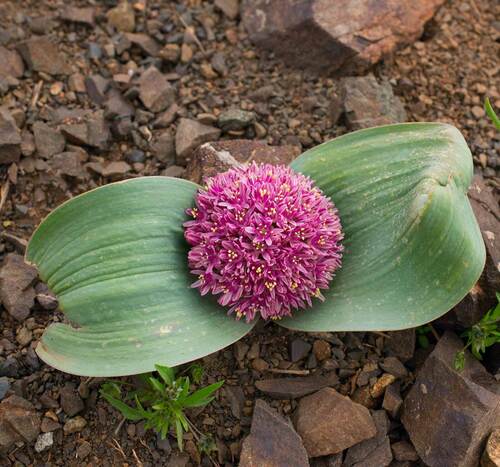
Allium stellatum
Fraser ex Ker Gawl.
Prairie onion, Glade onion
iNaturalist· cc-by
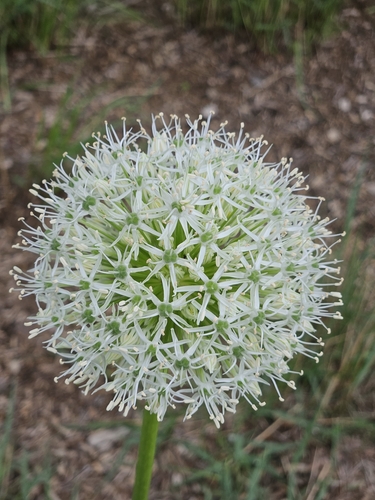
(c) USFWS Mountain-Prairie, some rights reserved (CC BY)
iNaturalist· cc-by-nc
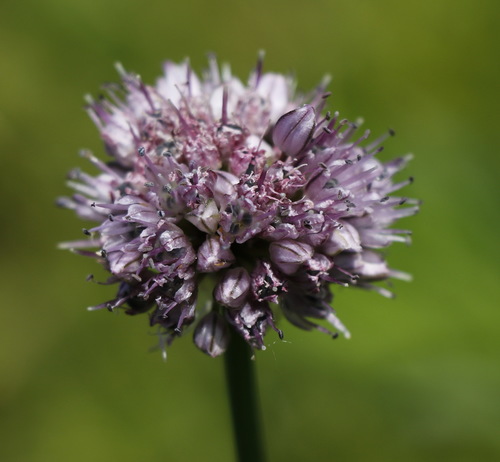
(c) Pat Deacon, some rights reserved (CC BY-NC), uploaded by Pat Deacon
Summary
Source: WikipediaAllium stellatum, commonly known as the autumn onion, prairie onion, cliff onion, or glade onion, is a North American species of wild onion in the Amaryllidaceae family that is native to central Canada and the central United States.
Description
An onion family plant. It is a bulb plant. It grows 45 cm tall and spreads 2.5-5 cm wide. The leaves are flat. There are 2-6 leaves on each bulb. The flower are star shaped.
Edible Uses
The bulbs are eaten raw or cooked and were traditionally used as food by Native Americans. They are fairly small, around 4cm tall and 15mm wide. The leaves are edible raw or cooked. The flowers are eaten raw and used as a garnish on salads.
Traditional Uses
The bulbs are eaten. The flowers can be eaten raw or used as a garnish on salads.
This uses section is brief — help expand it
Medicinal Uses
A sweetened decoction of the root has been taken, mainly by children, as a remedy for colds. More generally, members of this genus are considered very healthy additions to the diet. They contain sulphur compounds responsible for their onion flavour, and eaten regularly they help reduce blood cholesterol levels, act as a tonic to the digestive system, and support the circulatory system.
Known Hazards
Although no individual reports regarding this species have been seen, there have been cases of poisoning caused by the consumption, in very large quantities and by some mammals, of certain members of this genus. Dogs seem to be particularly susceptible.
Distribution
In Canada it grows in rocky prairies and in limestone rich areas. It suits hardiness zones 5-9.
Where It Grows
Australia, Canada, North America, USA,
Cultivation
An easily grown plant, it prefers a sunny position in a rich moist but well-drained soil. The bulbs should be planted fairly deeply. Most members of this genus are intolerant of competition from other growing plants. There is at least one named variety - 'Album' has white flowers. Grows well with most plants, especially roses, carrots, beet and chamomile, but it inhibits the growth of legumes. This plant is a bad companion for alfalfa, each species negatively affecting the other. Closely allied to A. cernuum and to A. textile. Members of this genus are rarely if ever troubled by browsing deer.
Propagation
Sow seed in spring in a cold frame. Prick seedlings into individual pots when large enough to handle — for faster clumps, place three plants per pot. Grow on in the greenhouse for at least the first winter, then plant out in spring once growing vigorously. Division in spring is very easy; plants can be divided successfully at any point during the growing season and the divisions planted straight into their permanent positions if needed.
Other Uses
The plant juice is used as a moth repellent. The whole plant is also said to repel insects and moles.
Notes
There are about 300-700 Allium species. Most species of Allium are edible (Flora of China). All alliums are edible but they may not all be worth eating! They have also been put in the family Alliaceae.
References (7)
- Beckstrom-Sternberg, Stephen M., and James A. Duke. "The Foodplant Database." http://probe.nalusda.gov:8300/cgi-bin/browse/foodplantdb.(ACEDB version 4.0 - data version July 1994)
- Bot. Mag. 38: t. 1576. 1813
- Cundall, P., (ed.), 2004, Gardening Australia: flora: the gardener's bible. ABC Books. p 128
- Facciola, S., 1998, Cornucopia 2: a Source Book of Edible Plants. Kampong Publications, p 7
- Hedrick, U.P., 1919, (Ed.), Sturtevant's edible plants of the world. p 44
Show all 7 references Hide references
- MacKinnon, A., et al, 2009, Edible & Medicinal Plants of Canada. Lone Pine. p 192
- Plants for a Future database, The Field, Penpol, Lostwithiel, Cornwall, PL22 0NG, UK. http://www.scs.leeds.ac.uk/pfaf/