Allium roseum
L.
Rosy Garlic, Rosy-flowered garlic
iNaturalist· cc-by-nc
(c) Stefano Doglio, some rights reserved (CC BY-NC), uploaded by Stefano Doglio
iNaturalist· cc-by
(c) Gianni Del Bufalo bygdb, some rights reserved (CC BY), uploaded by Gianni Del Bufalo bygdb
iNaturalist· cc-by
(c) Gianni Del Bufalo bygdb, some rights reserved (CC BY), uploaded by Gianni Del Bufalo bygdb
Summary
Source: WikipediaAllium roseum, commonly called rosy garlic, is an edible, Old World species of wild garlic. It is native to the Mediterranean region and nearby areas, with a natural range extending from Portugal and Morocco to Turkey and the Palestine region. It is cultivated widely, and has become naturalised in scattered locations in other regions outside its natural range.
Description
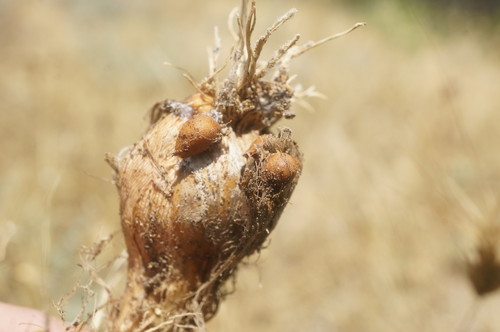
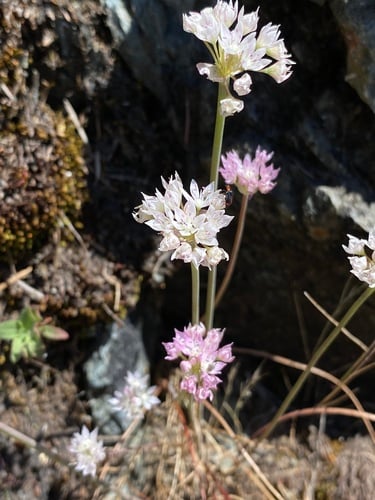
An onion family plant. It is a bulb plant. It grows 60 cm high and spreads 8 cm wide. It forms a bulb and keeps growing from year to year. The leaves are thin and like chive leaves. There are 2-4 leaves. They have a keel. They sheath the lower fifth of the flower stalk. The bract around the flowers is single with 3-4 lobes. It is papery and remains on the stalk. The flowers are red to white. They are bell shaped and 7-12 mm long. They are borne on equal length stalks in a group up to 7 cm across. It forms bulbils.
Edible Uses
The bulbs, measuring 10–15mm in diameter, can be eaten raw or cooked and work well as a garlic substitute, adding flavour to salads and cooked dishes. The leaves are edible raw or cooked, with a mild garlic flavour that makes a pleasant addition to salads or a useful seasoning in cooked foods. The flowers are eaten raw and make a very attractive garnish on salads, with a pleasant mild garlic flavour. The bulbils are also edible raw or cooked — very small and somewhat fiddly to use, but they share the same pleasant mild garlic flavour.
Traditional Uses
It is used as a spice or flavouring. The bulbs are eaten raw in salads and also boiled.
This uses section is brief — help expand it
Medicinal Uses
No specific medicinal uses have been recorded for this species, but members of this genus are generally considered very healthy additions to the diet. They contain sulphur compounds (responsible for their onion flavour) which, when eaten regularly, help reduce blood cholesterol levels, act as a tonic to the digestive system, and support the circulatory system.
Known Hazards
Although no individual reports regarding this species have been seen, there have been cases of poisoning caused by the consumption, in large quantities and by some mammals, of certain members of this genus. Dogs seem to be particularly susceptible.
Distribution
It is a temperate or Mediterranean climate plant. It grows in grassy and bushy places and on dry ground. It suits hardiness zones 5-9.
Where It Grows
Africa, Albania, Australia, Balkans, Britain, China, Crete, Croatia, Europe, France, Greece, Italy, Libya, Mediterranean, Morocco, North Africa, Portugal, Sicily, Spain, Tibet, Tunisia, Turkey, Türkiye,
Cultivation
Easily grown in a warm sunny position in a light well-drained soil. Only hardy in the milder parts of Britain, it tolerates temperatures down to between -5 and -10°c. The bulbs should be planted fairly deeply. A very ornamental plant. There are several named forms. The sub-species A. roseum bulbiferum produces a few sterile flowers and many bulbils on its flowering stem. This form will probably spread freely and perhaps escape from cultivation. The sub-species A. roseum roseum does not produce bulbils. Both forms produce numerous bulblets around the base of the main bulb. Grows well with most plants, especially roses, carrots, beet and chamomile, but it inhibits the growth of legumes. This plant is a bad companion for alfalfa, each species negatively affecting the other. Members of this genus are rarely if ever troubled by browsing deer.
Propagation
Sow seed in spring in a cold frame. Prick out seedlings into individual pots when large enough to handle — placing three plants per pot will produce clumps more quickly. Grow on in the greenhouse for at least the first winter, then plant out into permanent positions in spring once growing vigorously. Division in spring is also very easy; plants can be divided successfully at any point during the growing season and the divisions planted straight out into their permanent positions if needed.
Other Uses
The juice of the plant is used as a moth repellent. The whole plant is also said to repel insects and moles.
Notes
There are about 300-700 Allium species. Most species of Allium are edible (Flora of China). All alliums are edible but they may not all be worth eating! They have also been put in the family Alliaceae.
Synonyms
Also Known As
Agghiu sarvaggiu, Ajo porro, Azoul, Bsal barri, Gazoul, Korrath, Korrita, Porru, Tallaghouda, Toum lberry, Yazoul
References (27)
- Ben Ismail, H., 2013, Edible Wild Vegetables Used in North West of Tunisia. PARIPEX - Indian Journal of Reearch 2(9) :219-221
- Biscotti, N. et al, 2018, The traditional food use of wild vegetables in Apulia (Italy) in the light of Italian ethnobotanical literature. Italian Botanist 5:1-24
- Blamey, M and Grey-Wilson, C., 2005, Wild flowers of the Mediterranean. A & C Black London. p 485
- Blanco-Salas, J., et al, 2019, Wild Plants Potentially Used in Human Food in the Protected Area “Sierra Grande de Hornachos” of Extremadura (Spain). Sustainability 2019, 11, 456
- Boesi, A., 2014, Traditional knowledge of wild food plants in a few Tibetan communities. Journal of Ethnobiology and Ethnomedicine 10:75
Show all 27 references Hide references
- Brickell, C. (Ed.), 1999, The Royal Horticultural Society A-Z Encyclopedia of Garden Plants. Convent Garden Books. p 97
- Cundall, P., (ed.), 2004, Gardening Australia: flora: the gardener's bible. ABC Books. p 128
- Dolina, K. & Luczaj, L., 2014, Wild food plants used on the Dubrovnik coast (south-eastern Croatia) Acta Soc Bot Pol 83(3):175–181
- Dop, M. C., et al, 2019, Identification and frequency of consumption of wild edible plants over a year in central Tunisia: a mixed-methods approach. Public Health Nutrition: 23(5), 782–794
- Geraci, A., et al, 2018, The wild taxa utilized as vegetables in Sicily (Italy): a traditional component of the Mediterranean diet. Journal of Ethnobiology and Ethnomedicine (2018) 14:14
- Ghanimi, R., et al, 2022, Ethnobotanical study on wild edible plants traditionally used by Messiwa people, Morocco. Journal of Ethnobiology and Ethnomedicine. 18:16
- Hedrick, U.P., 1919, (Ed.), Sturtevant's edible plants of the world. p 41
- Irving, M., 2009, The Forager Handbook, A Guide to the Edible Plants of Britain. Ebury Press p 334
- Jardin, C., 1970, List of Foods Used In Africa, FAO Nutrition Information Document Series No 2.p 53
- Lazarides, M. & Hince, B., 1993, Handbook of Economic Plants of Australia, CSIRO. p 13
- Low, T., 1991, Wild Herbs of Australia and New Zealand. Angus & Robertson. p 105
- Luczaj et al, 2013, Wild vegetable mixes sold in the markets of Dalmatia (southern Croatia). Journal of Ethnobiology and Ethnomedicine. 8:2
- Mahklouf, M. H., 2019, Ethnobotanical Study of Edible Wild Plants in Libya. European Journal of Ecology. 5(2): 30-40
- Nassif, F., & Tanji, A., 2013, Gathered food plants in Morocco: The long forgotten species in Ethnobotanical Research. Life Science Leaflets 3:17-54
- Nimis, P. L., et al, 2015, A guide to the vascular plants of the temporary ponds of Sardinia (Italy) p114
- Pasta, S., et al, 2020, An Updated Checklist of the Sicilian Native Edible Plants: Preserving the Traditional Ecological Knowledge of Century-Old Agro-Pastoral Landscapes. Frontiers in Plant Science. Volume 11|Article 388
- Plants for a Future database, The Field, Penpol, Lostwithiel, Cornwall, PL22 0NG, UK. http://www.scs.leeds.ac.uk/pfaf/
- Rivera, C., et al, 2005, The Ethnobotanical Study of Local Mediterranean Food Plants as Medicinal Resources in Southern Spain. Journal of Physiologyand Pharmacology. 56, Suppl. 1, 97-114
- Sp. pl. 1:296. 1753
- Tardio, J., et al, 2006, Ethnobotanical review of wild edible plants in Spain. Botanical J. Linnean Soc. 152, 27-71
- Tbatou, M, et al, 2016, Wild Edible Plants traditionally used in the countryside of El Jadida, Coastal Area in the Center of Morocco. Life Sciences Leaflets 75:28-48
- Terra, G.J.A., 1973, Tropical Vegetables. Communication 54e Royal Tropical Institute, Amsterdam, p 20
More from Amaryllidaceae
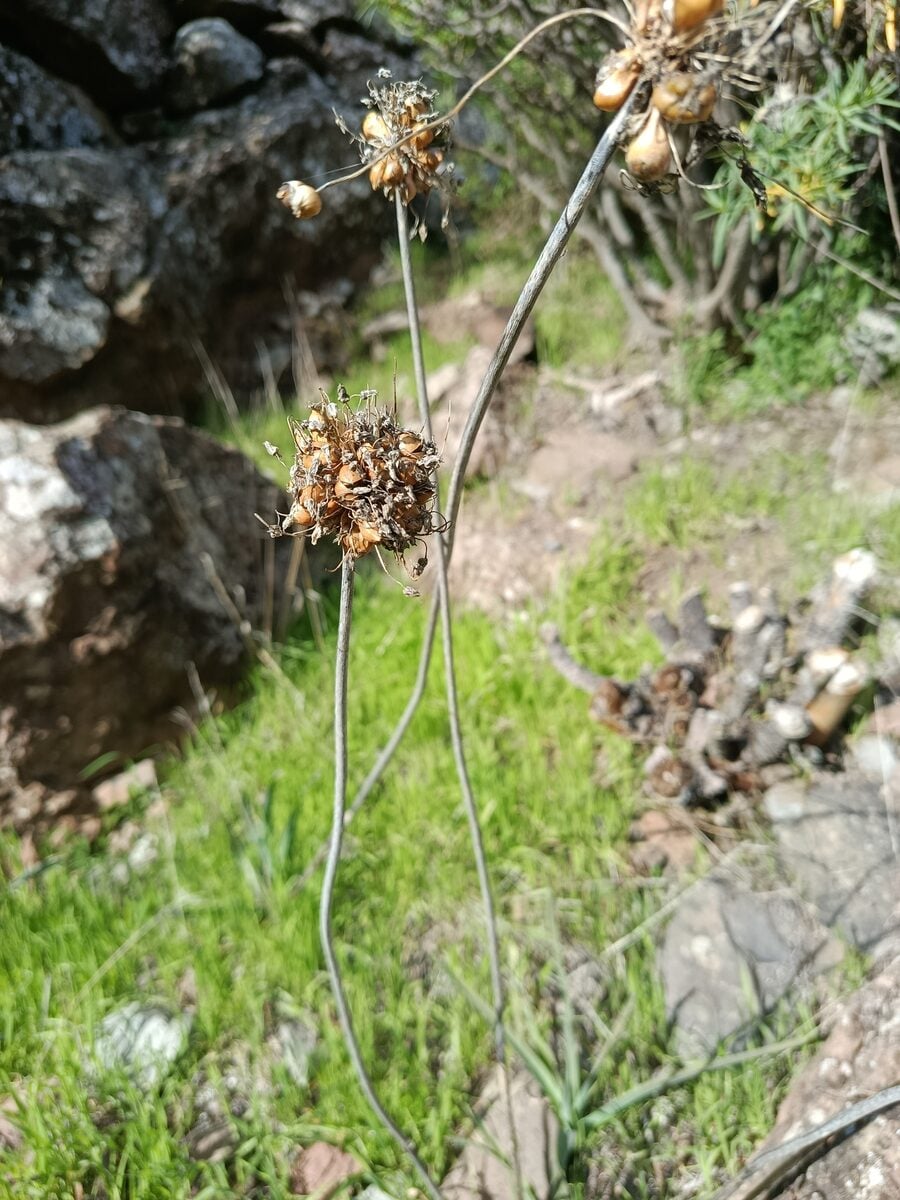
Allium ampeloprasum babingtonii - (Borrer.)Syme.
Babington's Leek
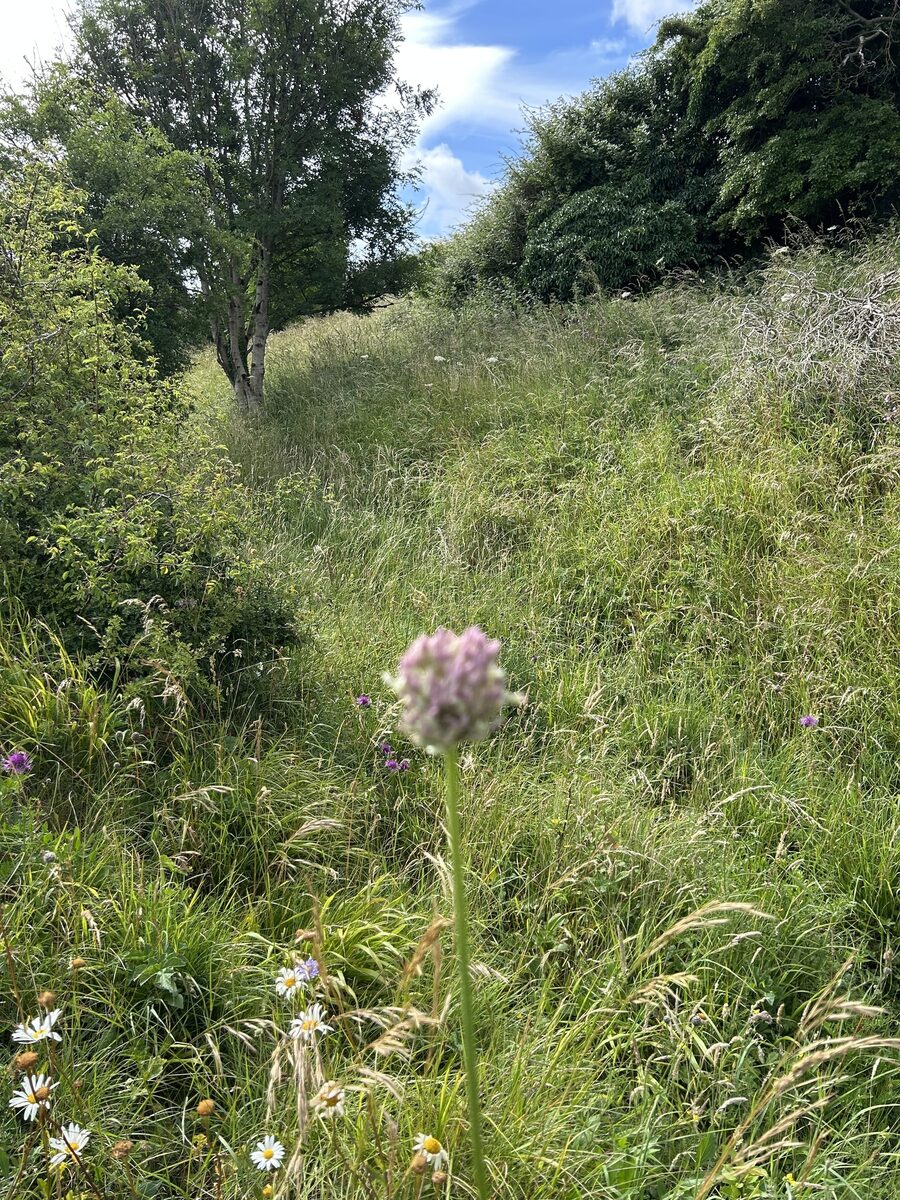
Allium ampeloprasum var. babbingtonii
Babbington's leek
Allium ampeloprasum var. kurrat
Kurrat, Salad Leek, Egyptian leek
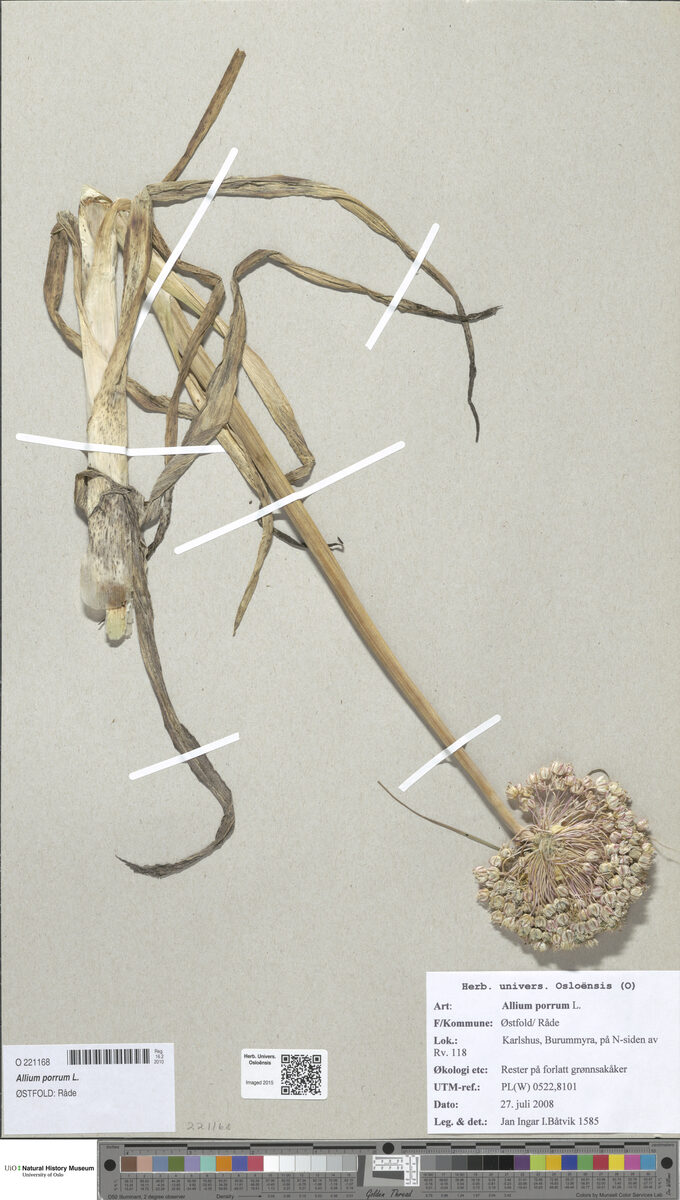
Allium ampeloprasum var. porrum
Leek
Allium ampeloprasum var. sativum
Pearl onion
Allium amplectens
Desert chives, Narrowleaf onion, Slimleaf onion