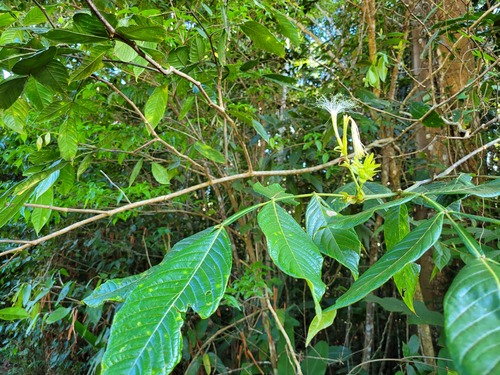
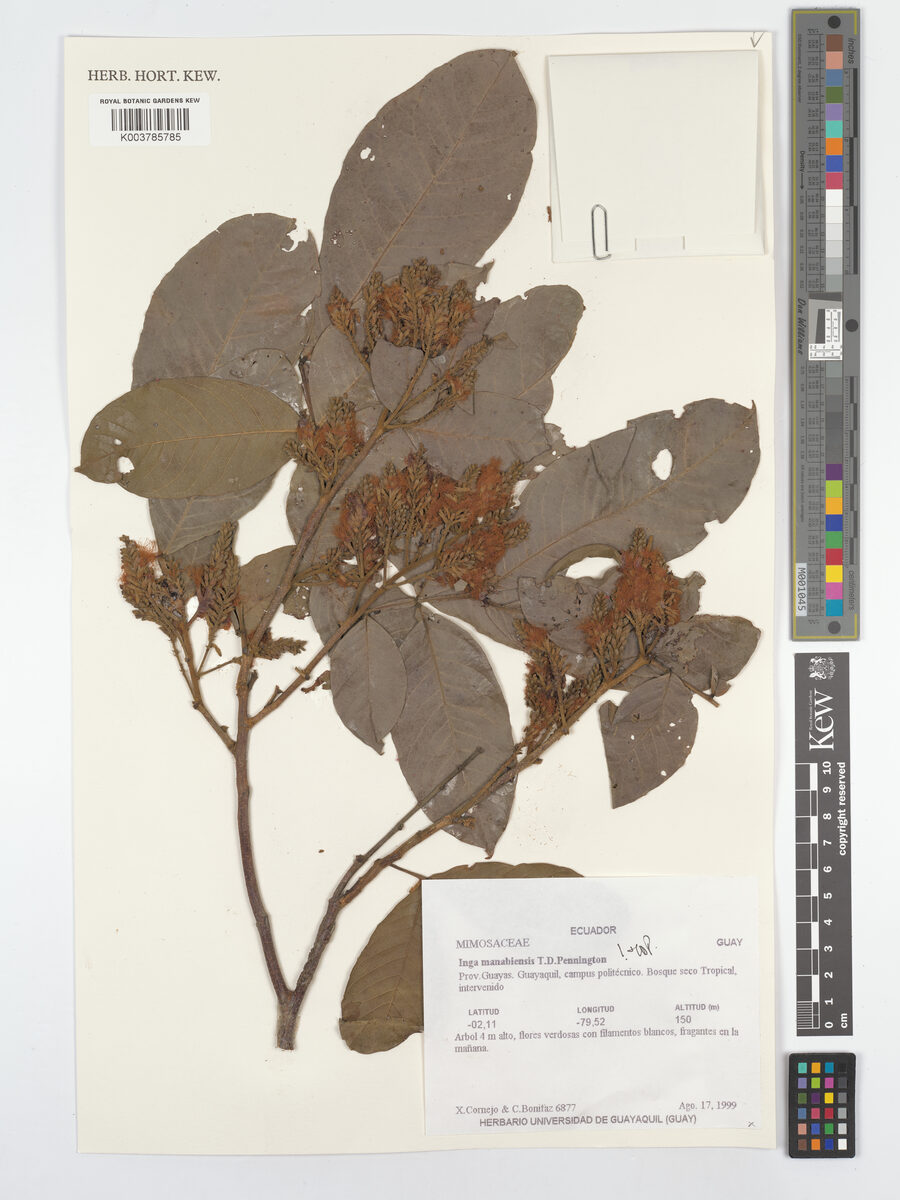
Acacia edgeworthii
T. Anderson
iNaturalist· cc-by-nc
(c) James Bailey, some rights reserved (CC BY-NC)
iNaturalist· cc-by-nc
(c) James Bailey, some rights reserved (CC BY-NC)
iNaturalist· cc-by-nc
(c) James Bailey, some rights reserved (CC BY-NC)
Description
A shrub or small tree. It grows 5 m tall. There are prickles along the stem. The leaves are twice divided and there are 8-18 pairs of pinnae. There are up to 50 pairs of pinnules on each pinnae. The flowers are yellow. They are in large clusters at the ends of branches. The pods are flattened.
Edible Uses
Nearly ripe fruit are eaten cooked or raw. Pods are eaten for the gum they contain. Leaves are also edible.
Traditional Uses
The pods are eaten for the gum. The nearly ripe fruit are eaten cooked or raw.
This uses section is brief — help expand it
Distribution
It is a subtropical plant. It grows in hot arid places. It grows in areas with a rainfall between 10-477 mm per year. It grows on dry, stony and sandy soils. They can be alkaline. It grows between 30-690 m above sea level. It cannot tolerate frost. It grows best in areas with an annual temperature between 23°-30° C. It can grow in arid places.
Where It Grows
Africa, East Africa, Ethiopia, Kenya, Middle East, Qatar, Socotra, Somalia, Yemen,
Notes
There are about 1,350 Acacia species. Over 1,000 occur in Australia. Also as Mimosaceae.
Synonyms
Also Known As
Cherin, Gulu, Jeerin, Jerin ad
References (4)
- ILDIS Legumes of the World http:www;ildis.org/Legume/Web
- Jardin, C., 1970, List of Foods Used In Africa, FAO Nutrition Information Document Series No 2.p 50
- Martin, F.W. & Ruberte, R.M., 1979, Edible Leaves of the Tropics. Antillian College Press, Mayaguez, Puerto Rico. p 197 (As Acacia socotrana)
- Royal Botanic Gardens, Kew (1999). Survey of Economic Plants for Arid and Semi-Arid Lands (SEPASAL) database. Published on the Internet; http://www.rbgkew.org.uk/ceb/sepasal/internet [Accessed 26th April 2011]