Vicia cracca
L.
Tufted vetch, Cow vetch, Bird vetch
iNaturalist· cc-by-nc-nd
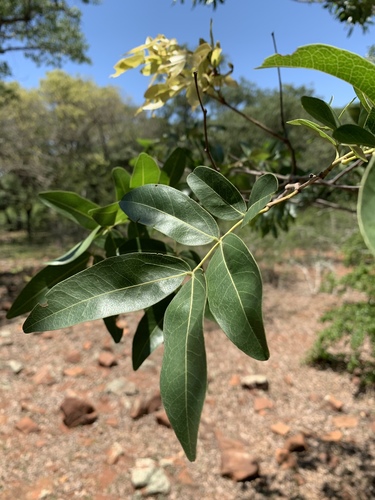
(c) mamiles, some rights reserved (CC BY-NC-ND), uploaded by mamiles
iNaturalist· cc-by
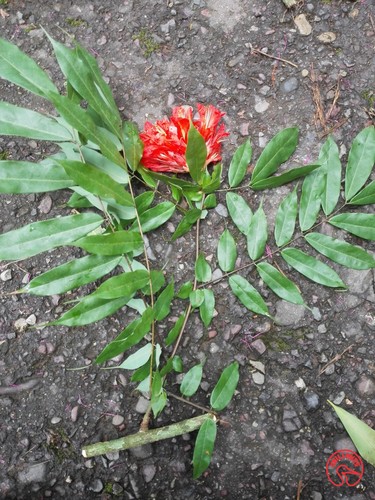
(c) Bill Levine, some rights reserved (CC BY), uploaded by Bill Levine
iNaturalist· cc-by-nc
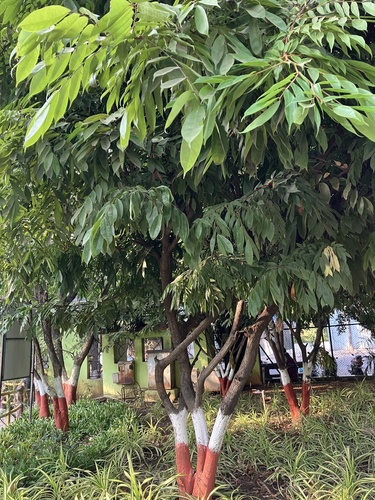
(c) amandaratsimb, some rights reserved (CC BY-NC), uploaded by amandaratsimb
Summary
Source: WikipediaVicia cracca (tufted vetch, cow vetch, bird vetch, blue vetch, boreal vetch), is a species of flowering plant in the pea and bean family Fabaceae. It is native to Europe and Asia. It occurs on other continents as an introduced species, including North America, where it is a common weed. It often occurs in disturbed habitats, including old fields and roadside ditches.
Description
An annual climbing herb. It is hairy. The leaves have leaflets along the stalk. There are 8-24 leaflets and a tendril at the end. The leaflets are 7-15 cm long by 2-8 mm wide. The flowers are pinkish-blue. The pods are flat and oblong. They are 2-4 cm long and with an oblique point at the end. There are 2-5 seeds. They are black.
Edible Uses
Seeds can be eaten cooked — either boiled or roasted. Young leaves and stems are also edible cooked and make a useful potherb. The leaves can be used as a tea substitute.
Traditional Uses
Young stems and leaves are eaten as a potherb. The leaves are used as a substitute for tea. The seeds are eaten boiled or roasted. They are also eaten raw.
Medicinal Uses
The cooked plant is used as a galactogogue to promote milk production.
Distribution
It is a temperate plant. In China it lies below 4,200 m above sea level. In Argentina it grows below 500 m above sea level. It suits hardiness zone 6.
Where It Grows
Argentina, Asia, Britain, Central Asia, China, Denmark, Estonia, Europe, Falklands, Faroe Islands, Finland, Iceland, Japan, Kazakhstan, Korea, Kyrgyzstan, Luxembourg, Mongolia, North America, Norway, Romania, Russia, Scandinavia, SE Asia, Slovenia, South America, Sweden, Turkey, Türkiye, USA, Vietnam,
Cultivation
Succeeds in any well-drained soil in a sunny position if the soil is reliably moist throughout the growing season, otherwise it is best grown in semi-shade. This species has occasionally been cultivated as a food plant, but yields are too low to make it very worthwhile. This species has a symbiotic relationship with certain soil bacteria, these bacteria form nodules on the roots and fix atmospheric nitrogen. Some of this nitrogen is utilized by the growing plant but some can also be used by other plants growing nearby. Growth habit is a single or multiple shooting vine from a crown. Herbaceous.
Propagation
Pre-soak the seed for 24 hours in warm water, then sow in situ in spring or autumn.
Other Uses
Can be grown as a green manure. Functions as a dynamic accumulator, drawing minerals and nutrients from the soil into a more bioavailable form useful as fertilizer or mulch improver. Also used in food forest systems as a nitrogen fixer.
Notes
There are about 140 Vicia species. They are mostly temperate.
Also Known As
Dikaia vika, Fuglevikke, Gurul, Hirrehernes, Kurehernes, Kus figi, Liendau, Ptičja grašica, Yeqandoujian
References (24)
- Cakir, E. A., 2017, Traditional knowledge of wild edible plants of Iğdır Province (East Anatolia, Turkey). Acta Soc Bot Pol. 2017;86(4):3568
- Cerne, M., 1992, Wild Plants from Slovenia used as Vegetables. Acta Horticulturae 318
- Ertug, F, Yenen Bitkiler. Resimli Türkiye Florası -I- Flora of Turkey - Ethnobotany supplement
- Facciola, S., 1998, Cornucopia 2: a Source Book of Edible Plants. Kampong Publications, p 112
- Girard, N. J., 2020, Sustainable Foraging of Wild Edible Plants in Norway. A Biocultural Approach. M. Sc. thesis Norwegian University. p 131
Show all 24 references Hide references
- Hedrick, U.P., 1919, (Ed.), Sturtevant's edible plants of the world. p 674
- http://nordicfood lab/org/blog/2102/9/wild-edible-plants-an-overview
- http://www.botanic-gardens-ljubljana.com/en/plants
- Hu, Shiu-ying, 2005, Food Plants of China. The Chinese University Press. p 486
- Hwang, H., et al, 2013, A Study on the Flora of 15 Islands in the Western Sea of Jeollanamdo Province, Korea. Journal of Asia-Pacific Biodiversity Vol. 6, No. 2 281-310
- Jack, M., Wild Foods and Medicines of Forest Garden Transylvania. http://www.forestgardentransylvania.org/ p34
- Jackes, D. A., 2007, Edible Forest Gardens
- Kalle, R. & Soukand, R., 2012, Historical ethnobotanical review of wild edible plants of Estonia (1770s-1960s) Acta Societatis Botanicorum Poloniae 81(4):271-281
- Kang, Y., et al, 2012, Wild food plants and wild edible fungi in two valleys on the Qinling Mountains (Shaanxi, central China) Journal of Ethnobiology and Ethnomedicine; 9:26
- Kiple, K.F. & Ornelas, K.C., (eds), 2000, The Cambridge World History of Food. CUP p 1873
- Kolosova, V., et al, 2020, Foraging in Boreal Forest: Wild Food Plants of the Republic of Karelia, NW Russia. Foods 2020, 9, 1015; p 14
- Orhan, I., et al, 2009, Free radical scavenging properties and phenolic characterization. Food Chemistry 114: 276-281
- Plants for a Future database, The Field, Penpol, Lostwithiel, Cornwall, PL22 0NG, UK. http://www.scs.leeds.ac.uk/pfaf/
- Sp. pl. 2:735. 1753
- Svanberg, I., et al, 2012, Edible wild plant use in the Faroe Islands and Iceland. Acta Societatis Botanicorum Poloniae 81(4): 233-238
- Svanberg, I., 2012, The use of wild plants as food in pre-industrial Sweden. Acta Societatis Botanicorum Poloniae 81(4): 317-327
- Upson, R., & Lewis R., 2014, Updated Vascular Plant Checklist and Atlas for the Falkland Islands. Falklands Conservation and Kew.
- Urgamal, M., Oyuntsetseg, B., Nyambayar, D. & Dulamsuren, Ch. 2014. Conspectus of the vascular plants of Mongolia. (Editors: Sanchir, Ch. & Jamsran, Ts.). Ulaanbaatar, Mongolia. “Admon“ Press. 334pp. (p. 121-143).
- Wujisguleng, W., & Khasbagen. K., 2010, An integrated assessment of wild vegetable resources in Inner Mongolian Autonomous Region, China. Journal or Ethnobiology and Ethnomedicine 6:34