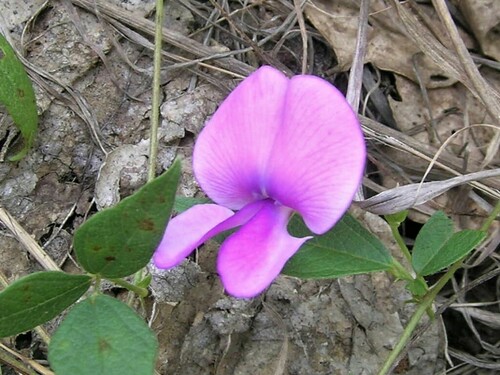
Vicia articulata
Hornem.
One-flower vetch
iNaturalist· cc-by-nc-sa
(c) יאיר אור, some rights reserved (CC BY-NC-SA)
iNaturalist· cc-by-nc-sa
(c) יאיר אור, some rights reserved (CC BY-NC-SA)
iNaturalist· cc-by-nc
(c) josefwirth, some rights reserved (CC BY-NC)
Summary
An annual vetch with compact growth to 0.6 m. Self-fertile, hermaphrodite flowers are insect-pollinated. Fixes nitrogen in soil. Adapts to light, medium, and heavy soils with preference for good drainage and mildly acid to basic pH. Grows in semi-shade or full sun and prefers moist soil conditions.
Description
An annual vetch with compact growth to 0.6 m. Self-fertile, hermaphrodite flowers are insect-pollinated. Fixes nitrogen in soil. Adapts to light, medium, and heavy soils with preference for good drainage and mildly acid to basic pH. Grows in semi-shade or full sun and prefers moist soil conditions.
Edible Uses
The seeds can be cooked and used in the same way as lentils.
Medicinal Uses
None known
Known Hazards
None known
Distribution
It is a temperate plant.
Where It Grows
Asia, Canary Islands, Europe, Mediterranean,
Cultivation
Succeeds in any well-drained soil in a sunny position if the soil is reliably moist throughout the growing season, otherwise it is best grown in semi-shade. This species has a symbiotic relationship with certain soil bacteria, these bacteria form nodules on the roots and fix atmospheric nitrogen. Some of this nitrogen is utilized by the growing plant but some can also be used by other plants growing nearby. When removing plant remains at the end of the growing season, it is best to only remove the aerial parts of the plant, leaving the roots in the ground to decay and release their nitrogen. Cultivated in France for its edible seed.
Propagation
Pre-soak seed for 24 hours in warm water, then sow in situ in spring. An autumn sowing in situ may also succeed.
Other Uses
Can be grown as a green manure crop.
Other Information
It is cultivated.
Notes
There are about 140 Vicia species. They are mostly temperate.
Synonyms
References (3)
- Enum. pl. hort. hafn. rev. ed. 41. 1807
- Plants for a Future database, The Field, Penpol, Lostwithiel, Cornwall, PL22 0NG, UK. http://www.scs.leeds.ac.uk/pfaf/
- Zeven, A. C. & de West, J. M. J., 1982, Dictionary of cultivated plants and their regions of diversity. Wageningen. p 116