Allium schoenoprasum
L.
Chives, Onion chives
iNaturalist· cc-by-nc
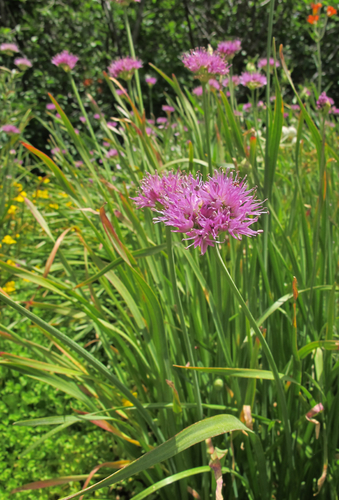
(c) Igor, some rights reserved (CC BY-NC), uploaded by Igor
iNaturalist· cc-by-nc-sa
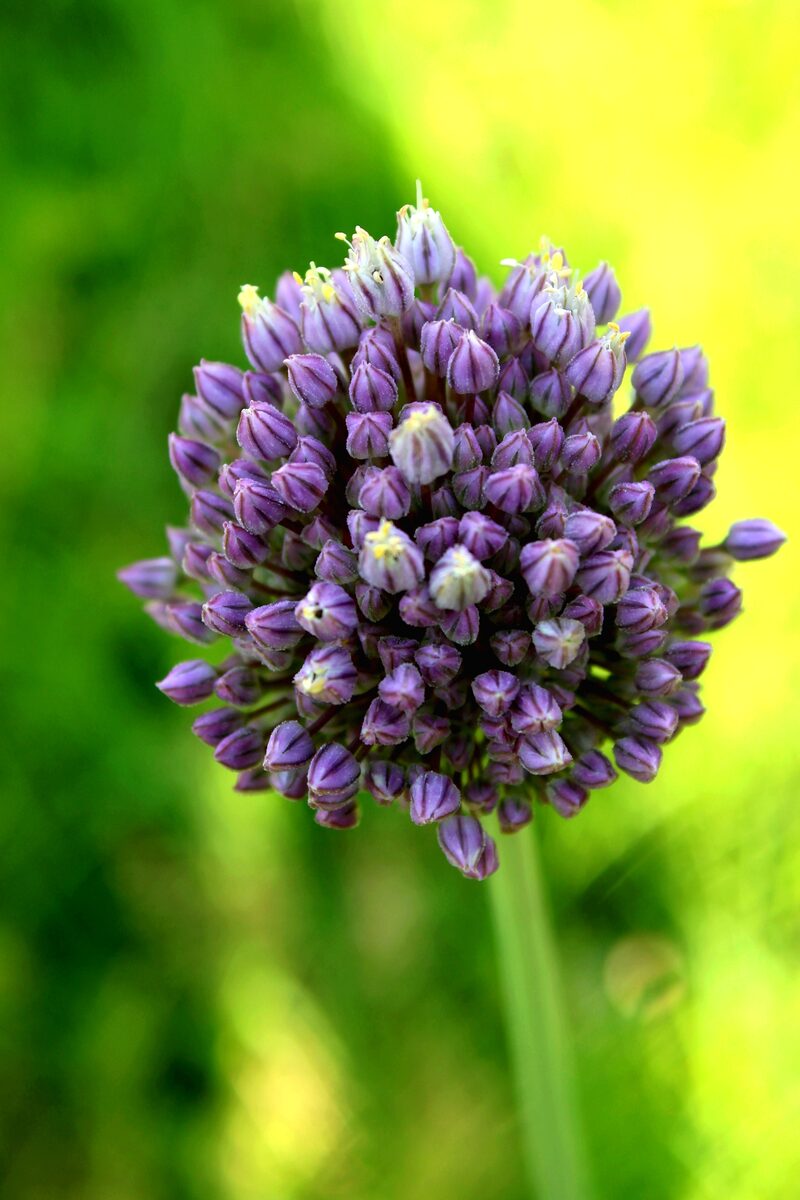
(c) Usually Melancholy, some rights reserved (CC BY-NC-SA)
iNaturalist· cc-by-sa
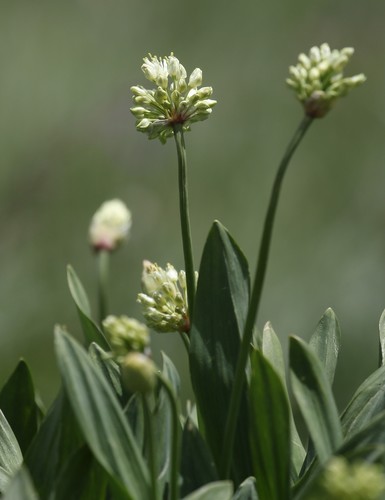
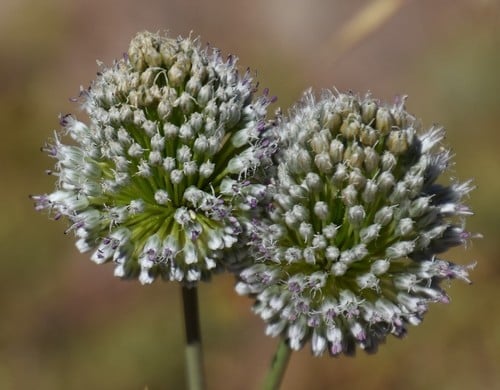
(c) Pohled 111, some rights reserved (CC BY-SA)
Summary
Source: WikipediaA bulbous plant growing to 0.3 m (1 ft) tall and wide at medium rate. Hardy to UK zone 5, frost-hardy. Foliage appears February to December; flowers June to July; seeds ripen July to August. Hermaphroditic, self-fertile, pollinated by bees, flies, and lepidoptera. Attracts wildlife. Tolerates light sandy, medium loamy, and heavy clay soils with good drainage; grows in semi-shade to full sun; prefers moist conditions. Adapts to mildly acidic to very alkaline pH.
Description
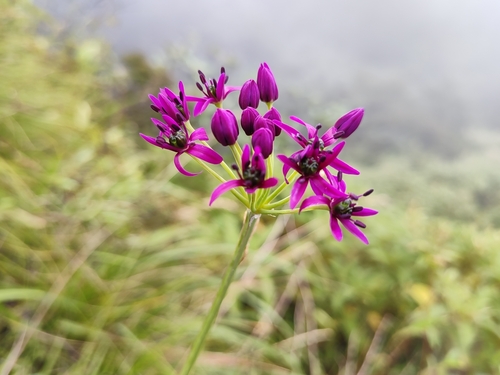
An onion family plant. It is a herb which grows one year, then flowers the next. It is up to 30 cm tall. A narrow leafed onion which forms dense clumps. The leaves are hollow and narrow. They are 10-25 cm long by 0.1 cm in cross section. They are angular in cross section. Bulbs are not well developed. They can be 1-3 cm long by 0.5-1.5 cm across. The flowers are pink or purple. They are produced in a head where small flowers are on equal length stalks forming a rounded head.
Edible Uses
The leaves are eaten raw, cooked, or dried for later use. They have a mild onion flavour and suit mixed salads as well as soups and other cooked dishes. Leaves are often available from late winter and can continue to be harvested into early the following winter, particularly in warm, sheltered spots. They are a good source of sulphur and iron. Per 100g dry weight the leaves provide 330 calories, with 0% water, 27g protein, 5.5g fat, 60g carbohydrate, 10.7g fibre, and 7g ash. Mineral content per 100g includes 900mg calcium, 509mg phosphorus, 15mg iron, and 2874mg potassium. Vitamins per 100g include 40,000mg vitamin A, 1.1mg thiamine (B1), 1.15mg riboflavin (B2), 6mg niacin, and 522mg vitamin C. Figures are the median of a range quoted in the source. The bulbs are small, rarely exceeding 10mm in diameter, and can be harvested with the leaves attached and used like spring onions; they have a pleasant, mild onion flavour. The flowers work as a garnish in salads, though they are rather dry and considered less desirable than the flowers of many other Allium species.
Traditional Uses
The mild flavoured leaves are eaten raw or used to flavour food. They are used to flavour salads and meat. The flowers are eaten and used as flavouring and garnish.
Medicinal Uses
The whole plant benefits both the digestive system and blood circulation. It improves appetite, aids digestion, and has hypotensive and tonic properties. Its effects are similar to those of garlic (A. sativum) but considerably milder, and it is rarely used medicinally.
Known Hazards
Although no individual reports regarding this species have been seen, there have been cases of poisoning caused by the consumption, in very large quantities and by some mammals, of certain members of this genus. Dogs seem to be particularly susceptible.
Distribution
A temperate plant. It is tolerant of cold and suits the highlands in the tropics. It needs a well drained soil. They can tolerate drought and grow on a wide range of soils. Fertile loam soils are best. In China it grows in meadows and damp valleys along streams between 2000-3000 m altitude. It suits hardiness zones 5-10.
Where It Grows
Africa, Alaska, Albania, Algeria, Andorra, Argentina, Armenia, Asia, Australia, Austria, Balkans, Bosnia, Britain, Bulgaria, Canada, Cape Verde, Caucasus, Central Asia, Central America, Central Asia, China, Colombia, Cook Islands, Croatia, Cuba, Czech Republic, Denmark, East Africa, Estonia, Europe*, Falklands, France, FSM, Germany, Greece, Grenada, Guyana, Haiti, Hawaii, India, Indochina, Indonesia, Iran, Iraq, Ireland, Italy, Japan, Kazakhstan, Korea, Latvia, Lithuania, Marshall Islands, Mediterranean, Micronesia, Middle East, Monaco, Mongolia, Nauru, Netherlands, North Africa, North America, Northeastern India, Norway, Pacific, Pakistan, Papua New Guinea, PNG, Philippines, Pohnpei, Poland, Portugal, Romania, Russia, Scandinavia, SE Asia, Serbia, Siberia, South Africa, Southern Africa, South America, Spain, Sweden, Switzerland, Tajikistan, Tasmania, Thailand, Turkey, Türkiye, Tuvalu, USA, West Indies, Yugoslavia, Zimbabwe,
Cultivation
An easily grown plant, it prefers a sunny position in a rich moist but well-drained soil, though it succeeds in most soils and also in light shade. Grows well in heavy clay soils. Tolerates a pH in the range 5.2 to 8.3. Chives are commonly cultivated in the garden for their edible leaves which are available from late winter to the beginning of the following winter. The bulbs divide rapidly and large clumps are quickly formed. There are some named varieties. Chives are very tolerant of heavy harvesting, regular cutting of the leaves ensures a continuous supply of young leaves and prevents the plants flowering. Plants can be moved into a frame or other protected environment in the autumn and will then produce leaves throughout the winter. Do not do this every year or it weakens the plants. The bulbs should be planted fairly deeply. A good bee plant. Grows well with most plants, especially roses, carrots, beet and chamomile, but it inhibits the growth of legumes. Helps to reduce the incidence of scab when it is grown under apple trees. This plant is a bad companion for alfalfa, each species negatively affecting the other. Members of this genus are rarely if ever troubled by browsing deer. Alliums are typically harvested in late spring to early summer, when the bulbs mature and the tops begin to yellow. Allium species typically flower in late spring to early summer, depending on the species and local climate conditions. Allium species generally have a moderate growth rate, with bulbs typically taking about 100 to 150 days from planting to harvest, depending on the variety and growing conditions.
Propagation
Sow seed in spring in a cold frame. Germination is generally free and easy; pot seedlings up as soon as they are large enough to handle and plant out the following spring. Division can be done at almost any time of year but spring is preferable. Clumps should be divided at least every three to four years to maintain vigour, and the divisions can be planted directly into their permanent positions.
Other Uses
The plant's juice acts as an insect repellent and has fungicidal properties, making it effective against scab, mildew, and similar diseases. The growing plant is said to repel insects and moles.
Production
Shoots can be harvested 70-100 days from planting. The outer leaves are cut 2 cm from the base leaving the central clump intact. Clumps should be replanted every 2-3 years.
Other Information
It is becoming more common in the highlands of Papua New Guinea. It is a commercially cultivated vegetable.
Notes
There are about 300-700 Allium species. Most species of Allium are edible (Flora of China). All alliums are edible but they may not all be worth eating! They have also been put in the family Alliaceae.
Nutrition
| Part | Moisture | kJ | kcal | Protein | Vit A | Vit C | Iron | Zinc |
|---|---|---|---|---|---|---|---|---|
| Leaves | 92 | 113 | 27 | 2.7 | 435 | 32 | 0.8 | 0.6 |
| Bulb | — | — | — | — | — | — | — | — |
| Flowers | — | — | — | — | — | — | — | — |
Synonyms
Also Known As
Aglio di serpe, Ail cibitte, Asatsuki, Bei cong, Bieslook, Ceboletta, Cebolinho, Cebollino, Ciboulette, Erba cipollina, Graes-lok, Kechai, Langkeo, Leemlaugud, Lihk, Lokeo, Maurloki, Mayughlak, Murulauk, Nira, Pazitka pobrezni, Shacong, Tingdra, Tlang purun
References (79)
- Abbet, C., et al, 2014, Ethnobotanical survey on wild alpine food plants in Lower and Central Valais (Switzerland). Journal of Ethnopharmacology 151 (2014) 624–634
- Ambasta S.P. (Ed.), 2000, The Useful Plants of India. CSIR India. p 28
- Anderson, E. F., 1993, Plants and people of the Golden Triangle. Dioscorides Press. p
- Benvenuti, S. & Mazzoncini, M., 2021, The Biodiversity of Edible Flowers: Discovering New Tastes and New Health Benefits. Frontiers in Plant Science Article 569499.
- Bernal, R., et al, (Eds), 2016, Catalogo de Plantas y Liquenes de Colombia, Volumen 2, Magnoliaceae a Zygophyllaceae. Universidad Nacional de Colombia. p 2495
Show all 79 references Hide references
- Bodkin, F., 1991, Encyclopedia Botanica. Cornstalk publishing, p 66
- Bremness, L., 1994, Herbs. Collins Eyewitness Handbooks. Harper Collins. p 142
- Brickell, C. (Ed.), 1999, The Royal Horticultural Society A-Z Encyclopedia of Garden Plants. Convent Garden Books. p 97
- Brown, D., 2002, The Royal Horticultural Society encyclopedia of Herbs and their uses. DK Books. p 113
- Bowser, M., 2017, Handout on Edible Plants of the Kenai Peninsula. USFWS Kenai National Wildlife Refuge p 9
- Burkill, I.H., 1966, A Dictionary of the Economic Products of the Malay Peninsula. Ministry of Agriculture and Cooperatives, Kuala Lumpur, Malaysia. Vol 1 (A-H) p 103
- Burnie, G & Fenton-Smith, J., 1999, A Grower's Guide to Herbs. Murdoch Books. p 24
- Cerne, M., 1992, Wild Plants from Slovenia used as Vegetables. Acta Horticulturae 318. (As Allium sibiricum)
- Christanell, A., et al, 2010, The Cultural Significance of Wild Gathered Plant Species in Kartitsch (Eastern Tyrol, Austria) and the Influence of Socioeconomic Changes on Local Gathering Practices. Chapter 3 in Ethnobotany in the New Europe. Berghahn Books.
- Cheifetz, A., (ed), 1999, 500 popular vegetables, herbs, fruits and nuts for Australian Gardeners. Random House p 113
- Chen, B. & Qiu, Z., Consumer's Attitudes towards Edible Wild Plants, Ishikawa Prefecture, Japan. p 22 www.hindawi.com/journals/ijfr/aip/872413.pdf
- Chen Xinqi, Liang Songyun, Xu Jiemei, Tamura M.N., Liliaceae. Flora of China. p 125
- Cundall, P., (ed.), 2004, Gardening Australia: flora: the gardener's bible. ABC Books. p 128
- Ertug, F, Yenen Bitkiler. Resimli Türkiye Florası -I- Flora of Turkey - Ethnobotany supplement
- Esperanca, M. J., 1988. Surviving in the wild. A glance at the wild plants and their uses. Vol. 1. p 222
- Facciola, S., 1998, Cornucopia 2: a Source Book of Edible Plants. Kampong Publications, p 6
- French, B., 1986, Food Plants of Papua New Guinea, Asia Pacific Science Foundation p 127
- Fujime, Y., 2012, Introduction to Some Indigenous Vegetables in Japan. HortScience Vol. 47(7) July 2012. p 831
- Girard, N. J., 2020, Sustainable Foraging of Wild Edible Plants in Norway. A Bioculutral Approach. M. Sc. thesis Norwegian University. p 127
- Hadfield, J., 2001, The A-Z of Vegetable Gardening in South Africa. Struik p 134
- Hedrick, U.P., 1919, (Ed.), Sturtevant's edible plants of the world. p 42
- Heller, C. A., 1962, Wild Edible and Poisonous Plants of Alaska. Univ. of Alaska Extension Service. p 54
- Hemphill, I, 2002, Spice Notes. Macmillan. p 130
- Hovsepyan, R., et al, 2016, Food as a marker for economy and part of identity: traditional vegetal food of Yezidis and Kurds in Armenia. Journal of Ethnic Foods. 3:32-41
- Irving, M., 2009, The Forager Handbook, A Guide to the Edible Plants of Britain. Ebury Press p 332
- Jardin, C., 1970, List of Foods Used In Africa, FAO Nutrition Information Document Series No 2.p 53
- Jernigan, K. A., et al, 2017, Naukan ethnobotany in post-Soviet times: lost edibles and new medicinals. Journal of Ethnobiology and Ethnomedicine (2017) 13:61
- Jia, X., et al, 2022, Ethnobotany of wild edible plants in multiethnic areas of the Gansu–Ningxia–Inner Mongolia junction zone. Journal of Ethnobiology and Ethnomedicine 18:53
- Kalle, R. & Soukand, R., 2012, Historical ethnobotanical review of wild edible plants of Estonia (1770s-1960s) Acta Societatis Botanicorum Poloniae 81(4):271-281
- Kays, S. J., and Dias, J. C. S., 1995, Common Names of Commercially Cultivated Vegetables of the World in 15 languages. Economic Botany, Vol. 49, No. 2, pp. 115-152
- Kiple, K.F. & Ornelas, K.C., (eds), 2000, The Cambridge World History of Food. CUP p 432, 1756
- Kybal, J., 1980, Herbs and Spices, A Hamlyn Colour Guide, Hamlyn Sydney p 30
- Lazarides, M. & Hince, B., 1993, Handbook of Economic Plants of Australia, CSIRO. p 14
- Lim, T. K., 2015, Edible Medicinal and Non Medicinal Plants. Volume 9, Modified Stems, Roots, Bulbs. Springer p 5
- Luczaj et al, 2013, Wild vegetable mixes sold in the markets of Dalmatia (southern Croatia). Journal of Ethnobiology and Ethnomedicine. 8:2
- Luczaj, L. et al, 2014, Wild Food Plants of Dalmatia (Croatia). in A. Pieroni, C. L. Quave (eds.), Ethnobotany and Biocultural Diversities in the Balkans, p 138
- Mabey, R., 1973, Food for Free. A Guide to the edible wild plants of Britain, Collins. p 143
- MacKinnon, A., et al, 2009, Edible & Medicinal Plants of Canada. Lone Pine. p 192
- Martin, F.W. & Ruberte, R.M., 1979, Edible Leaves of the Tropics. Antillian College Press, Mayaguez, Puerto Rico. p 105. 202
- Mattalia, G., et al, 2012, Traditional uses of wild food and medicinal plants among Brigasc, Kye ́, and Provenc ̧al communities on the Western Italian Alps. Genet Resour Crop Evol. Springer
- McCollum, G.D., 1979, Onions and allies, in Simmonds N.W.,(ed), Crop Plant Evolution. Longmans. London. p 186
- Medhi, P. & Borthakur, S. K., 2012, Phytoresources from North Cachur Hills of Assam -3: Edible plants sold at Hflong market. Indian Journal or Natural Products and Resources. 3(1) pp 84-109
- Medhi, P., Sarma, A and Borthakur, S. K., 2014, Wild edible plants from the Dima Hasao district of Assam, India. Pleione 8(1): 133-148
- Miguel, E., et al, 1989, A checklist of the cultivated plants of Cuba. Kulturpflanze 37. 1989, 211-357
- Mulherin, J., 1994, Spices and natural flavourings. Tiger Books, London. p 96
- Nedelcheva A., 2013, An ethnobotanical study of wild edible plants in Bulgaria. EurAsian Journal of BioSciences 7, 77-94
- Ochse, J.J. et al, 1931, Vegetables of the Dutch East Indies. Asher reprint. p 446
- Omawale, 1973, Guyana's edible plants. Guyana University, Georgetown p 66
- Peter, K. V. (Ed.), 2004, Handbook of Herbs and Spices Vol. 2 Woodhead Publishing and CRC Press.
- Petkova, N., et al, 2019, Fructans and antioxidants in leaves of culinary herbs from Asteraceae and Amaryllidaceae families. Food Research 3 (5) : 407 - 415
- Pieroni, A., 1999, Gathered wild food plants in the Upper Valley of the Serchio River (Garfagnana), Central Italy. Economic Botany 53(3) pp 327-341
- Plants for a Future database, The Field, Penpol, Lostwithiel, Cornwall, PL22 0NG, UK. http://www.scs.leeds.ac.uk/pfaf/
- PROSEA handbook Volume 13 Spices. p 273
- Pruse, B., et al, 2021, Active Wild Food Practices among Culturally Diverse Groups in the 21st Century across Latgale, Latvia. Biology 2021, 10, 551.
- Purseglove, J.W., 1972, Tropical Crops. Monocotyledons. Longmans p 56
- Sansanelli, S., et al, 2017, Ethnobotanical survey of wild food plants traditionally collected and consumed in the Middle Agri Valley (Basilicata region, southern Italy). Journal of Ethnobiology and Ethnomedicine (2017) 13:50
- Seidemann J., 2005, World Spice Plants. Economic Usage, Botany, Taxonomy. Springer. p 24
- Simkova, K. et al, 2014, Ethnobotanical review of wild edible plants used in the Czech Republic. Journal of Applied Botany and Food Quality 88, 49-67
- Sp. pl. 1:301. 1753
- Staples, G.W. and Herbst, D.R., 2005, A tropical Garden Flora. Bishop Museum Press, Honolulu, Hawaii. p 681
- Tardio, J., et al, 2006, Ethnobotanical review of wild edible plants in Spain. Botanical J. Linnean Soc. 152, 27-71
- Terra, G.J.A., 1973, Tropical Vegetables. Communication 54e Royal Tropical Institute, Amsterdam, p 20
- Thaman, R. R, 2016, The flora of Tuvalu. Atoll Research Bulletin No. 611. Smithsonian Institute p 35
- Tindall, H.D., 1983, Vegetables in the tropics. Macmillan p. 29
- Upson, R., & Lewis R., 2014, Updated Vascular Plant Checklist and Atlas for the Falkland Islands. Falklands Conservation and Kew.
- Urgamal, M., et al, 2014, Conspectus of the Vascular Plants of Mongolia. Mongolia Academy of Sciences Institute of Botany and National University of Mongolia Department of Biology. p 48
- Vander Velde, N, 2003, The Vascular Plants of Majuro Atoll, Republic of the Marshall Islands. Atoll research Bulletin. No. 503. Smithsonian Institute. p 21
- van Wyk, B., 2005, Food Plants of the World. An illustrated guide. Timber press. p 51
- Vermeulen, N, 1998, The Complete Encyclopedia of Herbs. Rebo Publishers. p 37
- Wiersema, J. H. & Leon, B., 2013, World Economic Plants. A Standard Reference CRC Press. 2nd Ed. p 36
- Woodward, P., 1996, Garlic and Friends. The History, Growth and Use of Edible Alliums. Hyland House. p 47
- World Checklist of Useful Plant Species 2020. Royal Botanic Gardens, Kew
- http://cookislands.bishopmuseum.org
- Zeven, A. C. & de West, J. M. J., 1982, Dictionary of cultivated plants and their regions of diversity. Wageningen. p 32