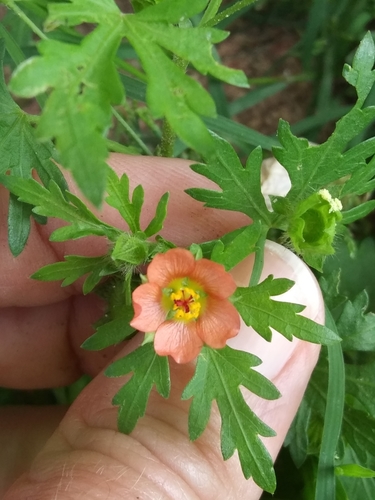
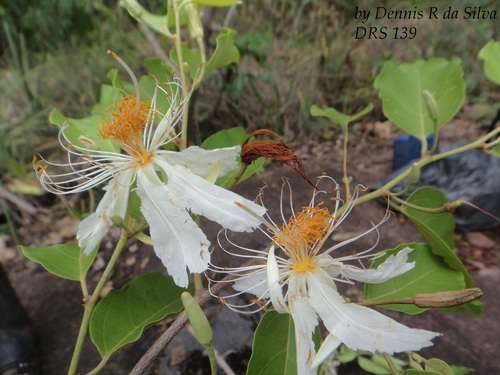
Hibiscus rosa-sinensis
L.
Hibiscus, Rose of China
iNaturalist· cc-by-nc
(c) fglick26, some rights reserved (CC BY-NC)
iNaturalist· cc-by-nc
(c) Alex Kenins, some rights reserved (CC BY-NC)
iNaturalist· cc-by-nc
(c) Alex Kenins, some rights reserved (CC BY-NC)
Summary
Source: WikipediaAn evergreen shrub growing 2.5 m tall and wide at a fast rate. Hardy to UK zone 9 and frost tender. Year-round foliage with hermaphroditic flowers pollinated by insects. Thrives in light sandy, medium loamy, or heavy clay soils with good drainage. Tolerates mildly acidic to mildly alkaline pH. Requires full sun and prefers consistently moist soil.
Description
A shrubby hibiscus used for hedges. It is a evergreen woody shrub. It grows to 2-5 m tall. The bark is grey and flaky. It has fine stripes. The leaves are bright green. They are oval and the edges of the leaves are entire on the lower leaves. The upper leaves are coarsely toothed. The leaves have long tips. The flowers occur singly in the axils of leaves. Flowers can be single or double. They are bell shaped and 10-15 cm across. There are a range of colours. The fruit are rounded capsules with many seeds inside. The capsules are beaked. Plants usually do not produce fruit in the hot humid tropics.
Edible Uses
Young leaves are sometimes used as a spinach substitute. Flowers can be eaten raw or cooked, made into a pickle, or used as a purple dye for colouring preserved fruits and cooked vegetables. The roots are edible but highly fibrous, with a mucilaginous texture and little flavour. Nutritional composition per 100 g of fresh flowers: 0 calories; water 89.8%; protein 0.06 g; fat 0.4 g; carbohydrate 0 g; fibre 1.56 g; ash 0 g; calcium 4 mg; phosphorus 27 mg; iron 1.7 mg; magnesium, sodium, potassium and zinc 0 mg; vitamin A 0 mg; thiamine (B1) 0.03 mg; riboflavin (B2) 0.05 mg; niacin 0.6 mg; B6 0 mg; vitamin C 4.2 mg.
Traditional Uses
The leaves are eaten cooked. In some places they are pounded before cooking. The flowers are eaten raw or pickled. They are also added to drinks. They are used to colour foods including preserved fruit, sliced pineapple, agar-agar jellies, and cooked vegetables. The fresh flower ovary is eaten.
Medicinal Uses
Chinese hibiscus is a sweet, astringent, cooling herb that checks bleeding, soothes irritated tissues and relaxes spasms. The flowers are aphrodisiac, demulcent, emmenagogue, emollient and refrigerant, and are used internally to treat excessive and painful menstruation, cystitis, venereal diseases, feverish illnesses, bronchial catarrh and coughs, and to promote hair growth. A flower infusion is given as a cooling drink to people who are ill. The leaves are anodyne, aperient, emollient and laxative; a leaf decoction is used as a lotion for fevers. Leaves and flowers beaten into a paste are poulticed onto cancerous swellings and mumps. The flowers are also used in the treatment of carbuncles, mumps, fever and sores. The root is a good source of mucilage and can substitute for marsh mallow (Althaea officinalis) in treating coughs and colds; a paste made from the root is used in the treatment of venereal diseases.
Known Hazards
Do not use during pregnancy or if planning children.
Distribution
A tropical and subtropical plant. A common ornamental throughout the tropics. It originally came from China. It thrives on any type of soil. It is tolerant of salinity. Different types are adapted to sunny or shady places. They grow where average temperatures are between 15-30°C. They are very sensitive to frost. They grow from sea level to 1000 m altitude. They probably require a minimum rainfall of 700 mm per year. It grows in Nepal to 1400 m altitude. It grows in open, moist places. It suits hardiness zones 9-11. In Sichuan and Yunnan.
Where It Grows
Africa, Antigua and Barbuda, Asia, Australia, Bangladesh, Bermuda, British Indian Ocean Terr., BIOT, Burkina Faso, Central Africa, Central America, China*, Congo, Costa Rica, Cuba, Dominican Republic, East Africa, East Timor, Europe, Fiji, France, FSM, Ghana, Greece, Guiana, Guianas, Guyana, Haiti, Hawaii, Himalayas, India, Indochina, Indonesia, Italy, Kiribati, Laos, Malawi, Malaysia, Maldives, Mariana Islands, Marquesas, Marshall Islands, Mediterranean, Micronesia, Mozambique, Myanmar, Nauru, Nepal, New Caledonia, Pacific, Pakistan, Palau, Papua New Guinea, PNG, Philippines, Pohnpei, Portugal, Rotuma, Samoa, Sao Tome and Principe, SE Asia, Sierra Leone, Slovenia, South Africa, Southern Africa, South America, Spain, Sri Lanka, St Helena, St. Kitts and Nevis, St Lucia, Suriname, Taiwan, Thailand, Timor-Leste, Tokelau, Tonga, Tuvalu, United Arab Emirates, UAE, USA, Vanuatu, Vietnam, West Africa, West Indies, Zambia, Zimbabwe,
Cultivation
Prefers a well-drained humus rich fertile soil in a warm, sheltered position in full sun. A very ornamental plant, it is not very frost-tolerant and needs to be grown in essentially frost-free areas. It might succeed outdoors in the very mildest areas of the country if given a very sheltered warm position. Alternatively, it might be possible to grow the plant as a tender annual by starting it off early in a warm greenhouse. If well-grown it can flower and set seed in its first year. This species grows very well in a frost-free conservatory in Northern Europe so long as it is in a sunny position and free from draughts. Plants will often lose most of their leaves in cool winters, though they will normally regenerate quickly as the warmer weather returns. The flowers of Chinese hibiscus are very important in Hindu devotional ceremonies, being sacred to the Elephant God, Ganesh. Individual flowers are short-lived, in many modern cultivars the flowers wither after 24 hours though in many of the older cultivars they can last for 48 hours. There are many named forms, selected for their ornamental value.
Propagation
Sow seed in early spring in a warm greenhouse; germination is usually fairly rapid. Prick seedlings into individual pots when large enough to handle. For annual cultivation, plant out in early summer with frame or cloche protection until established. For perennial cultivation, grow on in the greenhouse for the first year and plant out in early summer of the following year. Half-ripe cuttings taken in July or August can be rooted in a frame, overwintered in a warm greenhouse, and planted out after the last expected frosts.
Other Uses
Petal juice is used in China as shoe-blacking and mascara. A dye is made from the petals. A good-quality fibre obtained from the stems is used for coarse fabrics, nets and paper; in warm subtropical areas the fibres can reach up to 3 metres in length, though in Britain they would be much shorter. The plant is often used for hedges and screens, though its limited cold hardiness makes it unsuitable for this purpose in Britain.
Other Information
In Papua New Guinea it is mostly grown as an ornamental but is eaten in some areas.
Notes
It is used in medicine in Indonesia. There are about 220 Hibiscus species and many cultivated varieties of Hibiscus rosa-sinensis.
Nutrition
| Part | Moisture | kJ | kcal | Protein | Vit A | Vit C | Iron | Zinc |
|---|---|---|---|---|---|---|---|---|
| Leaves | 6.4 | 1339 | 279 | 25.9 | — | — | 19.6 | 8.9 |
| Leaves | 76 | 321 | 77 | 2.3 | — | — | — | — |
Synonyms
Also Known As
Amapola, Aute samoa, Bup, Bunga raya, Bunga sepatu, Bussouge, Cha-baa, Chaba, Chembarathi, Chinese rose, Clavelon, Dam but, Dasavala, Dasindacha phula, Fasut jasum, Fu sang, Ghanti phul, Gugamela, Gumamela bulaklak, Japa, Jasavanda, Jasum, Jasut, Jasuva, Java pushpamu dasana, Java, Joba, Karibunamidi, Khaung-yan, Khaung-yan-ywet-hla, Kembang sepatu, Kembang sepatu mawar cina, Khubayzah, Kugra, Linyolo, Losi, Mamela, Mandaro, Mar pacifico, Mawkmnae, Pan-swe-le, Phurahong, Pushpam, Rakta puspi, Rooj, Rosa, Rudra, Saimaa, Sapattu mal, Semparuthi, Shoe flower, Te roti, Thelele, Vadamal, Watha wal, Woro wari, Zhu jin
References (61)
- Abbiw, D.K., 1990, Useful Plants of Ghana. West African uses of wild and cultivated plants. Intermediate Technology Publications and the Royal Botanic Gardens, Kew. p 42
- Ambasta, S.P. (Ed.), 2000, The Useful Plants of India. CSIR India. p 267
- Benvenuti, S. & Mazzoncini, M., 2021, The Biodiversity of Edible Flowers: Discovering New Tastes and New Health Benefits. Frontiers in Plant Science Article 569499.
- Blamey, M and Grey-Wilson, C., 2005, Wild flowers of the Mediterranean. A & C Black London. p 135
- Bodkin, F., 1991, Encyclopedia Botanica. Cornstalk publishing, p 558
Show all 61 references Hide references
- Brickell, C. (Ed.), 1999, The Royal Horticultural Society A-Z Encyclopedia of Garden Plants. Convent Garden Books. p 522
- Brown, D., 2002, The Royal Horticultural Society encyclopedia of Herbs and their uses. DK Books. p 235
- Burkill, H. M., 1985, The useful plants of west tropical Africa, Vol. 4. Kew.
- Burkill, I.H., 1966, A Dictionary of the Economic Products of the Malay Peninsula. Ministry of Agriculture and Cooperatives, Kuala Lumpur, Malaysia. Vol 1 (A-H) p 1187
- Cundall, P., (ed.), 2004, Gardening Australia: flora: the gardener's bible. ABC Books. p 702
- D'Ambrosio, U., & Puri, R. K., 2016, Foodways in transition: food plants, diet and local perceptions of change in a Costa Rican Ngäbe community. Journal of Ethnobiology and Ethnomedicine (2016) 12:3 p 26
- Dharani, N., 2002, Field Guide to common Trees & Shrubs of East Africa. Struik. p 239
- Engel, D.H., & Phummai, S., 2000, A Field Guide to Tropical Plants of Asia. Timber Press. p 168
- Etherington, K., & Imwold, D., (Eds), 2001, Botanica's Trees & Shrubs. The illustrated A-Z of over 8500 trees and shrubs. Random House, Australia. p 379
- Facciola, S., 1998, Cornucopia 2: a Source Book of Edible Plants. Kampong Publications, p 148
- FAO, 1988, Traditional Food Plants, FAO Food and Nutrition Paper 42. FAO Rome p 325
- Flora of Pakistan. www.eFloras.org
- Flowerdew, B., 2000, Complete Fruit Book. Kyle Cathie Ltd., London. p 112
- Fowler, D. G., 2007, Zambian Plants: Their Vernacular Names and Uses. Kew. p 82
- Fox, F. W. & Young, M. E. N., 1982, Food from the Veld. Delta Books. p 262
- Franklin, J., Keppel, G., & Whistler, W., 2008, The vegetation and flora of Lakeba, Nayau and Aiwa Islands, Central Lau Group, Fiji. Micronesica 40(1/2): 169–225, 2008
- French, B.R., 1986, Food Plants of Papua New Guinea, A Compendium. Asia Pacific Science Foundation p 87
- Grubben, G. J. H. and Denton, O. A. (eds), 2004, Plant Resources of Tropical Africa 2. Vegetables. PROTA, Wageningen, Netherlands. p 562
- Hedrick, U.P., 1919, (Ed.), Sturtevant's edible plants of the world. p 345
- Hibbert, M., 2002, The Aussie Plant Finder 2002, Florilegium. p 139
- Jardin, C., 1970, List of Foods Used In Africa, FAO Nutrition Information Document Series No 2.p 81
- Karim, F. M. & Dakheel, A, J., 2006, Salt-tolerant plants of the United Arab Emirates. 2006. International Center for Biosaline Agriculture, Dubai, UAE. p 122
- Kuhnlein, H. V., et al, 2009, Indigenous Peoples' food systems. FAO Rome p 120
- Lazarides, M. & Hince, B., 1993, Handbook of Economic Plants of Australia, CSIRO. p 132
- Liu, Yi-tao, & Long, Chun-Lin, 2002, Studies on Edible Flowers Consumed by Ethnic Groups in Yunnan. Acta Botanica Yunnanica. 24(1):41-56
- Lord, E.E., & Willis, J.H., 1999, Shrubs and Trees for Australian gardens. Lothian. p 236
- Lugod, G.C. and de Padua L.S., 1979, Wild Food Plants in the Philippines. Vol. 1. Univ. of Philippines Los Banos. p 49
- Lyle, S., 2006, Discovering fruit and nuts. Land Links. p 240
- Malaisse, F., 1997, Se nourrir en floret claire africaine. Approche ecologique et nutritionnelle. CTA., p 63
- Manandhar, N.P., 2002, Plants and People of Nepal. Timber Press. Portland, Oregon. p 261
- Martin, F.W. & Ruberte, R.M., 1979, Edible Leaves of the Tropics. Antillian College Press, Mayaguez, Puerto Rico. p 49, 203
- McMakin, P.D., 2000, Flowering Plants of Thailand. A Field Guide. White Lotus. p 28
- Okigbo, B.N., Vegetables in Tropical Africa, in Opena, R.T. & Kyomo, M.L., 1990, Vegetable Research and development in SADCC countries. Asian Vegetable Research and development Centre. Taiwan. p 44
- Peekel, P.G., 1984, (Translation E.E.Henty), Flora of the Bismarck Archipelago for Naturalists, Division of Botany, Lae, PNG. p 363, 360
- Pham-Hoang Ho, 1999, An Illustrated Flora of Vietnam. Nha Xuat Ban Tre. p 523
- Plants for a Future database, The Field, Penpol, Lostwithiel, Cornwall, PL22 0NG, UK. http://www.scs.leeds.ac.uk/pfaf/
- Plants of Haiti Smithsonian Institute http://botany.si.edu/antilles/West Indies
- Ruiters-Welcome, A. K., 2019, Food plants of southern Africa. Ph.D. thesis. Univ. of Johannesburg p 76
- Solomon, C., 2001, Encyclopedia of Asian Food. New Holland. p 180
- Sp. pl. 2:694. 1753
- Staples, G.W. and Herbst, D.R., 2005, A tropical Garden Flora. Bishop Museum Press, Honolulu, Hawaii. p 389 (Drawing)
- Sukarya, D. G., (Ed.) 2013, 3,500 Plant Species of the Botanic Gardens of Indonesia. LIPI p 643
- Swaminathan, M.S., and Kochnar, S.L., 2007, An Atlas of Major Flowering Trees in India. Macmillan. p 39
- Tanaka,
- Terra, G.J.A., 1973, Tropical Vegetables. Communication 54e Royal Tropical Institute, Amsterdam, p 50
- Thaman, R. R., 1987, Plants of Kiribati: A listing and analysis of vernacular names. Atoll Research Bulletin No. 296
- Topp, J. M. W., 1988, An Annotated Check List of the Flora of Diego Garcia, British Ocean Territory. Atoll Research Bulletin No. 313
- Valder, P., 1999, The Garden Plants of China. Florilegium. p 290
- Wehmeyer, A. S, 1986, Edible Wild Plants of Southern Africa. Data on the Nutrient Contents of over 300 species
- Welcome, A. K. & Van Wyk, B.-E., 2019, An inventory and analysis of the food plants of southern Africa. South African Journal of Botany 122 (2019) 136–179
- Wijayakusuma, H.M.H., et al, 1996, Tanaman Berkhasiat Obat Di Indonesia. Pustaka Kartini. p 83
- Williamson, J., 2005, Useful Plants of Malawi. 3rd. Edition. Mdadzi Book Trust. p 132
- World Checklist of Useful Plant Species 2020. Royal Botanic Gardens, Kew
- Young, J., (Ed.), 2001, Botanica's Pocket Trees and Shrubs. Random House. p 442
- Yuncker, T.G., 1959, Plants of Tonga, Bernice P. Bishop Museum, Hawaii, Bulletin 220. p 183
- Zuchowski W., 2007, Tropical Plants of Costa Rica. A Zona Tropical Publication, Comstock Publishing. p 140