Eugenia myrcianthes
Nied.
Ivai
iNaturalist· cc-by-nc
(c) @iguazuexplorer, some rights reserved (CC BY-NC), uploaded by @iguazuexplorer
iNaturalist· cc-by-nc
(c) joaquin, some rights reserved (CC BY-NC)
iNaturalist· cc-by-nc
(c) Eduardo Axel Recillas Bautista, some rights reserved (CC BY-NC), uploaded by Eduardo Axel Recillas Bautista
Summary
Source: WikipediaEugenia myrcianthes (synonym Hexachlamys edulis) or ubajay is a species of plant in the family Myrtaceae found in Argentina, Bolivia, Brazil, Paraguay and Uruguay.
Description
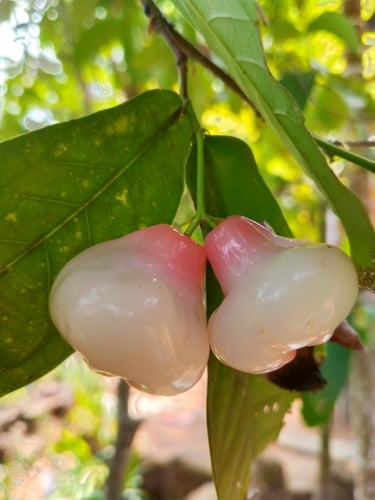
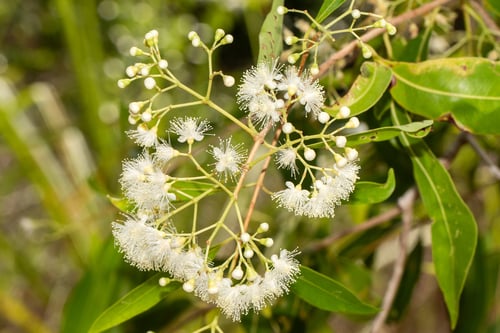
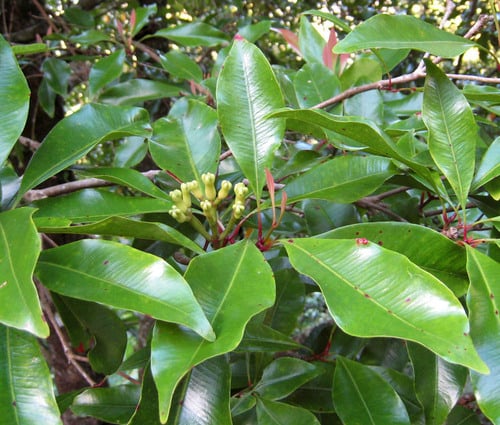
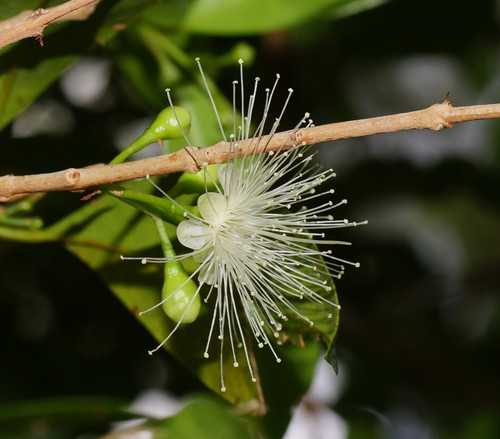
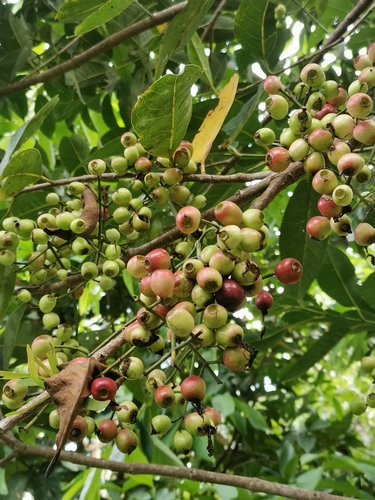
A small tree. It grows 4-6 m high. The crown is flat with spreading branches. The trunk is short and 20-30 cm across. The leaves are thin and simple. They are hairy over the veins. The leave are 3-5 cm long and 2.3 cm wide. The flowers are in groups in the axils of leaves. The flowers are white. The fruit is orange-yellow. The pulp is juicy and acid.
Edible Uses
The juicy, acid fruit can be eaten fresh or processed into jams, jellies, juices, and vinegar.
Traditional Uses
The fruit can be eaten fresh. They are also used for jams, jellies and juices. They are also used to make vinegar.
This uses section is brief — help expand it
Distribution
A subtropical plant. In Brazil it grows in open formations along the coast. In Argentina it grows below 500 m above sea level.
Where It Grows
Argentina, Asia, Bolivia, Brazil*, Indonesia, Paraguay, SE Asia, South America, Uruguay,
Cultivation
Plants are grown from seed. The ripe fruit are harvested and the seeds removed under running water. They are dried in the shade. Fresh seed are planted and germinate in 30-50 days.
Production
Plants have a moderate growth rate.
Other Information
It is sometimes cultivated for its fruit.
Synonyms
Also Known As
Cereheira-do-rio-grande, Cereja-do-rio-grande, Iba-jayi, Ibajai, Igua-jay, Ocorocillo, Passeguiero-do-moto, Pessego-do-mato, Pohon persik gunung, Ubajai, Ubajay
References (21)
- Brack, P., et al, 2020, Frutas nativas do Rio Grande do Sul, Brasil: riqueza e potencial alimentício. Native fruits of Rio Grande do Sul, Brazil: richness and potential as food. Rodriguésia 71: e03102018.
- Darwiniana 9:302. 1950
- Fouqué, A., 1972, Espèces fruitières d'Amérique tropicale. Institut français de recherches fruitierès outre-mer
- Fl. flumin. 208. 1829 ("1825"); Fl. flumin. icon. 5: t. 34A. 1831 ("1827") (As Eugenia edulis)
- Galluzzi, G. & Noriega, I. L., 2014, Conservation and Use of Genetic Resources of Underutilized Crops in the Americas - A Continental Analysis. Sustainability, 6:980-1017 (As Hexachlamys edulis)
Show all 21 references Hide references
- GRIN (As Hexachlamys edulis)
- H. G. A. Engler & K. A. E. Prantl, Nat. Pflanzenfam. 3(7):81. 1893
- Hedrick, U.P., 1919, (Ed.), Sturtevant's edible plants of the world. p 297 (As Eugenia edulis)
- INFOODSUpdatedFGU-list.xls
- Kermath, B. M., et al, 2014, Food Plants in the Americas: A survey of the domesticated, cultivated and wild plants used for Human food in North, Central and South America and the Caribbean. On line draft. p 417
- Kinupp, V. F., 2007, Plantas alimenticias nao-convencionais da regiao metropolitana de Porto Alegre, RS, Brazil p 85
- Kinupp, V. F. & Bergman, I., 2008, Protein and minerals of native species, potential vegetables and fruits. Cienc.Tecnol. Aliment. Vol. 28 No. 4 Campinas Oct/Dec.
- Lorenzi, H., 2002, Brazilian Trees. A Guide to the Identification and Cultivation of Brazilian Native Trees. Vol. 01 Nova Odessa, SP, Instituto Plantarum p 279
- Lorenzi, H., Bacher, L., Lacerda, M. & Sartori, S., 2006, Brazilian Fruits & Cultivated Exotics. Sao Paulo, Instituto Plantarum de Estuados da Flora Ltda. p 206
- Proença, C. E. B. 2006. (1725) Proposal to conserve the name Myrcianthes edulis against Psidium amygdalinum (Myrtaceae). Taxon 55:536–537
- USDA, ARS, National Genetic Resources Program. Germplasm Resources Information Network - (GRIN). [Online Database] National Germplasm Resources Laboratory, Beltsville, Maryland. Available: www.ars-grin.gov/cgi-bin/npgs/html/econ.pl (10 April 2000)
- Rozycki, V. R., et al, 1997, Nutrient content in vegetables species from the Argentine Chaco. (In Spanish), Arch. Latinoam Nutr. Sep. 47(3):265-70 (As Eugenia myrcianthes)
- Scarpa, G. F., 2009, Wild food plants used by the indigenous peoples of South American Gran Chaco: A general synopsis and intercultural comparison. Journal of Applied Botany and Food Quality 83:90-101
- Sukarya, D. G., (Ed.) 2013, 3,500 Plant Species of the Botanic Gardens of Indonesia. LIPI p 323
- World Checklist of Useful Plant Species 2020. Royal Botanic Gardens, Kew
- www.colecionandofrutas.org