Heterosmilax japonica
Kunth.
China Root
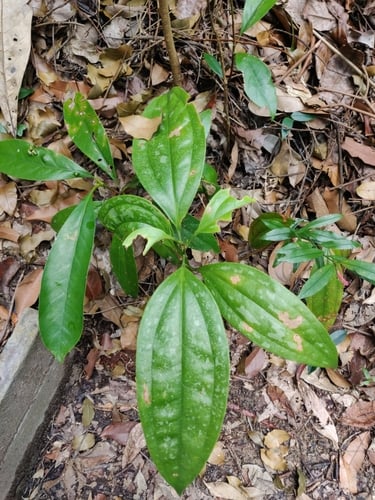
iNaturalist· cc-by-nc
(c) ssnp062, some rights reserved (CC BY-NC)
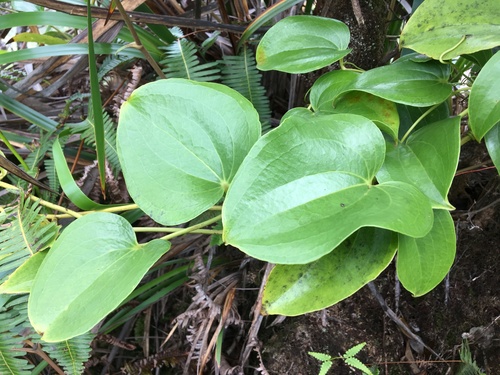
iNaturalist· cc-by-nc
(c) ssnp062, some rights reserved (CC BY-NC)
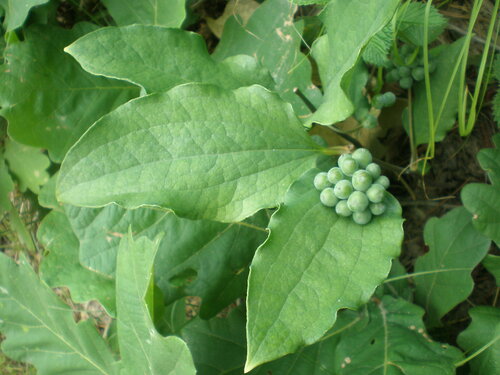
iNaturalist· cc-by-nc
(c) yko, some rights reserved (CC BY-NC)
Description
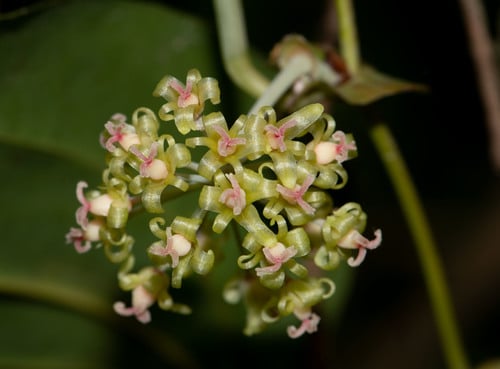
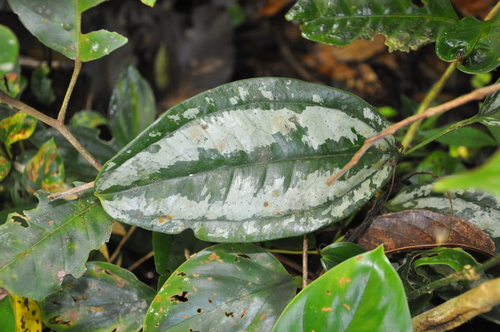
A climbing vine. The stem is woody. The leaf stalk is 1-3 cm long. It has narrow wings along 1/3 of its length. It has tendrils. The leaf blade is oval and 6-22 cm long by 2.4-12 cm wide. The flowering stalk is borne in the axil of the leaf. The flower stalk is 1-3 cm long. There are 20-50 flowers in the cluster. The fruit is a black berry. It is round and 6-10 mm across.
Edible Uses
The leaves are eaten.
Medicinal Uses
The plant contains steroids and is used in traditional medicine.
Distribution
It is a temperate plant. It grows on densely forested slopes between 500-1800 m altitude in China. In Sichuan and Yunnan.
Where It Grows
Asia, Bhutan, China, Himalayas, India, Japan, Northeastern India, Taiwan,
Notes
There are 12 Heterosmilax species in tropical and subtropical Asia. It contains steroids.
Synonyms
Also Known As
T 'u fu ling, Xiao ba qia
References (4)
- Baruah, S., 2016 Taxonomic study and habitat distribution modelling for reintroduction of Heterosmilax japonica Kunth. - a rare species of northeastern India. An international journal of environment and biodiversity. Vol. 7, No. 3, September 2016, 101 - 107
- Chen Xinqi, Liang Songyun, Xu Jiemei, Tamura M.N., Liliaceae. Flora of China. p 44
- SCHAEFER in CHANG,
- Wang, J. et al, 2013, A Study on the Utilization of Wild Plants for Food in Liangshan Yi Autonomous Prefecture. Plant Diversity and Resources. 35(4): 416-471