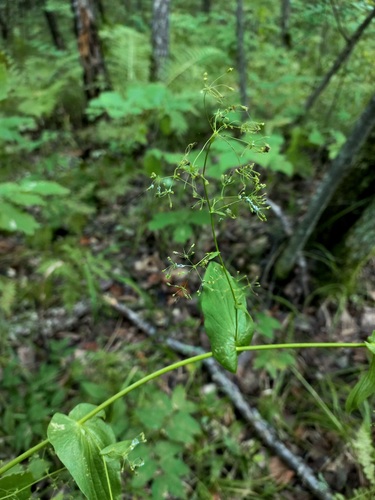
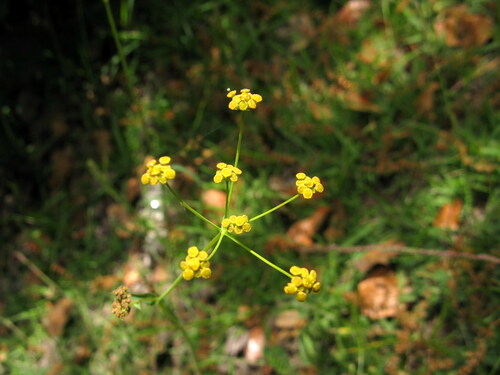
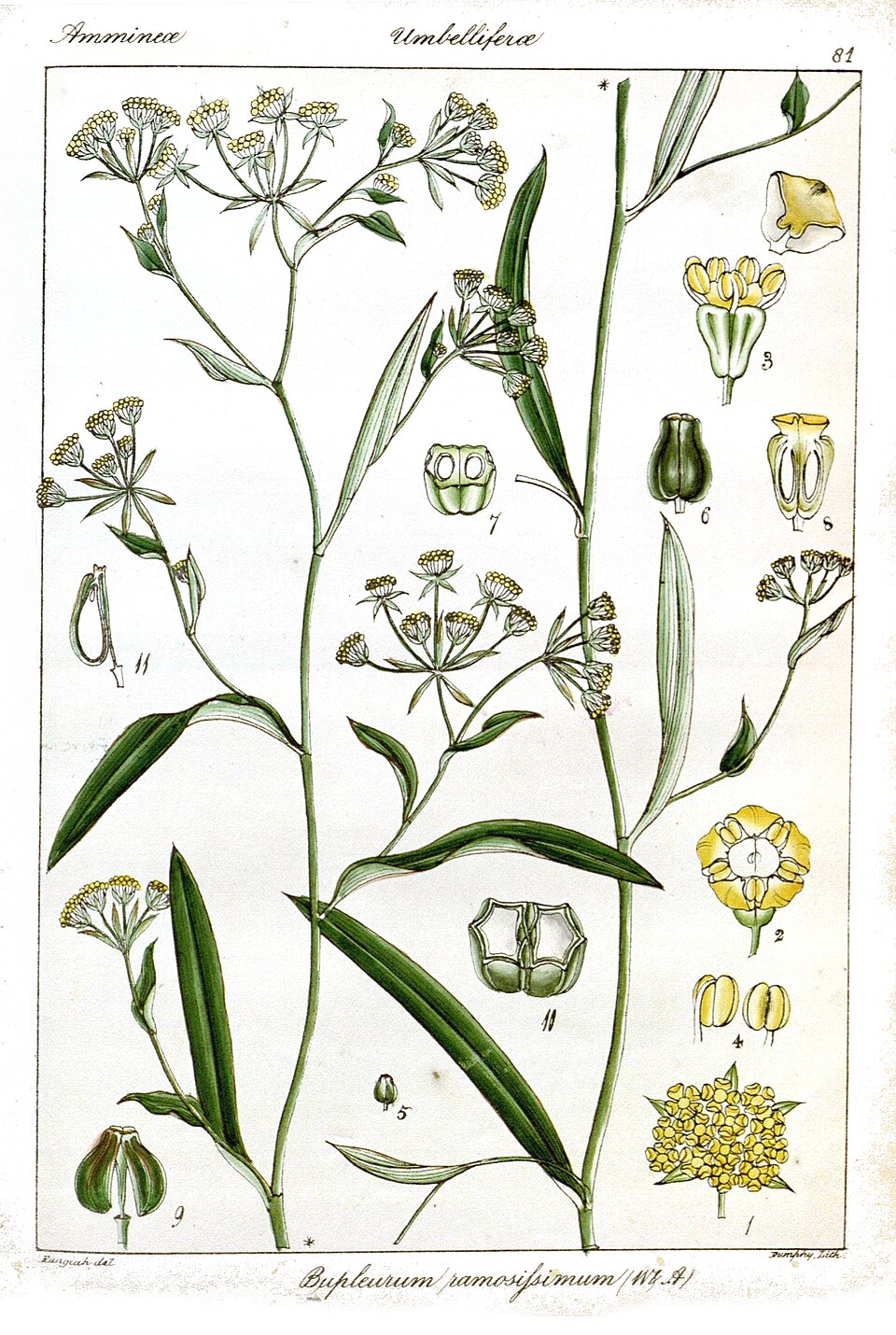
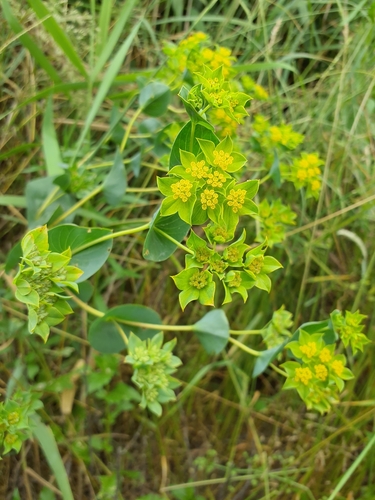
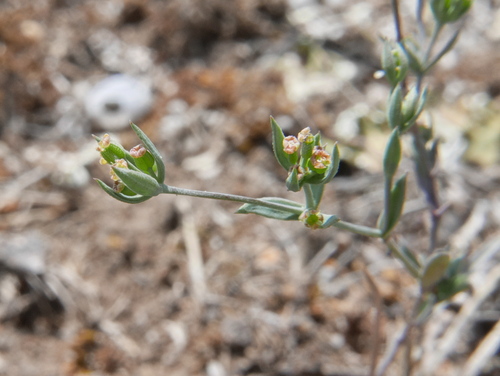
Heracleum sphondylium
L.
Hogweed, Cow parsnip
iNaturalist· cc-by-nc
(c) kpwells, some rights reserved (CC BY-NC)
iNaturalist· cc-by-nc
(c) Chris Schmidt, some rights reserved (CC BY-NC)
iNaturalist· cc-by-nc
(c) kpwells, some rights reserved (CC BY-NC)
Summary
Source: WikipediaHeracleum sphondylium, commonly known as hogweed or common hogweed, is a herbaceous perennial plant in the carrot family Apiaceae, which includes fennel, cow parsley, ground elder and giant hogweed. It is native to most of Europe, western Asia and northern Africa, but is introduced in North America and elsewhere. Other common names include cow parsnip (not to be confused with Heracleum maximum of North America). The flowers provide a great deal of nectar for pollinators.
Description
A fairly robust bristly herb. It can take 2 years to complete its life-cycle or grow for several years. It grows 2.5 m tall. The stems are hollow and ridged. The leaves are large and have leaflets along the stalk. These often have 5 lobed segments which have teeth. The upper leaves are smaller. The bases are inflated and flat and wrap around the developing flower. The flower umbel is large and flat. It can be 15 cm across. It is white or pink with 15-45 rays. The petals of the outer flowers are unequal and have notches. The fruit can be rounded or oval and 7-10 mm long. They are flattened and have broad wings.
Edible Uses
Stems and young shoots can be eaten raw or cooked as a green vegetable. When harvested as they first emerge from the ground, they have a flavour somewhat like asparagus, though the rind is mildly acrid. Leaf stems can be bundled and dried in the sun until they yellow, at which point a sweet, sugar-like substance forms on them and is considered a delicacy. The flower stalks (peduncles), taken before flowering, can be cooked as a vegetable or added to soups. The root is edible cooked, most commonly boiled.
Traditional Uses
The young leaves are boiled and eaten as a vegetable. They are also used in soup. The roots have been used as a condiment. The stems and seeds are used to make beer. The leaf stalks are tied in bundles and sun-dried and they exude a sugary substance eaten as a delicacy.
Medicinal Uses
The roots and leaves are aphrodisiac, digestive, mildly expectorant, and sedative. Though little used in modern herbalism, the plant has been applied to treating laryngitis and bronchitis. A tincture made from the aerial parts has been used to relieve general debility, though its mechanism is not well understood. The plant is harvested as it comes into flower and may be dried for later use.
Known Hazards
Many members of this genus, including many of the sub-species in this species, contain furanocoumarins. These have carcinogenic, mutagenic and phototoxic properties. See below for more details.
Distribution
It is a temperate plant. It grows in open woodland and grassy banks. It is often along streams. It suits hardiness zones 2-9.
Where It Grows
Africa, Andorra, Asia, Australia, Balkans, Belarus, Bosnia, Britain, Czech Republic, Estonia, Europe, Falklands, France, Germany, Haiti, Hungary, Lithuania, Luxembourg, Macedonia, Mediterranean, North America, Poland, Russia, Siberia, Slovenia, South America, Switzerland, Turkey, Türkiye, USA, West Indies,
Cultivation
A very easily grown plant, succeeding in any ordinary garden soil, doing best in moist soils or deep woodland. Grows well in full sun or partial shade. This species contains a large number of sub-species. Some, but by no means all of them, can cause various problems as detailed at the top of this record. Subspecies transylvanicum, pyrenaicum, montanum, orsinii and alpinum are distinctly phototoxic, subspecies sphondylium and sibiricum are not phototoxic whilst subspecies granatense and ternatum vary in their toxicity. A good bee plant.
Propagation
Sow seed mid to late spring or early autumn directly in situ. Divide plants in autumn.
Other Uses
None known.
Synonyms
Also Known As
Barsciai, Barstis, Bojtorjan, Bolsevnik obecny, Borscht, Grobuzdai, Karuputk, Medvjedji dlan, Natid, Navadni dežen, Plouta
References (27)
- Abbet, C., et al, 2014, Ethnobotanical survey on wild alpine food plants in Lower and Central Valais (Switzerland). Journal of Ethnopharmacology 151 (2014) 624–634
- Bahadori, M. B. et al, 2016, The Genus Heracleum : A Comprehensive Review on Its Phytochemistry, Pharmacology, and Ethnobotanical Values as a Useful Herb. Comprehensive Reviews in Food Science and Food Safety. 15(6): p 1018-1039
- Blamey, M and Grey-Wilson, C., 2005, Wild flowers of the Mediterranean. A & C Black London. p 162
- Bodkin, F., 1991, Encyclopedia Botanica. Cornstalk publishing, p 552
- Bremness, L., 1994, Herbs. Collins Eyewitness Handbooks. Harper Collins. p 176
Show all 27 references Hide references
- Brown, D., 2002, The Royal Horticultural Society encyclopedia of Herbs and their uses. DK Books. p 232
- Cerne, M., 1992, Wild Plants from Slovenia used as Vegetables. Acta Horticulturae 318
- Denes, A., et al, 2012, Wild plants used for food by Hungarian ethnic groups living in the Carpathian Basin. Acta Societatis Botanicorum Poloniae 81 (4): 381-396
- Facciola, S., 1998, Cornucopia 2: a Source Book of Edible Plants. Kampong Publications, 19
- Hedrick, U.P., 1919, (Ed.), Sturtevant's edible plants of the world. p 342
- Irving, M., 2009, The Forager Handbook, A Guide to the Edible Plants of Britain. Ebury Press p 124
- Jackes, D. A., Edible Forest Gardens
- Kalle, R. & Soukand, R., 2012, Historical ethnobotanical review of wild edible plants of Estonia (1770s-1960s) Acta Societatis Botanicorum Poloniae 81(4):271-281
- Kiple, K.F. & Ornelas, K.C., (eds), 2000, The Cambridge World History of Food. CUP p 1763
- Łukasz Łuczaj and Wojciech M Szymański, 2007, Wild vascular plants gathered for consumption in the Polish countryside: a review. J Ethnobiol Ethnomedicine. 3: 17
- Lukasz, L., 2016, Wild Edible Plants Traditionally Used in Poland.
- Mabey, R., 1973, Food for Free. A Guide to the edible wild plants of Britain, Collins. p 93
- Plants for a Future database, The Field, Penpol, Lostwithiel, Cornwall, PL22 0NG, UK. http://www.scs.leeds.ac.uk/pfaf/
- Plants of Haiti Smithsonian Institute http://botany.si.edu
- Prakofjewa, J., et al, 2023, Boundaries Are Blurred: Wild Food Plant Knowledge Circulation across the Polish-Lithuanian-Belarusian Borderland. Biology 2023, 12, 571.
- Redzic, S. J., 2006, Wild Edible Plants and their Traditional Use in the Human Nutrition in Bosnia-Herzegovina. Ecology of Food and Nutrition, 45:189-232
- Redzic, S., 2010, Use of Wild and Semi-Wild Edible Plants in Nutrition and Survival of People in 1430 Days of Siege of Sarajevo during the War in Bosnia and Herzegovina (1992–1995). Coll. Antropol 34 (2010) 2:551-570
- Rexhepi, B., et al, 2018, Ethnobotanical Study of Wild Edible Plants in Pelagonia Region (Southwestern Macedonia) International Journal of Advances in Science Engineering and Technology, Vol. 6 (1) p 57
- Simkova, K. et al, 2014, Ethnobotanical review of wild edible plants used in the Czech Republic. Journal of Applied Botany and Food Quality 88, 49-67
- Sp. pl. 1:249. 1753
- Turner, N. J. et al, 2011, Edible and Tended Wild Plants, Traditional Ecological Knowledge and Agroecology. Critical Reviews in Plant Sciences, 30:198-225
- Upson, R., & Lewis R., 2014, Updated Vascular Plant Checklist and Atlas for the Falkland Islands. Falklands Conservation and Kew.