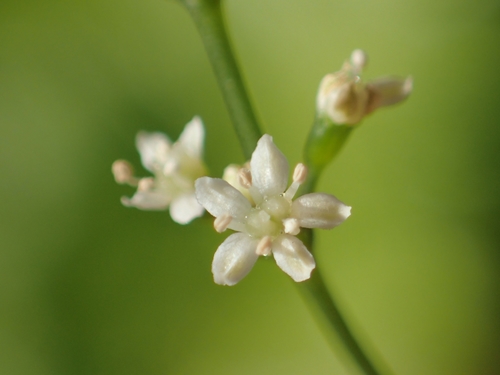
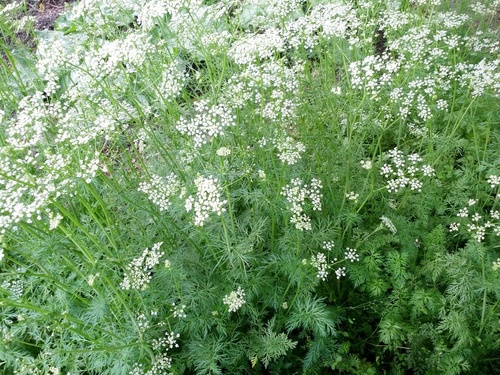
Heracleum pubescens
(Hoffm.) Bieb.
Downy cow-parsnip
wikimedia· cc-by-sa
Wikimedia Commons - Dietmar Rabich
wikimedia· cc-by-sa
Wikimedia Commons - Dietmar Rabich
Summary
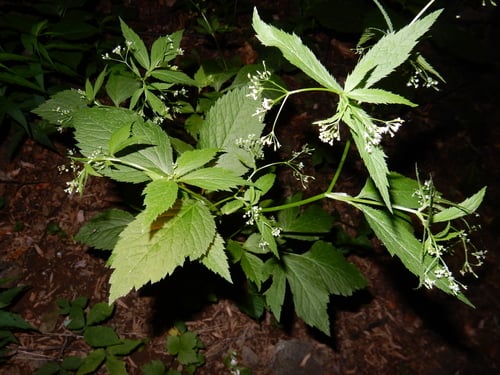
A biennial or perennial herb growing to 0.8 m (2ft 6in). Hermaphroditic and insect-pollinated; self-fertile. Adapts to light sandy, medium loamy, and heavy clay soils across mildly acid to basic pH ranges. Grows in full shade, semi-shade, or full sun and prefers moist soil.
Description
A biennial or perennial herb growing to 0.8 m (2ft 6in). Hermaphroditic and insect-pollinated; self-fertile. Adapts to light sandy, medium loamy, and heavy clay soils across mildly acid to basic pH ranges. Grows in full shade, semi-shade, or full sun and prefers moist soil.
Edible Uses
The young shoots are filled with a sweet, aromatic juice and are eaten raw.
Traditional Uses
The young shoots have a sweet juice and is eaten raw. They are also pickled.
This uses section is brief — help expand it
Medicinal Uses
None known.
Distribution
It is a temperate plant.
Where It Grows
Asia, Caucasus, Europe, France, Georgia,
Propagation
Sow seed mid to late spring or early autumn directly in situ. Divide plants in autumn.
Other Uses
None known.
Synonyms
References (5)
- Bussman, R. W. et al, 2017, Ethnobotany of Samtskhe-Javakheti, Sakartvelo (Republic of Georgia), Caucasus. Indian Journal of Traditional Knowledge Vol. 16(1) pp 7-24 (As Heracleum wilhelmsii)
- Facciola, S., 1998, Cornucopia 2: a Source Book of Edible Plants. Kampong Publications, 19
- Fl. taur.-caucas. 3:225. 1819
- Hedrick, U.P., 1919, (Ed.), Sturtevant's edible plants of the world. p 341
- Plants for a Future database, The Field, Penpol, Lostwithiel, Cornwall, PL22 0NG, UK. http://www.scs.leeds.ac.uk/pfaf/