Centella cordifolia
(Hook. f.) Nannf.
Centella, Swampwort
iNaturalist· cc-by-nc-sa
(c) Tony Rodd, some rights reserved (CC BY-NC-SA)
iNaturalist· cc-by-nc
(c) lesquishi33, some rights reserved (CC BY-NC)
iNaturalist· cc-by-nc
(c) callanca, some rights reserved (CC BY-NC)
Summary
Source: WikipediaCentella cordifolia, commonly known as swamp pennywort or arthritis herb, is a trailing perennial herb native to Australia. The species is common in preferred local environments. It potentially has medicinal purposes and indigenous cultural significance. C. cordifolia can be sourced commercially at Australian plant nurseries.
Description
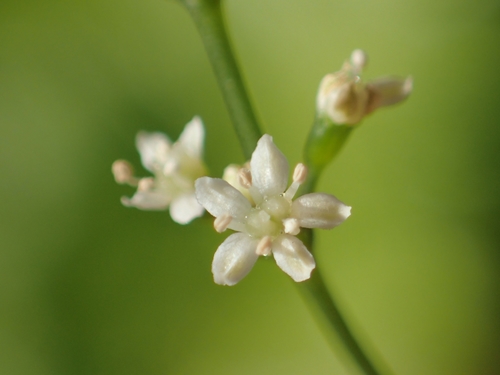
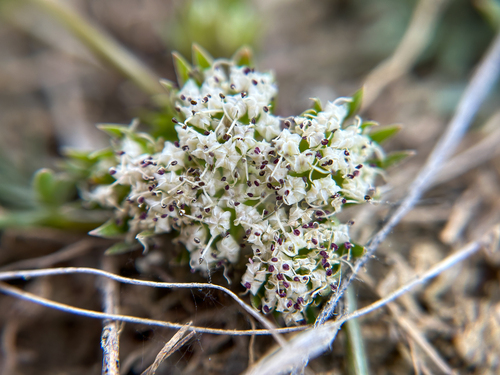
A herb which lies along the ground. It is a creeping plant. It can spread 1-2 m wide. It keeps growing from year to year. The stems form roots at the nodes. The leaves are 4 cm wide. They are round or heart shaped. They leaf stalks are long. The leaf edges can have teeth or be irregular. The flowers are very small and white or pink. They occur in small loose heads.
Edible Uses
The leaves are used medicinally.
Medicinal Uses
Centella cordifolia is known to treat rheumatism and arthritis, though widespread adoption and evidence for this is limited. The herb is said to have an indigenous cultural significance, again with limited information available. C. cordifolia is closely related to Centella asiatica and their uses may be interchangeable. C. asiatica is widespread across Australia, Africa, Asia, North and South America, with well-known cultural, medicinal and culinary uses. In a 2017 study published by Frontiers in Plant Science. C. cordifolia was found to be genetically and chemically similar to C. asiatica, when comparing three Centella species (C. cordifolia, C. asiatica and C. erecta).
Distribution
It is a temperate plant. It grows on the edges of swamps and wet places. It can tolerate frosts. Tasmania Herbarium.
Where It Grows
Australia*, Tasmania,
Cultivation
Plants can be grown from cuttings or division of stems which have roots.
Notes
There are about 20-40-50 Centella species. They are tropical. The leaves are used as medicine.
References (6)
- Curtis, W.M., 1963, The Students Flora of Tasmania Vol 2 p 247
- Dashorst, G.R.M., and Jessop, J.P., 1998, Plants of the Adelaide Plains & Hills. Botanic Gardens of Adelaide and State Herbarium. p 114
- Elliot, W.R., & Jones, D.L., 1984, Encyclopedia of Australian Plants suitable for cultivation. Vol 3. Lothian. p 6
- Gilfedder, L et al, 2003, The Nature of the Midlands. Midlands Bushweb. PO Box 156 Longford, Tasmania. p 83
- Hibbert, M., 2002, The Aussie Plant Finder 2002, Florilegium. p 63
Show all 6 references Hide references
- Tasmanian Herbarium Vascular Plants list p 3