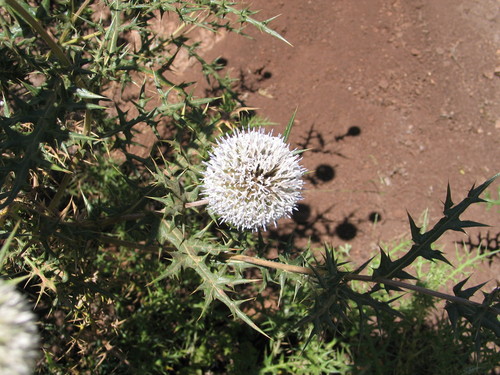
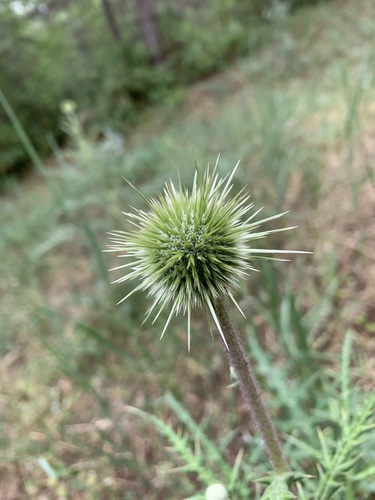
Dittrichia viscosa
(L.) Greuter
Viscous elecampe
iNaturalist· cc-by-nc-sa
(c) Maria Emília Martins, some rights reserved (CC BY-NC-SA), uploaded by Maria Emília Martins
iNaturalist· cc-by
(c) Gianni Del Bufalo bygdb, some rights reserved (CC BY), uploaded by Gianni Del Bufalo bygdb
iNaturalist· cc0
no rights reserved, uploaded by rockybajada
Summary
Source: WikipediaDittrichia viscosa, also known as false yellowhead, woody fleabane, sticky fleabane and yellow fleabane, is a flowering plant in the daisy family. Dittrichia viscosa is a highly branching perennial common throughout the Mediterranean Basin. It has long, narrow leaves that are pointed at both ends and have teeth along the edges and glandular hairs on the surfaces. One plant can produce many yellow flower heads each with as many as 16 ray florets and 44 disc florets. Originally, the species was found mainly in dry riverbeds and abandoned fields up to a 1500 m (5000 feet) elevation. Nowadays it is quite common in roadsides and ruderal habitats, even in urban areas. It is considered an invasive species in Australia. The false yellowhead is a tough plant, very resistant to adverse conditions and degraded environments. It is important as food for the caterpillars of certain butterflies and moths, like Iolana iolas. The galls of the plants also are habitat for Myopites stylatus and Myopites inulaedyssentericae, whose larvae are hosts to parasitic hymenoptera such as Eupelmus urozonus who are also major parasites of the olive fly, helping control its population. This may be cause for its name in Catalan: Olivarda. Despite the fresh-looking green color of its leaves and its attractive inflorescence, this plant is sticky and has a certain smell that most people find unpleasant. It contains an essential oil and has been used in traditional medicine since ancient times, especially in the Levant, as an astringent. In Elba Island and Corsica it is now used by residents and tourists to heal stings from jellyfish, bees and wasps pressing fresh leaves on the skin with quick results. It is called in local dialect pescida. A yellow dye substance has, since ancient times, been produced from its roots. It is an important plant in Catalan tradition, often mentioned in adages and proverbs. One adage says that: "No vos 'nemoreu, amor, de cap fadrina gallarda que és com la flor d'olivarda molt guapa, i dolenta d'olor." [My dear one, don't fall in love with any woman who only has good looks, she is like a false yellowhead flower: beautiful, but full of stench.] Subspecies Dittrichia viscosa subsp. angustifolia (Bég.) Greuter Dittrichia viscosa subsp. maritima (Brullo & De Marco) Greuter Dittrichia viscosa subsp. revoluta (Hoffmanns. & Link) P.Silva & Tutin Dittrichia viscosa subsp. viscosa
Description
A perennial reaching 0.5 m tall, flowering September to October. Hermaphroditic flowers pollinated by insects. Tolerates light sandy, medium loamy, and heavy clay soils with mildly acidic to basic pH. Requires full sun and prefers moist soil.
Edible Uses
No edible uses are known for this plant.
Traditional Uses
The leaves are used for preserving raisins and potatoes.
This uses section is brief — help expand it
Medicinal Uses
No medicinal uses are known for this plant.
Distribution
It is a Mediterranean climate plant.
Where It Grows
Africa, Canary Islands, Europe, Mediterranean, North Africa, Spain, Turkey, Türkiye,
Propagation
Sow seed in spring in a greenhouse, barely covering it. Prick seedlings out into individual pots once large enough to handle and grow on under glass for at least their first winter. Plant out into permanent positions in late spring or early summer, after the last expected frosts. Can also be propagated by division in spring or autumn.
Other Uses
A yellow dye can be obtained from the roots.
Synonyms
Also Known As
Apagafocs, Arnica, Gluey elecampe, Matavinyes, Olivarda
References (6)
- Blanco-Salas, J., et al, 2019, Wild Plants Potentially Used in Human Food in the Protected Area “Sierra Grande de Hornachos” of Extremadura (Spain). Sustainability 2019, 11, 456
- Bonet, M. A. & Valles, J., 2002, Use of non-crop food vascular plants in Montseny biosphere reserve (Catalonia, Iberian Peninsula). International Journal of Food Sciences and Nutrition (2002) 53, 225–248 (As Inula viscosa)
- Ertug, F, Yenen Bitkiler. Resimli Türkiye Florası -I- Flora of Turkey - Ethnobotany supplement (As Inula viscosa)
- INFOODSUpdatedFGU-list.xls (As Inula viscosa)
- Seidemann J., 2005, World Spice Plants. Economic Usage, Botany, Taxonomy. Springer. p 184 (As Inula viscosa)
Show all 6 references Hide references
- Tardio, J., et al, Ethnobotanical review of wild edible plants in Spain. Botanical J. Linnean Soc. 152 (2006), 27-71