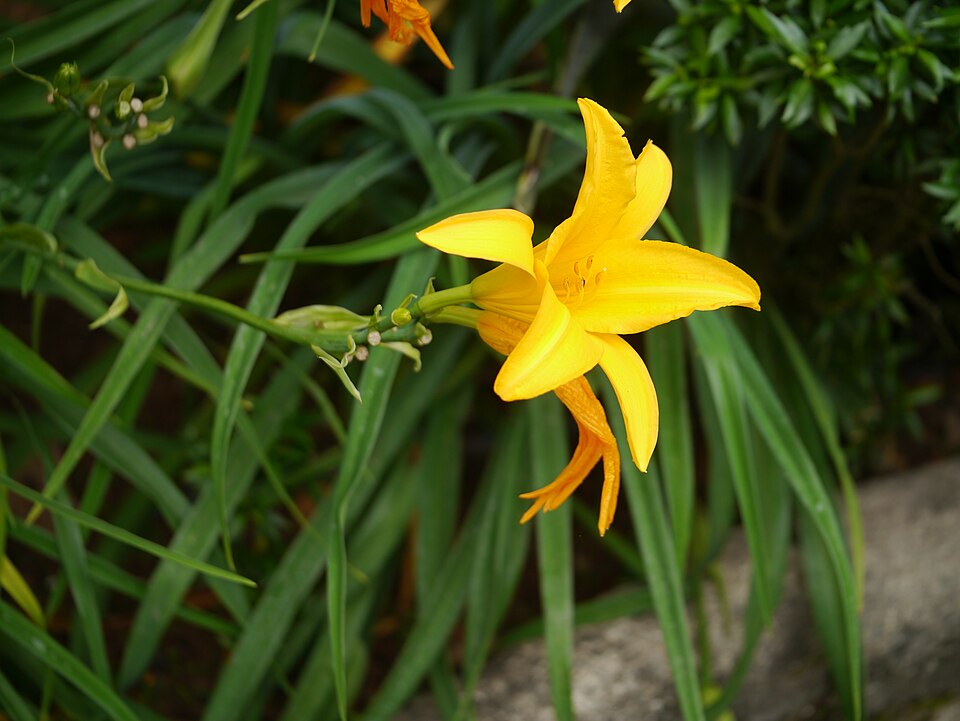
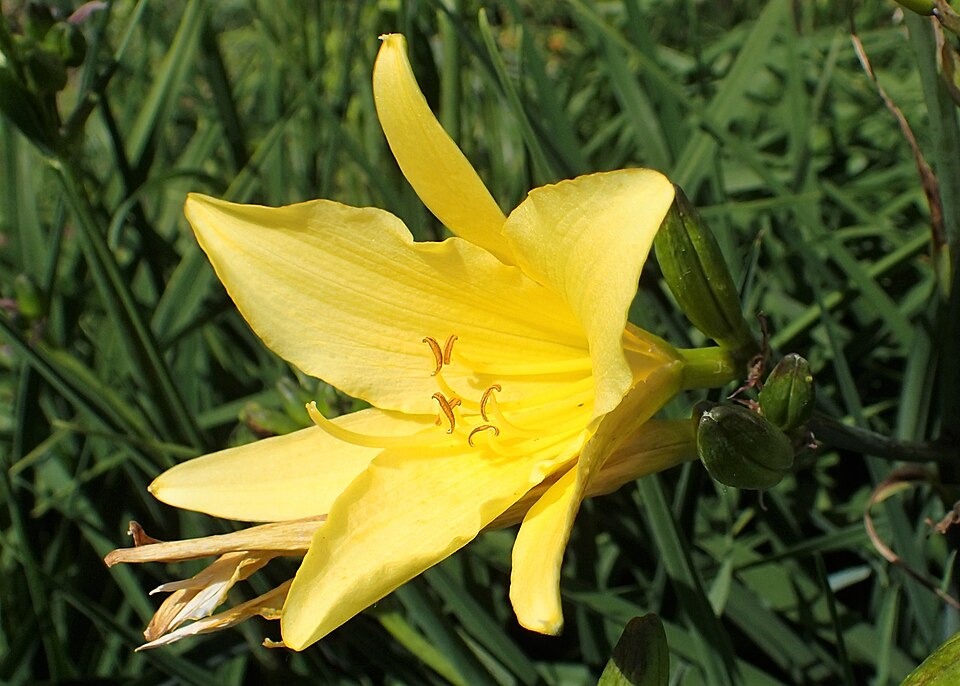
Hemerocallis lilioasphodelus
L.
Yellow day lily, Lemon daylily
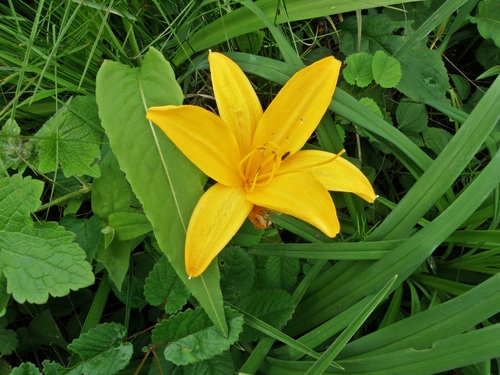
iNaturalist· cc-by-nc-sa
(c) Karl Bard, some rights reserved (CC BY-NC-SA), uploaded by Karl Bard
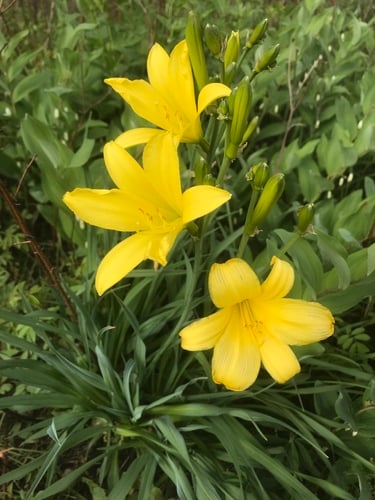
iNaturalist· cc-by
(c) Kim, Hyun-tae, some rights reserved (CC BY), uploaded by Kim, Hyun-tae
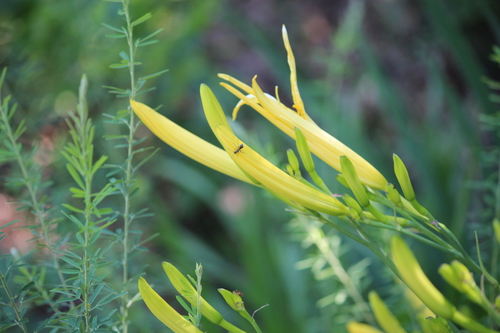
iNaturalist· cc-by-nc
(c) Thomas C. Wagner, some rights reserved (CC BY-NC), uploaded by Thomas C. Wagner
Summary
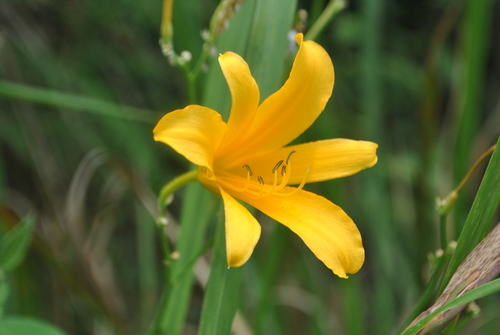
Source: WikipediaHemerocallis lilioasphodelus (syn. Hemerocallis flava, known as lemon daylily, lemon lily, yellow daylily, and other names) is a plant of the genus Hemerocallis. It is found in China, northeastern Italy, and Slovenia. It was also one of the first daylilies used for breeding new daylily cultivars. Hemerocallis lilioasphodelus grows in big, spreading clumps, and its leaves grow to 75 cm (30 in) long. Its scapes each bear from 3 through 9 sweetly fragrant, lemon-yellow flowers.
Description
A perennial plant. It grows 75-90 cm high. It forms rhizomes and spreads. The roots are slightly fleshy and rope like and sometimes with a swollen tuber. It loses its leaves in winter. The leaves are narrow. They are 20-70 cm long by 0.3-1.2 cm wide. They taper to the tip. The flowering stalk is branched. The flowers are fine shaped and lemon-yellow. They have a sweet scent. The fruit is a capsule. It is oval and 2.4 cm long by 1.2 cm wide.
Edible Uses
Leaves and young shoots can be eaten raw or cooked, used like asparagus or celery, but must be harvested when very young before becoming fibrous. Flower buds are edible raw or cooked with a flavour somewhat like green beans; they contain approximately 43mg vitamin C per 100g, 983 IU vitamin A, and 3.1% protein. Flowers are also edible raw or cooked and can be dried and used as a thickener in soups. Picked just as they begin to wither, flowers can be used as a condiment. In China, flowers are traditionally steamed and then dried. The roots are edible cooked, tasting like a blend of sweet corn and salsify — tender but fairly bland with a slight sweetness. The swollen roots are quite small and are best harvested when dividing the plant or digging it up for another reason.
Traditional Uses
The flowers are steamed and then dried and used as a traditional food in China. The flowers are flower buds are dipped in egg, milk, flour and seasoning and browned like fritters. The fleshy roots are boiled in salt water and eaten. The dried flowers are used to flavour soups, stir-fried dishes and noodle dishes. Young shoots are eaten raw, or cooked like asparagus.
Medicinal Uses
The juice of the roots is an effective antidote in cases of arsenic poisoning. The root also has a folk history of use in cancer treatment, and root extracts have shown antitumour activity. A tea made from boiled roots is used as a diuretic.
Known Hazards
Large quantities of the leaves are said to be hallucinogenic. Blanching the leaves removes this hallucinatory component. (This report does not make clear what it means by blanching, it could be excluding light from the growing shoots or immersing in boiling water.)
Distribution
It is a temperate plant. It is frost hardy. In China it grows in forests thickets and grasslands and on slopes along valleys between 100-2000 m altitude. Melbourne Botanical Gardens. It suits hardiness zones 4-9.
Where It Grows
Africa, Alps, Asia, Australia, Britain, Canada, China, Egypt, Europe, Fiji, Hawaii, Indonesia, Italy, Japan, Korea, Mediterranean, Mongolia, Myanmar, North Africa, North America, Pacific, Russia, SE Asia, Siberia, Slovenia, USA,
Cultivation
Succeeds in most soils, including dry ones, preferring a rich moist soil and a sunny position but tolerating partial shade. Plants flower less freely in a shady position though the flowers can last longer in such a position. Grows well in heavy clay soils. Succeeds in short grass if the soil is moist. Prefers a pH between 6 and 7. Plants are very cold-hardy, tolerating temperatures down to about -25°c. A very vigorous plant, spreading by underground rhizomes. The plant has a fibrous root system with occasional spindle-like swellings. Cultivated as a food and medicinal plant in Japan. Individual flowers are short-lived, they open at night and last for 20 - 76 hours. The plant produces a succession of blooms over a period of about 2 months. The flowers are fragrant. The flowers have a honeysuckle-like scent and this can pervade the air for a considerable distance when warmed by the summer sunshine. Hybridizes freely with other members of this genus. Plants take a year or two to become established after being moved. Plants seem to be immune to the predations of rabbits. The plants are very susceptible to slug and snail damage, the young growth in spring is especially at risk.
Propagation
Sow seed in mid-spring in a greenhouse; germination is usually fairly rapid and good. Prick seedlings into individual pots when large enough to handle, overwinter in the greenhouse, and plant out in late spring. Divide plants in spring or after flowering in late summer or autumn — division is quick and easy at almost any time of year. Larger clumps can go straight into permanent positions; smaller clumps are best potted up and grown on in a cold frame until rooting well, then planted out in spring.
Other Uses
The tough dried foliage can be plaited into cord and used for making footwear. Plants spread into clumps and are suitable for ground cover when spaced about 45cm apart each way; dead leaves should be left on the ground over winter to ensure effective cover. Flowers are rich in nectar and pollen, attracting bees, butterflies, and other pollinators. The dense foliage can provide shelter for small wildlife, and the leaf litter offers overwintering habitat for beneficial insects.
Other Information
It is a cultivated food plant.
Notes
There are about 15 Hemerocallis species. Also put in the family Hemerocallidaceae.
Nutrition
| Part | Moisture | kJ | kcal | Protein | Vit A | Vit C | Iron | Zinc |
|---|---|---|---|---|---|---|---|---|
| Flowers | 87.2 | 176 | 42 | 2 | — | — | 1.2 | — |
Synonyms
Also Known As
Bei huang hua cai, Lemon lily, Lili kuning, Northern yellow flower vegetable, Rumena maslenica, Tall yellow daylily, Wasure-gusa
References (25)
- Altschul, S.V.R., 1973, Drugs and Foods from Little-known Plants. Notes in Harvard University Herbaria. Harvard Univ. Press. Massachusetts. no. 251 (As Hemerocallis flava)
- Burkill, I.H., 1966, A Dictionary of the Economic Products of the Malay Peninsula. Ministry of Agriculture and Cooperatives, Kuala Lumpur, Malaysia. Vol 1 (A-H) p 1155 (As Hemerocallis flava)
- Chen Xinqi, Liang Songyun, Xu Jiemei, Tamura M.N., Liliaceae. Flora of China. p 92
- Cundall, P., (ed.), 2004, Gardening Australia: flora: the gardener's bible. ABC Books. p 692
- Facciola, S., 1998, Cornucopia 2: a Source Book of Edible Plants. Kampong Publications, p 144
Show all 25 references Hide references
- Food Composition Tables for use in East Asia FAO http://www.fao.org/infoods/directory No. 492 (As Hemerocallis flava)
- Hibbert, M., 2002, The Aussie Plant Finder 2002, Florilegium. p 127
- Hu, Shiu-ying, 2005, Food Plants of China. The Chinese University Press. p 318
- Jackes, D. A., Edible Forest Gardens
- Joyce, D., 1998, The Garden Plant Selector. Ryland, Peters and Small. p 236
- Kays, S. J., and Dias, J. C. S., 1995, Common Names of Commercially Cultivated Vegetables of the World in 15 languages. Economic Botany, Vol. 49, No. 2, pp. 115-152 (As Hemerocallis flava)
- Lim, T. K., 2015, Edible Medicinal and Non Medicinal Plants. Volume 9, Modified Stems, Roots, Bulbs. Springer p 46
- Plants for a Future database, The Field, Penpol, Lostwithiel, Cornwall, PL22 0NG, UK. http://www.scs.leeds.ac.uk/pfaf/
- Romanowski, N., 2007, Edible Water Gardens. Hyland House. p 87
- Seidemann J., 2005, World Spice Plants. Economic Usage, Botany, Taxonomy. Springer. p 175
- Slocum, P.D. & Robinson, P., 1999, Water Gardening. Water Lilies and Lotuses. Timber Press. p 122
- Smith, A.C., 1979, Flora Vitiensis Nova, Lawaii, Kuai, Hawaii, Volume 1 p 142
- Sp. pl. 1:324. 1753
- Staples, G.W. and Herbst, D.R., 2005, A tropical Garden Flora. Bishop Museum Press, Honolulu, Hawaii. p 688 (Drawing)
- Sukarya, D. G., (Ed.) 2013, 3,500 Plant Species of the Botanic Gardens of Indonesia. LIPI p 1115
- Urgamal, M., et al, 2014, Conspectus of the Vascular Plants of Mongolia. Mongolia Academy of Sciences Institute of Botany and National University of Mongolia Department of Biology. p 45
- Valder, P., 1999, The Garden Plants of China. Florilegium. p 361
- Wiersema, J. H. & Leon, B., 2013, World Economic Plants. A Standard Reference CRC Press. 2nd Ed. p 346
- Woodward, P., 2000, Asian Herbs and Vegetables. Hyland House. p 77 (As Hemerocallis flava)
- World Checklist of Useful Plant Species 2020. Royal Botanic Gardens, Kew