Helwingia japonica
(Thunberg) F. Dietrich
Helwingia
iNaturalist· cc-by-nc
(c) jessie-diver, some rights reserved (CC BY-NC)
iNaturalist· cc-by-nc
(c) Lukasz Madrzynski 孟巨石, some rights reserved (CC BY-NC), uploaded by Lukasz Madrzynski 孟巨石
Summary
Source: WikipediaHelwingia japonica, the Japanese helwingia, is a species of flowering plant in the family Helwingiaceae. It is native to South-East Asia.
Description
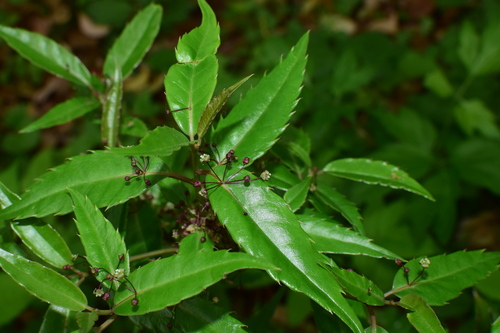
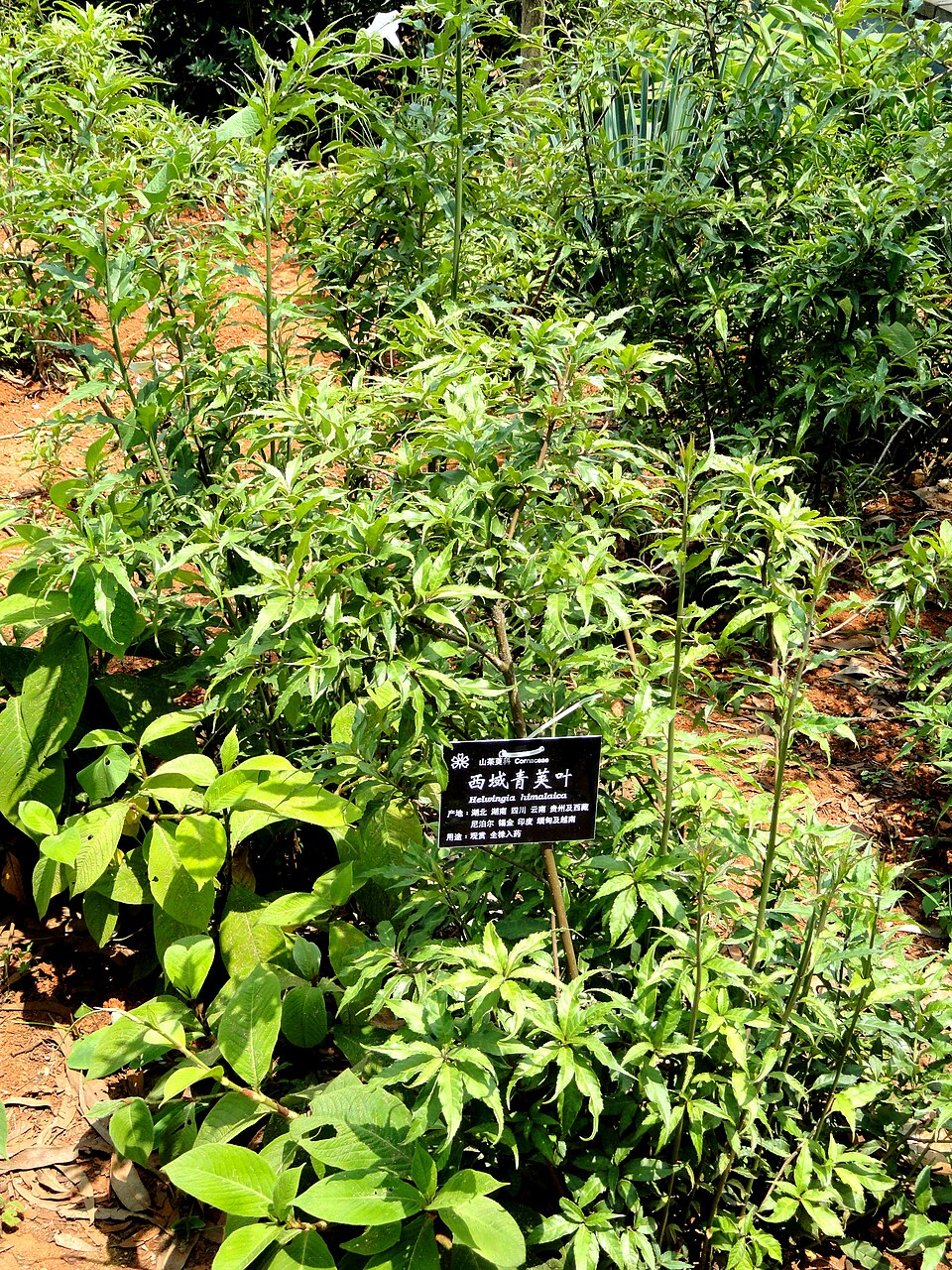
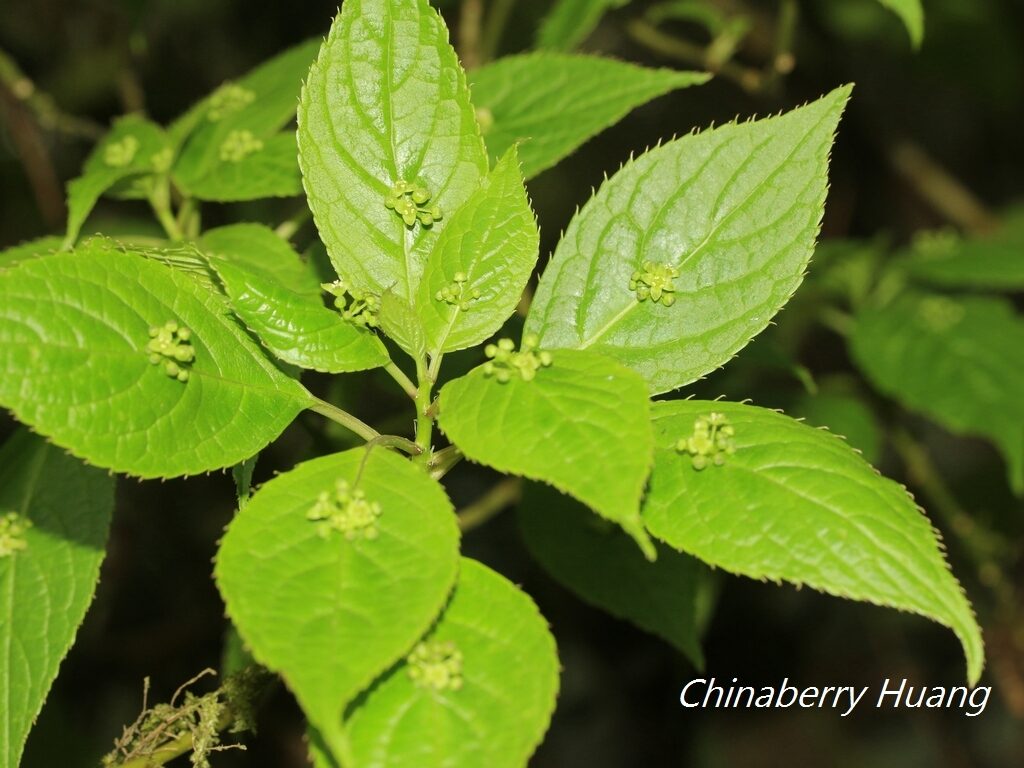
A shrub which loses its leaves. It grows 1-3 m tall and spreads 1.5 m wide. Male and female flowers are on separate plants. The leaves are narrowly oval and olive green. The leaves are alternate and have teeth. The flowers appear on the leaves. The male plants have 12 small greenish-white star shaped flowers. Female flowers occur singly. The fruit is fleshy. It is black. The fruit are on the surface of the leaves.
Edible Uses
Young leaves are cooked with rice or boiled as a potherb. The young flowers and young shoots are also eaten.
Traditional Uses
The young leafy shoots are eaten. They are blanched in hot water then soaked in cold water before cooking.
This uses section is brief — help expand it
Medicinal Uses
No medicinal uses are known for this plant.
Distribution
It is a temperate plant. They do best in the sun. They need moist soil. It suits hardiness zones 8-9.
Where It Grows
Asia, Australia, Bhutan, Britain, Canada, China, Europe, Himalayas, Japan, Korea, Myanmar, North America, SE Asia, Taiwan,
Cultivation
Succeeds in ordinary garden soil. Requires a sheltered position beneath a good tree canopy cover. Not very hardy in Britain, tolerating temperatures down to about -7°c, it only succeeds outdoors in the milder areas of the country. Cultivated for its leaves in Japan. The flowers are produced on the midribs of the leaves. Dioecious, male and female plants must be grown if seed is required.
Propagation
No specific propagation information is available for this species. It is suggested to sow seed in a greenhouse in late winter. Prick seedlings into individual pots once large enough and grow on in the greenhouse through at least their first winter, then plant out in late spring or early summer after the last expected frosts. Half-ripe wood cuttings can be taken in July/August in a frame.
Other Uses
No other uses are known for this plant.
Synonyms
Also Known As
Hana-ikada, Huo tie tie du, Yeshanghua
References (12)
- Chen, B. & Qiu, Z., Consumer's Attitudes towards Edible Wild Plants, Ishikawa Prefecture, Japan. p 23 www.hindawi.com/journals/ijfr/aip/872413.pdf
- Cundall, P., (ed.), 2004, Gardening Australia: flora: the gardener's bible. ABC Books. p 692
- Hedrick, U.P., 1919, (Ed.), Sturtevant's edible plants of the world. p 340 (As Helwingia rusciflora)
- Hu, Shiu-ying, 2005, Food Plants of China. The Chinese University Press. p 610
- Kang, Y., et al, 2012, Wild food plants and wild edible fungi in two valleys on the Qinling Mountains (Shaanxi, central China) Journal of Ethnobiology and Ethnomedicine; 9:26
Show all 12 references Hide references
- Kang, Y., et al, 2014, Wild food plants used by the Tibetans of Gongba Valley (Zouqu country, Gansu, China) Journal of Ethnobiology and Ethnomedicine 10:20
- Luo, B., et al, 2019, Wild edible plants collected by Hani from terraced rice paddy agroecosystem in Honghe Prefecture, Yunnan, China. Journal of Ethnobiology and Ethnomedicine 15:56
- Nachtr. vollst. Lex. Gaurtn. 3:660. 1817
- Plants for a Future database, The Field, Penpol, Lostwithiel, Cornwall, PL22 0NG, UK. http://www.scs.leeds.ac.uk/pfaf/
- READ, (As Helwingia rusciflora)
- Wang, J., et al, 2020, An ethnobotanical survey of wild edible plants used by the Yi people of Liangshan Prefecture, Sichuan Province, China. Journal of Ethnobiology and Ethnomedicine 16:10 p 7
- Zhang, L., et al, 2016, Ethnobotanical study of traditional edible plants used by the Naxi people during droughts. Journal of Ethnobiology and Ethnomedicine. 12:39