Helwingia himalaica
Hook. & Thomson ex C. B. Clarke
wikimedia· cc0
Wikimedia Commons - Daderot
wikimedia· cc-by-sa
Wikimedia Commons - peganum from Henfield, England
Summary
A deciduous shrub reaching 2.5 m tall with an upright habit. Flowers appear from April to May, with seeds ripening August to October. Dioecious species requiring both male and female plants for seed production. Tolerates light sandy, medium loamy, and heavy clay soils across mildly acidic to basic pH ranges. Grows in full shade to semi-shade conditions and prefers consistently moist soil.
Description
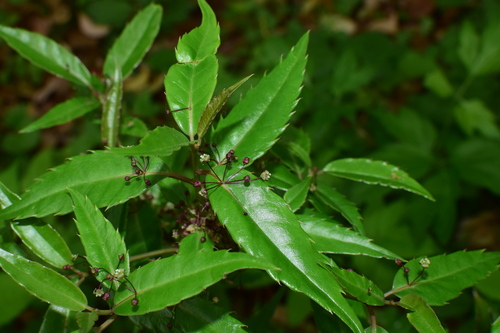
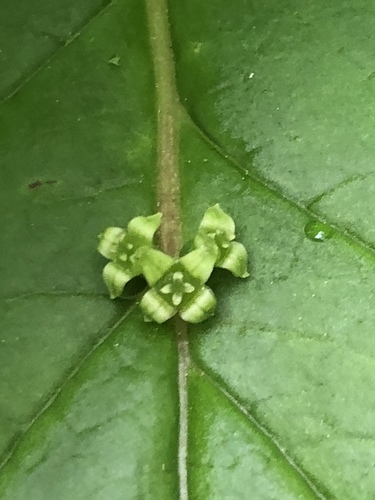
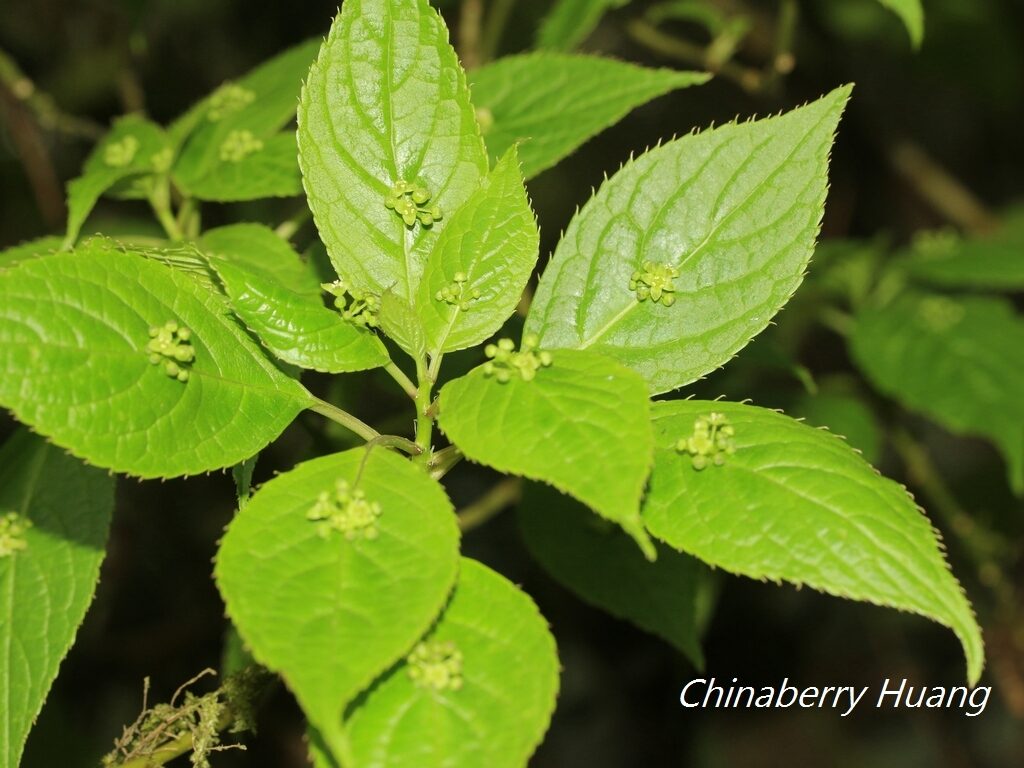
A shrub which loses its leaves. It grows 2-3 m tall. The leaves are light green underneath. They are oblong and 5-11 cm long by 3-4 cm wide. Male and female flowers are on separate plants. The leaves are alternate and have teeth. The flowers appear on the leaves. The fruit is fleshy.
Edible Uses
Young leaves are edible when cooked.
Medicinal Uses
No medicinal uses are known for this plant.
Distribution
It is a subtropical plant. In southern China it grows between 1,700-3,000 m above sea level.
Where It Grows
Asia, Bhutan, China, Himalayas, India, Myanmar, Nepal, Northeastern India, SE Asia, Sikkim, Tibet, Vietnam,
Cultivation
We have very little information on this species and do not know if it will be hardy in Britain, though judging by its native range it could succeed outdoors at least in the milder parts of this country. The following notes are based on the general needs of the genus. Succeeds in ordinary garden soil. Requires a sheltered position beneath a good tree canopy cover. The flowers are produced on the midribs of the leaves. Dioecious, male and female plants must be grown if seed is required.
Propagation
No specific propagation information is available for this species. It is suggested to sow seed in a greenhouse in late winter. Prick seedlings into individual pots once large enough and grow on in the greenhouse through at least their first winter, then plant out in late spring or early summer after the last expected frosts. Half-ripe wood cuttings can be taken in July/August in a frame.
Other Uses
No other uses are known for this plant.
References (2)
- J. D. Hooker, Fl. Brit. India 2:726. 1879
- Plants for a Future database, The Field, Penpol, Lostwithiel, Cornwall, PL22 0NG, UK. http://www.scs.leeds.ac.uk/pfaf/