Heliotropium curassavicum
L.
Smooth Heliotrope
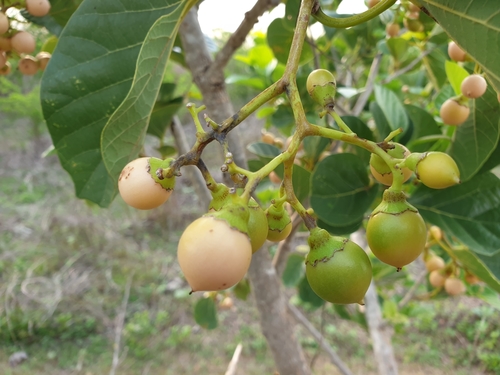
iNaturalist· cc-by
(c) Sam Fraser-Smith, some rights reserved (CC BY)
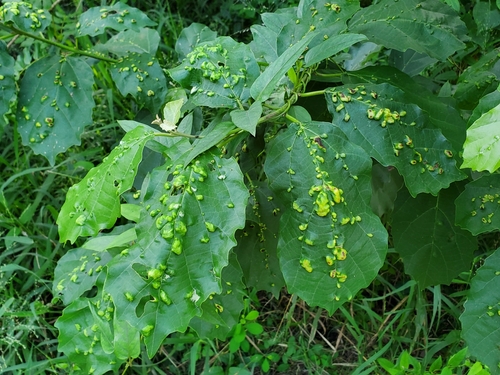
iNaturalist· cc-by-nc
(c) nathantay, some rights reserved (CC BY-NC)
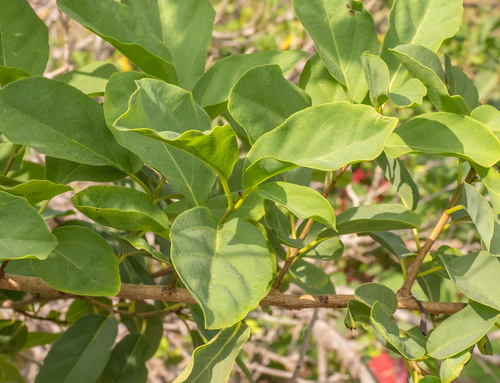
iNaturalist· cc-by
(c) Steve Matson, some rights reserved (CC BY), uploaded by Steve Matson
Summary
Source: WikipediaHeliotropium curassavicum, commonly called salt heliotrope, is a species of flowering plant in the family Heliotropiaceae. It is native to the Americas and has been introduced elsewhere.
Description
A shrub. It lives for only a few years. It forms a mound. It grows 40 cm high and spreads 60 cm wide. The stems and leaves are fleshy. The leaves are narrow and sword shaped and 5 cm long. They are light green. The flowering stalk is at the ends of the plant. It can be 10 cm wide and is first cream but matures to purple.
Edible Uses
The leaves are used fresh in salads and as a potherb, or dried and brewed into tea. The plant ashes can be used as a salt substitute.
Traditional Uses
The leaves are used in salads and as a potherb. Dried leaves are brewed into tea. The ashes of the plant are used as a substitute for salt. Caution: It is toxic for animals.
Medicinal Uses
The dried roots are ground to powder and applied to sores and wounds. A decoction of the plant is taken as a remedy for leucorrhoea, and as a substitute for Heliotropium indicum.
Known Hazards
No specific mention of toxicity has been seen for this species, but many members of this plant family (Boraginaceae) are known to contain pyrrolizidine alkaloids. These alkaloids have a cumulative effect upon the body and, unless concentrations in a plant are high, occasional use is generally completely safe. They are derived from amino acids including ornithine. Many pyrrolizidine alkaloids have pronounced hepatic toxicity, but the lungs and other organs may be affected as well. Mutagenic and carcinogenic activities of pyrrolizidine alkaloids have also been reported.
Distribution
A tropical plant. It grows in the tropics and subtropics. It can grow on sandy and salty soils. In Pakistan it grows from sea level to 300 m altitude. It suits hardiness zones 10-12.
Where It Grows
Africa, Argentina, Asia, Australia, Bahrain, Botswana, Central America, Chile, Dominican Republic, East Africa, Guiana, Guyana, Haiti, Hawaii, India, Madagascar, Mediterranean, Middle East, Mozambique, North America, Pacific, Pakistan, Paraguay, South America, St. Kitts and Nevis, United Arab Emirates, UAE, USA, West Indies,
Notes
There are about 250 Heliotropium species. Several Heliotropium are used in medicine.
Synonyms
Also Known As
Beach Heliotrope, Nena, Rahab, Seaside heliotrope
References (13)
- Blamey, M and Grey-Wilson, C., 2005, Wild flowers of the Mediterranean. A & C Black London. p 186
- Cundall, P., (ed.), 2004, Gardening Australia: flora: the gardener's bible. ABC Books. p 690
- CURREY,
- Facciola, S., 1998, Cornucopia 2: a Source Book of Edible Plants. Kampong Publications, p 51
- Hussey, B.M.J., Keighery, G.J., Cousens, R.D., Dodd, J., Lloyd, S.G., 1997, Western Weeds. A guide to the weeds of Western Australia. Plant Protection Society of Western Australia. p 110
Show all 13 references Hide references
- Lazarides, M. & Hince, B., 1993, Handbook of Economic Plants of Australia, CSIRO. p 130
- Moerman, D. F., 2010, Native American Ethnobotany. Timber Press. p 259
- Paczkowska, G. & Chapman, A.R., 2000, The Western Australian Flora. A Descriptive Catalogue. Western Australian Herbarium. p 182
- Phillips, D.C., 1988, Wild Flowers of Bahrain. A Field Guide to Herbs, Shrubs, and Trees. Privately published. p 49
- Plants of Haiti Smithsonian Institute http://botany.si.edu/antilles/West Indies
- Sp. pl. 1:130. 1753
- Tanaka,
- Williams, K.A.W., 1999, Native Plants of Queensland Volume 4. Keith A.W. Williams North Ipswich, Australia. p 222