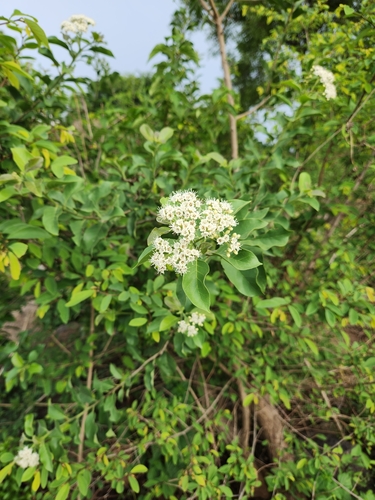
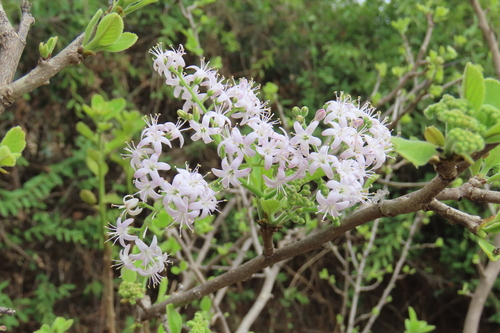
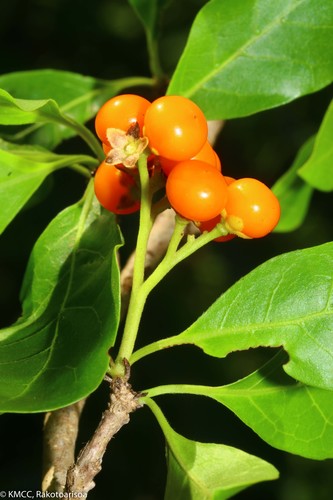
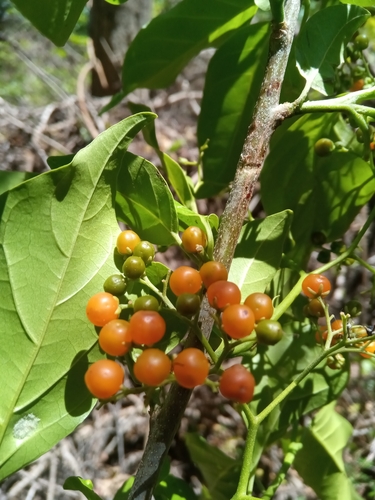
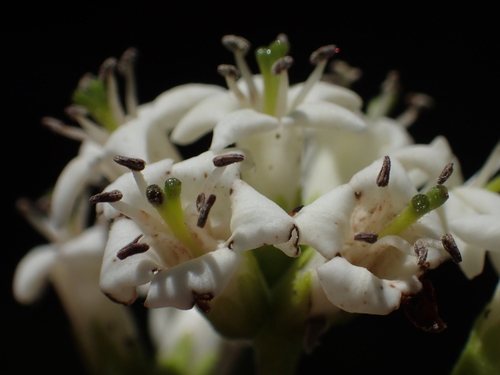
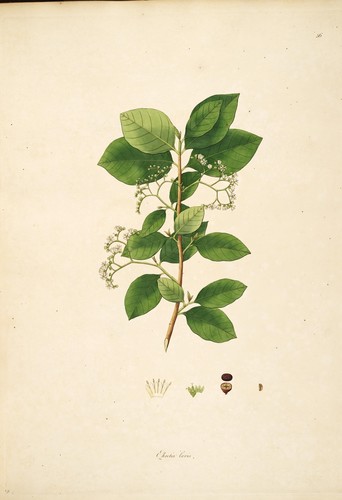
Carmona retusa - (Vahl) Masam.
(Vahl) Masam.
Fukien Tea, Philippine tea tree
gbif· cc0
Ingrid P. Lin
Description
Carmona retusa is an evergreen Shrub growing to 3 m (9ft) by 3 m (9ft) at a fast rate. See above for USDA hardiness. It is hardy to UK zone 10. Suitable for: light (sandy), medium (loamy) and heavy (clay) soils. Suitable pH: mildly acid, neutral and basic (mildly alkaline) soils and can grow in saline soils. It cannot grow in the shade. It prefers moist soil. The plant can tolerates strong winds but not maritime exposure.
Edible Uses
Tea. Fruit - raw. An infusion of the leaves is used as a substitute for tea. The leaves are dried in the shade and used as a tea. The fruit are eaten.
Medicinal Uses
Antibacterial Antidiarrhoeal Antidote Antitussive Dysentery Febrifuge Stomachic. The leaves are antidiarrhoeal, febrifuge and stomachic. An infusion is used as a remedy for stomach problems, dysentery and coughs. The root is considered an antidote against plant-based poisoning and an alterative in cachexia and syphilis. Furthermore, it is traditionally used to stop the haemorrhaging resulting from the bite of the viper Echis carinatus The roots are reported to be ingested to clean the body after childbirth. The plant has been shown to contain a range of medically active constituents. The leaves contain rosmarinic acid, flavonoid glycosides and triterpenoids. Rosmarinic acid, a phenylacrylic acid derivative, is a known inhibitor of histamine release and a methanol extract of the leaves has shown strong antihistamine release properties. In an experiment in the Philippines, tablets from the dried leaves reduced the formation of micronucleated polychromatic erythrocytes induced by mitomycin C, tetracycline, and dimethylnitrosamine. This suggests that these tablets possess antimutagenic activity The root bark contains ehretianone, microphyllone and ehretianone. Ehretianone, a quinonoid xanthene, has been shown to give protection against the action of snake venom. Microphyllone and ehretianone have shown antibacterial activity against a panel of bacteria. Many membes of this genus contain pyrrolizidine alkaloids and quinoid or phenolic compounds.
Distribution
E. Asia - China, Japan, Indian subcontinent, Malaysia, Indonesia, Vietnam, Philippines, New Guinea, Australia and the Solomon Islands.
Where It Grows
TEMPERATE ASIA: China (Guangdong Sheng (south), Hainan Sheng), Japan (Ryukyu Islands), Taiwan TROPICAL ASIA: India, Sri Lanka, Indonesia (Papua), Papua New Guinea, Solomon Islands, Indochina, Myanmar, Thailand, Indonesia (Jawa, Lesser Sunda Islands, Maluku, Sulawesi, Sumatera), Malaysia, Philippines AUSTRALASIA: Australia (Queensland (north))
Cultivation
The plant has escaped from cultivation in Hawaii and become naturalized in secondary vegetation. Plants can flower all year round.
Propagation
Seed, Cuttings, preferably of top shoots or young leafy shoots. The roots develop slowly over a period of 1-2 months.
Other Uses
Hedge. Other uses rating: Low (2/5). Agroforestry Uses: The plant can be grown as an ornamental hedge.
Synonyms
Also Known As
Carmona retusa or commonly known as Fukien Tea or Philippine Tea Tree. Other Names: Pala, Bapanaburi, Pitta, Pisniki, Barranki, Buri, Piccaka, Kuruvingi, Kalamoga, Kattuvettilai, Bute, Ennebutige, Kujapponno, Ponnomari, Fuku-man-gi, Icha.