Helicia serrata
Blume
gbif· cc0
President and Fellows of Harvard College
gbif· cc0
President and Fellows of Harvard College
gbif· cc0
President and Fellows of Harvard College
Description
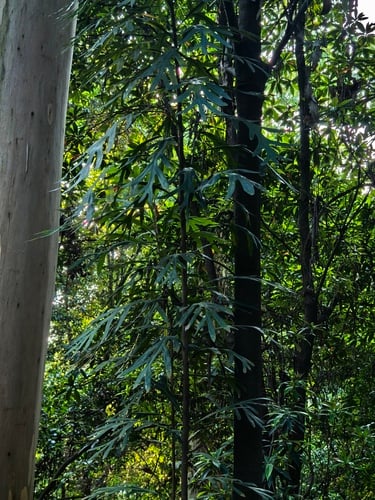
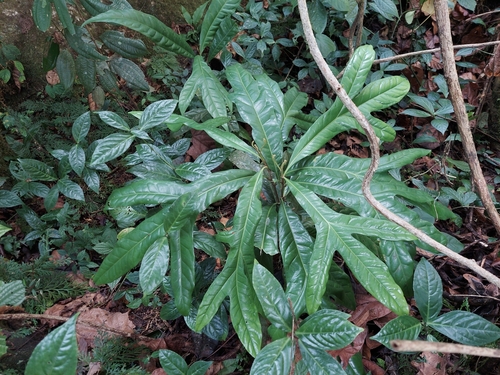
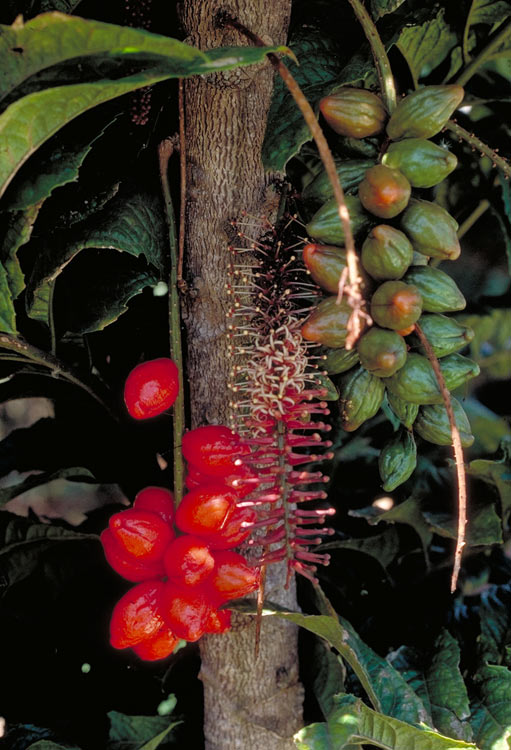
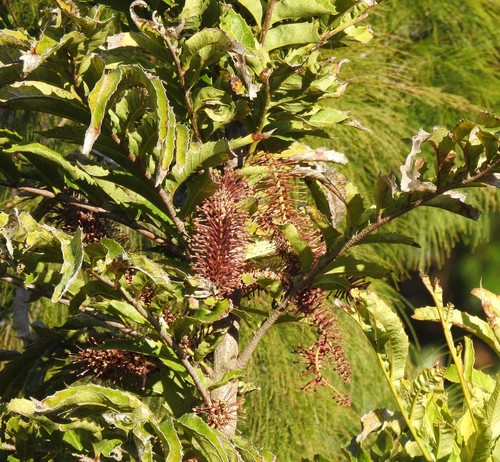
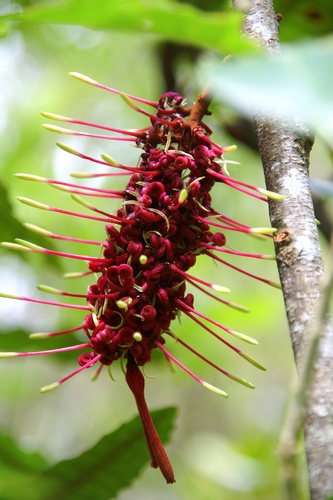
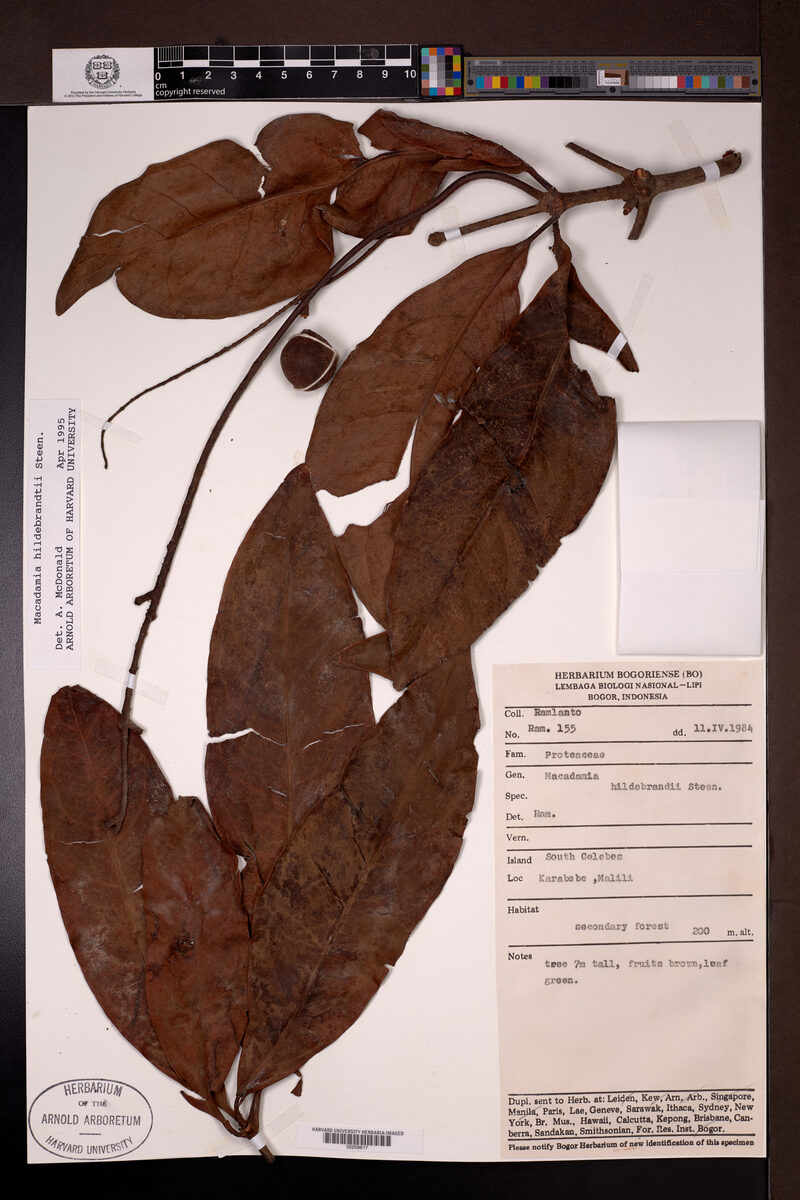
A medium sized tree. It grows 15-30 m tall. The trunk is straight and 25-50 cm across. The young shoots have a reddish colouring. The leave are arranged in spirals. They are narrowly oval and taper to the base. There are teeth along the edge. The leaves are 15-20 cm long by 6-8 cm wide. The leaf stalks are 2 cm long. The flowers are at the ends of branches or in the axils of leaves. The flowers are small and white. They have a sweet scent. The fruit are oval and flattened on one side. There are furrows along them. The fruit are 2-3 cm long.
Edible Uses
Young leaves are cooked and eaten.
Traditional Uses
The young leaves are cooked and eaten.
This uses section is brief — help expand it
Distribution
A tropical plant. It grows in mountain forests and valleys between 200-2,000 m above sea level in Indonesia.
Where It Grows
Asia, Indonesia, Malaysia, SE Asia,
Cultivation
Plants can be grown from seeds.
Other Uses
The honey-coloured heartwood wood is prettily marked by broad, yellowish medullary rays.
Other Information
Leaves are occasionally sold in markets.
Notes
There are about 90 Helicia species mostly in SE Asia with some in N Australia.
Also Known As
Pohon krinjin daun
References (5)
- Martin, F.W. & Ruberte, R.M., 1979, Edible Leaves of the Tropics. Antillian College Press, Mayaguez, Puerto Rico. p 215
- Ochse, J. J. et al, 1931, Vegetables of the Dutch East Indies. Asher reprint. p 623
- Sleumer, H., 1955, Proteaceae in Flora Malesiana, Ser 1 Vol 5(2) p 176
- Sosef, M. S. M., Hong, L. T., & Prawirohatmodjo, S., (Eds.), 1998, Timber tree: Lesser-known timbers. Plant Resources of South-East Asia, 5(3), p 268
- Sukarya, D. G., (Ed.) 2013, 3,500 Plant Species of the Botanic Gardens of Indonesia. LIPI p 319