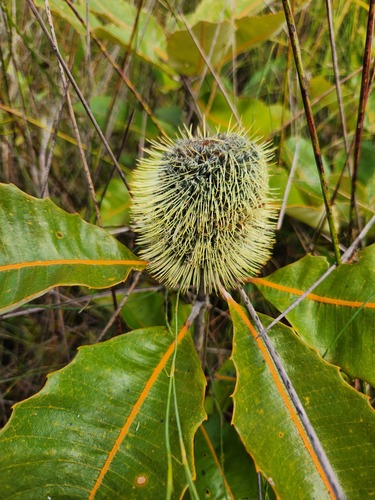
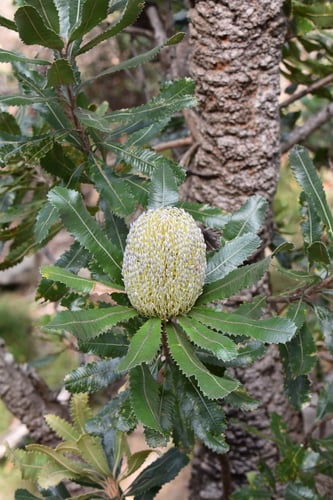
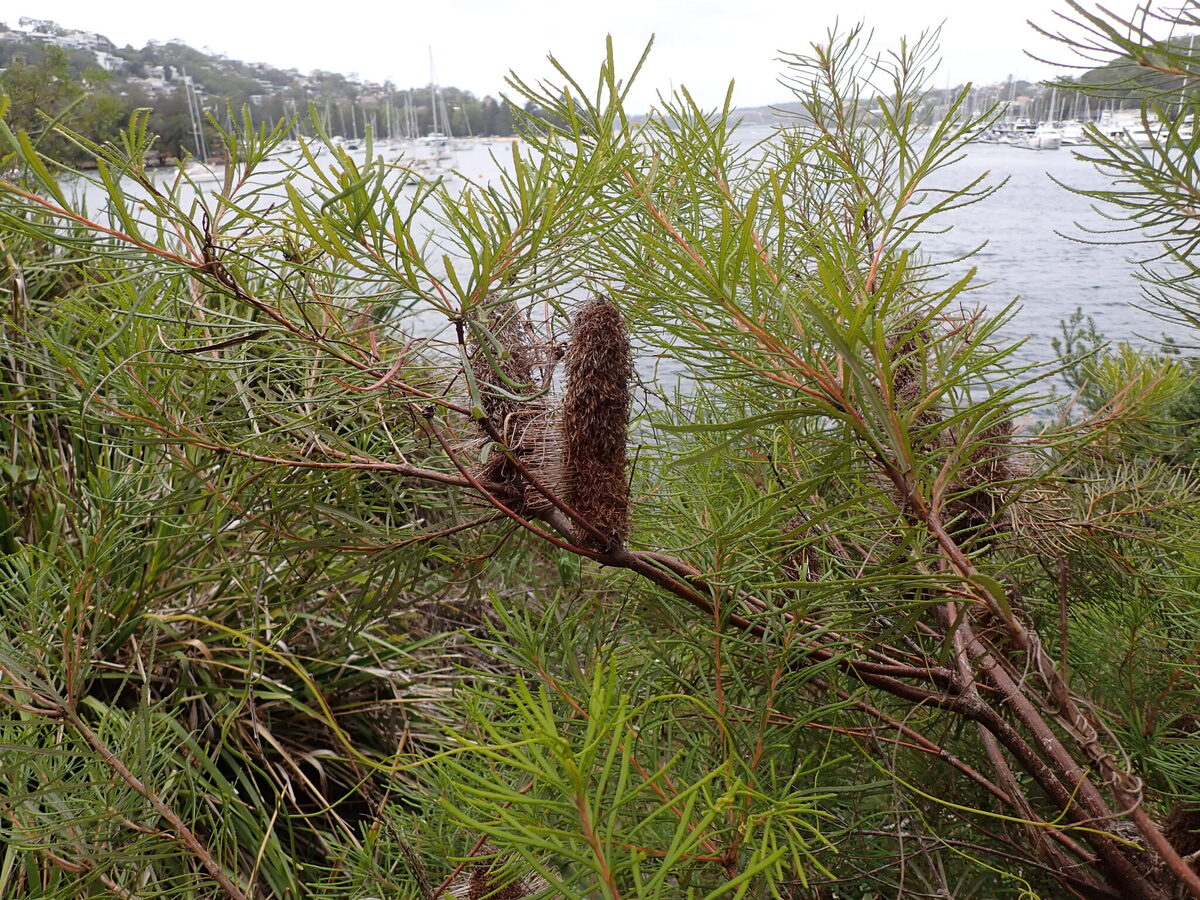
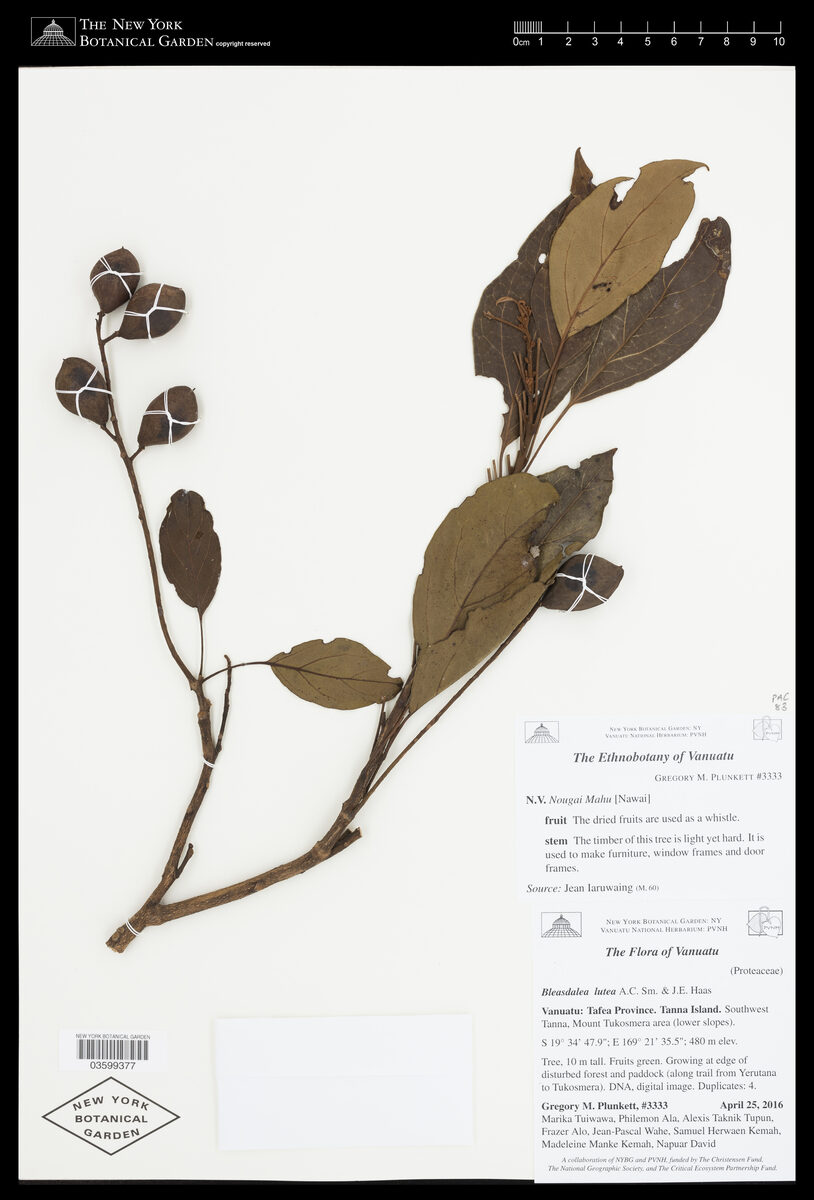
Protea madiensis
Oliv.
iNaturalist· cc-by-nc
(c) jordivanoort, some rights reserved (CC BY-NC), uploaded by jordivanoort
iNaturalist· cc-by-nc
(c) Bethel Clement, some rights reserved (CC BY-NC)
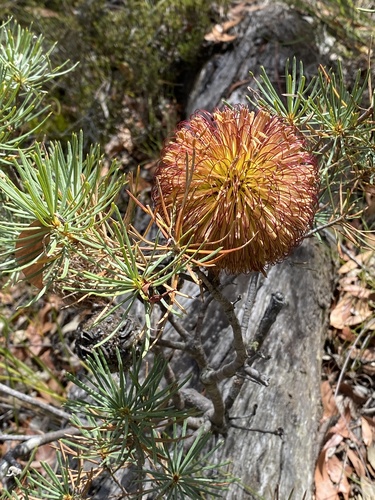
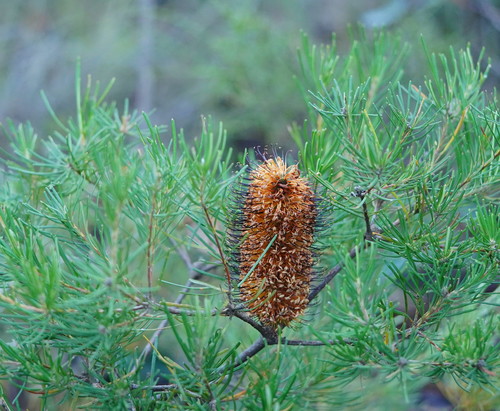
iNaturalist· cc-by-nc
(c) Bethel Clement, some rights reserved (CC BY-NC)
Summary
Source: WikipediaProtea madiensis, commonly known as the tall woodland sugarbush, is a flowering shrub which belongs to the genus Protea. It is native to the montane grasslands of Sub-Saharan Africa.
Description
A shrub or small tree in the Proteaceae family growing to 3 m high with usually white flowers. It is a tropical plant found in lowland and upland savannah in West Africa, reaching 1,970 m elevation in Nigeria.
Edible Uses
The flower nectar is eaten. The leaves are used as a vegetable.
Traditional Uses
The flower nectar is eaten.
This uses section is brief — help expand it
Medicinal Uses
The stem bark is used in the treatment of diarrhoea and dysentery.
Distribution
It is a tropical plant. It grows in lowland and upland savannah in West Africa. In Nigeria it grows to 1,970 m above sea level.
Where It Grows
Africa, Angola, Burkina Faso, Cameroon, Central Africa, Congo, East Africa, Ethiopia, Guinea, Guinée, Malawi, Mali, Mozambique, Nigeria, Southern Africa, West Africa, Zambia,
Synonyms
Also Known As
Chindjissi, Dague tulu, Katumbaga, Sinsi
References (8)
- Burkill, H. M., 1985, The useful plants of west tropical Africa, Vol. 4. Kew.
- Chapman, J. D. & Chapman, H. M., 2001, The Forest Flora of Taraba and Andamawa States, Nigeria. WWF & University of Canterbury. p 195
- East African Herbarium records, 1981,
- Grubben, G. J. H. and Denton, O. A. (eds), 2004, Plant Resources of Tropical Africa 2. Vegetables. PROTA, Wageningen, Netherlands. p 564
- Peters, C. R., O'Brien, E. M., and Drummond, R.B., 1992, Edible Wild plants of Sub-saharan Africa. Kew. p 164
Show all 8 references Hide references
- von Katja Rembold, 2011, Conservation status of the vascular plants in East African rain forests. Dissertation Universitat Koblenz-Landau p 178
- White, F., Dowsett-Lemaire, F. and Chapman, J. D., 2001, Evergreen Forest Flora of Malawi. Kew. p 439
- World Checklist of Useful Plant Species 2020. Royal Botanic Gardens, Kew