Allium canadense var. mobilense
(Regel) F. M. Ownbey
Canadian garlic, Meadow Garlic
gbif· cc-by-nc
Emmett Carstens
gbif· cc-by-nc
Emmett Carstens
gbif· cc-by-nc
Emmett Carstens
Summary
Source: WikipediaAllium canadense, the Canada onion, Canadian garlic, wild garlic, meadow garlic and wild onion is a perennial plant native to eastern North America from Texas to Florida to New Brunswick to Montana. The species is also cultivated in other regions as an ornamental and as a garden culinary herb. The plant is also reportedly naturalized in Cuba.
Description
An onion family plant. It is a bulb plant. It grows to 50 cm high. The bulb is 30 mm across. The stem is 15-20 cm long and hollow. It has an onion scent. There are 3 or more leaves from the base. They are about 15-20 cm long and 2-3 mm wide. The flowers cluster at the top of the stem. The individual flowers have stems 3-25 mm long.
Edible Uses
The Canada onion is cultivated as a vegetable in home gardens in Cuba, scattered locally in the south to western parts of the island. It was formerly collected from the wild to be eaten by Native Americans and by European settlers. People in the Cherokee Nation and Chickasaw Nation continue the tradition of picking and cooking wild onions in early spring. Various Native American tribes also used the plant for other purposes: for example, rubbing the plant on the body for protection from insect, lizard, scorpion, and tarantula bites. The whole plant can be eaten raw, with the tougher outer layers removed. It can also be cooked and included in any recipe calling for onions. However, there have been reported cases of poisoning when deathcamas bulbs were mistaken for wild onions. Additionally, long term consumption of wild onion bulbs reduces iodine uptake by the thyroid gland. This can worsen iodine deficiency for people with a diet that is low in iodine. Horses are vulnerable to developing hemolytic anemia from eating wild onion leaves.
Traditional Uses
The bulbs are eaten raw or cooked. The leaves are eaten raw or cooked. The flowers are used raw to flavour salads.
This uses section is brief — help expand it
Distribution
It grows best in open unshaded areas. It grows naturally on moist soils in prairies in South-eastern North America from North Carolina to Florida.
Where It Grows
North America, USA,
Cultivation
Plants can be grown from seed or by dividing the clumps.
Notes
There are about 300-700 Allium species. Most species of Allium are edible (Flora of China). All alliums are edible but they may not all be worth eating! They have also been put in the family Alliaceae.
Synonyms
References (4)
- Beckstrom-Sternberg, Stephen M., and James A. Duke. "The Foodplant Database." http://probe.nalusda.gov:8300/cgi-bin/browse/foodplantdb.(ACEDB version 4.0 - data version July 1994)
- Fl. bor.-amer. 1:195. 1803
- Loughmiller, C & L., 1985, Texas Wildflowers. A Field Guide. University of Texas, Austin. p 143 (As Allium mobilense)
- Plants for a Future database, The Field, Penpol, Lostwithiel, Cornwall, PL22 0NG, UK. http://www.scs.leeds.ac.uk/pfaf/
More from Amaryllidaceae
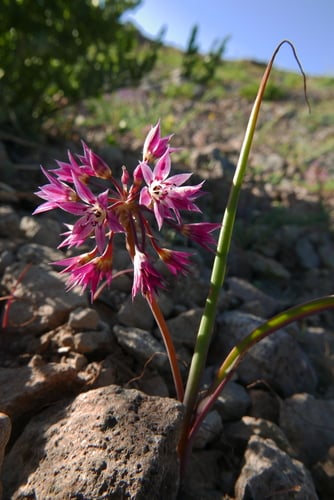
Allium campanulatum
Dusky onion
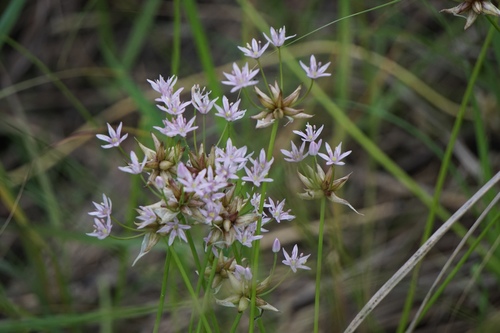
Allium canadense
Wild garlic, Canadian garlic, Meadow Garlic, Olympic Onion, American wild garlic, Rose garlic, Tree onion
Allium canadense mobilense - (Regel.)F.M.Ownb.
Canadian Garlic
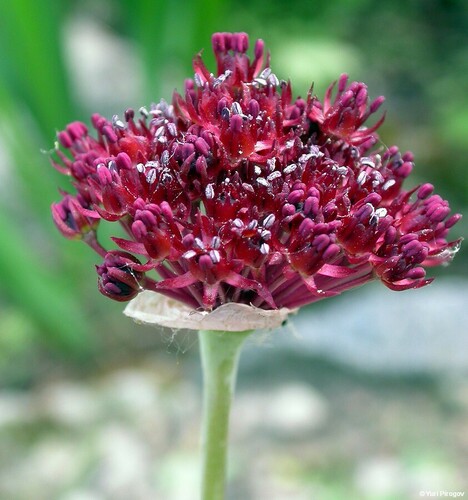
Allium cardiostemon
Purple gem ornamental onion
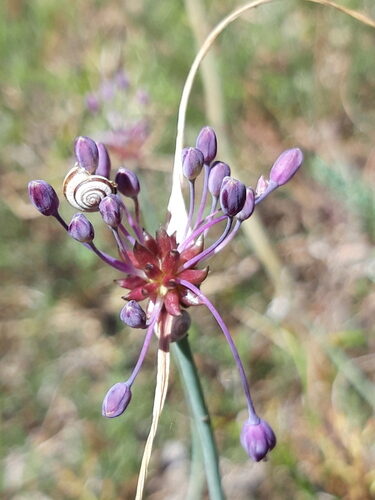
Allium carinatum
Keeled Garlic
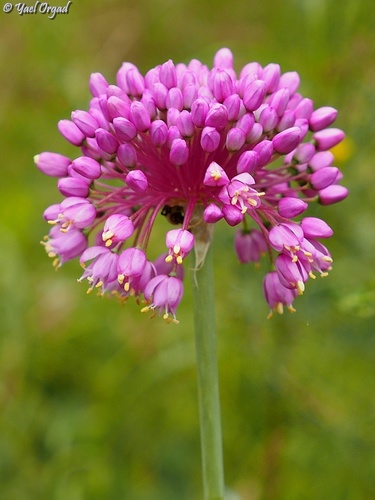
Allium carmeli
Mount Carmel onion