Helicia robusta
(Roxb.) R.Br. ex Wall.
iNaturalist· cc-by-nc-sa
(c) filibot.web, some rights reserved (CC BY-NC-SA)
gbif· cc0
President and Fellows of Harvard College
Description
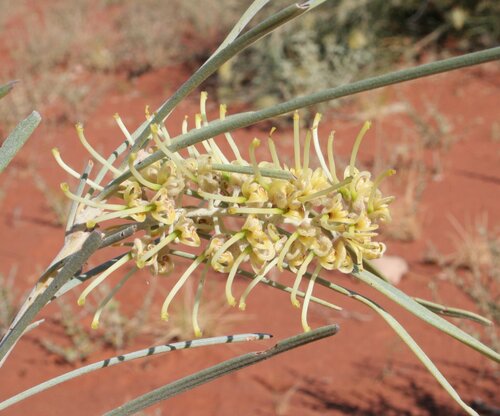
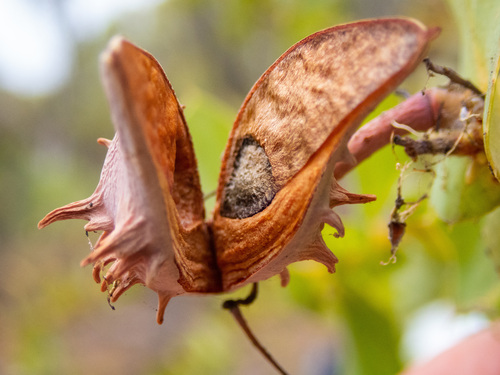
A large tree. It grows 17 m tall. The leaves are alternate and simple. There are often teeth along the edge. The flowers are 13 mm across. They are white to orange. The fruit are 3.5 cm across. They are fleshy and green to purple.
Edible Uses
The young shoots and leaves are eaten raw.
Traditional Uses
CAUTION: The fruit are poisonous. The young shoots are leaves are eaten raw.
This uses section is brief — help expand it
Known Hazards
The fruit are poisonous.
Distribution
A tropical plant. It grows in slightly open forest up to 1,200 m above sea level. It is often along rivers and in locations that are occasionally flooded.
Where It Grows
Asia, Brunei, India, Indochina, Indonesia, Malaysia, Myanmar, Philippines, SE Asia, Thailand,
Cultivation
Plants can be grown from seeds.
Other Uses
The wood is heavy and hard. It is used in house construction and for the shafts of axes. It is not a first class timber.
Notes
There are about 90 Helicia species mostly in SE Asia with some in N Australia.
Synonyms
Also Known As
Bronsop, Buak-buak, Buntal, Daukyan, Daukyat, Jaring jaringan jawa, Kendung, Korodo, Luan, Medang keladi, Medang lalang, Mot, Palis, Pohon kendung, Pohon maributan, Ponsch, Taukyat, Watutu
References (11)
- Ambasta, S.P. (Ed.), 2000, The Useful Plants of India. CSIR India. p 260
- Burkill, I.H., 1966, A Dictionary of the Economic Products of the Malay Peninsula. Ministry of Agriculture and Cooperatives, Kuala Lumpur, Malaysia. Vol 1 (A-H) p 1151 (As Helicia javanica)
- Heyne, K., 1927, p 588 (As Helicia javanica)
- Martin, F.W. & Ruberte, R.M., 1979, Edible Leaves of the Tropics. Antillian College Press, Mayaguez, Puerto Rico. p 215 (As Helicia javanica)
- Ochse p 623 (As Helicia javanica)
Show all 11 references Hide references
- Sleumer, H., 1955, Proteaceae in Flora Malesiana, Ser 1 Vol 5(2) p 184
- Slik, F., www.asianplant.net
- Sosef, M. S. M., Hong, L. T., & Prawirohatmodjo, S., (Eds.), 1998, Timber tree: Lesser-known timbers. Plant Resources of South-East Asia, 5(3), p 284
- Sukarya, D. G., (Ed.) 2013, 3,500 Plant Species of the Botanic Gardens of Indonesia. LIPI p 318
- Suwardi, A. B., et al, 2020, Wild edible fruits generate substantial income for local people of the Gunung Leuser National Park, Aceh Tamiang Region. Ethnobotany Research & Applications 20:11
- World Checklist of Useful Plant Species 2020. Royal Botanic Gardens, Kew