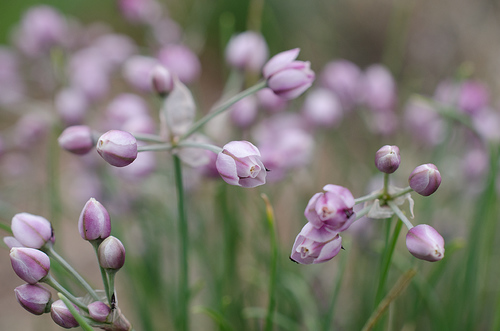
Allium cepa var. proliferum
(Moench) Regel.
Tree onion, Egyptian tree onion, Top onion
gbif· cc-by
Jens-Christian Svenning
gbif· cc-by
Jens-Christian Svenning
gbif· cc-by
Jens-Christian Svenning
Description
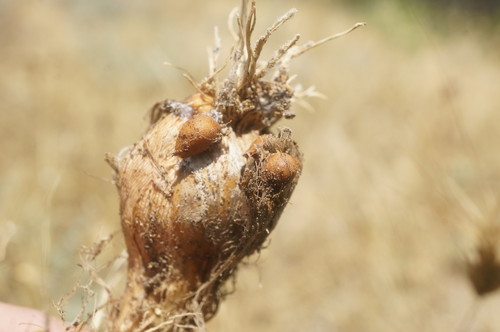
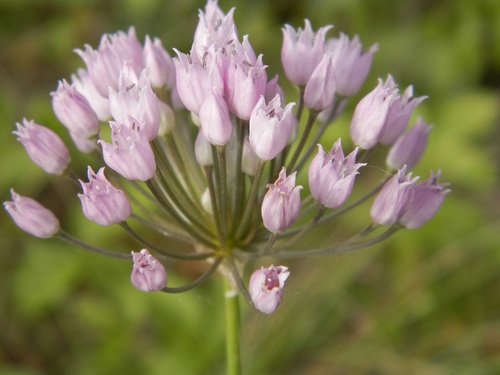
An onion family plant. A bulb plant. It grows to 1.2 m high. The bulb can be up to 4 cm in diameter. The plant forms small bulbs at the top of the flowering stem. Plants rarely if ever produce seed, instead the flowering head is comprised of a number of small onions or bulbils.
Edible Uses
The bulbils at the top of the stem can be eaten raw or cooked. The leaves can be eaten raw or cooked.
Traditional Uses
The bulbs at the top of the stem can be eaten The bulbs can be eaten raw or cooked. The leaves can be eaten raw or cooked.
This uses section is brief — help expand it
Distribution
It is a temperate plant. It suits hardiness zones 5-10. Hobart Botanical Gardens. In Sichuan.
Where It Grows
Africa, Australia, Britain, Canada, China, Europe, Egypt, North Africa, North America, Tasmania,
Cultivation
Plants are propagated by means of these bulbils or by dividing the main bulb that grows underground.
Other Information
It is a commercially cultivated vegetable.
Notes
There are about 300-700 Allium species. Most species of Allium are edible (Flora of China). All alliums are edible but they may not all be worth eating! They have also been put in the family Alliaceae.
Synonyms
Also Known As
Lou zi cong
References (10)
- Allior. monogr. 93. 1875
- Bremness, L., 1994, Herbs. Collins Eyewitness Handbooks. Harper Collins. p 143
- Chen Xinqi, Liang Songyun, Xu Jiemei, Tamura M.N., Liliaceae. Flora of China. p 124
- Flora of Pakistan. www.eFloras.org
- Kays, S. J., and Dias, J. C. S., 1995, Common Names of Commercially Cultivated Vegetables of the World in 15 languages. Economic Botany, Vol. 49, No. 2, pp. 115-152
Show all 10 references Hide references
- Kiple, K.F. & Ornelas, K.C., (eds), 2000, The Cambridge World History of Food. CUP p 1825
- Plants for a Future database, The Field, Penpol, Lostwithiel, Cornwall, PL22 0NG, UK. http://www.scs.leeds.ac.uk/pfaf/
- Woodward, P., 1996, Garlic and Friends. The History, Growth and Use of Edible Alliums. Hyland House. p 138
- Zeven, A. C. & de West, J. M. J., 1982, Dictionary of cultivated plants and their regions of diversity. Wageningen. p 81
- Zhang, L., et al, 2016, Ethnobotanical study of traditional edible plants used by the Naxi people during droughts. Journal of Ethnobiology and Ethnomedicine. 12:39