Heinsia crinita
(Afzel.) G. Taylor
Small false gardenia
iNaturalist· cc-by-nc
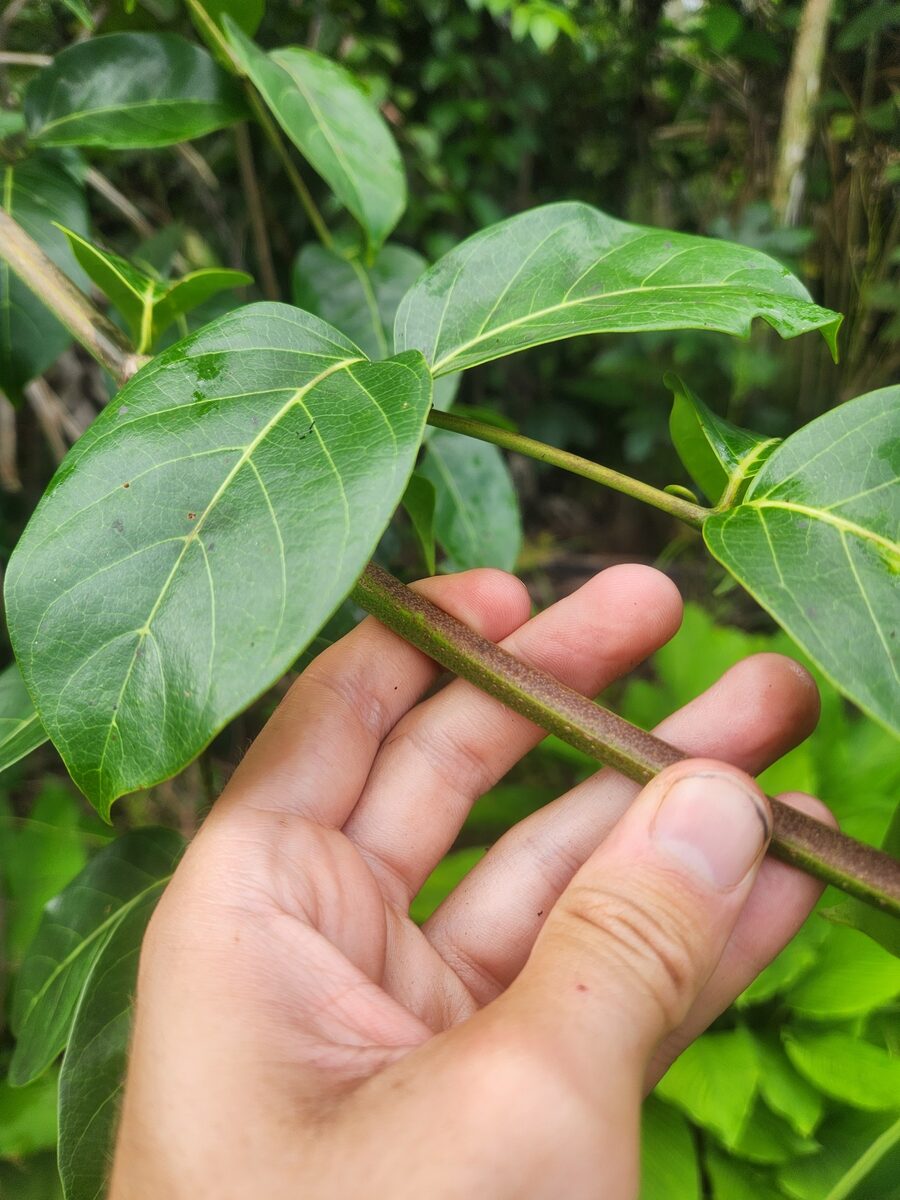
(c) ryansig, some rights reserved (CC BY-NC)
iNaturalist· cc-by-nc
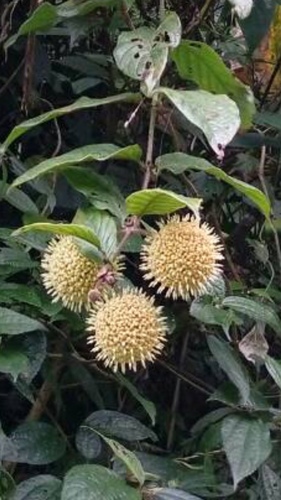
(c) Bart Wursten, some rights reserved (CC BY-NC), uploaded by Bart Wursten
iNaturalist· cc-by-nc
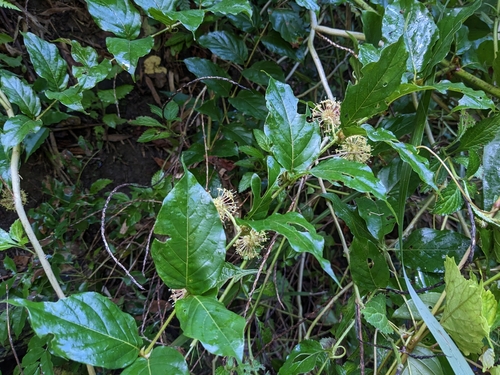
(c) ryansig, some rights reserved (CC BY-NC)
Summary
Source: WikipediaHeinsia crinita (commonly known as bush apple) is a species of perennial shrub or small tree in the family Rubiaceae. It is native to tropical areas of Africa. The fruit is harvested as a local source of food and the leaves are also eaten ("betete" or bitter leaves). Parts are also used in traditional medicine. It has been the subject of various studies. It is known as atama in Nigeria.
Description
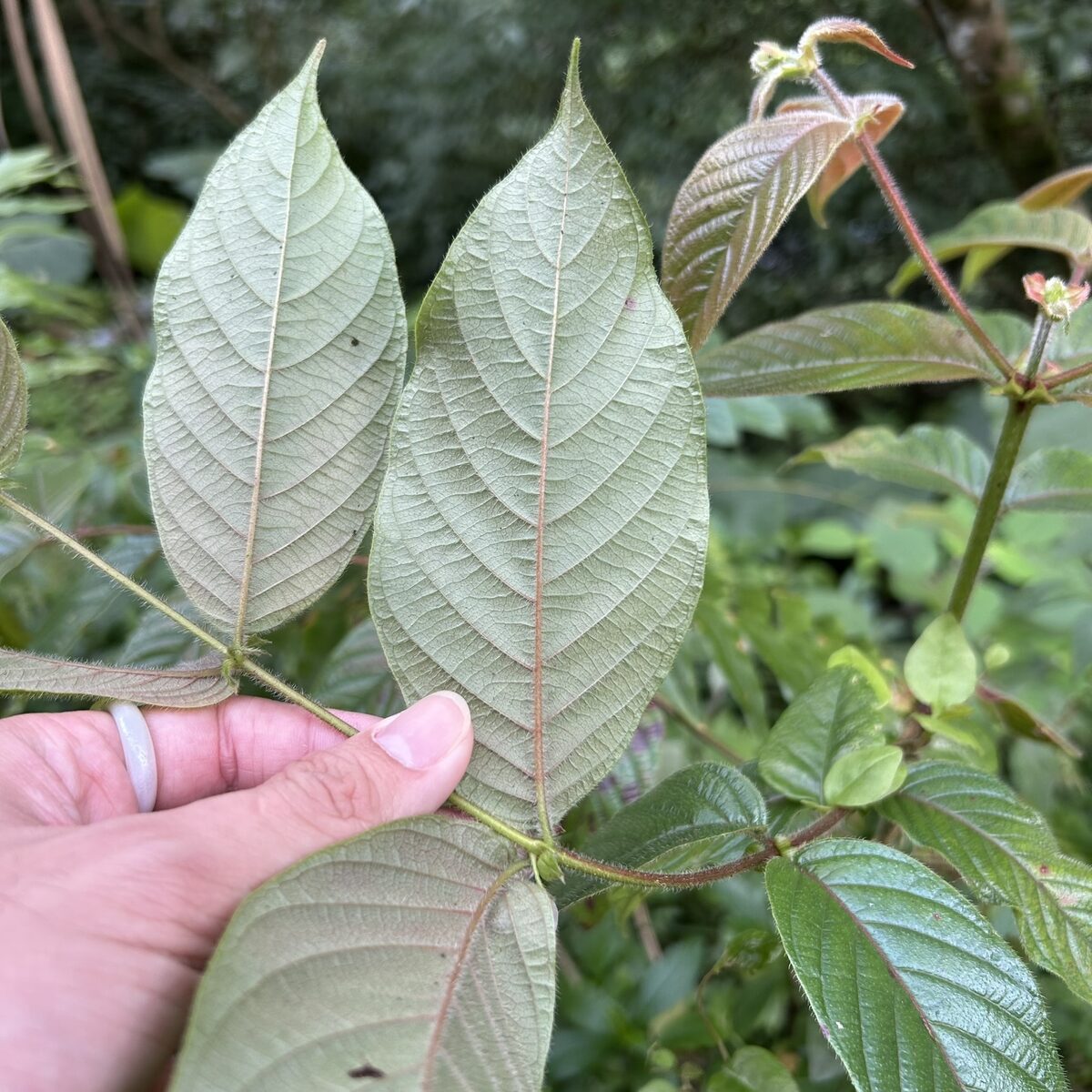
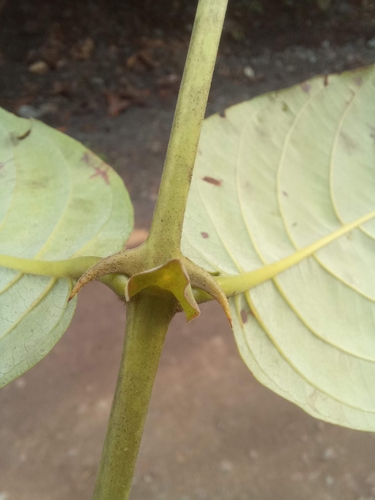
A shrub or small tree. It grows to 6 m high. The bark is grey to light brown and mottled. It is smooth. The leaves are opposite and simple. They are oval and 2-8 cm long by 1-5 cm wide. They are light green. There are some harsh hairs on top and soft velvety hairs underneath. The leaves taper to both ends. The flowers are white and 3-4 cm across. The flower tube it 3 cm long with spreading lobes. Flowers can be single or a few in a group either in the axils of leaves or at the ends of branches. The fruit is oval and 10 mm long. They are orange when mature. At the top there is the leaf-like remains of the calyx.
Edible Uses
The leaves are dried and eaten in soups, though they can be high in oxalates. The orange fruits are eaten as a snack.
Traditional Uses
The leaves can be dried and stored. They are eaten in soup. They can be high in oxalates. The fruit are eaten as a snack.
This uses section is brief — help expand it
Medicinal Uses
The leaves are popular and traditionally used.
Distribution
A tropical plant. It occurs at low altitudes along the edges of forest in river valleys. It is mostly on sandy soils. In Zimbabwe it grows up to 1,000 m above sea level.
Where It Grows
Africa, Angola, Cameroon, Central Africa, Congo DR, Congo R, East Africa, Equatorial Guinea, Gabon, Ghana, Guinea, Guinée, Kenya, Libya, Mozambique, Nigeria, North Africa, Sao Tome and Principe, Sierra Leone, Somalia, South Africa, Southern Africa, Tanzania, West Africa, Zambia, Zimbabwe,
Cultivation
Plants can be grown from stem cuttings. It can also be grown by seeds.
Other Uses
Flowers used as perfume. The pulverised leaves have the scent of sweet vernal grass (Anthoxanthum odoratum). They are made into pomades and used locally. The wood is hard and flexible. It is used for tool handles.
Other Information
The leaves are popular.
Synonyms
Also Known As
Atama, Bastard gardenia, Bush apple, Evem, Jasmine gardenia, Kibwa, Kinkete, Nsiamuna Twitita
References (25)
- Abbiw, D.K., 1990, Useful Plants of Ghana. West African uses of wild and cultivated plants. Intermediate Technology Publications and the Royal Botanic Gardens, Kew. p 42
- Akinola, R., et al, 2020, A Review of Indigenous Food Crops in Africa and the Implications for more Sustainable and Healthy Food Systems. Sustainability 2020, 12, 3493;
- Burkill, H. M., 1985, The useful plants of west tropical Africa, Vol. 4. Kew.
- Busson, 1965,
- Dalziel, J. M., 1937, The Useful plants of west tropical Africa. Crown Agents for the Colonies London.
Show all 25 references Hide references
- Exell, Catalogue of the plants of São Tome 209. 1944
- Fowler, D. G., 2007, Zambian Plants: Their Vernacular Names and Uses. Kew. p 84
- Fox, F. W. & Young, M. E. N., 1982, Food from the Veld. Delta Books. p 329
- Grubben, G. J. H. and Denton, O. A. (eds), 2004, Plant Resources of Tropical Africa 2. Vegetables. PROTA, Wageningen, Netherlands. p 562
- Jardin, C., 1970, List of Foods Used In Africa, FAO Nutrition Information Document Series No 2.p 79, 141
- Kuhnlein, H. V., et al, 2009, Indigenous Peoples' food systems. FAO Rome p 264
- Latham, P., 2004, Useful Plants of Bas-Congo province. Salvation Army & DFID p 145
- Liengola, I. B., 2001, A contribution to the study of native edible plants by the Turumbu and Lokele of the Tshopo District, Province Orientale, D. R. Congo. Syst. Geogr. Pl. 71:687-698
- Luoga, E. J., et al, 2000, Differential Utilization and Ethnobotany of Trees in Kitulanghalo Forest Reserve and Surrounding Communal Lands, Eastern Tanzania. Economic Botany, Vol. 54, No. 3, pp. 328-343
- Martin, F.W. & Ruberte, R.M., 1979, Edible Leaves of the Tropics. Antillian College Press, Mayaguez, Puerto Rico. p 216
- Mutie, F. M., et al, 2023, Important Medicinal and Food Taxa (Orders and Families) in Kenya, Based on Three Quantitative Approaches. Plants 2023, 12, 1145
- Nkeoua, G. & Boundzanga, G. C., 1999, Donnees sur les produits forestieres non ligneux en Republique du Congo. FAO. p 28
- Okafor, J. C., 1978, Development of Forest Tree crops for Food Supplies in Nigeria. Forest Ecology and Management 1:235-247
- Okigbo, B.N., Vegetables in Tropical Africa, in Opena, R.T. & Kyomo, M.L., 1990, Vegetable Research and development in SADCC countries. Asian Vegetable Research and development Centre. Taiwan. p 45
- Palgrave, K.C., 1996, Trees of Southern Africa. Struik Publishers. p 869
- Ruiters-Welcome, A. K., 2019, Food plants of southern Africa. Ph.D. thesis. Univ. of Johannesburg p 96
- Vivien, J., & Faure, J.J., 1996, Fruitiers Sauvages d'Afrique. Especes du Cameroun. CTA p 283
- Welcome, A. K. & Van Wyk, B.-E., 2019, An inventory and analysis of the food plants of southern Africa. South African Journal of Botany 122 (2019) 136–179
- World Checklist of Useful Plant Species 2020. Royal Botanic Gardens, Kew
- Zapfack, L., et al, 2001, Ethnobotanical Survey of the Takamanda Forest Reserve. Consultancy Report PROFA, Cameroon. p 28