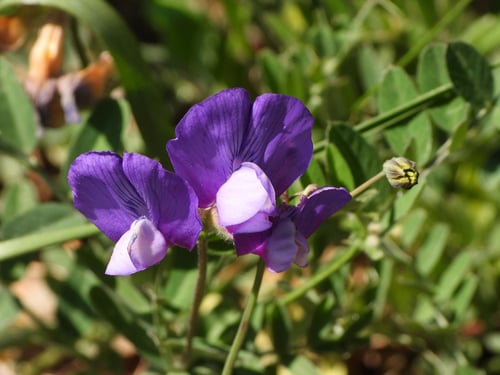
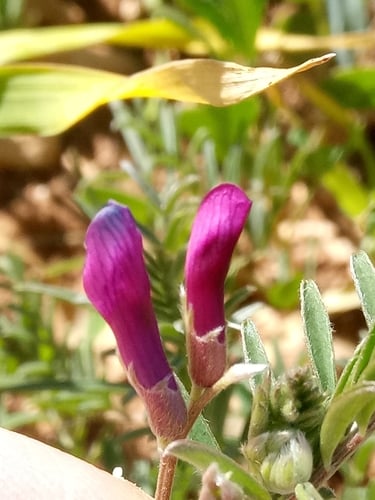
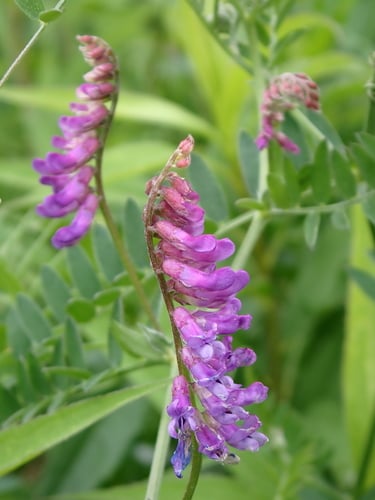
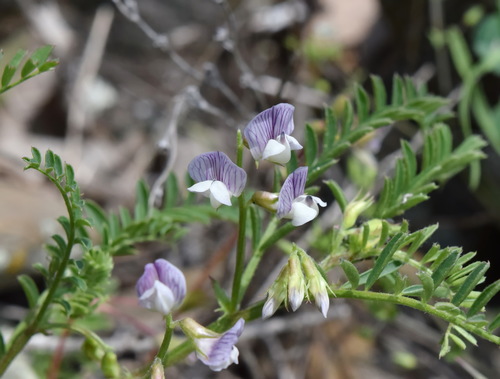
Hedysarum sachalinense
B. Fedtsch.
iNaturalist· cc-by-nc
(c) Viktor Stepanov, some rights reserved (CC BY-NC), uploaded by Viktor Stepanov
iNaturalist· cc-by-nc
(c) Viktor Stepanov, some rights reserved (CC BY-NC)
Summary
Perennial growing to 0.4 m (1ft 6in) tall. Hermaphrodite flowers pollinated by insects. Grows in light, medium, or heavy well-drained soils with mildly acid to basic pH. Requires full sun and moist soil conditions. Nitrogen-fixing capability.
Description
Perennial growing to 0.4 m (1ft 6in) tall. Hermaphrodite flowers pollinated by insects. Grows in light, medium, or heavy well-drained soils with mildly acid to basic pH. Requires full sun and moist soil conditions. Nitrogen-fixing capability.
Edible Uses
The root is edible raw or cooked.
Medicinal Uses
None known.
Distribution
It is a temperate plant.
Where It Grows
Asia, Russia,
Cultivation
We have very little information on this species and do not know if it will be hardy in this country though, judging by its native range, it should be perfectly hardy in this country. The following notes are based on the general needs of the genus. Easily grown in ordinary garden soil in a sunny position, preferring a deep well-drained sandy loam. Plants strongly resent root disturbance and should be placed in their permanent positions as soon as possible. This species has a symbiotic relationship with certain soil bacteria, these bacteria form nodules on the roots and fix atmospheric nitrogen. Some of this nitrogen is utilized by the growing plant but some can also be used by other plants growing nearby.
Propagation
Sow seed in a cold frame as soon as it is ripe or in spring. Stored seed should be pre-soaked in warm water for 24 hours before sowing. Prick seedlings into individual pots as soon as they are large enough to handle, then plant into permanent positions in summer. Division is possible in spring, though great care is needed as the plant dislikes root disturbance.
Other Uses
None known.
References (2)
- ILDIS Legumes of the World http:www:ildis.org/Legume/Web
- Plants for a Future database, The Field, Penpol, Lostwithiel, Cornwall, PL22 0NG, UK. http://www.scs.leeds.ac.uk/pfaf/