Vigna reticulata
Hook. f.
iNaturalist· cc-by-nc-nd
(c) Dinesh Valke, some rights reserved (CC BY-NC-ND)
iNaturalist· cc-by-nc-sa
(c) Dinesh Valke, some rights reserved (CC BY-NC-SA)
iNaturalist· cc-by-sa
(c) Dinesh Valke, some rights reserved (CC BY-SA)
Description
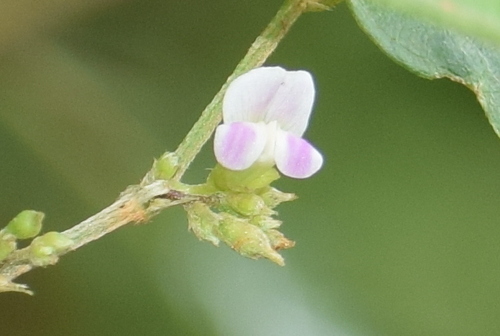
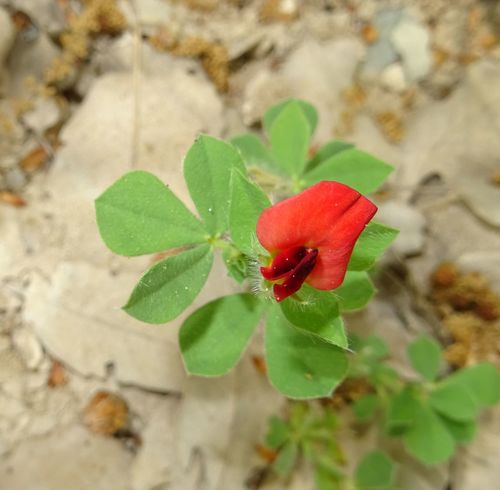
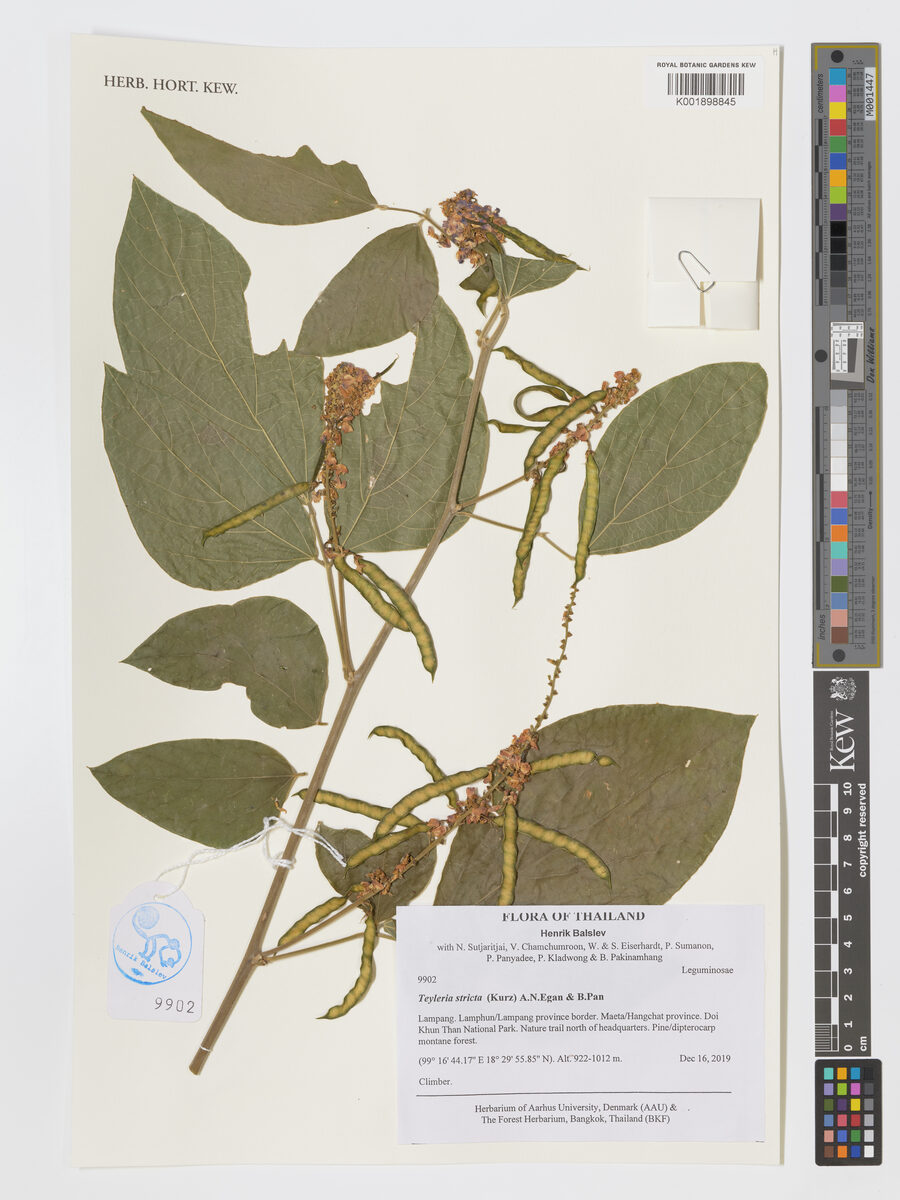
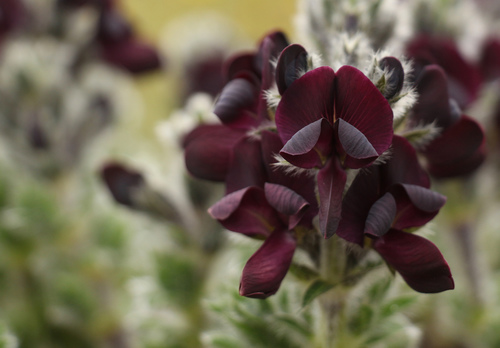
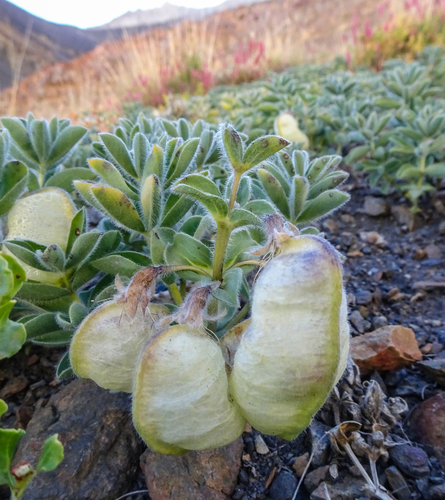
A bean family herb. It can grow each year from seed or continue to grow from year to year. It can climb or trail over the ground. Stems can be 0.6-1.5 m long. The stems are covered with reddish-brown hairs. The leaves normally have 3 leaflets. The leaflets can be 1.5-22 cm long by 0.3-4 cm wide. They have fine hairs. The small veins are close together and at right angles to the midrib. The leaf stalk is 2-8 cm long. The flowers occur in the axils of leaves. There are 2-6 flowers. The flowering stalk is 4-25 cm long. The pea like flower has a pink to red standard with a yellow centre. The wings are purple and the keel white. The fruit are pods held erect and spreading. They are 3-8 cm long and 4-4.5 mm wide. The seeds are pink to grown with dark speckles. They are oblong and 3-4 mm long by 2-3 mm wide.
Edible Uses
The leaves are cooked and eaten. The roots are eaten as a snack or cooked as a vegetable. The edible portions include leaves, roots, tubers, and seeds.
Traditional Uses
The leaves are cooked and eaten. The roots are eaten as a snack or cooked as a vegetable.
This uses section is brief — help expand it
Distribution
A tropical plant. It grows in grassland and bushland in West Africa. It grows from sea level to 2,400 m above sea level. It can grow in arid places.
Where It Grows
Africa, Angola, Benin, Burkina Faso, Burundi, Cameroon, Central Africa, Central African Republic, CAR, Chad, Congo DR, Congo R, Côte d'Ivoire, East Africa, Ethiopia, Gabon, Ghana, Guinea, Guinée, Guinea-Bissau, Ivory Coast, Kenya, Madagascar, Malawi, Mali, Mozambique, Niger, Nigeria, Pacific, Papua New Guinea, PNG, Rwanda, Senegal, Sierra Leone, Southern Africa, Sudan, Tanzania, Togo, Uganda, West Africa, Zambia, Zimbabwe,
Other Information
In Papua New Guinea they have been grown in trial plots at Aiyura at 1500 m altitude.
Notes
There are about 150 Vigna species. They are mostly in the tropics.
Synonyms
Also Known As
Chama, Chamaweya, Nkainia, Tirde
References (18)
- Burkill, H. M., 1985, The useful plants of west tropical Africa, Vol. 3. Kew.
- Dakora, F. D., 2013, Biogeographic Distribution, Nodulation and Nutritional Attributes of Underutilized Indigenous Agrican Legumes. Acta Horticulturae Number 979 Vol. 1. p 53
- Fox, F. W. & Young, M. E. N., 1982, Food from the Veld. Delta Books. p 223
- Grubben, G. J. H. and Denton, O. A. (eds), 2004, Plant Resources of Tropical Africa 2. Vegetables. PROTA, Wageningen, Netherlands. p 565
- J. D. Hooker & G. Bentham in W. J. Hooker, Niger Fl. 310. 1849
Show all 18 references Hide references
- ILDIS Legumes of the World http:www:ildis.org/Legume/Web
- Jardin, C., 1970, List of Foods Used In Africa, FAO Nutrition Information Document Series No 2.p 109
- Kew Plants of the World On line
- Malaisse, F., 1997, Se nourrir en floret claire africaine. Approche ecologique et nutritionnelle. CTA., p 69
- Martin, F.W. & Ruberte, R.M., 1979, Edible Leaves of the Tropics. Antillian College Press, Mayaguez, Puerto Rico. p 201
- Peters, C. R., O'Brien, E. M., and Drummond, R.B., 1992, Edible Wild plants of Sub-saharan Africa. Kew. p 139
- Royal Botanic Gardens, Kew (1999). Survey of Economic Plants for Arid and Semi-Arid Lands (SEPASAL) database. Published on the Internet; http://www.rbgkew.org.uk/ceb/sepasal/internet [Accessed 1st May 2011]
- Ruiters-Welcome, A. K., 2019, Food plants of southern Africa. Ph.D. thesis. Univ. of Johannesburg p 63
- Terra, G.J.A., 1973, Tropical Vegetables. Communication 54e Royal Tropical Institute, Amsterdam, p 80
- Verdcourt, B., 1979, Manual of New Guinea Legumes. Botany Bulletin No 11, Division of Botany, Lae, Papua New Guinea. p 524
- Welcome, A. K. & Van Wyk, B.-E., 2019, An inventory and analysis of the food plants of southern Africa. South African Journal of Botany 122 (2019) 136–179
- Williamson, J., 2005, Useful Plants of Malawi. 3rd. Edition. Mdadzi Book Trust. p 261
- World Checklist of Useful Plant Species 2020. Royal Botanic Gardens, Kew