Allium cepa
L.
Bulb onion
iNaturalist· cc-by-nc-sa
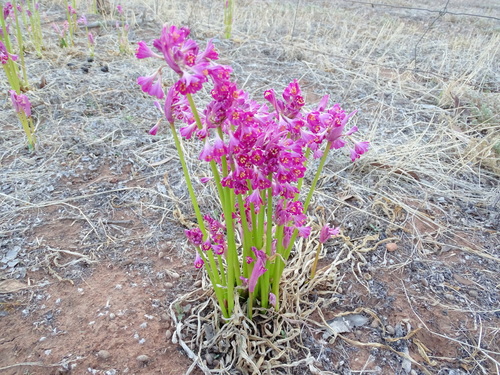
(c) Monteregina (Nicole), some rights reserved (CC BY-NC-SA)
iNaturalist· cc-by
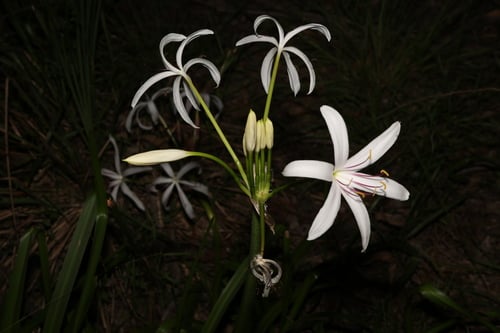
(c) Wuyongzheng, some rights reserved (CC BY)
iNaturalist· cc-by-sa
(c) H. Zell, some rights reserved (CC BY-SA)
Summary
An evergreen bulb growing to 60cm at medium rate, hardy to UK zone 5 and not frost tender. Flowers June to July; hermaphroditic and self-fertile. Attracts wildlife. Prefers light to medium well-drained soils, thrives in mildly acid to very alkaline pH, and requires full sun and moist soil.
Description
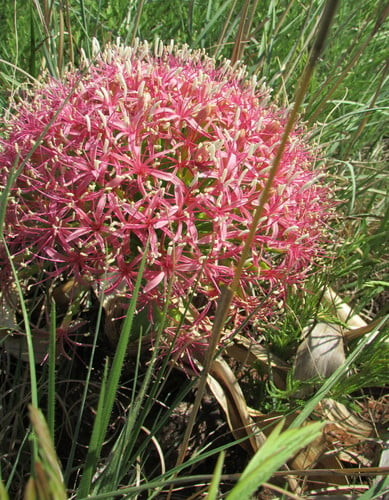
An onion family plant. A herb with a two year life cycle. Normally it develops fattened bulbs at the base. It has a shallow fibrous root system. The actual stem in very short and condensed. Leaves are produced in an alternate fashion one after the other from the top of this stem. Successive leaves grow up inside, then burst through the leaf sheath of the previous leaf. Leaves are thin and long. They are slightly to markedly flattened on the upper surface. Long day lengths and warm temperatures help the leaf bases become swollen and store food reserves. Flowers are greenish white in colour. Flowers develop on a rounded head with stalks all coming from the centre. Flowers in the rounded head open irregularly. There are no bulbils on the flower-head. There are short day cultivars that will form bulbs in the tropics.
Edible Uses
The bulb is eaten raw or cooked and is one of the most widely used vegetables in the world, growing 10cm or more in diameter. Raw, it can be sliced into salads or sandwich fillings; it is also baked or boiled as a vegetable in its own right, and commonly used to flavour soups, stews, and countless other cooked dishes. Some cultivars are selected for smaller, hotter bulbs specifically suited to pickling. Leaves of spring onion cultivars are harvested while young and actively growing for use in salads; the bulbs of these types are small and typically eaten along with the leaves. Successional sowing makes leaves available year-round. Flowers are eaten raw as a salad garnish, though they are somewhat dry and less pleasant than those of many related species. Seeds are sprouted and eaten, with a delicious onion flavour. Nutritional values per 100g fresh weight: 72 calories; water 79.8%; protein 2.5g; fat 0.1g; carbohydrate 16.8g; fibre 0.7g; ash 0.8g; calcium 37mg; phosphorus 60mg; iron 1.2mg; sodium 12mg; potassium 334mg; thiamine (B1) 0.06mg; riboflavin (B2) 0.02mg; niacin 0.2mg; vitamin C 8mg.
Traditional Uses
The bulbs and leaves are used as flavouring raw or cooked. The flowers are crushed and eaten.
This uses section is brief — help expand it
Medicinal Uses
Though rarely used as a dedicated medicinal herb, the onion offers a broad range of beneficial effects and promotes general health when eaten regularly, especially raw. The bulb is anthelmintic, anti-inflammatory, antiseptic, antispasmodic, carminative, diuretic, expectorant, febrifuge, hypoglycaemic, hypotensive, lithontripic, stomachic, and tonic. Regular dietary use helps offset tendencies toward angina, arteriosclerosis, and heart attack, and is useful in preventing oral infection and tooth decay. Baked onions can be applied as a poultice to draw pus from sores. Fresh onion juice is an effective first-aid treatment for bee and wasp stings, bites, grazes, and fungal skin complaints. Warmed juice dropped into the ear relieves earache. Onion juice also aids scar tissue formation on wounds, speeding healing, and has been used cosmetically to reduce freckles. Bulbs of red cultivars, harvested when mature in summer, are used to prepare a homeopathic remedy particularly suited to symptoms including running eyes and nose. The German Commission E Monographs approve onion for appetite loss, arteriosclerosis, dyspeptic complaints, fevers and colds, cough and bronchitis, hypertension, tendency to infection, inflammation of the mouth and pharynx, and the common cold.
Known Hazards
There have been cases of poisoning caused by the consumption, in large quantities and by some mammals, of this plant. Dogs seem to be particularly susceptible. Hand eczema may occur with frequent handling. May interfere with drug control of blood sugar.
Distribution
A temperate plant. It is more easy to get onions to grow and form bulbs in the highlands in the tropics but they can be grown from sea level to 2600 m altitude in Papua New Guinea. In Nepal they grow to 3000 m altitude. They do not suit the wet humid tropics. Because the day lengths are short near the equator, onions often do not produce a bulb. Some newer varieties will yield in the tropics. It plant grows best at 12-21°C and the bulb forms best at 15-25°C. It grows best with a pH 5.7-6.6. It suits hardiness zones 5-10.
Where It Grows
Afghanistan, Africa, Albania, Amazon, Andorra, Angola, Argentina, Armenia, Asia, Australia, Austria, Azerbaijan, Balkans, Bangladesh, Benin, Bolivia, Brazil, Britain, Brunei, Burkina Faso, Cambodia, Canada, Cape Verde, Caucasus, Central Africa, Central America, Central Asia, China, Colombia, Congo, Cook Islands, Costa Rica, Côte d'Ivoire, Cuba, East Africa, East Timor, Ecuador, Egypt, Europe, Fiji, Finland, FSM, Gabon, Georgia, Ghana, Greece, Guam, Guyana, Haiti, Hawaii, Himalayas, India, Indochina, Indonesia, Iran, Iraq, Ireland, Italy, Ivory Coast, Jamaica, Japan, Jordan, Kazakhstan, Kenya, Korea, Kyrgyzstan, Lithuania, Macedonia, Madagascar, Malawi, Malaysia, Marshall Islands, Mediterranean, Mexico, Micronesia, Middle East, Moldova, Myanmar, Nauru, Nepal, Netherlands, Nicaragua, Niger, Nigeria, North Africa, North America, Northeastern India, Pacific, Pakistan, Papua New Guinea, PNG, Peru, Philippines, Pohnpei, Poland, Romania, Russia, Sahel, Saudi Arabia, Scandinavia, SE Asia, Senegal, Serbia, Sikkim, Slovenia, Somalia, South Africa, Southern Africa, South America, South Korea, Spain, Sri Lanka, Sudan, Switzerland, Tajikistan, Tanzania, Tasmania, Thailand, Timor-Leste, Tonga, Turkey, Türkiye, Uganda, Ukraine, Uruguay, USA, Uzbekistan, Vanuatu, Vietnam, West Africa, West Indies, Zambia, Zimbabwe,
Cultivation
Prefers a sunny sheltered position in a rich light well-drained soil. Prefers a pH of at least 6.5. Plants tolerate a pH in the range of 4.5 to 8.3. Onions are best grown in a Mediterranean climate, the hot dry summers ensuring that the bulbs are ripened fully. For best growth, however, cool weather is desirable at the early stages of growth. Plants are frost-tolerant but prolonged temperatures below 10°c cause the bulb to flower. Optimum growth takes place at temperatures between 20 and 25°c. Bulb formation takes place in response to long-day conditions. Plants are perennial but the cultivated forms often die after flowering in their second year though they can perennate by means of off-sets. The onion was one of the first plants to be cultivated for food and medicine. It is very widely cultivated in most parts of the world for its edible bulb and leaves, there are many named varieties capable of supplying bulbs all the year round. This species was derived in cultivation from A. oschaninii. Most forms are grown mainly for their edible bulbs but a number of varieties, the spring onions and everlasting onions, have been selected for their edible leaves. There are several sub-species:- Allium cepa 'Perutile' is the everlasting onion with a growth habit similar to chives, it is usually evergreen and can supply fresh leaves all winter. Allium cepa aggregatum includes the shallot and the potato onion. These are true perennials, the bulb growing at or just below the surface of the ground and increasing by division. Plants can be divided annually when they die down in the summer to provide bulbs for eating and propagation. Allium cepa proliferum is the tree onion, it produces bulbils instead of flowers in the inflorescence. These bulbils have a nice strong onion flavour and can be used raw, cooked or pickled. Onions grow well with most plants, especially roses, carrots, beet and chamomile, but they inhibit the growth of legumes. This plant is a bad companion for alfalfa, each species negatively affecting the other. Members of this genus are rarely if ever troubled by browsing deer. Alliums are typically harvested in late spring to early summer, when the bulbs mature and the tops begin to yellow. Allium species typically flower in late spring to early summer, depending on the species and local climate conditions. Allium species generally have a moderate growth rate, with bulbs typically taking about 100 to 150 days from planting to harvest, depending on the variety and growing conditions.
Propagation
Early sowings can be made in February in a greenhouse for planting out in late spring. The main sowing is in March or April in a well-prepared outdoor seedbed. A further sowing of winter-hardy varieties (Japanese onions are widely used for this) can be made outdoors in August; these overwinter and produce bulbs in June of the following year. Onion sets can be planted out in March or April. Sets are produced by sowing seed thickly in an outdoor seedbed in May or June on soil that is not too rich — seedlings will remain small in their first year, producing bulbs of about 1–2cm diameter. These are harvested in late summer, stored in a cool, frost-free place over winter, and planted out the following April. A proportion will bolt to seed but most should develop into good-sized bulbs.
Other Uses
Plant juice acts as a moth repellent and can be rubbed onto the skin to repel insects. The juice also serves as a rust preventative on metals and as a polish for copper and glass. A yellow-brown dye is obtained from the dry outer skins of the bulbs. Rubbing onion juice into the scalp is said to promote hair growth and act as a remedy for baldness, and it is also used cosmetically to reduce freckles. The growing plant is said to repel insects and moles. A spray made by covering 1kg of chopped unpeeled onions with boiling water is said to increase the disease and parasite resistance of other plants when applied to them.
Other Information
In Papua New Guinea, it is not widely grown but is popular and imported for sale. It is a commercially cultivated vegetable.
Notes
There are about 300-700 Allium species. Most species of Allium are edible (Flora of China). All alliums are edible but they may not all be worth eating! They have also been put in the family Alliaceae.
Nutrition
| Part | Moisture | kJ | kcal | Protein | Vit A | Vit C | Iron | Zinc |
|---|---|---|---|---|---|---|---|---|
| Bulbs raw | 92.8 | 99 | 24 | 0.9 | 0 | 10 | 0.3 | 0.1 |
| Bulbs boiled | 96.6 | 53 | 13 | 0.6 | 0 | 6 | 0.3 | 0.1 |
| Leaves | 90 | — | — | 1.4 | 49 | — | 0.5 | 0.5 |
| Bulbs | — | — | — | — | — | — | — | — |
Synonyms
Also Known As
Albasa, Anyezi, Basal, Bawang, Besalim, Butungulu, Cebola, Cebolla, Cebula, Chivannaulli, Cibule, Cipolla, Dungari, Irulli, Kanda, Kuchen zweibel, Kywtthun-ni, Luk, Mangafaka, Nirulli, Oignon, Palandu, Piaja, Piyaz, Pyaj, Pyanj, Pyaz, Sogan, Sybo, Talap, Tamanegi, Tongolobe, Tschong, Ulligaddalu, Ullikadalu, Vengayam, Yang cong, Yangpa
References (91)
- Ali, A. M. S., 2005, Homegardens in Smallholder Farming Systems: Examples from Bangladesh. Human Ecology, Vol. 33, No. 2 pp. 245-270
- Ambasta S.P. (Ed.), 2000, The Useful Plants of India. CSIR India. p 28
- Anderson, E. F., 1993, Plants and people of the Golden Triangle. Dioscorides Press. p
- Ara, R. I. T., 2015, Leafy Vegetables in Bangladesh. Photon eBooks. p 46 f
- Badwar, R. R., & Fernandez, R. R., 2011, Edible Wild Plants of the Himachal Pradesh State by IHBT, Himalayas, Daya Publishing House,. Delhi, India
Show all 91 references Hide references
- Bernal,R., et al, (Eds), 2016, Catalogo de Plantas y Liquenes de Colombia, Volumen 11, Magnoliaceae a Zygophyllaceae. Universidad Nacional de Colombia. p 2495
- Bernholt, H. et al, 2009, Plant species richness and diversity in urban and peri-urban gardens of Niamey, Niger. Agroforestry Systems 77:159-179
- Bianchini, F., Corbetta, F., and Pistoia, M., 1975, Fruits of the Earth. Cassell. p 82
- Bodner, C. C. and Gereau, R. E., 1988, A Contribution to Bontoc Ethnobotany. Economic Botany, 43(2): 307-369
- Brown, D., 2002, The Royal Horticultural Society encyclopedia of Herbs and their uses. DK Books. p 113
- Burkill, H. M., 1985, The useful plants of west tropical Africa, Vol. 3. Kew.
- Burkill, I.H., 1966, A Dictionary of the Economic Products of the Malay Peninsula. Ministry of Agriculture and Cooperatives, Kuala Lumpur, Malaysia. Vol 1 (A-H) p 101
- Bussman, R. W., et al, 2016, A comparative ethnobotany of Khevsureti, Samtskhe-Javakheti, Tusheti, Svaneti, and Racha-Lechkhumi, Republic of Georgia (Sakartvelo), Caucasus. Journal of Ethnobiology and Ethnomedicine (2016) 12:43
- Bussman, R. W. et al, 2017, Ethnobotany of Samtskhe-Javakheti, Sakartvelo (Republic of Georgia), Caucasus. Indian Journal of Traditional Knowledge Vol. 16(1) pp 7-24
- Call, C. A., et al, 2004, Participatory Rural Appraisal in the Upland Ecosystem of Mt Malindang, Misamis Occidental, Philippines. Biodiversity Research Programme for Development in Mindanao. p 53
- Cheifetz, A., (ed), 1999, 500 popular vegetables, herbs, fruits and nuts for Australian Gardeners. Random House p 30
- Chen Xinqi, Liang Songyun, Xu Jiemei, Tamura M.N., Liliaceae. Flora of China. p 123
- Chin, H. F., 1999, Malaysian Vegetables in Colour. Tropical Press. p 36
- Cobley, L.S. (rev. Steele, W.M.) 2nd Ed., 1976, An Introduction to the Botany of Tropical Crops. Longmans. p 148
- Coe, F. G. and Anderson, G. J., 1999, Ethnobotany of the Sumu (Ulwa) of Southeastern Nicaragua and Comparisons with Miskitu Plant Lore. Economic Botany Vol. 53. No. 4. pp. 363-386
- D'Ambrosio, U., & Puri, R. K., 2016, Foodways in transition: food plants, diet and local perceptions of change in a Costa Rican Ngäbe community. Journal of Ethnobiology and Ethnomedicine (2016) 12:3 p 26
- Dansi, A., et al, 2008, Traditional leafy vegetables and their use in the Benin Republic. Genet Resour Crop Evol (2008) 55:1239–1256
- Duarte, M. C., et al, 2022, Diversity of Useful Plants in Cabo Verde Islands: A Biogeographic and Conservation Perspective. Plants 2022, 11, 1313 p 8
- Ertug, F., 2004, Wild Edible Plants of the Bodrum Area. (Mugla, Turkey). Turk. J. Bot. 28 (2004): 161-174
- Facciola, S., 1998, Cornucopia 2: a Source Book of Edible Plants. Kampong Publications, p 5
- Flora of Pakistan. www.eFloras.org
- Foo, J.T.S.(ed), 1996, A Guide to Common Vegetables. Singapore Science Foundation. p 104
- Fowler, D. G., 2007, Zambian Plants: Their Vernacular Names and Uses. Kew. p 64
- French, B., 1986, Food Plants of Papua New Guinea, Asia Pacific Science Foundation p 123
- Hadfield, J., 2001, The A-Z of Vegetable Gardening in South Africa. Struik p 112
- Hedrick, U.P., 1919, (Ed.), Sturtevant's edible plants of the world. p 34
- Hepper, E.N., 1993, Illustrated Encyclopedia of Bible Plants, IVP, England. p 126
- Hide, R., et al, 1979, A checklist of some plants in the territory of the Sinasina Nimai (Simbai Province, Papua New Guinea), with ntoes on their uses. Department Anthropology, University of Aukland
- Hu, Shiu-ying, 2005, Food Plants of China. The Chinese University Press. p 311
- Jardin, C., 1970, List of Foods Used In Africa, FAO Nutrition Information Document Series No 2.p 52 (As Allium angolense)
- Kayabasi, N. P., et al, 2018, Wild edible plants and their traditional use in the human nutrition in Manyas (Turkey). Indian Journal of Traditional Knowledge. Vol. 17(2), April 2018, pp 299-306
- Kapelle, M., et al, 2000, Useful plants within a Campesino Community in a Costa Rican Montane Cloud Forest. Mountain Research and Development, 20(2): 162-171
- Kays, S. J., and Dias, J. C. S., 1995, Common Names of Commercially Cultivated Vegetables of the World in 15 languages. Economic Botany, Vol. 49, No. 2, pp. 115-152
- Khodram,S. D., et al, 2019, Local knowledge of edible flowers used in Mizoram. Indian Journal of Traditional Knowledge Vol 18(40 pp 715-723
- Kiple, K.F. & Ornelas, K.C., (eds), 2000, The Cambridge World History of Food. CUP p 433
- Kohila, A. & Kensa, V. M., 2019, Survey of Wild Edible Plants of Dhanakarkulam Panchayath, Tirunelveli District, Tamil Nadu, India. Kong. Res. J. 6(2): 20-27, 2019
- Kumar, A., et al, 2012, Ethnobotanical Edible Plant Biodiversity of Lepcha Tribes. Indian Forester, 138 (9):798-803
- Kybal, J., 1980, Herbs and Spices, A Hamlyn Colour Guide, Hamlyn Sydney p 20
- Lazarides, M. & Hince, B., 1993, Handbook of Economic Plants of Australia, CSIRO. p 13
- Macmillan, H.F. (Revised Barlow, H.S., et al), 1991, Tropical Planting and Gardening. Sixth edition. Malayan Nature Society. Kuala Lumpur. p 366
- Manandhar, N.P., 2002, Plants and People of Nepal. Timber Press. Portland, Oregon. p 81
- Martin, F.W. & Ruberte, R.M., 1979, Edible Leaves of the Tropics. Antillian College Press, Mayaguez, Puerto Rico. p 43, p 201 (As Allium angolense)
- McCollum, G.D., 1979, Onions and allies, in Simmonds N.W.,(ed), Crop Plant Evolution. Longmans. London. p 186
- Mertz, O., Lykke, A. M., and Reenberg, A., 2001, Importance and Seasonality of Vegetable Consumption and Marketing in Burkina Faso. Economic Botany, 55(2):276-289
- Miguel, E., et al, 1989, A checklist of the cultivated plants of Cuba. Kulturpflanze 37. 1989, 211-357
- Misra, S., 2020, Survey of edible plants for human consumption in south Odisha, India. Journal of Emerging Technologies and Innovative Research (JETIR) Vol. 7, Issue 12 p 277
- Mulherin, J., 1994, Spices and natural flavourings. Tiger Books, London. p 70
- Murtem, G. & Chaudhrey, P., 2016, An ethnobotanical note on wild edible plants of Upper Eastern Himalaya, India. Brazilian Journal of Biological Sciences, 2016, v. 3, no. 5, p. 63-81
- Omawale, 1973, Guyana's edible plants. Guyana University, Georgetown p 70
- Oran, S. A. S., 2015, Selected Wild Aromatic Plants in Jordan. International Journal of Medicinal Plants. Photon 108 (2015) 686-699
- Paniagua Zambrana, N. Y., et al, 2017, Traditional knowledge hiding in plain sight - twenty-first century ethnobotany of the Chacobo in Beni, Bolivia. Journal of Ethnobiology and Ethnomedicine (2017) 13:57
- Pieroni, A., 2008, Local plant resources in the ethnobotany of Theth, a village in the Northern Albanian Alps. Genet Resour Crop Evol (2008) 55:1197–1214
- Plants for a Future database, The Field, Penpol, Lostwithiel, Cornwall, PL22 0NG, UK.
- Purseglove, J.W., 1972, Tropical Crops. Monocotyledons. Longmans p 38
- Rao, M. L. S., et al, 2014, Indigenous Plant Foods which are commonly consumed by the tribal communities in Dumbriguda Area of Visakhapatnam District, Andhra Pradesh, India. Biolife. Vol 2, Issue 3
- Rashid, H. E., 1977, Geography of Bangladesh. Westview. p 270
- Ruiters-Welcome, A. K., 2019, Food plants of southern Africa. Ph.D. thesis. Univ. of Johannesburg p 8
- Schneider, E., 2001, Vegetables from Amaranth to Zucchini: The essential reference. HarperCollins. p 439
- Seidemann J., 2005, World Spice Plants. Economic Usage, Botany, Taxonomy. Springer. p 16 (As Allium angolense)
- Sharma, B.B., 2005, Growing fruits and vegetables. Publications Division. Ministry of Information and broadcasting. India. p 152
- Siemonsma, J. S. and Piluek, K. (Eds), 1994, Plant Resources of South-East Asia No. 8 Vegetables. Prosea Foundation, Bogor, Indonesia, p 68
- Small, E., 2009, Top 100 Food Plants. The world's most important culinary crops. NRC Research Press. p 377
- Smith, A.C., 1979, Flora Vitiensis Nova, Lawaii, Kuai, Hawaii, Volume 1 p 147
- Staples, G.W. and Herbst, D.R., 2005, A tropical Garden Flora. Bishop Museum Press, Honolulu, Hawaii. p 680
- Sukenti, K., et al, 2016, Ethnobotanical study on local cuisine of the Sasak tribe in Lombok Island, Indonesia. Journal of Ethnic Foods. 3 (2016) 189-200 p 198
- Termote, C., et al, 2014, Assessing the potential of wild foods to reduce the cost of a nutritionally adequate diet: An example from eastern Baringo District, Kenya. Food and Nutrition Bulletin, vol. 35, no. 4
- Terra, G.J.A., 1973, Tropical Vegetables. Communication 54e Royal Tropical Institute, Amsterdam, p 19, p 20 (As Allium angolense)
- Tindall, H.D., & Williams, J.T., 1977, Tropical Vegetables and their Genetic Resources, International Board for Plant Genetic Resources, Rome, p 55
- Tindall, H.D., 1983, Vegetables in the tropics. Macmillan p. 20
- Torre, de la L., et al, 2008, Enciclopedia de las Plantas Útiles del Ecuador. Herbario QCA. Pontificia Universidad Católica del Ecuador. p 151
- Tsering, J., et al, 2017, Ethnobotanical appraisal on wild edible plants used by the Monpa community of Arunchal Pradesh. Indian Journal of Traditional Knowledge. Vol 16(4), October 2017, pp 626-637
- Tyagi, R. K., et al, 2004, Conservation of Spices Germplasm in India. Indian J. Plant Genet. Resour. 17(3): 163-174
- USDA, ARS, National Genetic Resources Program. Germplasm Resources Information Network - (GRIN). [Online Database] National Germplasm Resources Laboratory, Beltsville, Maryland. Available: www.ars-grin.gov/cgi-bin/npgs/html/econ.pl (10 April 2000)
- Vael, L., 2015, Ethnobotanical study of the plant use in the natural landscape of two mestizo communities in the Ucayali region of the Peruvian Amazon. Universiteit Gent.
- Vermeulen, N, 1998, The Complete Encyclopedia of Herbs. Rebo Publishers. p 34
- Vickery, M.L. and Vickery, B., 1979, Plant Products of Tropical Africa, Macmillan. p 47
- Vlkova, M., et al, 2015, Edible Plants Sold on Marginal Rural Markets in Fergana Valley, Southern Kyrgyzstan. Bulgarian Journal of Agricultural Science, 21 (No 2) 2015, 243–250
- Walter, A. & Lebot, V., 2007, Gardens of Oceania. ACIAR Monograph No. 122. p 223
- Welcome, A. K. & Van Wyk, B.-E., 2019, An inventory and analysis of the food plants of southern Africa. South African Journal of Botany 122 (2019) 136–179
- Wiersema, J. H. & Leon, B., 2013, World Economic Plants. A Standard Reference CRC Press. 2nd Ed. p 33
- Wild edible plants of Himachal Pradesh
- Williamson, J., 2005, Useful Plants of Malawi. 3rd. Edition. Mdadzi Book Trust. p 20
- Woodward, P., 1996, Garlic and Friends. The History, Growth and Use of Edible Alliums. Hyland House. p 102
- World Checklist of Useful Plant Species 2020. Royal Botanic Gardens, Kew
- Youssef, R. S. A., 2013, Medicinal and non-medicinal uses of some plants found in the middle region of Saudi Arabia. Journal of Medicinal Plants Research. Vol. 7(34), pp. 2501-2517
- Zeven, A. C. & de West, J. M. J., 1982, Dictionary of cultivated plants and their regions of diversity. Wageningen. p 81, 103