Halesia carolina
Linnaeus
Carolina Silverbell, Mountain Silverbell, Snowdrop tree, Silver-bell tree, Wild olive
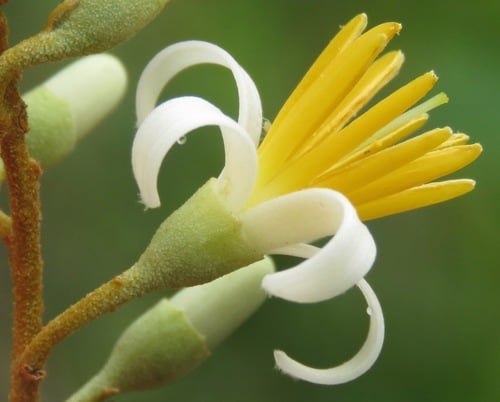
iNaturalist· cc-by-nc
(c) Samuel Cannon, some rights reserved (CC BY-NC), uploaded by Samuel Cannon
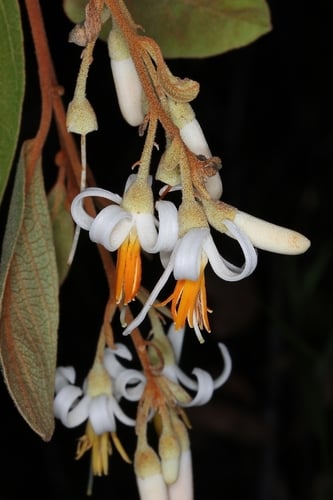
iNaturalist· cc-by
(c) Michael J. Papay, some rights reserved (CC BY), uploaded by Michael J. Papay
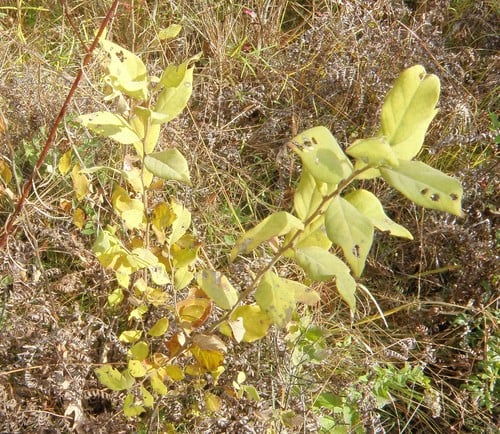
iNaturalist· cc-by-nc
(c) Matt Tomlinson, some rights reserved (CC BY-NC), uploaded by Matt Tomlinson
Summary
Source: WikipediaHalesia carolina, commonly called Carolina silverbells or little silverbells, is a species of flowering plant in the family Styracaceae, native to the southeastern United States.
Description
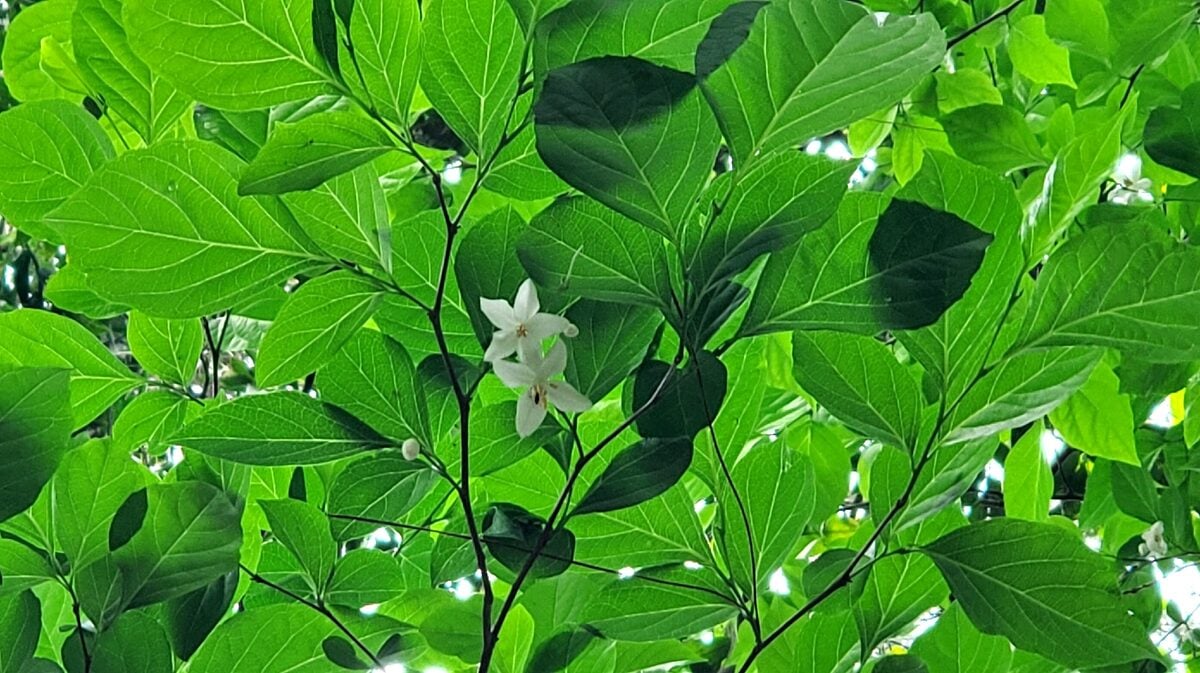
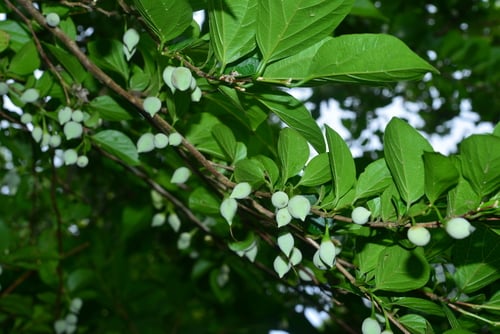
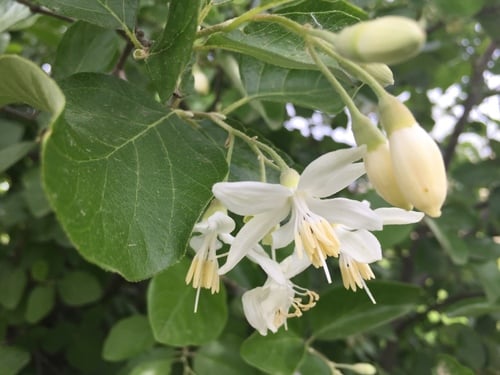
A spreading deciduous tree. It grows to 8-20 m high. It spreads wider than that. It is broadly cone shaped. The bark is pale brown and has scaly ridges which cross. The leaves are mid green and downy when young. They are oval and 20 cm long by 10 cm wide. They taper to a point at the tip. The leaves turn yellow in autumn. The flowers are white or pink and bell shaped. They occur in masses and droop. The fruit are green and have 4 wings. They ripen to pale brown. They are 5 cm long.
Edible Uses
The fruit, which is about 4cm in diameter, is the edible part. Ripe fruit is chewed for its acidity, and unripe fruits are sometimes pickled.
Traditional Uses
The ripe fruit are eaten. The unripe fruit are made into pickles.
This uses section is brief — help expand it
Medicinal Uses
None known
Distribution
It is a temperate plant. It is native to S.E. United States. It grows in rich moist woods and by streams. It is a cool climate plant. They do best in a sheltered position. They need a well drained, moist and neutral to acid soil. It suits hardiness zones 3-9. Arboretum Tasmania.
Where It Grows
Australia, North America, Slovenia, Tasmania, USA,
Cultivation
Prefers a sunny sheltered position and a deep moist sandy soil. Succeeds in most moist soils and in most positions so long as they are well-drained. Requires a lime-free soil. Dormant plants are hardy to about -25°c. A very ornamental plant, it has a moderate rate of growth and lives about 100 years. It can flower when only 1.2 metres tall. The flowers have a delicate sweet perfume. The sub-species H. tetraptera monticola forms a tree about 24 metres tall. Plants in this genus are notably resistant to honey fungus.
Propagation
Seed is best sown as soon as it is ripe in a cold frame; germination takes 18 months. This can be reduced by warm stratifying the seed for 2–3 months at 14–25°c followed by cold stratification for 2–3 months at 0–5°c. Prick seedlings into individual pots once large enough and grow on in the greenhouse for at least their first winter before planting out in late spring or early summer after the last expected frosts. Greenwood cuttings of 5–8cm with a heel taken in May or June root in about 28 days at a fair percentage. Layering in early spring as the buds break takes around 12 months but gives a high success rate.
Other Uses
The wood is soft, light, and close-grained, weighing 35lb per cubic foot. Trees that grow large enough are cut for saw timber and used in panelling and cabinet making.
Notes
There are 5 Halesia species.
Synonyms
References (14)
- Coombes, A.J., 2000, Trees. Dorling Kindersley Handbooks. p 297
- Cundall, P., (ed.), 2004, Gardening Australia: flora: the gardener's bible. ABC Books. p 669
- Etherington, K., & Imwold, D., (Eds), 2001, Botanica's Trees & Shrubs. The illustrated A-Z of over 8500 trees and shrubs. Random House, Australia. p 367
- Facciola, S., 1998, Cornucopia 2: a Source Book of Edible Plants. Kampong Publications, p 240
- Hedrick, U.P., 1919, (Ed.), Sturtevant's edible plants of the world. p 336 (As Halesia tetraptera)
Show all 14 references Hide references
- Hibbert, M., 2002, The Aussie Plant Finder 2002, Florilegium. p 118
- Jackes, D. A., Edible Forest Gardens (As Halesia tetraptera)
- Kermath, B. M., et al, 2014, Food Plants in the Americas: A survey of the domesticated, cultivated and wild plants used for Human food in North, Central and South America and the Caribbean. On line draft. p 403
- Little, E.L., 1980, National Audubon Society Field Guide to North American Trees. Alfred A. Knopf. p 637
- Lord, E.E., & Willis, J.H., 1999, Shrubs and Trees for Australian gardens. Lothian. p 57
- Plants for a Future database, The Field, Penpol, Lostwithiel, Cornwall, PL22 0NG, UK. http://www.scs.leeds.ac.uk/pfaf/
- Ryan, S., 2008, Dicksonia. Rare Plants Manual. Hyland House. p 29
- Syst. nat. ed. 10, 2:1044. 1759
- Young, J., (Ed.), 2001, Botanica's Pocket Trees and Shrubs. Random House. p 428