Gypsophila davurica
Turczaninow ex Fenzl
North China's baby breath, Meadow rock flower
iNaturalist· cc-by-nc
(c) Daba, some rights reserved (CC BY-NC), uploaded by Daba
iNaturalist· cc-by-nc
(c) tsengell, some rights reserved (CC BY-NC)
iNaturalist· cc-by-nc
(c) tsengell, some rights reserved (CC BY-NC)
Summary
A hermaphroditic perennial reaching 60cm tall. Insect-pollinated and self-fertile. Adapts to light, medium, or heavy soils with good drainage across mildly acid to alkaline pH ranges. Requires full sun and tolerates both dry and moist soil.
Description
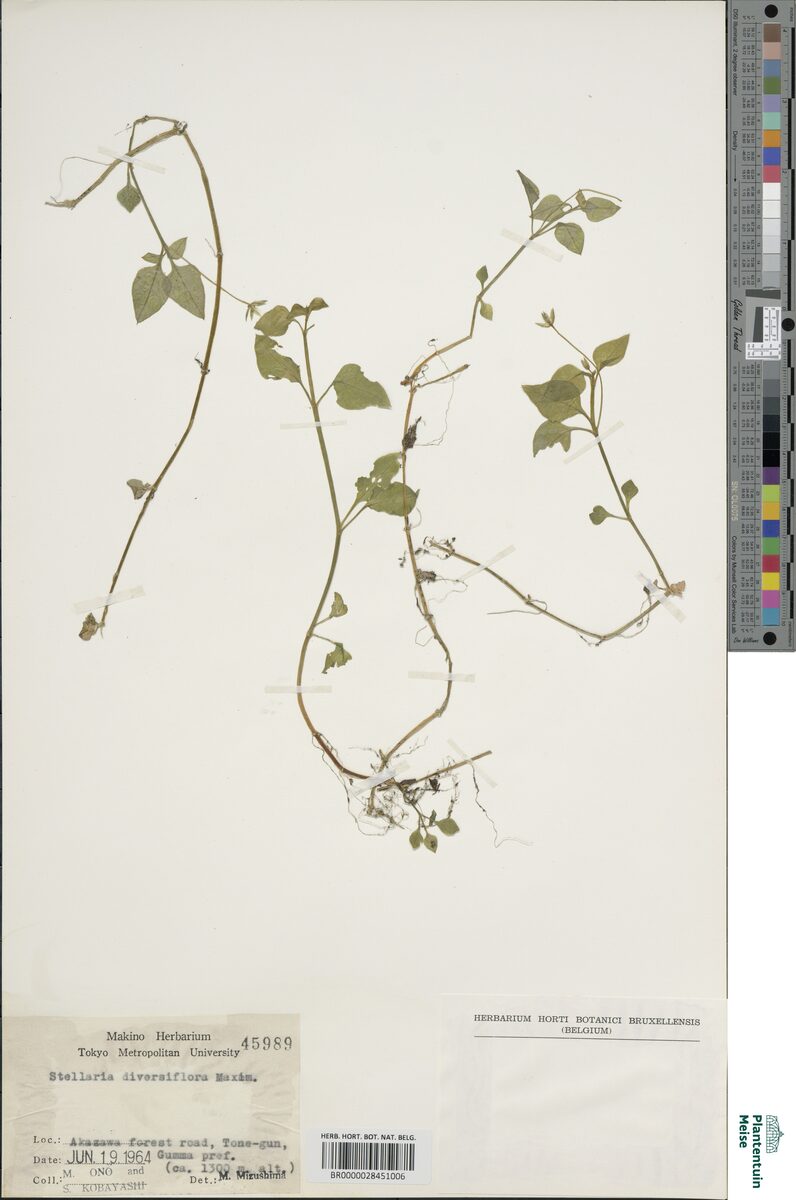
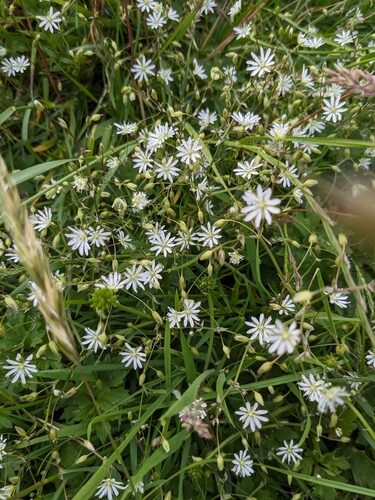
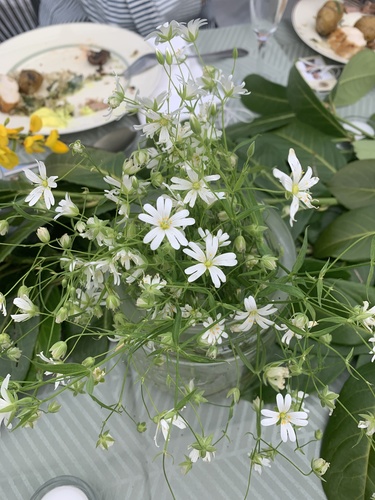
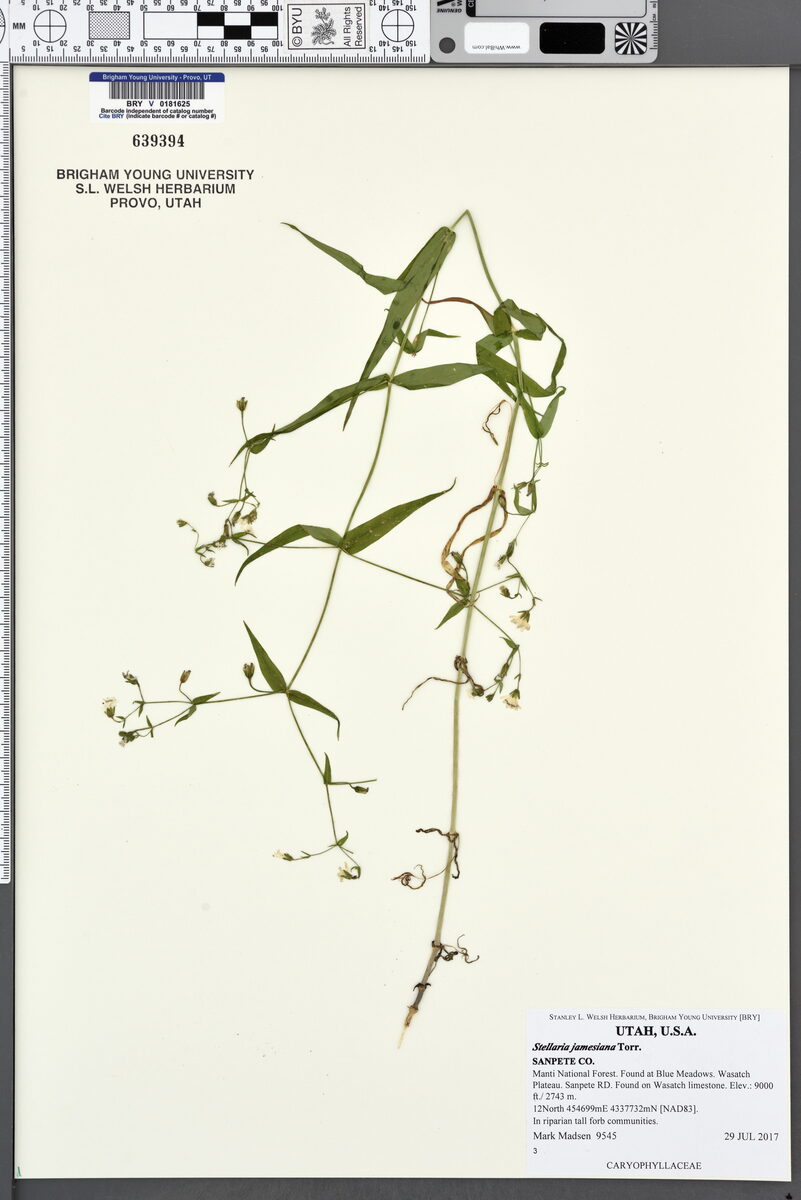
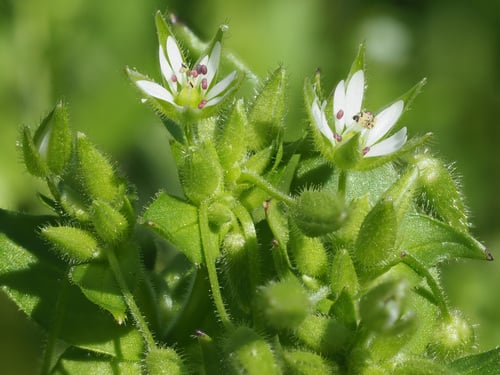
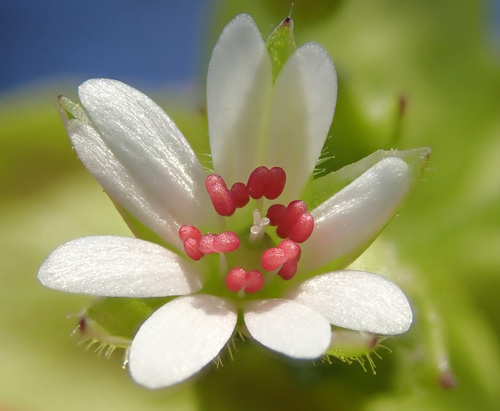
A herb. It keeps growing from year to year. It grows up to 80 cm tall. The leaves are opposite and without leaf stalks. They are narrow and sword shaped. They are 3-5 cm long by 3-7 mm wide. The flowers are white and tinged pink. They are in loose groups at the ends of the shoots.
Edible Uses
The root can be cooked and eaten, but it requires treatment before use and is considered an emergency food for when all else fails. The specific treatment method is not recorded, though it is likely some form of leaching or extended cooking to remove or neutralise saponins.
Traditional Uses
CAUTION: It contains toxic saponin. The root is eaten after extensive processing. The young shoots are eaten as a vegetable.
This uses section is brief — help expand it
Medicinal Uses
None known
Known Hazards
Although no mention has been seen for this species, at least one member of this genus has a root that is rich in saponins. Although toxic, these substances are very poorly absorbed by the body and so tend to pass through without causing harm. They are also broken down by heat so a long slow baking can destroy them. Saponins are found in many plants, including several that are often used for food, such as certain beans. It is advisable not to eat large quantities of food that contain saponins. Saponins are much more toxic to some creatures, such as fish, and hunting tribes have traditionally put large quantities of them in streams, lakes etc in order to stupefy or kill the fish.
Distribution
It is a temperate plant. It grows on hills, dry rocky slopes, steppes, fixed dunes in China. It grows in the eastern forests in Manchuria.
Where It Grows
Asia, China, Manchuria, Mongolia, Russia, Siberia,
Cultivation
We have very little information on this species and do not know if it will be hardy in Britain, though judging by its native range it should succeed outdoors in at least the milder areas of this country. It is likely to require a dry, sunny position in a well-drained soil. The following notes are based on the general needs of the genus. Requires a well-drained soil in full sun. Lime tolerant, it grows well in a dryish soil.
Propagation
Seed is best sown in a greenhouse in spring. Prick seedlings out into individual pots once large enough to handle, and plant out into permanent positions in summer if growth allows. If plants are too small, overwinter them in the greenhouse and plant out in late spring or early summer the following year. Divide clumps in spring or autumn — larger clumps can go straight into permanent positions, while smaller ones are best potted up and grown on in a cold frame until well rooted, then planted out in spring. Basal cuttings can be taken before flowering: harvest shoots around 10cm long with plenty of underground stem, pot individually, and keep in light shade in a cold frame or greenhouse until well rooted, then plant out in summer. Root cuttings are also an option.
Other Uses
None known Special Uses
Notes
It is used in medicine. There are about 100 Gypsophila species.
Also Known As
Cao yuan shi tou hua
References (7)
- BARANOV,
- Flora of China @ efloras.org Volume 6
- Hu, Shiu-ying, 2005, Food Plants of China. The Chinese University Press. p 384
- Lim, T. K., 2015, Edible Medicinal and Non Medicinal Plants. Volume 9, Modified Stems, Roots, Bulbs. Springer p 45
- Lu Dequan, Wu Zhengyi, Zhou Lihua, Chen Shilong; Michael G. Gilbert, Magnus Lidén, John McNeill, John K. Morton, Bengt Oxelman, Richard K. Rabeler, Mats Thulin, Nicholas J. Turland, Warren L. Wagner, CARYOPHYLLACEAE, Flora of China.
Show all 7 references Hide references
- Plants for a Future database, The Field, Penpol, Lostwithiel, Cornwall, PL22 0NG, UK. http://www.scs.leeds.ac.uk/pfaf/
- C. F. von Ledebour, Fl. ross. 1:294. 1842 - (as davurica)