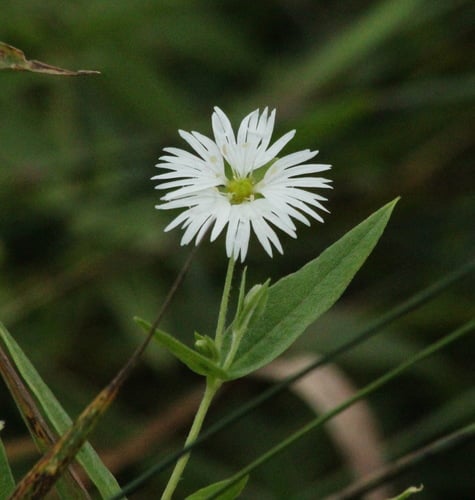
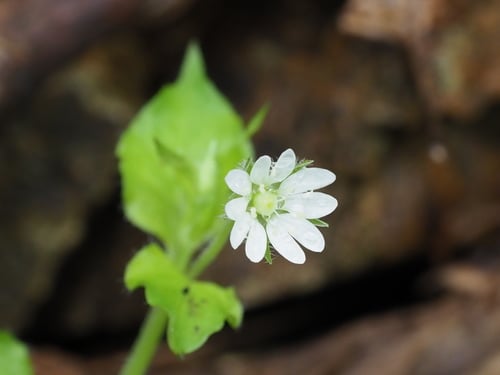
Stellaria pallida
(Dumort.) Pire
Lesser chickweed
iNaturalist· cc-by-nc
(c) Valerio Lazzeri, some rights reserved (CC BY-NC)
iNaturalist· cc-by-nc
(c) Valerio Lazzeri, some rights reserved (CC BY-NC)
iNaturalist· cc-by-nc
(c) Valerio Lazzeri, some rights reserved (CC BY-NC)
Description
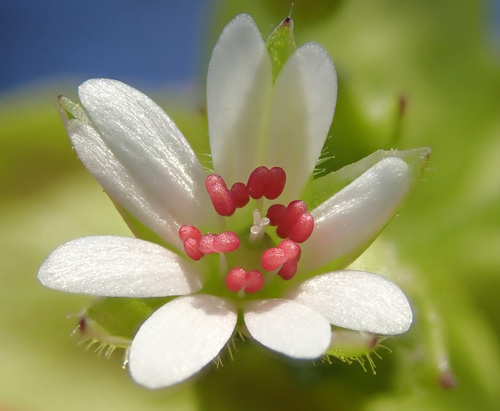
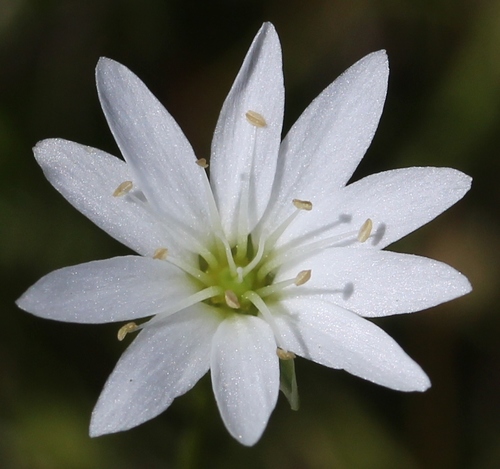
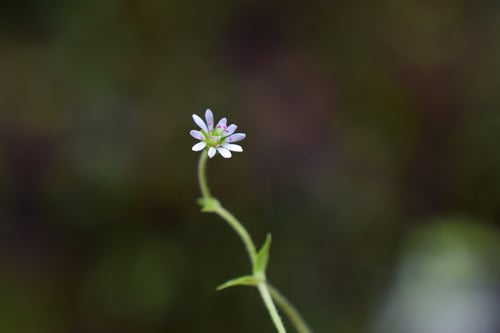
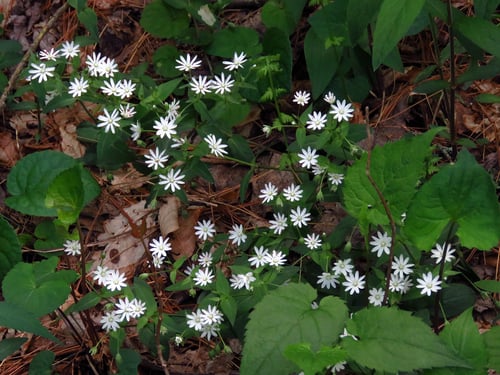
An annual herb. It is much branched and yellowish-green. The stems are about 10-20 cm long and lie along the ground. There is a single row of hairs between each pair of nodes. The leaves are pale green and oval. They are 1.5 cm long by 7 mm wide. The leaves towards the end do not have stalks. The flowers are in groups at the ends of the branches. The flowers are small and 203 mm across. The seeds are pale yellow and about 0.7 mm across.
Edible Uses
The young leaves are eaten raw and added to salads.
Traditional Uses
The young leaves are eaten raw and added to salads.
This uses section is brief — help expand it
Distribution
It is a cool temperate plant. It usually grows in coastal sand dunes or sandy soil. In Argentina it grows below 500 m above sea level.
Where It Grows
Argentina, Asia, Australia, Britain, Canada, Chile, China, Europe, Iraq, Mediterranean, Middle East, North America, South America, Spain, Turkey, Türkiye, Tasmania, Turkey, Türkiye, Ukraine, USA,
Synonyms
Also Known As
Gaqazila, Haval otu
References (3)
- Ertug, F., 2000, An Ethnobotanical Study in Central Anatolia (Turkey). Economic Botany Vol. 54. No. 2. pp. 155-182 (As Stellaria media subsp. pallida)
- Ertug, F, Yenen Bitkiler. Resimli Türkiye Florası -I- Flora of Turkey - Ethnobotany supplement
- Galalaey, A. M. K., et al, 2021, Ethnobotanical study of some wild edible plants in Hujran Basin, Kurdistan Region of Iraq. ZANCO Journal of Pure and Applied Sciences. Salahaddin University-Erbil p 26