Gunnera magellanica
Lam.
Pigvine
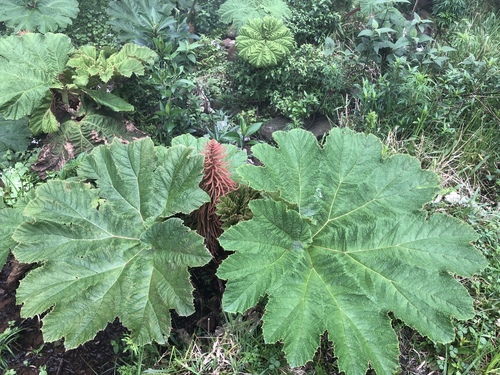
iNaturalist· cc-by-nc
(c) Miguel A. Casado, some rights reserved (CC BY-NC), uploaded by Miguel A. Casado
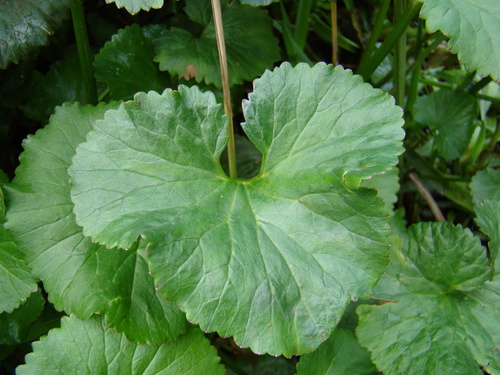
iNaturalist· cc-by-nc
(c) Damon Tighe, some rights reserved (CC BY-NC), uploaded by Damon Tighe
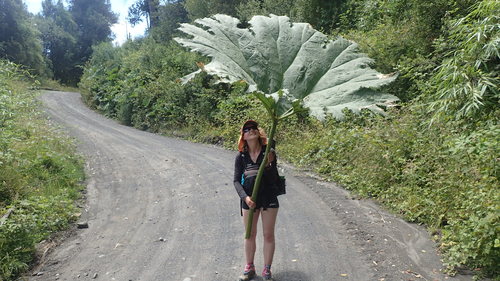
iNaturalist· cc-by
(c) aacocucci, some rights reserved (CC BY), uploaded by aacocucci
Summary
Source: WikipediaGunnera magellanica is a perennial rhizomatous dioeceous herb native to Chile, Argentina and the Falkland Islands, and Andean areas of Peru and Ecuador. In the southern part of its range, it grows in damper parts of the Magellanic subpolar forests and Valdivian temperate forests, and shrub formations on Tierra del Fuego, with an altitudinal range from sea level to 1,500 m (4,920 ft). This species colonizes the bare land that appears upon retreating glaciers in Southern Chile. Since G. magellanica can form symbiosis with mycorrhizal fungi and cyanobacteria, thereby enriching the soil with nutrients, the species has been proposed to facilitate the establishment of other plant species.
Description
A fleshy perennial herb. It grows 8-15 cm tall. The leaves are dark green and rounded or kidney shaped. They are 6 cm across. They are often bronze colour when young. Male and female flowers are on separate plants. The flowers do not have petals and the sepals are only on female flowers.
Edible Uses
One report suggests the fruit may be edible. The fruit is approximately 5 mm in diameter.
Traditional Uses
The leaves are eaten raw or cooked.
This uses section is brief — help expand it
Medicinal Uses
None known
Distribution
It is a cold temperate plant. They grow in wet boggy conditions. It grows in the Antarctic. It grows in the most southern regions of South America. In Colombia it grows between 3,200 and 4,000 m altitude. In Argentina it grows from sea level to 1,800 m above sea level.
Where It Grows
Andes, Antarctic, Argentina, Australia, Bolivia, Chile, Colombia, Ecuador, Falkland Islands, Peru, South America, Sweden,
Cultivation
Requires a damp humus rich soil in a sunny position or semi-shade. Prefers a cool moist position. Plants are hardy to at least -10°c. The plant has a creeping root and spreads to form extensive patches. The top part of the inflorescence is male, the bottom is female and the middle is hermaphrodite according to one report whilst another says that the flowers are unisexual without saying if the two sexes are on the same plant. Male and female flowers are on separate plants. Members of this genus are rarely if ever troubled by browsing deer.
Propagation
Seed is best sown as soon as ripe in autumn in a sandy mix in a cold frame, though it can also be sown in spring. Prick seedlings into individual pots once large enough to handle and grow on under glass through at least their first winter. Plant out into permanent positions in late spring or early summer, after the last expected frosts. Division can be done as new growth begins in spring — larger clumps can go directly into permanent positions, while smaller clumps are best potted up and grown on in a cold frame until rooting well before planting out in spring.
Other Uses
A carpeting plant that roots as it spreads, it works well as ground cover when plants are spaced approximately 45 cm apart in each direction.
Notes
There are about 68 Gunnera species. They are in the southern hemisphere and in cool or cold places.
Synonyms
Also Known As
Nalca
References (10)
- Altschul, S.V.R., 1973, Drugs and Foods from Little-known Plants. Notes in Harvard University Herbaria. Harvard Univ. Press. Massachusetts. no. 3108
- Chamorro, M. F., & Ladio, A., 2020, Native and exotic plants with edible fleshy fruits utilized in Patagonia and their role as sources of local functional foods. BMC Complementary Medicine and Therapies. 20:155
- Heywood, V.H., Brummitt, R.K., Culham, A., and Seberg, O. 2007, Flowering Plant Families of the World. Royal Botanical Gardens, Kew. p 161
- Hibbert, M., 2002, The Aussie Plant Finder 2002, Florilegium. p 117
- Kew Plants of the World On line
Show all 10 references Hide references
- Morley, B. & Everard, B., 1970, Wild Flowers of the World. Ebury press. Plate 3
- Plants for a Future database, The Field, Penpol, Lostwithiel, Cornwall, PL22 0NG, UK. http://www.scs.leeds.ac.uk/pfaf/
- Rapoport, E. H. & Ladio, A. H., 1999, Plantas comestibles. Bosque Volume 20 No. 2. ISSN 0314-8799
- Slocum, P.D. & Robinson, P., 1999, Water Gardening. Water Lilies and Lotuses. Timber Press. p 120
- Upson, R., & Lewis R., 2014, Updated Vascular Plant Checklist and Atlas for the Falkland Islands. Falklands Conservation and Kew.