Guiera senegalensis
J. F. Gmel.
iNaturalist· cc-by-nc
(c) ONG OeBenin, some rights reserved (CC BY-NC), uploaded by ONG OeBenin
iNaturalist· cc-by-nc
(c) tsuchan, some rights reserved (CC BY-NC)
Summary
Source: WikipediaEvergreen shrub growing slowly to 2.5 m in height and spread. Suits light sandy and medium loamy soils preferring good drainage and tolerating nutritionally poor soil. Grows in mildly acidic, neutral, and basic soils. Requires full sun and tolerates both dry and moist soil with drought resistance. Hardy to UK zone 10.
Description
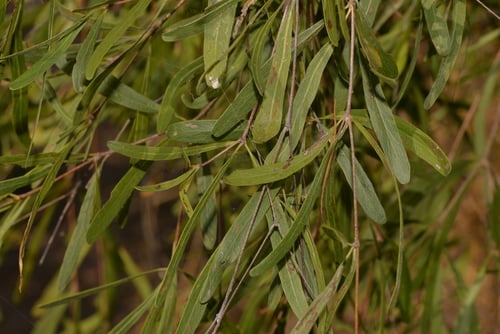
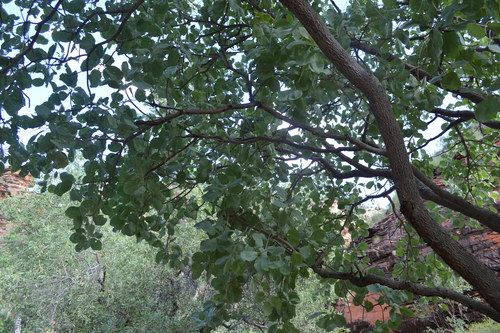
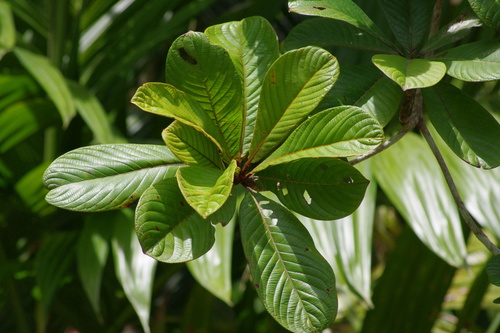
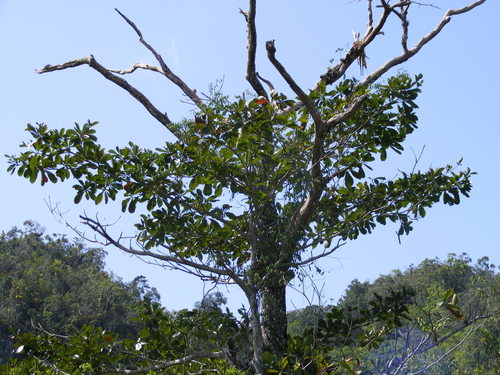
A shrub. It grows 3 m tall. The bark is grey. The branches are softly hairy. The leaves are grey-green and oval. They are 3-6 cm long by 2-4 cm wide. They are hairy. The flowers are in round heads. They are yellowish-green. The fruit is 3.5 cm long and covered with silvery hairs.
Edible Uses
A gum is obtained from the plant. The leaves are also used to curdle milk.
Traditional Uses
The leaves are also used to curdle milk.
This uses section is brief — help expand it
Medicinal Uses
The leaves of this plant have a strong reputation as a general cure-all across Africa, commonly taken as decoctions or mixed with food. The bitter leaves are antitussive, appetising, blood-purifying, diuretic, febrifuge, galactagogue, laxative, pectoral, and tonic, used for pulmonary and respiratory complaints including coughs and fevers; digestive problems including colic, dysentery, and diarrhoea; infectious diseases including syphilis, beriberi, and leprosy; and other conditions such as impotence, rheumatism, and oedema. Powdered leaves are mixed with food as a general tonic and blood restorative after debilitating illness, and are given specifically to women after childbirth to promote milk flow. A common preparation combines the leaves with those of Combretum micranthum as an infusion for fever, chest complaints, and rheumatism, and as a nasal douche for head colds. Combined with tamarind pulp, the leaves act as a laxative and appetite stimulant. The plant has a particular reputation for preventing leprosy — many people drink a cold leaf decoction morning and evening, and it is given to newborns and children of leper parents or wherever hereditary taint or early symptoms are suspected. Dried leaves are smoked in a pipe and the smoke blown through the nose for colds; mixed with tobacco, they are smoked to treat coughs and respiratory trouble. Powdered leaves are added to a snuff taken for headache and sinusitis. Applied externally, the leaves are regarded as antiseptic and vulnerary — they are used on wounds, mouth sores, syphilitic chancres, and phagadenic ulcers; applied to skin infections; used in poultices on inflammatory swellings and for guinea-worm; and applied to tumours to bring them to a head and to treat skin diseases. A leaf decoction serves as a body wash and for bathing newborns. The fruit and leaves are common ingredients in ceremonial preparations aimed at strengthening children and protecting them from disease. Chewing the twigs gives symptomatic relief from scorpion stings. Powdered and boiled roots are used for diarrhoea and dysentery. The fruits, baked and powdered with salt added to mask bitterness, are considered a reliable remedy for hiccups. Leafy stems contain traces of alkaloids and tannins. Root and leaf ash are particularly rich in magnesium, calcium, strontium, titanium, iron, and aluminium. Pharmacologically the plant has demonstrated positive effects on coughs, and is hypotensive, antidiarrheal, and anti-inflammatory.
Distribution
A tropical plant. It grows in the Sahel. It is mostly on sandy soils. It grows in savannah woodland. It grows in areas with an annual rainfall between 200-800 mm. It can grow in arid places.
Where It Grows
Africa, Burkina Faso, Cameroon, Central Africa, Congo, Côte d'Ivoire, Gambia, Ghana, Guinea, Guinée, Guinea-Bissau, Ivory Coast, Mali, Mauritania, Niger, Nigeria, Sahel, Senegal, Sudan, West Africa,
Cultivation
A plant of arid and semi-arid areas in the tropics. Requires a sunny position. Grows wild in light, dry soils. Capable of growing on very poor, dry, leached soils. For many decades the range of this plant has been spreading further south to areas with wetter conditions.
Propagation
Seed.
Other Uses
A typical pioneer species whose seeds are spread by grazing animals, Guiera senegalensis grows especially well on impoverished soils and can colonise otherwise bare land in pure stands. Its spread is recommended to be restricted in Senegal to improve Sahel pasture quality; it is often seen as an indicator of overgrazed land. The bark yields a marketable gum. Thin branches are used for basket weaving, for mats used in sand stabilisation, and for fencing. Roots are commonly split and used as chew-sticks and toothpicks. Burning branches produce smoke that repels flies. The wood is whitish or tinged red, coarse-grained, knotted, and short but very hard, used for the framework of wells and for bed-posts. The shrub is commonly cut to fence farms. Branches and especially roots are considered good fuel.
Synonyms
Also Known As
Babodos, Bado-doce, Badodosso, Badosdoce, Badosdos, Badossosso, Bioce, Bionsi, Bisse-nhatam, Bissilintche, Bissom-aptchom, Bitchiante, Biussi, Bu-rusu, Budossosse, Carrere, Cloco, Elode, Fufumuco, Guelodi, Heloco, Iuci, Kaseshi, Kunye, Mamakoikoi, Manafenafem, Nissem-antchom, Ntafine, Paundace
References (14)
- Bojang, L., 1999, Non-wood Forest Products in The Gambia. EC-FAO Partnership Programme.
- Dalziel, J. M., 1937, The Useful plants of west tropical Africa. Crown Agents for the Colonies London.
- Food Composition Tables for use in Africa FAO http://www.fao.org/infoods/directory No. 656
- Grubben, G. J. H. and Denton, O. A. (eds), 2004, Plant Resources of Tropical Africa 2. Vegetables. PROTA, Wageningen, Netherlands. p 562
- Harris, F. M. A. and Salisu Mohammed, 2003, Relying on nature: Wild Foods in Northern Nigeria. AMBIO Vol. 32 No. 1, p 27
Show all 14 references Hide references
- Jardin, C., 1970, List of Foods Used In Africa, FAO Nutrition Information Document Series No 2.p 43, 80
- Martin, F.W. & Ruberte, R.M., 1979, Edible Leaves of the Tropics. Antillian College Press, Mayaguez, Puerto Rico. p 183
- Maydell, H. von, 1990, Trees and shrubs of the Sahel: their characteristics and uses. Margraf. p 301
- MORTIMORE,
- Okigbo, B.N., Vegetables in Tropical Africa, in Opena, R.T. & Kyomo, M.L., 1990, Vegetable Research and development in SADCC countries. Asian Vegetable Research and development Centre. Taiwan. p 38
- Peters, C. R., O'Brien, E. M., and Drummond, R.B., 1992, Edible Wild plants of Sub-saharan Africa. Kew. p 86
- Royal Botanic Gardens, Kew (1999). Survey of Economic Plants for Arid and Semi-Arid Lands (SEPASAL) database. Published on the Internet; http://www.rbgkew.org.uk/ceb/sepasal/internet [Accessed 10th April 2011]
- World Checklist of Useful Plant Species 2020. Royal Botanic Gardens, Kew
- Zika, A., et al, 2015, Traditional plant use in Burkina Faso (West Africa): a national-scale analysis with focus on traditional medicine. Journal of Ethnobiology and Ethnomedicine 2015, 11:9