Grewia bicolor
Juss.
Two-coloured grewia, White-leaved raisin
iNaturalist· cc-by-sa
(c) Tony Rebelo, some rights reserved (CC BY-SA)
iNaturalist· cc-by-sa
(c) Tony Rebelo, some rights reserved (CC BY-SA)
iNaturalist· cc-by-sa
(c) Tony Rebelo, some rights reserved (CC BY-SA)
Summary
Source: WikipediaGrewia bicolor, called bastard brandy bush, false brandy bush, two-coloured grewia, white-leaved grewia, white-leaved raisin, white raisin and donkey berry (a name it shares with Grewia flavescens), is a species of flowering plant in the family Malvaceae, native to sub-Saharan Africa, Yemen, Oman, and the Indian subcontinent. In Africa Grewia bicolor is one of the most important forages during the dry season, when all herbivores, wild and domestic, find it palatable. It is particularly enjoyed by giant eland (Taurotragus derbianus) and domestic goats (Capra aegagrus hircus). Caterpillars of Anaphe reticulata have been found to feed on the foliage.
Description
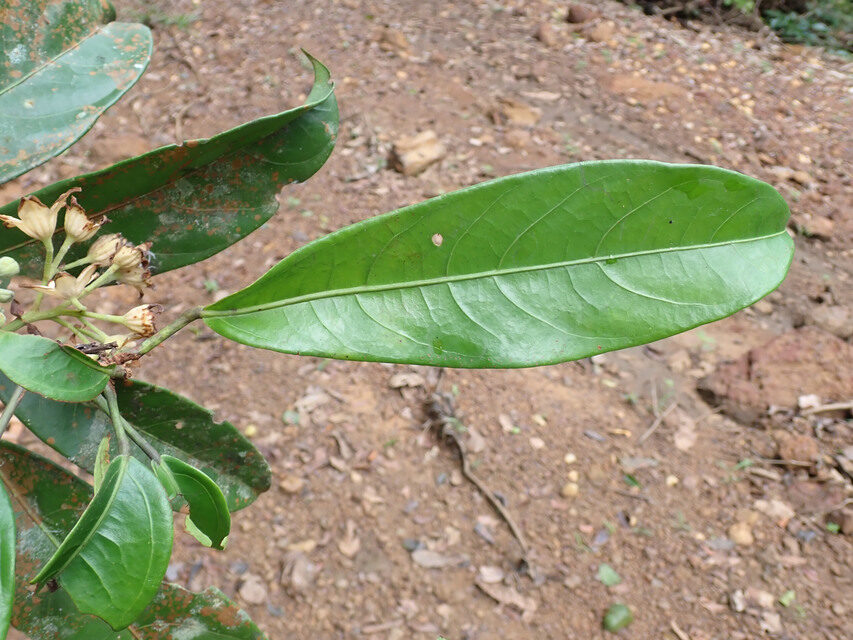
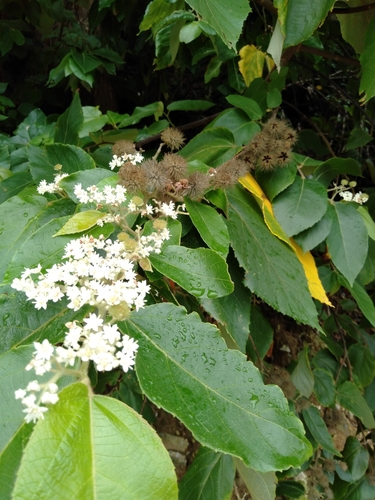
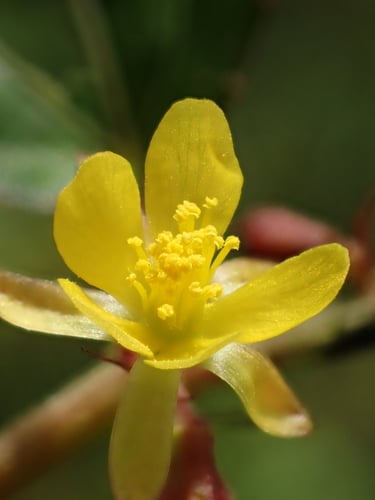
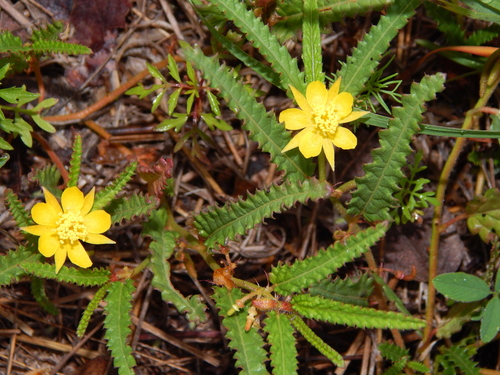
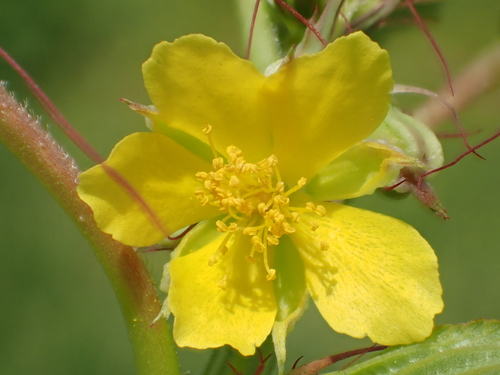
A small tree or shrub. It grows up to 3-8 m tall. It is often a shrub with many stems. The young branches are covered with soft hairs. The leaves are oval or sword shaped. They are smooth above and white below. The have fine teeth along the edges. The leaves are 1-8 cm long. The flowers are in bunches and are bright yellow. They have 5 narrow petals. The fruit are orange brown and 6 mm across. They are edible.
Edible Uses
The ripe fruit are eaten raw and fresh, dried as candy, or fermented into beer; the fruit juice is drunk and added to porridge. The leaves are eaten as a binding agent for sauces and fresh leaves are made into tea.
Traditional Uses
The ripe fruit are eaten raw and fresh. The seeds are not eaten. The fruit are also dried as candy. The fruit juice is drunk and added to porridge. It is also fermented into beer. The leaves are eaten being used as a binding agent for sauces. Fresh leaves are made into a tea drink.
Distribution
A tropical plant. It grows in lowlands and highlands. It grows in drier regions. It grows in the Sahel. The rainfall in these places is 400-900 mm each year. It is often on rocky slopes near the sea. In grows on calcareous soils. It grows at low and medium altitudes in South Africa. In East Africa it grows from sea level to 2,000 m altitude. It grows best between 800-1,800 m altitude. It can grow in arid places. It is often on termite mounds. It grows in Miombo woodland in Africa. It grows in the Sahara.
Where It Grows
Africa, Angola, Arabia, Asia, Benin, Botswana, Burkina Faso, Burundi, Cameroon, Central Africa, Chad, Congo DR, Côte d'Ivoire, East Africa, Eritrea, Eswatini, Ethiopia, Ghana, Guinea, Guinée, India, Ivory Coast, Kenya, Malawi, Mali, Mauritania, Mediterranean, Middle East, Morocco, Mozambique, Namibia, Niger, Nigeria, North Africa, Sahel, Saudi Arabia, Senegal, Somalia, South Africa, Southern Africa, South Sudan, Sudan, Swaziland, Tanzania, Togo, Uganda, West Africa, Yemen, Zambia, Zimbabwe,
Cultivation
Plants are grown from seeds. Seeds need treatment to germinate well. The hard surface needs breaking. Cuttings root poorly but if they have a heel they are better. It can be cut back and will re-grow.
Production
In Tanzania it grows between April to June.
Other Information
The fruit are eaten especially by children.
Notes
There are about 200 Grewia species. They are mostly tropical. The fruit of most may be edible. These were in the Sparrmanniaceae and the Tiliaceae.
Nutrition
| Part | Moisture | kJ | kcal | Protein | Vit A | Vit C | Iron | Zinc |
|---|---|---|---|---|---|---|---|---|
| Fruit dry | 13.2 | 1302 | 311 | 10.3 | — | 9.3 | 5.9 | 2.6 |
| Leaves | — | — | — | — | — | — | — | — |
Synonyms
Also Known As
Adini'ato, Bamberou, Bastard brandybush, Bereza, Dahita, Daiyta, Dawaita, Dhebi, Ekaliye, False brandybush, Haroresa, Hebele, Imizziz, Kongulubi, Lomo, M'tongolo, Mariken dutse, Metapuessa, Mkole, Mkoma, Mkone, Mlawa, Mogwana, Mulawa, Muntongoro, Muragwa, Mutongoro, Olsitete, Omundjembere, Osiminde, Ositeti, Seffa, Sibane, Simadado, Siteti, Sitit, Somoya, Tsewayita, Umhlampunzi, Umpumpulwane
References (67)
- Abbiw, D.K., 1990, Useful Plants of Ghana. West African uses of wild and cultivated plants. Intermediate Technology Publications and the Royal Botanic Gardens, Kew. p 47
- Addis, G., Asfaw, Z & Woldu, Z., 2013, Ethnobotany of Wild and Semi-wild Edible Plants of Konso Ethnic Community, South Ethiopia. Ethnobotany Research and Applications. 11:121-141
- Allen, D. J., 2007, Wildflowers and Common Trees of East Africa. Camerapix Publishers p 58
- Asfaw, Z. and Tadesse, M., 2001, Prospects for Sustainable Use and Development of Wild Food Plants in Ethiopia. Economic Botany, Vol. 55, No. 1, pp. 47-62
- Bahru, T., et al, 2013, Wild Edible Plants: Sustainable Use and Management by Indigenous Communities in and the Buffer Area of Awah National Park, Ethiopia. Ethiop. J. Sci., 36(2): 93-108
Show all 67 references Hide references
- Balemie, K., & Kebebew, F., 2006, Ethnobotanical study of wild edible plants in Derashe and Kucha Districts, South Ethiopia. Journal of Ethnobiology and Ethnomedicine.
- Bekele-Tesemma A., Birnie, A., & Tengnas, B., 1993, Useful Trees and Shrubs for Ethiopia. Regional Soil Conservation Unit. Technical Handbook No 5. p 262
- Belem, M., et al, 2017, Strategy of Conservation and Protection of Wild Edible Plants Diversity in Burkina Faso. ANADOLU 27 (2) 2017, 82- 90
- Berihun, T. & Molla, E., 2017, Study on the Diversity and Use of Wild Edible Plants in Bullen District Northwest Ethiopia. Hindawi Journal of Botany. Article ID 8383468
- Brink, M., 2007. Grewia bicolor Juss. [Internet] Record from Protabase. Louppe, D., Oteng-Amoako, A.A. & Brink, M. (Editors). PROTA (Plant Resources of Tropical Africa), Wageningen, Netherlands. < http://database.prota.org/search.htm>. Accessed 16 October 2009.
- Burkill, H. M., 1985, The useful plants of west tropical Africa, Vol. 1. Kew.
- Dalziel, J. M., 1937, The Useful plants of west tropical Africa. Crown Agents for the Colonies London.
- Dharani, N., 2002, Field Guide to common Trees & Shrubs of East Africa. Struik. p 236
- Edwards. S., et al, (Eds), 1995, Flora of Ethiopia and Eritrea. Vol.2, Part 2 Canellaceae to Euphorbiaceae. Uppsala, Sweden. p 162
- Ethiopia: Famine Food Field Guide. http://www.africa.upenn.edu/faminefood/category3.htm
- Exell, A.W. et al, (Ed), 1963, Flora Zambesiaca Vol 2 Part 1 Crown Agents, London. p 49
- FAO, 1988, Traditional Food Plants, FAO Food and Nutrition Paper 42. FAO Rome p 306
- Feyssa, D. H., et al, 2011, Seasonal availability an consumption of wild edible plants in semiarid Ethiopia; Implications to food security and climate change adaptation. Journal of Horticulture and Forestry 3(5): 138-149
- Fowler, D. G., 2007, Zambian Plants: Their Vernacular Names and Uses. Kew. p 45
- Fox, F. W. & Young, M. E. N., 1982, Food from the Veld. Delta Books. p 355
- Gallagher, D. E., 2010, Farming beyond the escarpment: Society, Environment, and Mobility in Precolonial Southeastern Burkina Faso. PhD University of Michigan.
- Gemedo-Dalle, T., et al, 2005, Plant Biodiversity and Ethnobotany of Borana Pastoralists in Southern Oromia, Ethiopia. Economic Botany 59(1) pp. 43-65
- Glover et al, 1966b,
- Goode, P., 1989, Edible Plants of Uganda. FAO p 30
- Grivetti, L. E., 1980, Agricultural development: present and potential role of edible wild plants. Part 2: Sub-Saharan Africa, Report to the Department of State Agency for International Development. p 72, 79
- Grubben, G. J. H. and Denton, O. A. (eds), 2004, Plant Resources of Tropical Africa 2. Vegetables. PROTA, Wageningen, Netherlands. p 562
- Gueye, M., et al, 2014, Wild Fruits Traditionally Gathered by the Malinke Ethnic Group in the Edge of Niokolo Koba Park (Senegal). American Journal of Plant Sciences 5, 1306-1317
- Hines, D. A. & Eckman, K., 1993, Indigenous multipurpose trees of Tanzania: Uses and economic benefits for people. FAO Forestry Department. p 170
- Ichikawa, M., 1980, The Utilization of Wild Food Plants by the Suiei Dorobo in Northern Kenya. J. Anthrop. Soc. Nippon. 88(1): 25-48
- INFOODS:FAO/INFOODS Databases
- Keay, R.W.J., 1989, Trees of Nigeria. Clarendon Press, Oxford. p 114
- Kebebew, M. & Leta, G., 2016, Wild Edible Plant Bio-diversity and Utilization System in Nech Sar National Park, Ethiopia. International Journal of Bio-resource and Stress Management 2016, 7(4):885-896
- Kuhnlein, H. V., et al, 2009, Indigenous Peoples' food systems. FAO Rome p 239
- Leger, S., 1997, A Description of Today's Use of Plants in West Bushmanland (Namibia). German Development Service. PO Box 220035, 14061 Berlin, Germany. http://www.sigridleger.de/book/
- Le Houerou, H. N., (Ed.), 1980, Browse in Africa. The current state of knowledge. International Livestock Centre for Africa, Ethiopia. p 163
- Long, C., 2005, Swaziland's Flora - siSwati names and Uses http://www.sntc.org.sz/flora/
- Luoga, E. J., et al, 2000, Differential Utilization and Ethnobotany of Trees in Kitulanghalo Forest Reserve and Surrounding Communal Lands, Eastern Tanzania. Economic Botany, Vol. 54, No. 3, pp. 328-343
- Lulekal, E., et al, 2011, Wild edible plants in Ethiopia: a review on their potential to combat food insecurity. Afrika Focus - Vol. 24, No 2. pp 71-121
- Magwede, K., van Wyk, B.-E., & van Wyk, A. E., 2019, An inventory of Vhavenḓa useful plants. South African Journal of Botany 122 (2019) 57–89
- Malan & Owen-Smith, 1974,
- Mannheimer, C. A. & Curtis. B.A. (eds), 2009, Le Roux and Muller's Field Guide to the Trees and Shrubs of Namibia. Windhoek: Macmillan Education Namibia. p 316
- Maroyi, A., 2011, The Gathering and Consumption of Wild Edible Plants in Nhema Communal Area, Midlands Province, Zimbabwe. Ecology of Food and Nutrition 50:6, 506-525
- Maundu, P. et al, 1999, Traditional Food Plants of Kenya. National Museum of Kenya. 288p
- Maydell, H. von, 1990, Trees and shrubs of the Sahel: their characteristics and uses. Margraf. p 291
- Mbuya, L.P., Msanga, H.P., Ruffo, C.K., Birnie, A & Tengnas, B., 1994, Useful Trees and Shrubs for Tanzania. Regional Soil Conservation Unit. Technical Handbook No 6. p 288
- Mengistu, F. & Hager, H., 2008, Wild Edible Fruit Species Cultural Domain, Informant Species Competence and Preference in Three Districts of Amhara Region, Ethiopia. Ethnobotany Research & Applications 6:487-502
- Morgan, W. T. W., 1981, Ethnobotany of the Turkana: Use of plants by a Pastoral People and Their Livestock in Kenya. Economic Botany 35(1):96-130
- Nassif, F., & Tanji, A., 2013, Gathered food plants in Morocco: The long forgotten species in Ethnobotanical Research. Life Science Leaflets 3:17-54
- Neudeck, L. et al, 2012, The Contribution of Edible Wild Plants to Food Security, Dietary Diversity and Income of Households in Shorobe Village, Northern Botswana. Ethnobotany Research & Applications 10:449-462
- Newman, 1970,
- Ogle & Grivetti, 1985,
- Palgrave, K.C., 1996, Trees of Southern Africa. Struik Publishers. p 569
- Peters, C. R., O'Brien, E. M., and Drummond, R.B., 1992, Edible Wild plants of Sub-saharan Africa. Kew. p 191
- Roodt, V., 1998, Trees & Shrubs of the Okavango Delta. Medicinal Uses and Nutritional value. The Shell Field Guide Series: Part 1. Shell Botswana. p 73
- Royal Botanic Gardens, Kew (1999). Survey of Economic Plants for Arid and Semi-Arid Lands (SEPASAL) database. Published on the Internet; http://www.rbgkew.org.uk/ceb/sepasal/internet [Accessed 11th June 2011]
- Ruffo, C. K., Birnie, A. & Tengnas, B., 2002, Edible Wild Plants of Tanzania. RELMA p 343
- Ruiters-Welcome, A. K., 2019, Food plants of southern Africa. Ph.D. thesis. Univ. of Johannesburg p 75
- Schmidt, E., Lotter, M., & McCleland, W., 2007, Trees and shrubs of Mpumalanga and Kruger National Park. Jacana Media p 402
- Scudder, 1962,
- Shumsky, S., et al, 2014, Institutional factors affecting wild edible plant (WEP) harvest and consumption in semi-arid Kenya. Land Use Policy 38(2014) 48-69
- Swaziland's Flora Database http://www.sntc.org.sz/flora
- Teklehaymanot, T., 2017, An ethnobotanical survey of medicinal and edible plants of Yalo Woreda in Afar regional state, Ethiopia. Journal of Ethnobiology and Ethnomedicine 13:40
- Termote, C., et al, 2014, Assessing the potential of wild foods to reduce the cost of a nutritionally adequate diet: An example from eastern Baringo District, Kenya. Food and Nutrition Bulletin, vol. 35, no. 4
- Vivien, J., & Faure, J.J., 1996, Fruitiers Sauvages d'Afrique. Especes du Cameroun. CTA p 351
- Welcome, A. K. & Van Wyk, B.-E., 2019, An inventory and analysis of the food plants of southern Africa. South African Journal of Botany 122 (2019) 136–179
- www.worldagroforestrycentre.org/treedb/
- www.zimbabweflora.co.zw 2011