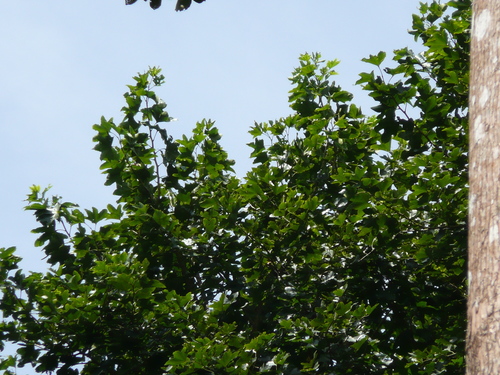
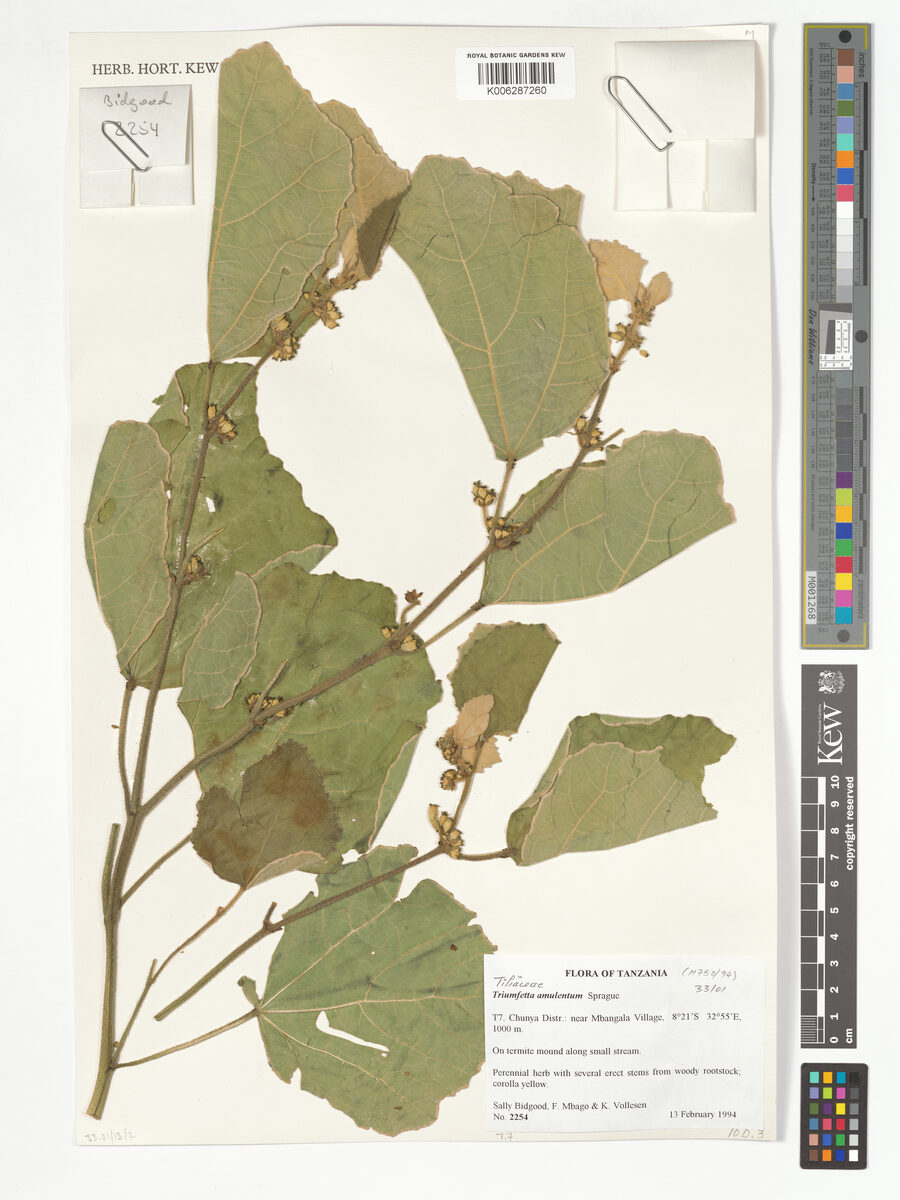
Abutilon mauritianum
(Jacq.) Medic.
Bush mallow
iNaturalist· cc-by-nc
(c) Frank-Roland Fließ, some rights reserved (CC BY-NC), uploaded by Frank-Roland Fließ
iNaturalist· cc-by-nc
(c) Mark Hyde, Bart Wursten and Petra Ballings, some rights reserved (CC BY-NC)
iNaturalist· cc-by-nc
(c) Mark Hyde, Bart Wursten and Petra Ballings, some rights reserved (CC BY-NC)
Description
A shrub or small tree. It grows 5 m tall. There are prickles along the stem. The leaves are twice divided and there are 8-18 pairs of pinnae. There are up to 50 pairs of pinnules on each pinnae. The flowers are yellow. They are in large clusters at the ends of branches. The pods are flattened.
Edible Uses
The young tender leaves and flowers are cooked and eaten, often in oil with other ingredients like peanuts. The seeds are also edible.
Traditional Uses
The young tender leaves and flowers are cooked and eaten. They are often cooked in oil and with other ingredients like peanuts.
This uses section is brief — help expand it
Medicinal Uses
The plant is widely used in traditional African medicine. Modern research has demonstrated the presence of a range of medically active compounds in the plant - saponins, flavonoids, tannins and alkaloids have all been reported present in the leaf. Ethanolic extracts of the leaf exhibited antibacterial activity against Escherichia coli, Klebsiella pneumonia and Pseudomonas aeruginosa. The bark is diuretic. It is used to treat kidney problems. The roots and bark are boiled and the liquid drunk to treat diarrhoea, stomach-ache, coughs and colds. The roots are expectorant and febrifuge. An infusion of the root is taken as cooling drink in case of fever. A root decoction is drunk as a treatment against bronchitis and cramp in the stomach. The crushed fresh root is boiled and taken orally in case of snake bites. The leaves are demulcent and mucilaginous, They are used to treat a range of conditions such as diarrhoea and dysentery; cutaneous and subcutaneous parasitic infections; naso-pharyngeal affections; venereal diseases. The sap is drunk as a treatment against coughs, colds and malaria. An infusion of the macerated leaves, combined with the powdered root of Xylopia aethiopica, is drunk as a treatment for venereal diseases such as gonorrhoea. The leaves are used as rectal suppository to relieve soreness of the rectum in babies and young children. Applied externally, they are used as bandage on open wounds. The leaves are pounded to a pulp and applied on scabies. A decoction of the leaves is used as a gargle for sore throat and as a fomentation to relieve pain in dysentery and haemorrhoids. Mucilage from the leaves is used in poultices, and is applied on wounds to facilitate the extraction of foreign bodies such as splinters. The seed is used to treat coughs and other pulmonary troubles. The powdered fruit is used in preparations for the treatment of eczema.
Distribution
It is a tropical plant. It grows along roadsides and on a variety of soils from sea level to 2,000 m altitude.
Where It Grows
Africa, Cameroon, Central Africa, East Africa, Eswatini, Ethiopia, Gabon, Ghana, Kenya, Malawi, Mali, Mauritius, Mozambique, Nigeria, Rwanda, Senegal, South Africa, Southern Africa, Swaziland, Tanzania, Uganda, West Africa, Zambia, Zimbabwe,
Cultivation
Plants can be grown from seeds.
Other Uses
The bark is used to obtain dyes, stains, inks, tattoos and mordants. A mucilaginous extract from the bark is used as mordant in dyeing. A strong fibre is obtained from the stem bark. It is used to make rope and string. The stems are used as chew-sticks, etc. Twigs are used to make brooms. The bark is used for making baskets. The leaves are used as a toilet paper. The flowers are a good bee forage.
Production
Leaves and flowers are collected during the wet season.
Other Information
Probably minor.
Notes
There are about 100-160 Abutilon species. It can become a serious weed.
Synonyms
Also Known As
Chitube, Fiefie, Umukuungeri, Zambira
References (10)
- Burkill, H. M., 1985, The useful plants of west tropical Africa, Vol. 4. Kew.
- Dalziel, J. M., 1937, The Useful plants of west tropical Africa. Crown Agents for the Colonies London. (As Abutilon indicum)
- Fowler, D. G., 2007, Zambian Plants: Their Vernacular Names and Uses. Kew. p 82
- Grubben, G. J. H. and Denton, O. A. (eds), 2004, Plant Resources of Tropical Africa 2. Vegetables. PROTA, Wageningen, Netherlands. p 559
- Msuya, T. S., et al, 2010, Availability, Preference and Consumption of Indigenous Foods in the Eastern Arc Mountains, Tanzania, Ecology of Food and Nutrition, 49:3, 208-227
Show all 10 references Hide references
- Mutie, F. M., et al, 2023, Important Medicinal and Food Taxa (Orders and Families) in Kenya, Based on Three Quantitative Approaches. Plants 2023, 12, 1145
- Peters, C. R., O'Brien, E. M., and Drummond, R.B., 1992, Edible Wild plants of Sub-saharan Africa. Kew. p 144
- Ruffo, C. K., Birnie, A. & Tengnas, B., 2002, Edible Wild Plants of Tanzania. RELMA p 84
- Swaziland's Flora Database http://www.sntc.org.sz/flora
- World Checklist of Useful Plant Species 2020. Royal Botanic Gardens, Kew