Allium ampeloprasum
L.
Great round-headed garlic, Giant garlic
wikimedia· cc-by-sa
Philmarin (via Wikimedia Commons)
wikimedia· cc-by-sa
Roger Culos (via Wikimedia Commons)
wikimedia· cc-by-sa
Dave Whitinger (via Wikimedia Commons)
iNaturalist· cc-by-nc
(c) Сергей, some rights reserved (CC BY-NC), uploaded by Сергей
iNaturalist· cc-by-nc
(c) Eddi Bisulli, some rights reserved (CC BY-NC), uploaded by Eddi Bisulli
iNaturalist· cc-by-sa
(c) Emanuele Santarelli, some rights reserved (CC BY-SA), uploaded by Emanuele Santarelli
Summary
Source: WikipediaAllium ampeloprasum is a member of the onion genus Allium. The wild plant is commonly known as wild leek or broadleaf wild leek. Its native range includes southern Europe, southwestern Asia and North Africa, but it has been cultivated and naturalized in many other countries. Allium ampeloprasum has been differentiated into five cultivated vegetables: leek, elephant garlic, pearl onion, kurrat, and Persian leek.
Description
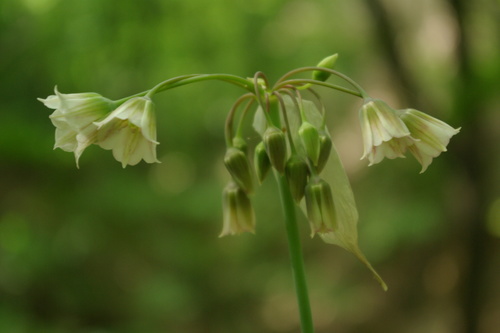
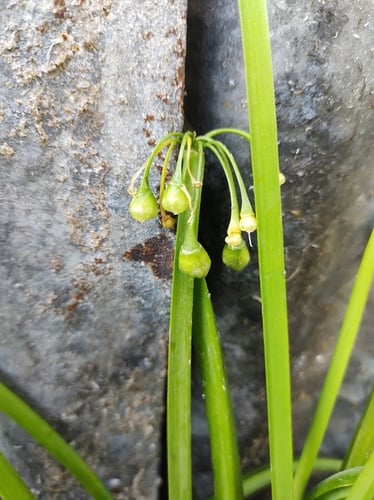
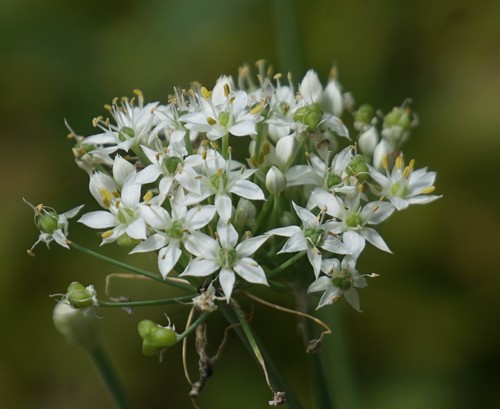
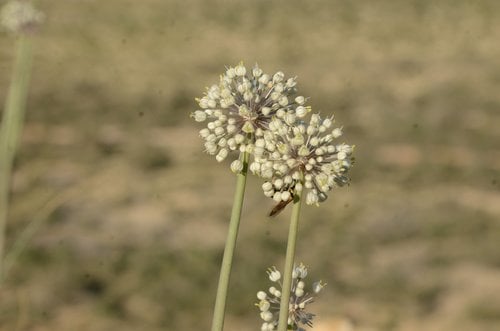
An onion family plant with a bulb. It grows to 1.2 m high and spreads 10 cm wide. The leaves are flat and shaped like a keel. This is a variable species which includes leeks, great headed garlic and kurrat. The bulbs can be 2-6 cm wide. The flowers are in a round head and are white, purple or red. The flowers are bell shaped and 4-5.5 mm long. The flower heads may have 500 flowers and be 5-9 cm across.
Edible Uses
The bulbs can be eaten raw or cooked, ranging from 2–6cm in size with a fairly strong leek-to-garlic flavour that works well as a flavouring in cooked dishes. Selected cultivars produce much larger bulbs with a milder garlic taste. The leaves are edible raw or cooked, offering a pleasant mild to strong garlic flavour; they're available from late autumn through spring, though older leaves can become tough and fibrous. The flowers are edible raw but have a somewhat dry texture, making them better suited as a flavouring in cooked foods than eaten on their own. The bulbils carry a mild garlic flavour and make a nice addition to salads and cooked dishes; though produced in abundance, their small size makes them fiddly to work with. They can also be pickled.
Traditional Uses
The bulbs are eaten raw or cooked. The leaves are eaten raw or cooked. The leaves are used for sarma in Turkey. They are rolled around a filling of rice or minced meat. They are also used in cheese making. The flowers are used raw or to flavour cooked foods. The seeds are milled and added to foods. The small bulbs or bulbils can be used for flavouring or pickles.
Medicinal Uses
This species shares the same medicinal properties as garlic, though in a milder and less effective form. Garlic has a long folk history of use across a wide range of ailments, particularly those such as ringworm, Candida, and vaginitis, where its fungicidal, antiseptic, tonic, and parasiticidal actions have proven beneficial. It is also reported to have anticancer activity. Regular dietary use has been shown to benefit the body, especially the blood and cardiovascular system — demographic studies suggest garlic is responsible for the low incidence of arteriosclerosis in parts of Italy and Spain where consumption is high. The bulb is considered anthelmintic, antiasthmatic, anticholesterolemic, antiseptic, antispasmodic, cholagogue, diaphoretic, diuretic, expectorant, febrifuge, stimulant, stomachic, tonic, and vasodilator. Crushed bulb can be applied as a poultice to relieve pain from bites, stings, and similar complaints.
Known Hazards
Although no individual reports regarding this species have been seen, there have been cases of poisoning caused by the consumption, in large quantities and by some mammals, of certain members of this genus. Dogs seem to be particularly susceptible.
Distribution
It is a temperate and Mediterranean climate plant. It grows naturally in rocky places near the coast in S.W. England and Wales. It is common around the Mediterranean. It prefers a sunny position in a light well drained soil. It tolerates a pH in the range 5.2 to 8.3. It does not suit moist climates. It suits hardiness zones 6-9. It can tolerate frosts. In Hobart Botanical gardens. Tasmania Herbarium.
Where It Grows
Africa, Albania, Algeria, Argentina, Armenia, Asia, Australia, Azerbaijan, Balkans, Belarus, Bosnia and Herzegovina, Britain, Bulgaria, Canary Is., Cape Verde, Caucasus, Chile, China, Colombia, Crete, Croatia, Cuba, Cyprus, Czech Republic, Dominican Republic, East Africa, Egypt, Ethiopia, Europe, France, Georgia, Greece, Haiti, India, Indochina, Indonesia, Iran, Iraq, Ireland, Israel, Italy, Jordan, Lebanon, Libya, Mediterranean, Mexico, Middle East, Morocco, Myanmar, North Africa, North America, Pakistan, Palestine, Portugal, Puerto Rico, Romania, Russia, Saudi Arabia, SE Asia, Sicily, Sinai, Slovenia, South America, Spain, Syria, Tanzania, Tasmania, Thailand, Tunisia, Turkey, Türkiye, Turkmenistan, Ukraine, United Kingdom, USA, Uzbekistan, West Africa, Yugoslavia,
Cultivation
Prefers a sunny position in a light well-drained soil. Prefers a dry position. Succeeds in clay soils. Tolerates a pH in the range 5.2 to 8.3. The bulbs should be planted fairly deeply. The wild leek is a rare native of Britain, found only in the south-west and Wales, though it should be hardy in most parts of the country. It comes into growth in the autumn, dying down in the summer, and makes a very pleasant winter leaf, either raw or cooked. It is a rather variable plant, especially in the amount of flowers and bulbils produced. The species produces mainly flowers with almost no bulbils, whilst the sub-species A. ampeloprasum babbingtonii (Babbington's Leek) produces lots of bulbils and almost no flowers. The cultivated leek (A. ampeloprasum porrum) is believed to have been developed from this plant whilst, in Germany and Italy, other forms have been selected for their edible bulbils. Allium ampeloprasum comprises several vegetables, of which the most important ones are: leek, elephant garlic or great-headed garlic, pearl onion, kurrat, Egyptian leek or salad leek, and Persian leek (Allium ampeloprasum ssp. persicum). The cultivar 'Perizweibel' is often used, the bulbils are solid rather than made up of layers and are popularly used for making pickles. This cultivar does not set seed. Another cultivated form of this plant produces very large, mild-garlic flavoured bulbs that are up to 500g in weight.They are known as elephant garlic. The wild leek grows well with most plants, especially roses, carrots, beet and chamomile, but it inhibits the growth of legumes. This plant is a bad companion for alfalfa, each species negatively affecting the other. Members of this genus are rarely if ever troubled by browsing deer.
Propagation
Seed is best sown as soon as it is ripe in a cold frame, though spring sowing in a cold frame is also viable. Prick seedlings into individual pots once large enough to handle. Well-grown plants can go into their final positions in late summer or autumn; otherwise, keep them in pots for another year and plant out the following summer. For division, dig up the bulbs during dormancy in late summer or early autumn, separate the small bulblets from the base of the larger bulb, and replant immediately in open ground or in pots in a cold frame. Bulbils should be planted out as soon as they ripen in late summer — they can go directly into permanent positions, though potting them up and planting out the following spring gives better results.
Other Uses
The plant's juice acts as a moth repellent, and the whole plant is said to deter insects and moles. Suitable for food forest plantings.
Other Information
It is a commercially cultivated vegetable.
Notes
Probably the wild ancestor of salad leek and common leek. There are about 300-700 Allium species. Most species of Allium are edible (Flora of China). All alliums are edible but they may not all be worth eating! They have also been put in the family Alliaceae.
Nutrition
| Part | Moisture | kJ | kcal | Protein | Vit A | Vit C | Iron | Zinc |
|---|---|---|---|---|---|---|---|---|
| Bulbs | — | — | — | — | — | — | — | — |
| Leaves | 79 | — | — | 1.8 | — | 116 | 25.5 | — |
| Flowers | — | — | — | — | — | — | — | — |
Synonyms
Also Known As
Ajo porro, Ajos de vibora, Bawang sayuran, Broad-leaf wild Leek, Cipodde carrare, Divlji luk, Elephant Garlic, Htan-kyetthun, Krakoremen, Levant garlic, Lukovac, Pirasa, Pivazok, Por, Poriluk, Prasa, Prasi, Purriettu, Puorru sarvaggiu, Riddidde, Sirdim, Sirik, Sirika penir, Sirim, Sirvask, Sorum, Summe, Wild leek, Yabani sarimsak
References (66)
- Ali-Shtayeh, M. S., et al, 2008, Traditional knowledge of wild edible plants used in Palestine (Northern West Bank): A comparative study. J Ethnobiol Ethnomed. 4: 13
- Al-Qura'n, S. A., 2010, Ethnobotanical and Ecological Studies of Wild Edible Plants in Jordan. Libyan Agriculture Research Center Journal International 1(4):231-243
- Anderson, E. F., 1993, Plants and people of the Golden Triangle. Dioscorides Press. p
- Bailey, C. and Danin, A., 1981, Bedouin Plant Utilization in Sinai and the Negev. Economic Botany 35(2): 145-162
- Bernal,R., et al, (Eds), 2016, Catalogo de Plantas y Liquenes de Colombia, Volumen 11, Magnoliaceae a Zygophyllaceae. Universidad Nacional de Colombia. p 1515
Show all 66 references Hide references
- Bircher, A. G. & Bircher, W. H., 2000, Encyclopedia of Fruit Trees and Edible Flowering Plants in Egypt and the Subtropics. AUC Press. p 19
- Biscotti, N. & Pieroni, A., 2015, The hidden Mediterranean diet: wild vegetables traditionally gathered and consumed in the gargano area, Apulia, SE Italy. Acta Societatis Botanicorum Poloniae 84 (3): 327-338
- Blamey, M and Grey-Wilson, C., 2005, Wild flowers of the Mediterranean. A & C Black London. p 486
- Blanco-Salas, J., et al, 2019, Wild Plants Potentially Used in Human Food in the Protected Area “Sierra Grande de Hornachos” of Extremadura (Spain). Sustainability 2019, 11, 456
- Brown, D., 2002, The Royal Horticultural Society encyclopedia of Herbs and their uses. DK Books. p 112
- Burkill, H. M., 1985, The useful plants of west tropical Africa, Vol. 3. Kew.
- Burkill, I. H., 1966, A Dictionary of the Economic Products of the Malay Peninsula. Ministry of Agriculture and Cooperatives, Kuala Lumpur, Malaysia. Vol 1 (A-H) p 99
- Bussman, R. W., et al, 2016, A comparative ethnobotany of Khevsureti, Samtskhe-Javakheti, Tusheti, Svaneti, and Racha-Lechkhumi, Republic of Georgia (Sakartvelo), Caucasus. Journal of Ethnobiology and Ethnomedicine (2016) 12:43
- Cerne, M., 1992, Wild Plants from Slovenia used as Vegetables. Acta Horticulturae 318.
- Cheifetz, A., (ed), 1999, 500 popular vegetables, herbs, fruits and nuts for Australian Gardeners. Random House p 30
- Davis, S.D., Heywood, V.H., & Hamilton, A.C. (eds), 1994, Centres of plant Diversity. WWF. Vol 2. p 340
- Della, A., et al, 2006, An ethnobotanical survey of wild edible plants of Paphos and Larnaca countryside of Cyprus. J. Ethnobiol. Ethnomed. 2:34
- Demir, I. & Ayaz, N., 2022, Wild edible plants contributing to the traditional foods of Mardin (Turkey) Province. Indian Journal of Traditional Knowledge Vol 21(3), July 2022, pp 569-582
- Dogan, Y., 2012, Traditionally used wild edible greens in the Aegean Region of Turkey. Acta Societatis Botanicorum Poloniae 81(4): 329-342
- Dogan, Y., et al, 2015, Of the importance of a leaf: the ethnobotany of sarma in Turkey and the Balkans. Journal of Ethnobiology and Ethnomedicine, 11:56
- Dolina, K. & Luczaj, L., 2014, Wild food plants used on the Dubrovnik coast (south-eastern Croatia) Acta Soc Bot Pol 83(3):175–181
- Duarte, M. C., et al, 2022, Diversity of Useful Plants in Cabo Verde Islands: A Biogeographic and Conservation Perspective. Plants 2022, 11, 1313 p 8
- Ertug, F., 2004, Wild Edible Plants of the Bodrum Area. (Mugla, Turkey). Turk. J. Bot. 28 (2004): 161-174
- Ertug, F, Yenen Bitkiler. Resimli Türkiye Florası -I- Flora of Turkey - Ethnobotany supplement
- Facciola, S., 1998, Cornucopia 2: a Source Book of Edible Plants. Kampong Publications, p 4
- Geraci, A., et al, 2018, The wild taxa utilized as vegetables in Sicily (Italy): a traditional component of the Mediterranean diet. Journal of Ethnobiology and Ethnomedicine (2018) 14:14
- Hadjichambis, A. C., et al, 2007, Wild and semi-domesticated food plant consumption in seven circum-Mediterranean areas. International Journal of Food Sciences and Nutrition. 2007, 1-32.
- Hedrick, U.P., 1919, (Ed.), Sturtevant's edible plants of the world. p 33
- Hepper, E.N., 1993, Illustrated Encyclopedia of Bible Plants, IVP, England. p 127
- Hussey, B.M.J., Keighery, G.J., Cousens, R.D., Dodd, J., Lloyd, S.G., 1997, Western Weeds. A guide to the weeds of Western Australia. Plant Protection Society of Western Australia. p 16
- Hu, Shiu-ying, 2005, Food Plants of China. The Chinese University Press. p 311
- Irving, M., 2009, The Forager Handbook, A Guide to the Edible Plants of Britain. Ebury Press p 332
- Jardin, C., 1970, List of Foods Used In Africa, FAO Nutrition Information Document Series No 2.p 52
- Kays, S. J., and Dias, J. C. S., 1995, Common Names of Commercially Cultivated Vegetables of the World in 15 languages. Economic Botany, Vol. 49, No. 2, pp. 115-152
- Kew Plants of the World Online
- Lazarides, M. & Hince, B., 1993, Handbook of Economic Plants of Australia, CSIRO. p 13
- Licata, M., et al, 2016, A survey of wild plant species for food use in Sicily (Italy) – results of a 3-year study in four Regional Parks. Journal of Ethnobiology and Ethnomedicine 12:12
- Luczaj, L. et al, 2013, Wild food plants used in the villages of the Lake Vrana Nature Park (northern Dalmatia, Croatia). Acta Societatis Botanicorum Poloniae, 82(4): 275-281
- Luczaj, L. et al, 2014, Wild Food Plants of Dalmatia (Croatia). in A. Pieroni, C. L. Quave (eds.), Ethnobotany and Biocultural Diversities in the Balkans, p 138
- Mahklouf, M. H., 2019, Ethnobotanical Study of Edible Wild Plants in Libya. European Journal of Ecology. 5(2): 30-40
- McCollum, G.D., 1979, Onions and allies, in Simmonds N.W.,(ed), Crop Plant Evolution. Longmans. London. p 186
- Molina, M. et al, 2014, Weeds and Food Diversity: Natural Yield Assessment and Future Alternatives for Traditionally Consumed Wild Vegetables. Journal of Ethnobiology 34(1): 44–67
- Morley, B.D., & Toelken, H.R., (Eds), 1983, Flowering Plants in Australia. Rigby. p 332
- Mukemre, M., et al, 2016, Survey of wild food plants for human consumption in villages of Catak, (Van-Turkey), Indian Journal of Traditional Knowledge. Vol. 15(2) pp. 183-191
- Paczkowska, G. & Chapman, A.R., 2000, The Western Australian Flora. A Descriptive Catalogue. Western Australian Herbarium. p 29
- Pasta, S., et al, 2020, An Updated Checklist of the Sicilian Native Edible Plants: Preserving the Traditional Ecological Knowledge of Century-Old Agro-Pastoral Landscapes. Frontiers in Plant Science. Volume 11|Article 388
- Pieroni, A., et al, 2005, Food for two seasons: Culinary uses of non-cultivated local vegetables and mushrooms in a south Italian village. International Journal of Food Sciences and Nutrition, 56(4): 245-272
- Plants for a Future database, The Field, Penpol, Lostwithiel, Cornwall, PL22 0NG, UK. http://www.scs.leeds.ac.uk/pfaf/
- Polat, R., et al, 2015, Survey of wild food plants for human consumption in Elazig (Turkey). Indian Journal of Traditional Knowledge. Vol. 1(1): 69-75
- Purseglove, J.W., 1972, Tropical Crops. Monocotyledons. Longmans p 50
- Recher, P, 2001, Fruit Spirit Botanical Gardens Plant Index. www.nrg.com.au/~recher/ seedlist.html p 1
- Rivera, C., et al, 2005, The Ethnobotanical Study of Local Mediterranean Food Plants as Medicinal Resources in Southern Spain. Journal of Physiologyand Pharmacology. 56, Suppl. 1, 97-114
- Ryan, S., 2008, Dicksonia. Rare Plants Manual. Hyland House. p 120
- Sanchez-Mata, M. C., et al, 2010, Wild vegetables of the Mediterranean area as valuable sources of bioactive compounds. Genet. Resourc. Crop Evol. 59:431-443
- Seidemann J., 2005, World Spice Plants. Economic Usage, Botany, Taxonomy. Springer. p 15
- Sp. pl. 1:294. 1753, nom. cons.
- Sulamain, N., et al, 2023, The Importance of Becoming Tamed: Wild Food Plants as Possible Novel Crops in Selected Food-Insecure Regions. Horticulturae 2023, 9, 171.
- Tasmanian Herbarium Vascular Plants list p 68
- Terra, G.J.A., 1973, Tropical Vegetables. Communication 54e Royal Tropical Institute, Amsterdam, p 20
- USDA, ARS, National Genetic Resources Program. Germplasm Resources Information Network - (GRIN). [Online Database] National Germplasm Resources Laboratory, Beltsville, Maryland. Available: www.ars-grin.gov/cgi-bin/npgs/html/econ.pl (10 April 2000)
- van Wyk, B., 2005, Food Plants of the World. An illustrated guide. Timber press. p 47
- Wiersema, J. H. & Leon, B., 2013, World Economic Plants. A Standard Reference CRC Press. 2nd Ed. p 33
- World Checklist of Useful Plant Species 2020. Royal Botanic Gardens, Kew
- Yesil, Y., et al, 2019, Wild edible plants in Yeşilli (Mardin-Turkey), a multicultural area. Journal of Ethnobiology and Ethnomedicine (2019) 15:52
- Yesil, Y. et al, 2019, Traditional knowledge of wild edible plants in Hasankeyf (Batman Province, Turkey). Acta Societatis Botanicorum Poloniae. 88(3):3633
- Zeven, A. C. & de West, J. M. J., 1982, Dictionary of cultivated plants and their regions of diversity. Wageningen. p 71, 87