Glyceria striata
(Lam.) Hitchc.
Fowl manna grass
iNaturalist· cc-by
(c) Jason Hollinger, some rights reserved (CC BY)
iNaturalist· cc-by-nc
(c) fernbanktreegirl, some rights reserved (CC BY-NC)
iNaturalist· cc-by-nc
(c) csledge, some rights reserved (CC BY-NC), uploaded by csledge
Summary
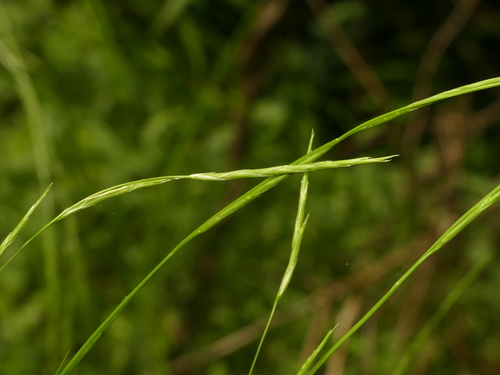
Source: WikipediaGlyceria striata is a species of Glyceria which is known by the common names fowl mannagrass and ridged glyceria. It is native to much of North America, from Alaska and northern Canada to northern Mexico. It is a common bunchgrass species found in wet areas, often in forests. Glyceria striata bears erect stems exceeding a meter in maximum height and firm, narrow leaves. The spreading branches of the inflorescence hold oval-shaped to nearly round spikelets each with generally fewer than six florets.
Description
A perennial grass reaching 1.5 m tall with hermaphrodite flowers pollinated by wind. Grows in light sandy, medium loamy, or heavy clay soils across mildly acidic to basic pH ranges. Tolerates semi-shade and wet conditions, thriving in waterlogged areas and shallow water.
Edible Uses
The seeds are edible, though no further preparation details are recorded. Note that the seeds are very small and fiddly to harvest.
Medicinal Uses
None known.
Distribution
It grows in wet areas.
Where It Grows
Canada, North America, USA,
Propagation
Sow seed in spring in a greenhouse in a pot standing in 3–5cm of water. Surface sow or barely cover the seed; germination should occur within 3 weeks. Once seedlings are large enough to handle, prick them out into individual pots and plant out in early summer. For division, split clumps in spring — larger clumps can go directly into permanent positions, while smaller ones are best potted up and grown on in a cold frame until rooting well, then planted out in spring.
Other Uses
None known.
References (2)
- Plants for a Future database, The Field, Penpol, Lostwithiel, Cornwall, PL22 0NG, UK. http://www.scs.leeds.ac.uk/pfaf/
- Proc. Biol. Soc. Wash. 41:157. 1928