Gliricidia sepium
(Jacq.) Kunth. ex Steud.
Mother-of-cacao
iNaturalist· cc-by-nc
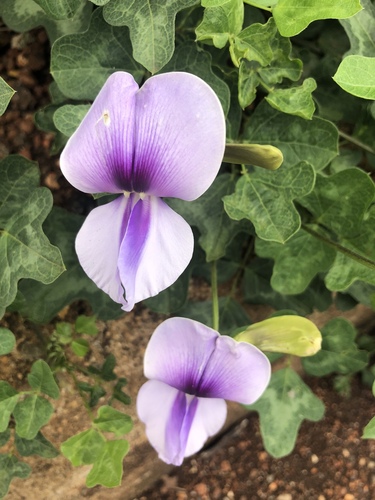
(c) Colin Barrows, some rights reserved (CC BY-NC)
iNaturalist· cc-by-nc-sa
(c) Ballestas Explora I.E. de Ballestas, some rights reserved (CC BY-NC-SA), uploaded by Ballestas Explora I.E. de Ballestas
iNaturalist· cc0
no rights reserved, uploaded by 葉子
Summary
Source: WikipediaGliricidia sepium, often simply referred to as gliricidia or by its Spanish common name madre de cacao (calque of Nahuatl cacahuanāntli; also anglicized as mother of cocoa), is a medium size leguminous tree belonging to the family Fabaceae. It is an important multi-purpose legume tree, with a native range from Mexico to Colombia, but now widely introduced to other tropical zones.
Description
An evergreen shrub or tree. It grows to 10 m high and spreads to 3 m across. The crown is irregular. The bark is grey. The stem is erect and branching. The young branches are hairy. The leaves are compound with 8 to 14 leaflets. These are 7 cm long and 3 cm wide. They come to a blunt tip at the top end and are rounded at the base. The flowers are pink and yellow in the centre with a green stripe. They are pea shaped. The flowers occur in 10 cm long clusters. They are produced on older twigs. The fruit is a woody pod 15 cm long and up to 2 cm wide. The seeds are purplish brown and round. They are 1 cm long and 9 mm wide.
Edible Uses
The flowers are cooked and eaten as a potherb, or folded into a batter and fried. The leaves have been reported as eaten and are used in a fish dish. There are some reports that all parts of this plant are poisonous, and the leaves have been used to kill rats.
Traditional Uses
The leaves have been reported as being eaten. They are used in a fish dish. The flowers are cooked as potherbs and also folded into an egg batter and fried. CAUTION: They are also reported as poisonous. Leaves are used to kill rats. As all parts are poisonous it is probably better not to eat any part.
Medicinal Uses
The plant is expectorant, sedative, and suppurative. Crude extracts have demonstrated antifungal activity. It is a folk remedy for alopecia, boils, bruises, burns, colds, cough, debility, eruptions, erysipelas, fever, fractures, gangrene, headache, itch, prickly heat, rheumatism, skin tumours, ulcers, urticaria, and wounds.
Known Hazards
G. sepium was spread from its native range throughout the tropics to shade plantation crops such as coffee. Today it is used for many other purposes including live fencing, fodder, firewood, green manure, intercropping, and rat poison. Its use expanded following the widespread defoliation of Leucaena by psyllid in the 1980s. In the charsutri method of paddy cultivation, leaves of glyricidia are incorporated in soil during ploughing.
Distribution
A tropical plant. It grows best in warm, seasonally dry climates. It occurs in areas with 900-1500 mm annual rainfall. It grows between sea level and 1200 m altitude. It suits areas with a mean annual temperature of 20-27°C. It does best with light well composted soil. The soil needs to be well drained. It needs a protected sunny position. It is damaged by drought and frost. It grows with soil pH between 5.0-8.5. It suits hardiness zones 10-12. In XTBG Yunnan.
Where It Grows
Africa, Antigua and Barbuda, Antilles, Argentina, Aruba, Asia, Australia, Bahamas, Barbados, Belize, Bhutan, Bolivia, Brazil, Brunei, Burkina Faso, Cameroon, Caribbean, Central Africa, Central America, Chad, Chile, China, Colombia, Costa Rica, Côte d'Ivoire, Cuba, Dominica, Dominican Republic, East Africa, East Timor, Ecuador, El Salvador, Fiji, French Guiana, Gambia, Ghana, Grenada, Guam, Guadeloupe, Guatemala, Guianas, Guinea, Guinée, Guinea-Bissau, Guyana, Haiti, Hawaii, Himalayas, Honduras, India, Indochina, Indonesia, Ivory Coast, Jamaica, Kenya, Kiribati, Laos, Liberia, Madagascar, Malawi, Malaysia, Maldives, Mali, Marquesas, Martinique, Mauritania, Mauritius, Mexico*, Micronesia, Montserrat, Mozambique, Myanmar, Netherlands Antilles, Nicaragua, Niger, Nigeria, North America, Pacific, Pakistan, Palau, Pan tropical, Panama, Papua New Guinea, PNG, Paraguay, Peru, Philippines, Puerto Rico, Reunion, Sahel, Samoa, SE Asia, Seychelles, Senegal, Sierra Leone, Singapore, Solomon Islands, Southern Africa, South America, Sri Lanka, St. Kitts and Nevis, St Lucia, St Vincent and Grenadines, Suriname, Tanzania, Thailand, Timor-Leste, Togo, Tonga, Trinidad & Tobago, Uganda, Uruguay, USA, Vanuatu, Venezuela, Vietnam, Virgin Islands, West Africa, West Indies, Zimbabwe,
Cultivation
Plants are grown from seed. The seed needs treatment to help it to start growing. Plants are easy to grow from large cuttings or mature wood. The cuttings should be 4.7 cm long.
Propagation
Pre-treatment is often unnecessary with fresh seed, but older seed should be soaked overnight in hot water and sown immediately afterwards. Inoculation of seed or seedlings with suitable rhizobium strains is necessary where the plant is not yet naturalised. Direct sowing requires good land preparation and regular weeding; germination rates of 90–100% occur within 7 days. Nursery seedlings reach plantable size in 3 months. Seed storage behaviour is orthodox, with viability maintained for 12 months in open storage. Gliricidia is most commonly propagated by cuttings, though this is not ideal for establishment in poor soils; even very large cuttings root successfully in open ground.
Other Uses
Gliricidia is a pioneer species that readily colonises open ground and is used for reclaiming Imperata grasslands. It is widely grown as a shade tree for perennial crops such as tea, coffee, and cocoa, and as a nurse tree for shade-loving species. Its fine, feathery foliage provides light shade, and it withstands repeated pruning and resprouts vigorously. When grown as a hedgerow in alley cropping, it suppresses weeds, controls erosion, and has been shown to reduce disease incidence in groundnut crops. Its ease of propagation from large cuttings makes it ideal for live fencing around cattle pastures and for marking boundaries. It is also used as a live stake to support crops including black pepper, vanilla, and yam in West Africa and India, and has been planted to reclaim land degraded by or infested with Imperata cylindrica. As a green manure, it increases soil organic matter, aids nutrient cycling through litter production, improves soil aeration, and reduces soil temperature. It is drought-resistant and water-conserving, shedding most of its leaves in the dry season to reduce transpiration loss. The plant is also used as a rodenticide and general pesticide; seeds serve as rat poison, and the roots are said to be deadly to field mice and rats, which reportedly prefer them to cacao or coffee roots. The heartwood is dark brown, turning reddish-brown on exposure; the moderately thin sapwood is yellowish to light brown, also turning reddish-brown. The texture is coarse with an irregular, close grain. The wood is hard, heavy, very tough, very durable in contact with soil, and termite-resistant. It is difficult to split, takes a very good polish, and is used for railway sleepers, farm implements, tool handles, furniture, house construction, and as mother posts in live-fence establishment. It is also widely used for fuel and charcoal production, burning slowly without sparking and with little smoke. The calorific value of a 5-year-old tree is 4550 kcal/kg.
Other Information
Plants are used as shade for coffee in the lowlands.
Notes
There are about 6 Gliricidia species. They grow in tropical America. The seeds are used as rat poison. Also as Papilionaceae.
Nutrition
| Part | Moisture | kJ | kcal | Protein | Vit A | Vit C | Iron | Zinc |
|---|---|---|---|---|---|---|---|---|
| Leaves raw | 84.7 | 217 | 52 | 2.4 | — | — | 0.8 | — |
Synonyms
Also Known As
Balo, Bien vestido, Cacahuananche, Cacaonance, Chuchunuc, Cocohuite, Gamal, Kakawate, Kakawati, Kante, Khae-farang, Madero negro, Madre de cafe, Madre, Madreado, Madrecacao, Madrecaco, Madre de cacao, Madrial, Malthass, Mata raton, Mexican lilac, Nicaraguan cacao-shade, Nicaraguan shade tree, Pohon gamal, Quick stick, Spotted gliricidia, Thinbaw-ngusat, Tropical flowering cherry, Xab-yaab
References (47)
- Altschul, S.V.R., 1973, Drugs and Foods from Little-known Plants. Notes in Harvard University Herbaria. Harvard Univ. Press. Massachusetts. no. 1751
- Ambasta, S.P. (Ed.), 2000, The Useful Plants of India. CSIR India. p 237
- Barwick, M., 2004, Tropical and Subtropical Trees. A Worldwide Encyclopedic Guide. Thames and Hudson p 201
- Bernholt, H. et al, 2009, Plant species richness and diversity in urban and peri-urban gardens of Niamey, Niger. Agroforestry Systems 77:159-179
- Bodkin, F., 1991, Encyclopedia Botanica. Cornstalk publishing, p 498
Show all 47 references Hide references
- Burkill, H. M., 1985, The useful plants of west tropical Africa, Vol. 4. Kew.
- Casas, A., et al, 1996, Plant Management Among the Nahua and the Mixtec in the Balsas River Basin, Mexico: An Ethnobotanical Approach to the Study of Plant Domestication. Human Ecology, Vol. 24, No. 4 pp. 455-478
- Chizmar Fernandez, C., et al, 2009, Plantas comestibles de Centroamerica. Instituto de Biodiversidad, Costa Rica. p 207
- Clarke, W. C. & Thaman, R.R., Agroforestry in the Pacific Islands. Appendix One hundred Pacific Island agroforestry trees. United Nations University.
- Condit, R., et al, 2011, Trees of Panama and Costa Rica. Princeton Field Guides. p 224
- Elevitch, C.R.(ed.), 2006, Traditional Trees of the Pacific Islands: Their Culture, Environment and Use. Permanent Agriculture Resources, Holualoa, Hawaii. p 367
- Engel, D.H., & Phummai, S., 2000, A Field Guide to Tropical Plants of Asia. Timber Press. p 39
- Etherington, K., & Imwold, D., (Eds), 2001, Botanica's Trees & Shrubs. The illustrated A-Z of over 8500 trees and shrubs. Random House, Australia. p 348
- Ezeagu, I. E. et al, 2002, Seed protein and nitrogen-to-protein conversion factors for some uncultivated tropical plant seeds. Food Chemistry 78:105-109
- Facciola, S., 1998, Cornucopia 2: a Source Book of Edible Plants. Kampong Publications, p 105
- FAO, 2012, Forest Genetic Resources Situation in Mexico. Final Report of Project TCP/ 3301 p 287
- Food Composition Tables for use in East Asia FAO http://www.fao.org/infoods/directory No. 529
- Forest Genetic Resources Situation in Mexico, FAO 2012 Annex 15 p 286
- Grandtner, M. M., 2008, World Dictionary of Trees. Wood and Forest Science Department. Laval University, Quebec, Qc Canada. (Internet database http://www.wdt.qc.ca)
- Grandtner, M. M. & Chevrette, J., 2013, Dictionary of Trees, Volume 2: South America: Nomenclature, Taxonomy and Ecology. Academic Press p 265
- Grubben, G. J. H. and Denton, O. A. (eds), 2004, Plant Resources of Tropical Africa 2. Vegetables. PROTA, Wageningen, Netherlands. p 562
- Hearne, D.A., & Rance, S.J., 1975, Trees for Darwin and Northern Australia. AGPS, Canberra p 72, Pl 19 (As Gliricidia maculata)
- Henty, E.E., 1980, Harmful Plants in Papua New Guinea. Botany Bulletin No 12. Division Botany, Lae, Papua New Guinea. p 88, 89
- Hussey, B.M.J., Keighery, G.J., Cousens, R.D., Dodd, J., Lloyd, S.G., 1997, Western Weeds. A guide to the weeds of Western Australia. Plant Protection Society of Western Australia. p 150
- ILDIS Legumes of the World http:www:ildis.org/Legume/Web
- Krishen P., 2006, Trees of Delhi, A Field Guide. DK Books. p 261
- Llamas, K.A., 2003, Tropical Flowering Plants. Timber Press. p 220
- Lugod, G.C. and de Padua L.S., 1979, Wild Food Plants in the Philippines. Vol. 1. Univ. of Philippines Los Banos. p 47
- Martin, F.W. & Ruberte, R.M., 1979, Edible Leaves of the Tropics. Antillian College Press, Mayaguez, Puerto Rico. p 82, 199
- Martin, F.W. & Ruberte, R.M., 1979, Edible Leaves of the Tropics. Antillian College Press, Mayaguez, Puerto Rico. p 199 (As Gliricidia maculata)
- Mbuya, L.P., Msanga, H.P., Ruffo, C.K., Birnie, A & Tengnas, B., 1994, Useful Trees and Shrubs for Tanzania. Regional Soil Conservation Unit. Technical Handbook No 6. p 282
- McMakin, P.D., 2000, Flowering Plants of Thailand. A Field Guide. White Lotus. p 22
- Mutchnick, P. A. and McCarthy, B. C., 1997, An Ethnobotanical Analysis of the Tree Species Common to the Subtropical Moist Forests of the Peten, Guatemala. Economic Botany, Vol. 51, No. 2, pp. 158-183
- Paczkowska, G . & Chapman, A.R., 2000, The Western Australian Flora. A Descriptive Calatogue. Western Australian Herbarium. p 432
- Pham-Hoang Ho, 1999, An Illustrated Flora of Vietnam. Nha Xuat Ban Tre. p 906
- Piedra-Malagón, E. M., et al, 2022, Edible native plants of the Gulf of Mexico Province. Biodiversity Data Journal 10: e80565 p 21
- Plants of Haiti Smithsonian Institute http://botany.si.edu/antilles/West Indies
- Polinag, M. A., 2003, Food from the Wilderness. Department of Environment and Natural Resources. Laguna.
- Repert. bot. syst. 1:679. 1842 (Steudel, Nomencl. bot. ed. 2, 1:688. 1840, pro syn.)
- Selvam, V., 2007, Trees and shrubs of the Maldives. RAP Publication No. 2007/12 p 98
- Sujanapal, P., & Sankaran, K. V., 2016, Common Plants of Maldives. FAO & Kerala FRI, p 139
- Sukarya, D. G., (Ed.) 2013, 3,500 Plant Species of the Botanic Gardens of Indonesia. LIPI p 305
- Turreira-Garcia, N., et al, 2015, Wild edible plant knowledge, distribution and transmission: a case study of the Achi Mayans of Guatemala. Journal of Ethnobiology and Ethnomedicine. 11:52
- Verdcourt, B., 1979, Manual of New Guinea Legumes. Botany Bulletin No 11, Division of Botany, Lae, Papua New Guinea. p 348 (Drawing)
- World Checklist of Useful Plant Species 2020. Royal Botanic Gardens, Kew
- www.worldagroforestrycentre.org/treedb/
- Zuchowski W., 2007, Tropical Plants of Costa Rica. A Zona Tropical Publication, Comstock Publishing. p 226