Glinus oppositifolius
(L.) A. DC.
Bitter cumin
iNaturalist· cc0
no rights reserved, uploaded by 葉子
iNaturalist· cc-by
(c) Rongrong Angkaew, some rights reserved (CC BY), uploaded by Rongrong Angkaew
iNaturalist· cc-by-sa
(c) Vikas D Prasad, some rights reserved (CC BY-SA), uploaded by Vikas D Prasad
Description
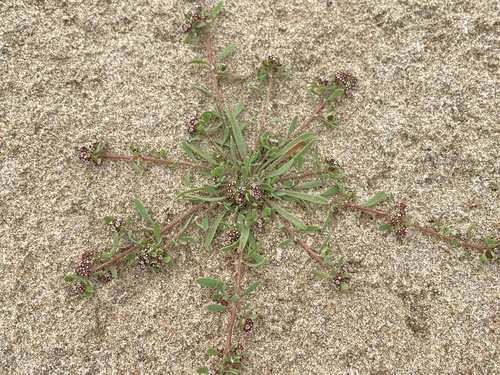
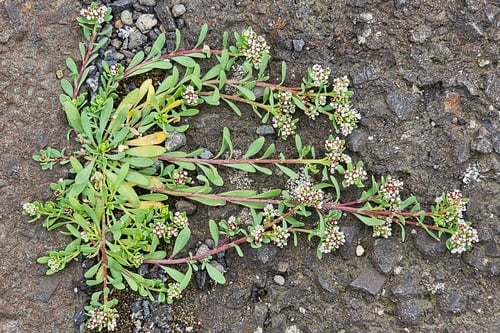
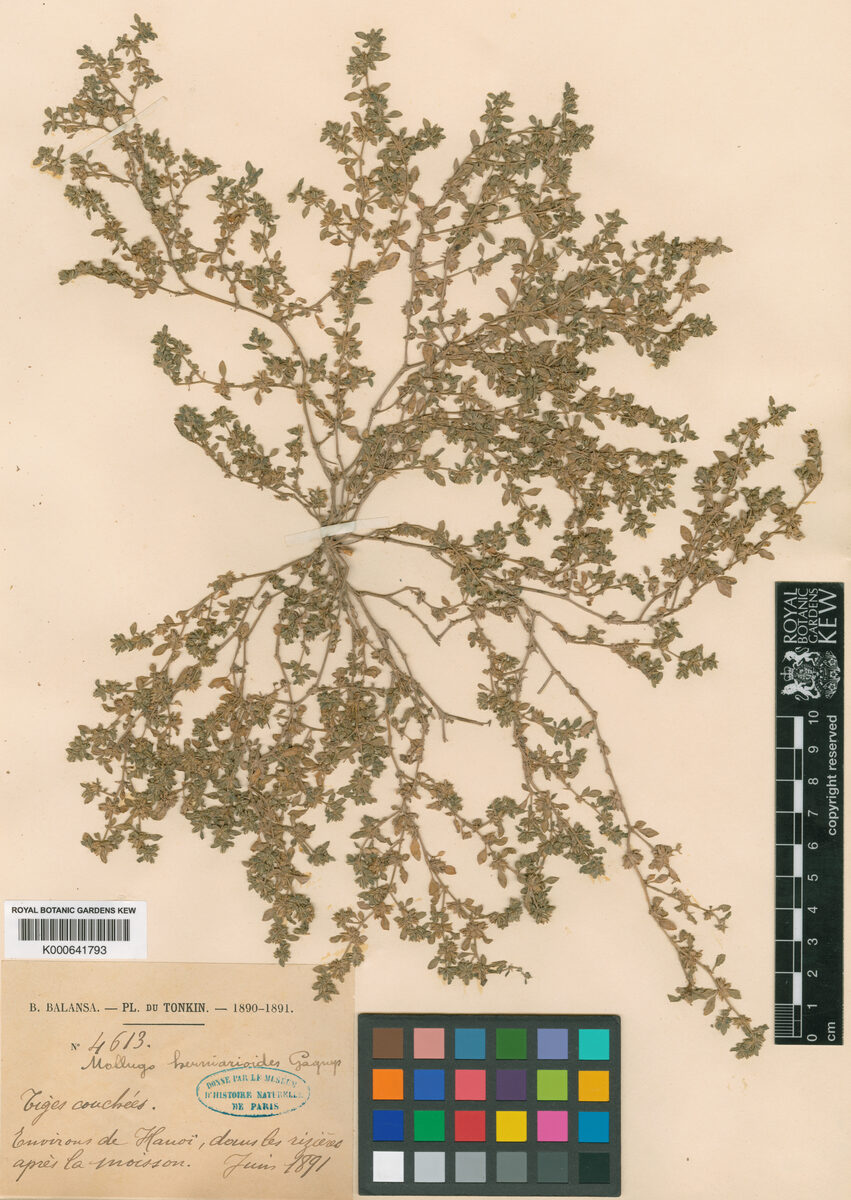
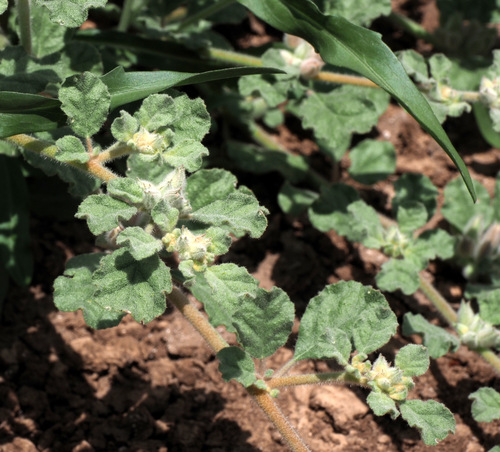
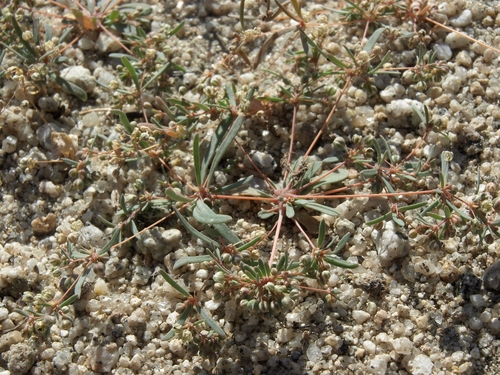
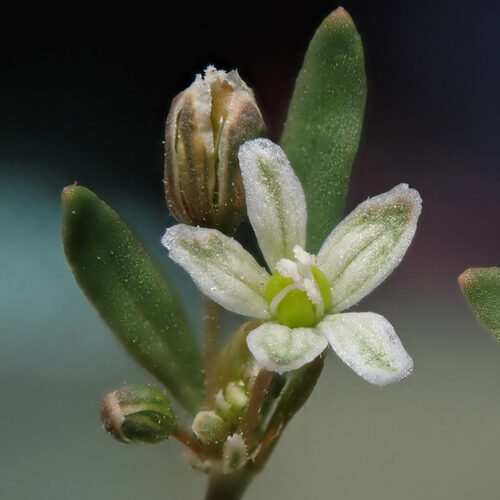
An annual herb. This is a small thin spreading plant. It grows 10-60 cm tall. It is smooth skinned and branched and grows each year from seed. The leaves are opposite each other and 1 to 3 cm long. Sometimes the leaves are in circles. It flowers throughout the year. Flowers develop around the nodes. There are 4-6 flowers together. They are 6-12 mm long. They are greenish-white. They have a long flower stalk. The fruit is a capsule which is oval. It has 5 valves. There are many seeds. These are kidney shaped. They are 0.5 mm long.
Edible Uses
The leaves are cooked with meat and fish to enhance flavor, though they are bitter. The entire plant including flowers can be fried and eaten, or ground into a paste for use in pickles. Leaves are sold in local markets.
Traditional Uses
The leaves are cooked with meat and fish to add to the flavour. The leaves are bitter. The plant including flowers are fried and eaten. The plant is ground into a paste then used for pickles.
Medicinal Uses
No medicinal uses mentioned in the data.
Distribution
It is a tropical plant. It grows in open waste places. It often grows on land which is occasionally flooded. It grows on tidal flats. It grows in damp shady places. It grows in wetlands. It grows between 40-780 m above sea levels.
Where It Grows
Africa, Asia, Australia, Bangladesh, Botswana, Burkina Faso, Cambodia, Central Africa, China, Congo, East Africa, Eswatini, Guinea, Guinée, Guinea-Bissau, India, Indochina, Indonesia, Laos, Madagascar, Malawi, Mozambique, Myanmar, Northeastern India, Pacific, Philippines, SE Asia, Senegal, Sierra Leone, Southern Africa, South America, Swaziland, Taiwan, Thailand, Vietnam, West Africa, Zambia, Zimbabwe,
Cultivation
It can be grown from seeds and stem cuttings.
Other Information
Leaves are sold in local markets.
Notes
There are about 10 Glinus species. There are 2 species in tropical America.
Nutrition
| Part | Moisture | kJ | kcal | Protein | Vit A | Vit C | Iron | Zinc |
|---|---|---|---|---|---|---|---|---|
| Leaves | 91.1 | 137 | 33 | 1.7 | — | 7 | — | — |
Synonyms
Also Known As
Bakkate, Chadarasi gida, Chandarasisoppu, Chang geng xing su cao, Chayun-tarashiaku, Dang khem, Dima shak, Gandhi buuti, Ganga, Ganga-la-acho, Geema shak, Gemashak, Ghima, Gima, Gimasak, Gimma, Grishma-sundaraka, Harha ara, Jala-papr, Jeem shaak, Jharasi, Jima, Jin-ga, Kachantarai, Kadubhaji, Kaipacheera, Kaipajira, Karvo okhrad, Kayata bhaji, Lonika, Pampantra, Parpata, Parpatka, Phak kaen khom, Phak khuang, Phanija, Pitangama, Pitasaga, Rau dang dat, Rumput tapak burung, Sadaodin, Teeta shak, Thura poondu, Toorael lay, Ushnasundara
References (48)
- Ambasta, S.P. (Ed.), 2000, The Useful Plants of India. CSIR India. p 237
- Ara, R. I. T., 2015, Leafy Vegetables in Bangladesh. Photon eBooks. p 82 (As Mollugo spergula)
- Azam, F. M. S., et al, 2014, Are Famine Food Plants Also Ethnomedicinal Plants? An Ethnomedicinal Appraisal of Famine Food Plants of Two Districts of Bangladesh. Evidence-Based Complementary and Alternative Medicine Volume 2014, Article ID 741712, 28 pages
- Bandyopadhyay, S. et al, 2009, Wild edible plants of Koch Bihar district, West Bengal. Natural Products Radiance 8(1) 64-72
- Bandyopadhyay, S., et al, 2012, A Census of Wild Edible Plants from Howrah District, West Bengal, India. Proceedings of UGC sponsored National Seminar 2012
Show all 48 references Hide references
- Banerjee, A., et al, 2013, Ethnobotanical Documentation of Some Wild Edible Plants in Bankura District, West Bengal, India. The Journal of Ethnobiology and Traditional Medicine. Photon 120 (2013) 585-590 (Also as Mollugo spergula)
- BARC, 2016, State of Biodiversity for Food and Agriculture in Bangladesh. Bangladesh Agricultural Research Council.
- Burkill, H. M., 1985, The useful plants of west tropical Africa, Vol. 1. Kew.
- Chatterjee, R., et al, 2016, Diversity of Vegetable Crop in Home Gardens of Sub Himalayan Districts of West Bengal, India. Int. J. Horti. and Plant Sci.: Vol. 1, No. 1, p. 9-16, October 2016
- Chowdery, T., et al, 2014, Wild edible plants of Uttar Dinajpur District, West Bengal. Life Science Leaflets. 47:pp 20-36 http://lifesciencesleaflets.ning.com
- Chowdhury, A. & Das, A. P., 2014, Conservation through sustainable utilization of wetland leafy vegetables of Terai and Duars, West Bengal, India. International Journal of Advanced Life Sciences (IJALS), 7(4) p 654
- Chowdhury, M. & Mukherjee, R., 2012, Wild Edible Plants Consumed by Local Communities of Maldah of West Bengal, India. Indian J.Sci.Res.3(2) : 163-170
- Cruz-Garcia, G. S., & Price, L. L., 2011, Ethnobotanical investigation of 'wild' food plants used by rice farmers in Kalasin, Northeast Thailand. Journal of Ethnobiology and Ethnomedicine 7:33
- Fowler, D. G., 2007, Zambian Plants: Their Vernacular Names and Uses. Kew. p 48
- Ghosh, C. & Das A. P., 2011, Some useful and poisonous tea garden weeds from the Darjiling District of West Bengal, India. Pleione 5(1): 91 - 114
- Grivetti, L. E., 1980, Agricultural development: present and potential role of edible wild plants. Part 2: Sub-Saharan Africa, Report to the Department of State Agency for International Development. p 70
- Grubben, G. J. H. and Denton, O. A. (eds), 2004, Plant Resources of Tropical Africa 2. Vegetables. PROTA, Wageningen, Netherlands. p 562
- Hussey, B.M.J., Keighery, G.J., Cousens, R.D., Dodd, J., Lloyd, S.G., 1997, Western Weeds. A guide to the weeds of Western Australia. Plant Protection Society of Western Australia. p 182
- Jacquat, C., 1990, Plants from the Markets of Thailand. D.K. Book House p 60
- Japanese International Research Centre for Agricultural Science www.jircas.affrc.go.jp/project/value_addition/Vegetables
- Jiwajinda, S., et al, 2002, Suppressive Effects of Edible Thai Plants on Superoxide and Nitric Oxide Generation. Asian Pacific Journal of Cancer Prevention, Vol 3, 2002
- Kar, A., et al, 2013, Wild Edible Plant Resources used by the Mizos of Mizoram, India. Kathmandu University Journal of Science, Engineering and Technology. Vol. 9, No. 1, July, 2013, 106-126
- Kenneally, K.E., Edinger, D. C., and Willing T., 1996, Broome and Beyond, Plants and People of the Dampier Peninsula, Kimberley, Western Australia. Department of Conservation and Land Management. p 138
- Khodram,S. D., et al, 2019, Local knowledge of edible flowers used in Mizoram. Indian Journal of Traditional Knowledge Vol 18(40 pp 715-723
- Khumgratok, S., Edible Plants in Cultural Forests of Northeastern Thailand. Mahasarakham University Thailand.
- Lazarides, M. & Hince, B., 1993, Handbook of Economic Plants of Australia, CSIRO. p 121
- Lu De-quan, Hartmann, H.E.K., Molluginaceae. Flora of China.
- Martin, F.W. & Ruberte, R.M., 1979, Edible Leaves of the Tropics. Antillian College Press, Mayaguez, Puerto Rico. p 172 (As Mollugo oppositifolia)
- Mishra, N., et al, 2016, Indigenous knowledge in utilization of wetland plants in Bhadrak district, Odisha, India. Indian Journal of Natural Products and Resources. Vol. 7(1) pp. 82-89
- Misra, S., 2018, Ethno Botany and Nutritional Status of Some Edible Plants of South Odisha, India. International Journal of Advances in Agricultural Science and Technology, Vol.5 Issue.2, February- 2018, pg. 21-32
- Monsalud, M.R., Tongacan, A.L., Lopez, F.R., & Lagrimas, M.Q., 1966, Edible Wild Plants in Philippine Forests. Philippine Journal of Science. p 434
- Ogle, B. M., et al, 2003, Food, Feed or Medicine: The Multiple Functions of Edible Wild Plants in Vietnam. Economic Botany 57(1): 103-117
- Paczkowska, G . & Chapman, A.R., 2000, The Western Australian Flora. A Descriptive Calatogue. Western Australian Herbarium. p 330
- Pham-Hoang Ho, 1999, An Illustrated Flora of Vietnam. Nha Xuat Ban Tre. p 719
- Pickering, H., & Roe, E., 2009, Wild Flowers of the Victoria Falls Area. Helen Pickering, London. p 83
- Romanowski, N., 2007, Edible Water Gardens. Hyland House. p 106
- Sakar, A. & Das, A. P., 2018, The traditional knowledge on edible wild leafy vegetables of Rabha Tribe in Duars of North Bengal: a potential reinforcement to food security. Pleione 12(2): 275 - 281. 2018.
- Seidemann J., 2005, World Spice Plants. Economic Usage, Botany, Taxonomy. Springer. p 167
- Sen, R., et al, 1985, Ethnobotanical Uses of Herbaria - 4 J. Econ. Tax. Bot. Vol 6. No.2 pp 331-335 (As Mollugo spergula)
- Setiya, A. V., et al, 2016, Exploration and documentation of some wild edible plants used by the aboriginals from Gadchiroli District (M.S.) India. International Advanced Research Journal in Science, Engineering and Technology. 3(7)
- Shaheen, N., et al, 2013, Food Composition Table for Bangladesh. University of Daka. p 33
- Swapna, M. M. et al, 2011, A review on the medicinal and edible aspects of aquatic and wetland plants of India. J. Med. Plants Res. 5 (33) pp. 7163-7176
- Swaziland's Flora Database http://www.sntc.org.sz/flora
- Tanaka, Y & Van Ke, N., 2007, Edible Wild Plants of Vietnam. Orchid Press. p 95
- Ullah, M. O., et al, 2013, Anti-bacterial activity and brine shrimp lethality bioassay of methanolic extracts of fourteen different edible vegetables from Bangladesh. Asia Pacific Journal of Tropical Biomedicine. 3(1): 1-7
- Wheeler, J.R.(ed.), 1992, Flora of the Kimberley Region. CALM, Western Australian Herbarium, p 140
- World Checklist of Useful Plant Species 2020. Royal Botanic Gardens, Kew
- www.eFloras.org Flora of China