Glinus lotoides
L.
Hairy Carpet-weed, Lotus sweetjuice
iNaturalist· cc-by-nc
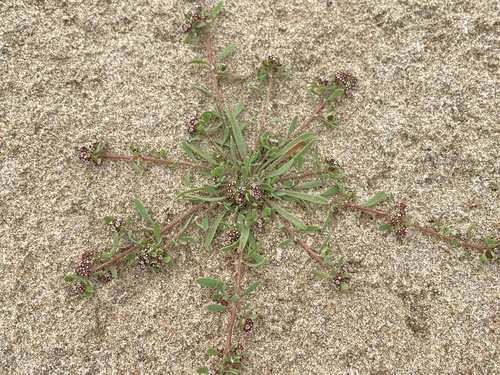
(c) Ron Frumkin, some rights reserved (CC BY-NC), uploaded by Ron Frumkin
iNaturalist· cc-by-nc
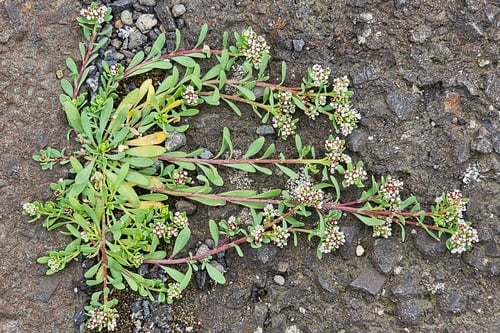
(c) Theodore, some rights reserved (CC BY-NC), uploaded by Theodore
iNaturalist· cc-by-nc-sa
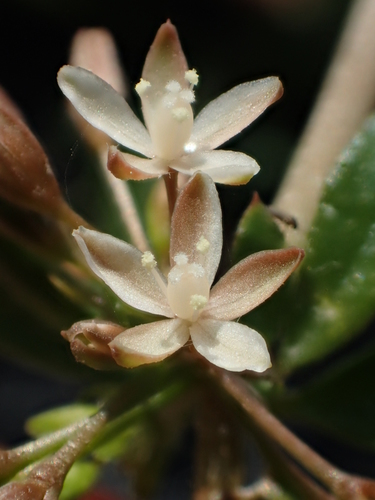
(c) Valter Jacinto, some rights reserved (CC BY-NC-SA)
Summary
Source: WikipediaGlinus lotoides is a species of flowering plant in the family Molluginaceae known by the common names damascisa and lotus sweetjuice. It is native to Eurasia and Africa and it is known in many other places as an introduced species.
Description
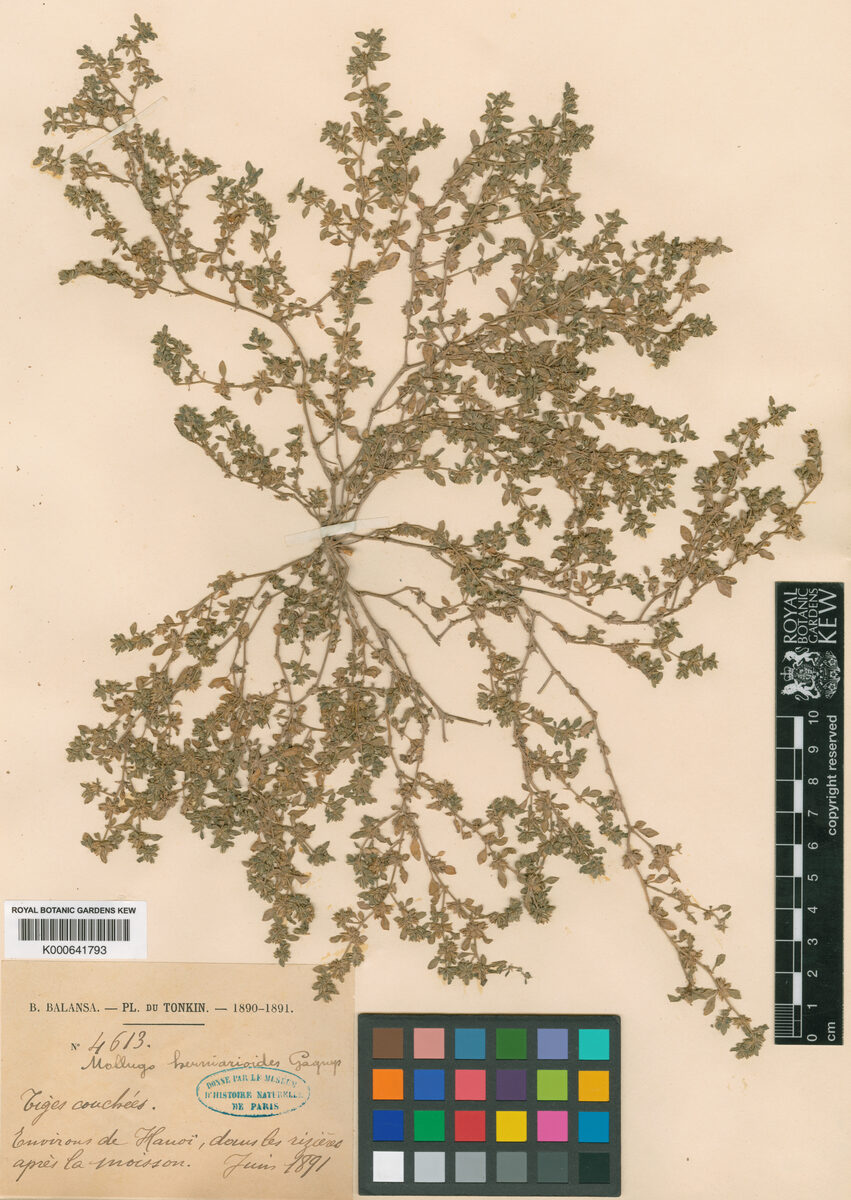
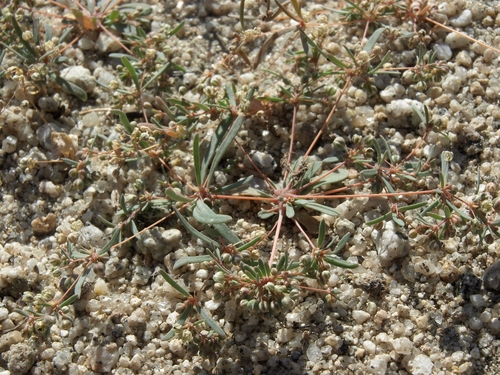
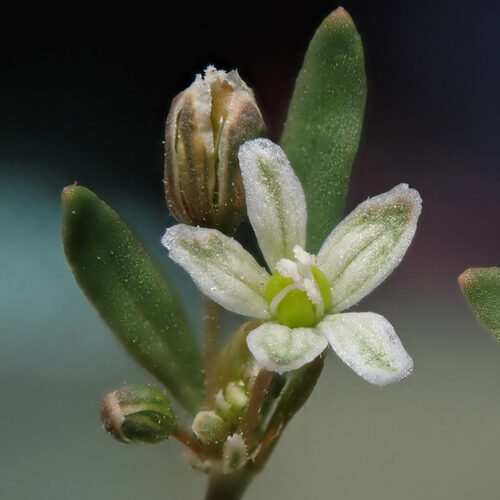
A herb. It lays along the ground. The stem are hairy. They are 10-40 cm long. There are many branches. The leaves at the base are in a ring. These dry off. The higher leaves are 6-24 mm long by 5-15 mm wide. Several flowers occur in a group. The fruit are capsules which have 5 valves. There are many chestnut brown seeds. They are kidney shaped.
Edible Uses
This plant is found in seasonally inundated land and has many traditional uses in cultures across its large native range, as medicine and as food. Young leaves and stems of Glinus lotoides are used as a vegetable in some tropical countries.
Traditional Uses
The young shoots are eaten as a pot-herb.
This uses section is brief — help expand it
Distribution
A tropical plant. They grow in open sands and riversides and waste places from sea level to 500 m altitude in China. It is often in muddy areas along watercourses and wetlands. It grows between 600-1,440 m above sea level in Africa. In Argentina it grows below 100 m above sea level.
Where It Grows
Africa, Argentina, Asia, Australia, Botswana, Burkina Faso, Cambodia, China, East Africa, East Timor, Eswatini, Ethiopia, Europe, Guinea, Guinée, Guinea-Bissau, India, Indochina, Indonesia, Laos, Malawi, Malaysia, Mauritania, Mediterranean, Mozambique, Myanmar, Northeastern India, Pacific, Pakistan, Philippines, SE Asia, Senegal, Sierra Leone, Southern Africa, South America, Spain, Sri Lanka, Sudan, Swaziland, Timor-Leste, Vietnam, West Africa, Zambia, Zimbabwe,
Notes
There are about 10 Glinus species. There are 2 species in tropical America. Also as Mimosaceae.
Synonyms
Also Known As
Bhissata, Duserasag, Gandibudi, Gandibuti, Gholo okhrad, Kotrak, Meetho okhrad, Meterrie, Myet-pan, Okharadi, Porprang, Sirooseroopadi, Xing su cao
References (22)
- Ambasta, S.P. (Ed.), 2000, The Useful Plants of India. CSIR India. p 237
- Bandyopadhyay, S. et al, 2009, Wild edible plants of Koch Bihar district, West Bengal. Natural Products Radiance 8(1) 64-72
- Blamey, M and Grey-Wilson, C., 2005, Wild flowers of the Mediterranean. A & C Black London. p 42
- Cowie, I, 2006, A Survey of Flora and vegetation of the proposed Jaco-Tutuala-Lore National Park. Timor-Lests (East Timor) www.territorystories.nt/gov.au p 50
- Elliot, W.R., & Jones, D.L., 1992, Encyclopedia of Australian Plants suitable for cultivation. Vol 4. Lothian. p 363
Show all 22 references Hide references
- Flora of Pakistan. www.eFloras.org
- Grubben, G. J. H. and Denton, O. A. (eds), 2004, Plant Resources of Tropical Africa 2. Vegetables. PROTA, Wageningen, Netherlands. p 562
- Hedrick, U.P., 1919, (Ed.), Sturtevant's edible plants of the world. p 416 (As Mollugo hirta)
- Jardin, C., 1970, List of Foods Used In Africa, FAO Nutrition Information Document Series No 2.p 79
- Lazarides, M. & Hince, B., 1993, Handbook of Economic Plants of Australia, CSIRO. p 121
- Martin, F.W. & Ruberte, R.M., 1979, Edible Leaves of the Tropics. Antillian College Press, Mayaguez, Puerto Rico. p 172
- Molla, A., Ethiopian Plant Names. http://www.ethiopic.com/aplants.htm
- Monod, T., (On wild edible plants of Mauritania)
- Paczkowska, G . & Chapman, A.R., 2000, The Western Australian Flora. A Descriptive Calatogue. Western Australian Herbarium. p 330
- Pham-Hoang Ho, 1999, An Illustrated Flora of Vietnam. Nha Xuat Ban Tre. p 719
- Seidemann J., 2005, World Spice Plants. Economic Usage, Botany, Taxonomy. Springer. p 167
- Sp. pl. 1:463. 1753
- Swaziland's Flora Database http://www.sntc.org.sz/flora
- Wheeler, J.R.(ed.), 1992, Flora of the Kimberley Region. CALM, Western Australian Herbarium, p 140
- Williams, K.A.W., 1999, Native Plants of Queensland Volume 4. Keith A.W. Williams North Ipswich, Australia. p 202
- World Checklist of Useful Plant Species 2020. Royal Botanic Gardens, Kew
- www.eFloras.org Flora of China