Glaucium corniculatum
(L.) Curtis
Red horned poppy, Bristle horned poppy
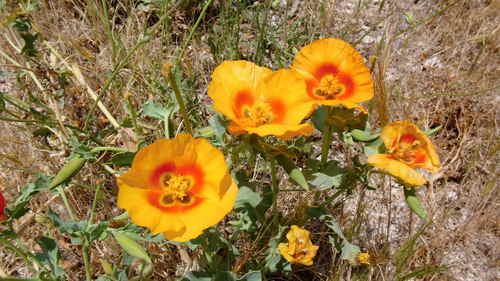
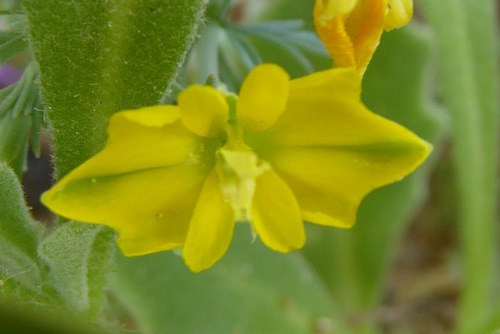
iNaturalist· cc-by
(c) Kostas Zontanos, some rights reserved (CC BY), uploaded by Kostas Zontanos
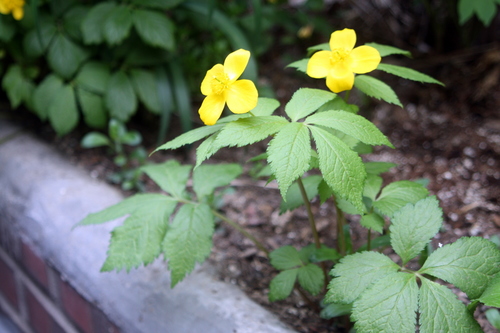
iNaturalist· cc-by-nc
(c) Nikita Sevastianov, some rights reserved (CC BY-NC), uploaded by Nikita Sevastianov
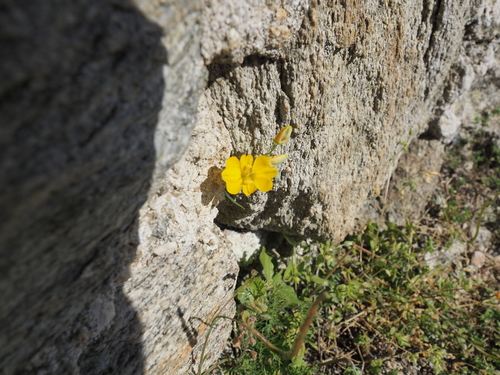
iNaturalist· cc-by-nc
(c) l091, some rights reserved (CC BY-NC)
Summary
Source: WikipediaGlaucium corniculatum, the blackspot hornpoppy or red horned-poppy, is a species of the genus Glaucium in the poppy family (Papaveraceae). It is an annual flowering plant, occurring in southern Europe, and grows up to 1 foot (30 cm) high. The stem and leaves are hairy, the capsule fruit is covered with stiff hair, the flower is red, with a black spot on the base of the tepal bract, which has a yellow margin around it. The flower appears from June until August.
Description
An annual herb. It has bristles. When damaged it has a yellow latex. The leaves are alternate and deeply divided into lobes with irregular teeth. The lower leaves are much smaller than the leaves on the stem. The upper leaves clasp the stem. The flowers are red. They are on thick stems. The four red petals have a black blotch near the middle. The stamens are yellow. The fruit is an elongated capsule or pod. It is covered with short bristles. The capsule opens from the top downwards. The plant dries off after flowering.
Edible Uses
The leaves are cooked with meals, and the seeds are eaten raw.
Traditional Uses
The leaves are cooked with meals. The seeds are eaten raw.
This uses section is brief — help expand it
Distribution
It is a temperate or Mediterranean climate plant. It grows in coastal regions. In Argentina it grows below 500 m above sea level.
Where It Grows
Africa, Argentina, Australia, Europe, Libya, Mediterranean, Morocco, North Africa, Slovenia, South America, Tunisia, Turkey, Türkiye,
Notes
There are about 25 Glaucium species.
Synonyms
Also Known As
Aghnbo-nouswou, Comlekcatlatan
References (16)
- Blamey, M and Grey-Wilson, C., 2005, Wild flowers of the Mediterranean. A & C Black London. p 61
- Bodkin, F., 1991, Encyclopedia Botanica. Cornstalk publishing, p 497
- Brickell, C. (Ed.), 1999, The Royal Horticultural Society A-Z Encyclopedia of Garden Plants. Convent Garden Books. p 476
- Dashorst, G.R.M., and Jessop, J.P., 1998, Plants of the Adelaide Plains & Hills. Botanic Gardens of Adelaide and State Herbarium. p 66
- Ertug, F, Yenen Bitkiler. Resimli Türkiye Florası -I- Flora of Turkey - Ethnobotany supplement
Show all 16 references Hide references
- Fl. jen. 13. 1781
- Ghanimi, R., et al, 2022, Ethnobotanical study on wild edible plants traditionally used by Messiwa people, Morocco. Journal of Ethnobiology and Ethnomedicine. 18:16
- Hibbert, M., 2002, The Aussie Plant Finder 2002, Florilegium. p 111
- Hussey, B.M.J., Keighery, G.J., Cousens, R.D., Dodd, J., Lloyd, S.G., 1997, Western Weeds. A guide to the weeds of Western Australia. Plant Protection Society of Western Australia. p 192
- Jardin, C., 1970, List of Foods Used In Africa, FAO Nutrition Information Document Series No 2.p 43
- Lamp, C & Collet F., 1989, Field Guide to Weeds in Australia. Inkata Press. p 129
- Lazarides, M. & Hince, B., 1993, Handbook of Economic Plants of Australia, CSIRO. p 120
- Mahklouf, M. H., 2019, Ethnobotanical Study of Edible Wild Plants in Libya. European Journal of Ecology. 5(2): 30-40
- Morley, B.D., & Toelken, H.R., (Eds), 1983, Flowering Plants in Australia. Rigby. p 57
- Nassif, F., & Tanji, A., 2013, Gathered food plants in Morocco: The long forgotten species in Ethnobotanical Research. Life Science Leaflets 3:17-54
- Paczkowska, G . & Chapman, A.R., 2000, The Western Australian Flora. A Descriptive Calatogue. Western Australian Herbarium. p 415