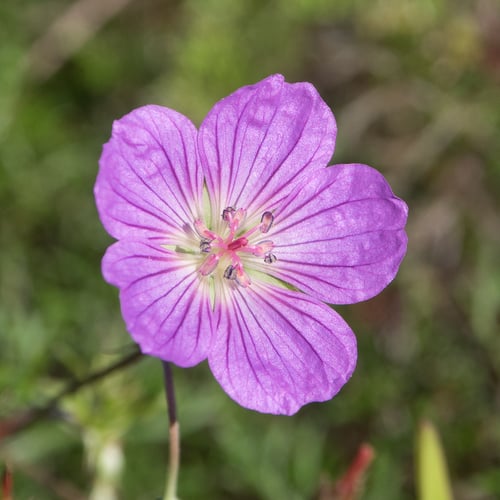
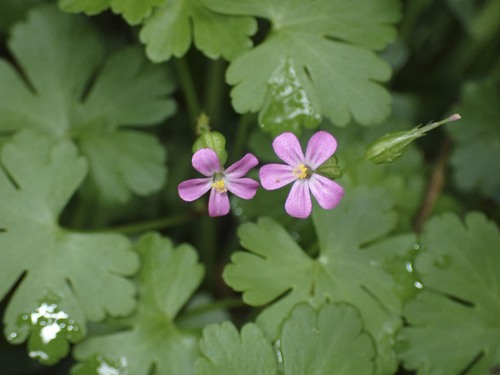
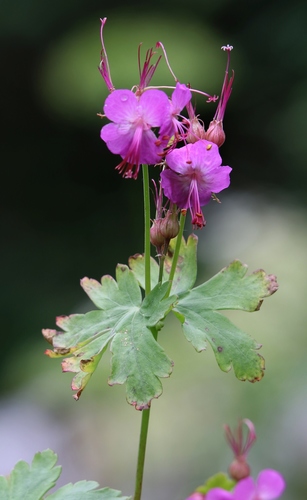
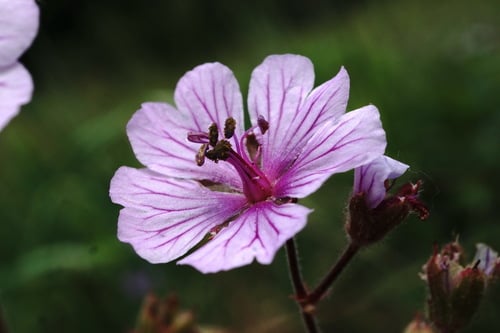
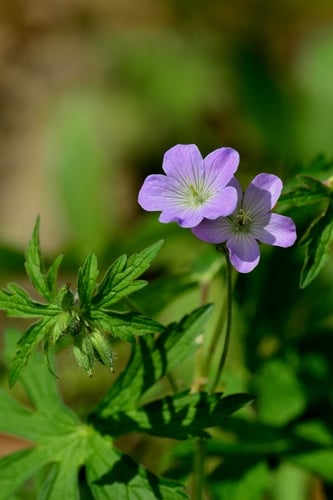
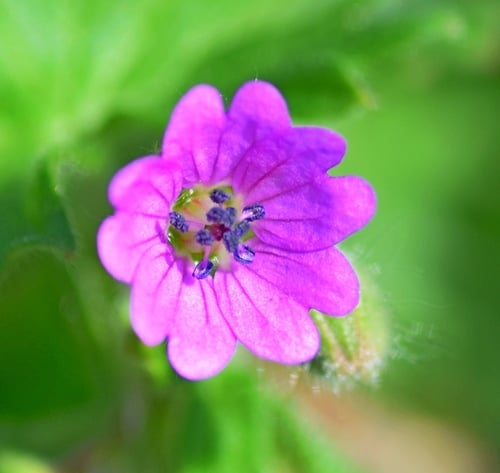
Geranium pilosum
Forst.
Cut-leaf crane's-bill
iNaturalist· cc0
no rights reserved
iNaturalist· cc0
no rights reserved
iNaturalist· cc-by
(c) Michael Fox, some rights reserved (CC BY)
Summary
A compact perennial growing to 0.3 m in height. Hermaphroditic flowers pollinated by insects. Adapts to light sandy, medium loamy, and heavy clay soils with mildly acidic to basic pH. Requires full sun and prefers moist soil.
Description
A compact perennial growing to 0.3 m in height. Hermaphroditic flowers pollinated by insects. Adapts to light sandy, medium loamy, and heavy clay soils with mildly acidic to basic pH. Requires full sun and prefers moist soil.
Edible Uses
The root is edible, though no further details are given.
Medicinal Uses
None known.
Distribution
It is a temperate plant.
Where It Grows
Australia*,
Cultivation
We have almost no information on this species and do not know if it will be hardy in this country. The following comments are based on the general needs of the species. Succeeds in any moderately fertile retentive soil in a sunny position. Tolerates a wide range of soil types. Members of this genus are rarely if ever troubled by browsing deer or rabbits.
Propagation
Sow seed in spring in a cold frame. Once seedlings are large enough to handle, prick them out into individual pots and plant out during summer. Divide plants in spring or autumn. Larger clumps can be replanted directly into permanent positions, though smaller clumps are better potted up and grown on in a cold frame until rooting well, then planted out in spring.
Other Uses
None known.
Notes
There are about 300-400 Geranium species. They are mostly temperate. Not a current name.
References (1)
- Plants for a Future database, The Field, Penpol, Lostwithiel, Cornwall, PL22 0NG, UK. http://www.scs.leeds.ac.uk/pfaf/ (As Geranium pilosum Forst.)