Gastrococos crispa
(Kunth) H. E. Moore
Floridamia Nut palm, Corojo
gbif· cc0
President and Fellows of Harvard College
gbif· cc0
President and Fellows of Harvard College
Description
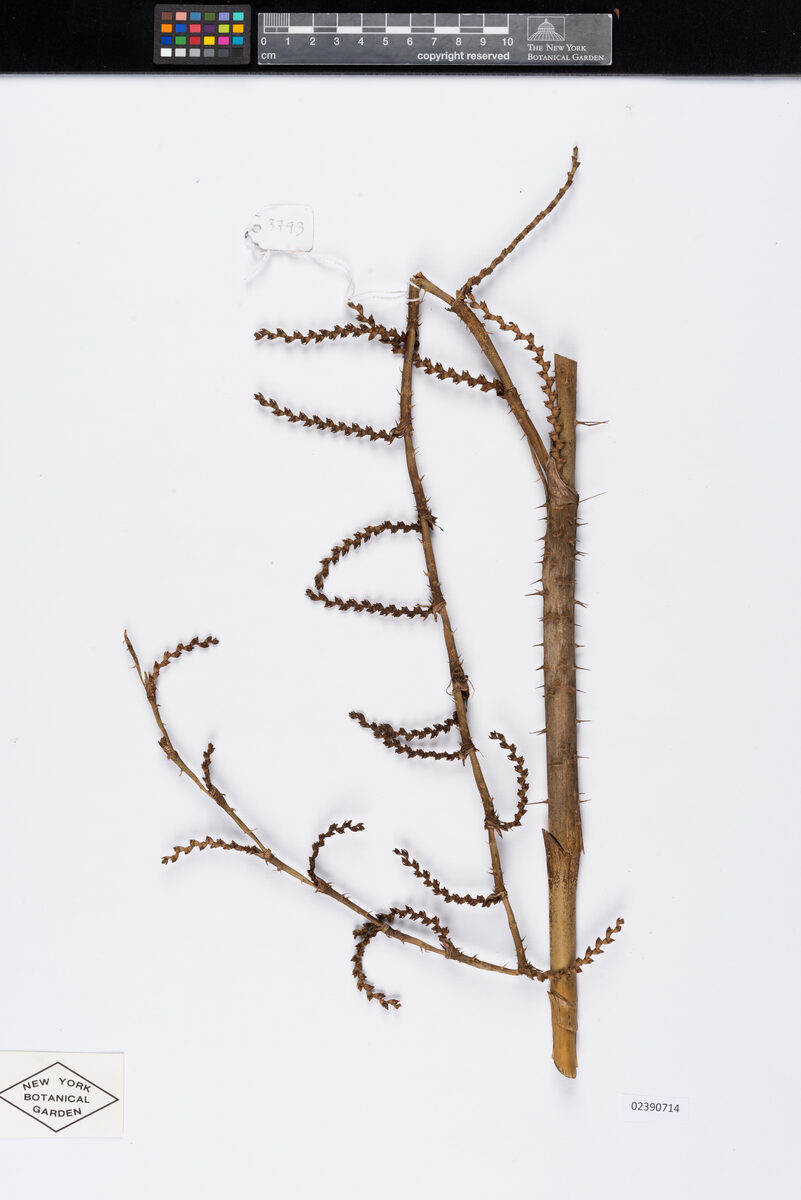
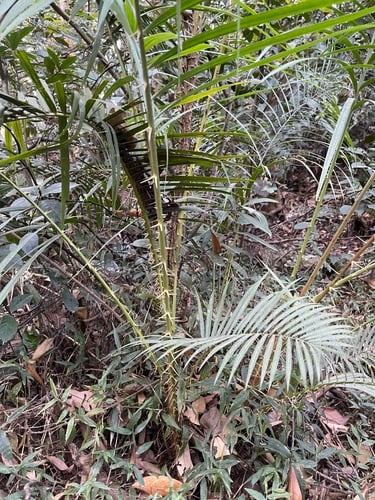
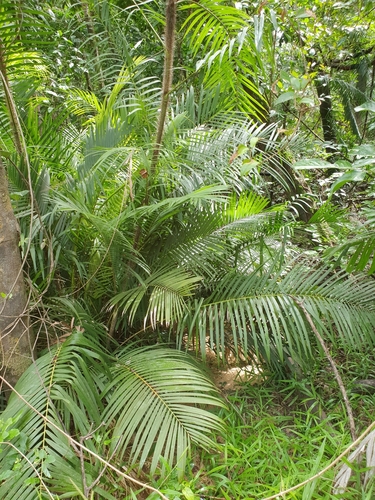
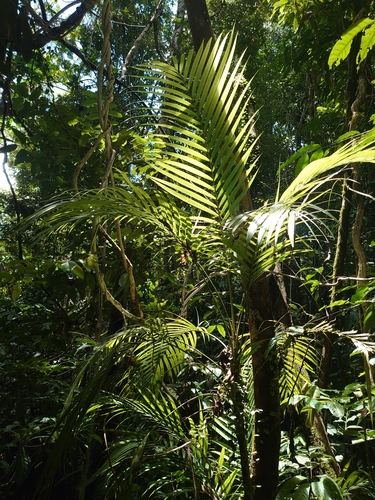
A palm with a swollen trunk. It grows to 15-20 m tall. It is grey and supported on a slender base. The trunk is woody and armed with rows of flat spines. Each row occurs on an annual ring. The fronds arch over. The fronds have leaflets along the stalk. The leaflets are dark glossy green above and covered with a waxy bloom underneath. Each flowering stalk has a large woody bract underneath. It is covered with brownish fur and spines. The flowers are bright yellow. The fruit are orange. They have an edible oily flesh. They are 2-3 cm across.
Edible Uses
The endosperm of the seeds is eaten and tastes like coconut. The fruit flesh is also edible and oily.
Traditional Uses
The endosperm of the seeds is eaten. It tastes like coconut.
This uses section is brief — help expand it
Distribution
A tropical plant. It suits tropical and subtropical regions. It needs well drained soil. Cairns BG.
Where It Grows
Australia, Central America, Cuba, USA, West Indies,
Cultivation
Plants are grown from seed. Seed can germinate erratically. To try to improve this filing the seed and soaking in dilute acid have been tried. Young plants can tolerate direct sun from an early age.
Notes
There is only one Gastrococcos species.
Synonyms
Also Known As
Cuban Belly Palm
References (10)
- Gibbons, M., 1993, Palms. Compact study Guide and Identifier. Sandstone. p 42
- Gibbons, M., 2003, A pocket guide to Palms. Chartwell Books. p 107
- Henderson, A., Galeano, G and Bernal, R., 1995, Field Guide to the Palms of the Americas. Princeton. p 167
- Haynes, J., & McLaughlin, J., 2000, Edible palms and Their Uses. University of Florida Fact sheet MCDE-00-50-1 p 6
- Jones, D.L., 1994, Palms throughout the World. Smithtonian Institution, Washington. p 215
Show all 10 references Hide references
- Jones, D.L., 2000, Palms of Australia 3rd edition. Reed/New Holland. p 158
- Menninger, E.A., 1977, Edible Nuts of the World. Horticultural Books. Florida p 134
- Principes 11:121. 1968
- Riffle, R.L. & Craft, P., 2003, An Encyclopedia of Cultivated Palms. Timber Press. p 337
- Wickens, G.E., 1995, Edible Nuts. FAO Non-wood forest products. FAO, Rome. p166