Gahnia aspera
(R. Br.) Sprengel
Red-fruit Saw-sedge, Saw-leaf sedge
iNaturalist· cc-by-nc
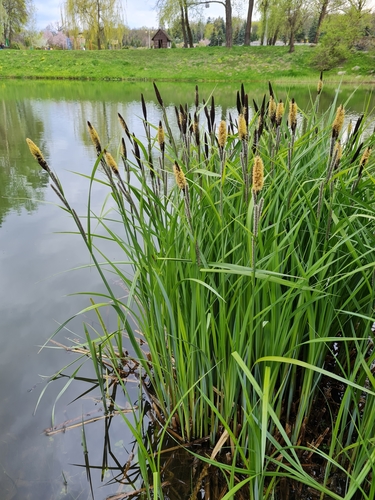
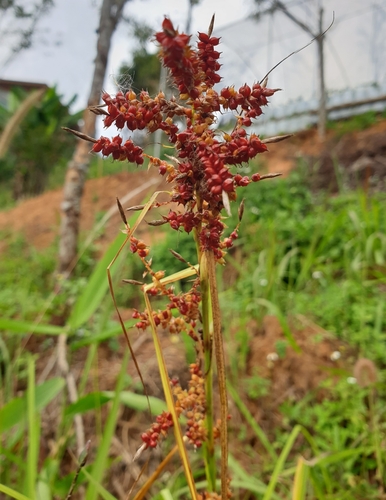
(c) simonealidaworld, some rights reserved (CC BY-NC)
iNaturalist· cc-by-nc
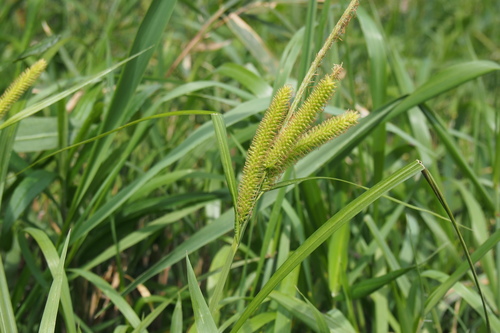
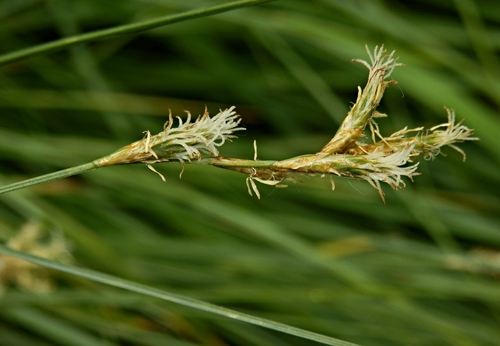
(c) leithallb, some rights reserved (CC BY-NC), uploaded by leithallb
iNaturalist· cc-by-nc-sa
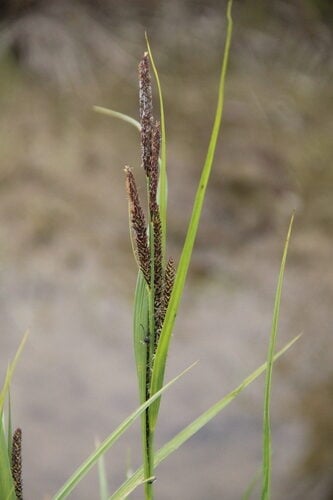
(c) Nick Lambert, some rights reserved (CC BY-NC-SA), uploaded by Nick Lambert
Summary
Source: WikipediaGahnia aspera known as the rough saw-sedge or round sawsedge is a tussock forming perennial plant, often seen in moist situations. The long strap like leaves grow to 80 cm long. Originally described by botanist Robert Brown as Lampocarya aspera in his 1810 work Prodromus Florae Novae Hollandiae, it was placed in its current genus by German botanist Curt Polycarp Joachim Sprengel in 1825. Its specific name aspera is the Latin adjective asper "rough". Gahnia aspera grows as a strappy tussock 50–100 cm (20–39 in) high by 50–150 cm (20–59 in) across, with leaves to 80 cm (31 in) long. The underside of the leaves and leaf edges are sharp and can easily cut human skin. The creamy flowers grow in spikes from the centre of the plant and appear from October to January. They are followed by shiny red or red-brown round nuts, which measure 4.5 to 6.0 mm long, 2.5 to 4.0 mm in diameter. Two subspecies are accepted. Gahnia aspera subsp. aspera – Cook Islands, Fiji, Maluku Islands, New Caledonia, New Guinea, New South Wales, Ogasawara Islands, Queensland, Society Islands, Tubuai Islands, Vanuatu, and Wallis and Futuna Gahnia aspera subsp. globosa (H.Mann) J.Kern – Hawaiian Islands (Oahu) It is found in a variety of situations, from rainforest to drier inland areas such as Rankins Springs and the Pilliga Scrub district in New South Wales. Also seen in Queensland, Malaysia, New Guinea and islands in the Pacific. The caterpillars of the spotted sedge-skipper (Hesperilla ornata), two-spotted sedge-skipper (Hesperilla malindeva), and flame sedge-skipper (Hesperilla idothea) feed on the leaves. Gahnia aspera is relatively easy to grow and benefits from a moist position in the garden for best foliage. It grows in semi-shade or some sun and has horticultural appeal in its foliage and nuts, but is not widely grown as propagation by seed is difficult. It also serves as shelter in the garden for small birds such as the superb fairywren. The seeds were used by Aboriginal Australians to make a kind of flour.
Description
A tufted sedge. It forms clumps and keeps growing from year to year. It grows 0.5-1 m high and spreads 0.5-1.5 m wide. The stems are slender. The leaves are 80 cm long and narrow. They are rough on the underside and have a channel on top. The flowering stalk is long and erect. The seed heads are in dense spikes at the ends of the stalks. It has dark brown seed heads. The seeds turn orange as they ripen and remain attached on a thread for a time. The nut is about 0.5 cm across. These seeds are edible.
Edible Uses
The seeds are crushed and used for flour. The leaf base is also edible.
Traditional Uses
The seeds are crushed and used for flour.
This uses section is brief — help expand it
Distribution
It is a tropical plant. It grows along creek banks. It needs moist soils. The plants are tolerant to frost. It also grows in coastal rocky areas.
Where It Grows
Asia, Australia, Britain, England, Europe, Fiji, Malesia, New Caledonia, Pacific, Papua New Guinea, PNG, Polynesia,
Cultivation
Plants grow from seeds. Seeds are hard to germinate. Plants can also be grown by dividing the clump but this also is not easy.
Notes
There are about 30-40 Gahnia species.
Nutrition
| Part | Moisture | kJ | kcal | Protein | Vit A | Vit C | Iron | Zinc |
|---|---|---|---|---|---|---|---|---|
| Seed | 7.4 | 600 | 144 | 2 | — | — | — | 12.7 |
Synonyms
References (17)
- Cherikoff V. & Isaacs, J., The Bush Food Handbook. How to gather, grow, process and cook Australian Wild Foods. Ti Tree Press, Australia p 195, 200
- Cribb, A.B. & J.W., 1976, Wild Food in Australia, Fontana. p 101
- Edible and Useful Native Plants (off internet)
- Elliot, W.R., & Jones, D.L., 1992, Encyclopedia of Australian Plants suitable for cultivation. Vol 4. Lothian. p 324
- Franklin, J., Keppel, G., & Whistler, W., 2008, The vegetation and flora of Lakeba, Nayau and Aiwa Islands, Central Lau Group, Fiji. Micronesica 40(1/2): 169–225, 2008
Show all 17 references Hide references
- Haslam, S., 2004, Noosa's Native Plants. Noosa Integrated Catchment Assn. Inc. p 293
- Hibbert, M., 2002, The Aussie Plant Finder 2002, Florilegium. p 107
- Hiddins, L., 1999, Explore Wild Australia with the Bush Tucker Man. Penguin Books/ABC Books. p 161
- Jackes, B.R., 2001, Plants of the Tropics. Rainforest to Heath. An Identification Guide. James Cook University. p 49
- Jackes, B. R., 2010, Plants of Magnetic Island. 3rd Edition. James Cook University, Australia. p 32
- Jones D, L, 1986, Ornamental Rainforest Plants in Australia, Reed Books, p 279
- Melzer, R. & Plumb, J., 2011, Plants of Capricornia. Belgamba, Rockhampton. p 417
- Nicholson, N & H., 1994, Australian Rainforest Plants 4, Terania Rainforest Publishing. NSW. p 36
- Simpson, D. A. & Inglis, C. A., 2001, Cyperaceae of Economic, Ethnobotanical and Horticultural Importance: A checklist. Kew Bulletin Vol. 56, No. 2 (2001), pp. 257-360
- Smith, A.C., 1979, Flora Vitiensis Nova, Lawaii, Kuai, Hawaii, Volume 1 p 269
- Townsend, K., 1999, Field Guide to Plants of the Dry Tropics. Society for Growing Australian Plants, Townsville Branch Inc. p 158
- World Checklist of Useful Plant Species 2020. Royal Botanic Gardens, Kew