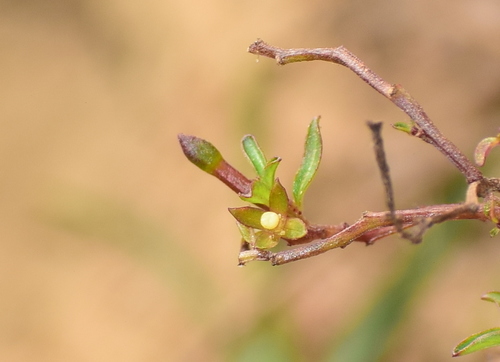
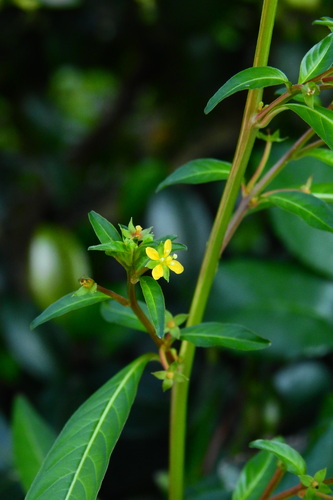
Fuchsia fulgens
DC.
Brilliant fuchsia
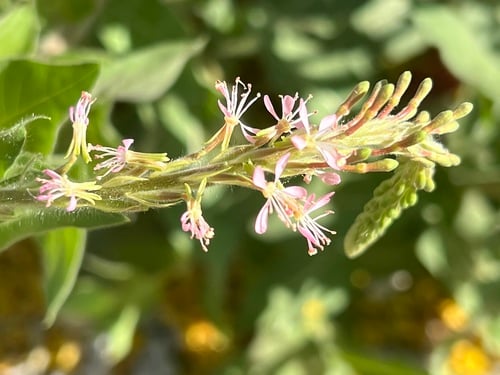
iNaturalist· cc-by-nc-nd
(c) Alex in situ, some rights reserved (CC BY-NC-ND)
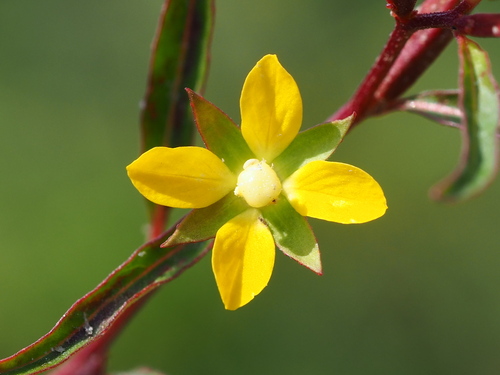
iNaturalist· cc-by
(c) Joe Dillon, some rights reserved (CC BY)
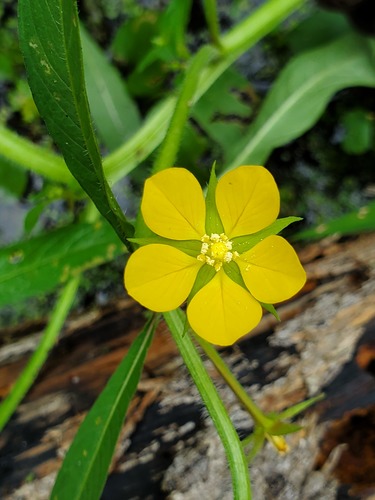
iNaturalist· cc-by
(c) Joe Dillon, some rights reserved (CC BY)
Summary
Source: WikipediaFuchsia fulgens is a plant of the genus Fuchsia native to Mexico and Central America.
Description
A shrub. It has spreading branches and the roots are like tubers. The shrub can grow 1.53 m high. The leaves are large. They are heart shaped and have teeth along the edge. They are red above and paler underneath. The flowers are small. They droop in long stalks. The sepals are red tinged with yellow-green toward the tips. The fruit is oblong and deep purple.
Edible Uses
The fruit is eaten raw or used as a beverage. The juicy berries have an acidic yet very pleasant flavour. Individual fruits can grow up to 30mm long and 15mm wide.
Medicinal Uses
None known.
Distribution
A tropical plant. It is frost tender. It suits hardiness zones 11-12. In Tasmania Botanical Gardens.
Where It Grows
Australia, Britain, Central America, Europe, Mexico*, North America, Tasmania,
Cultivation
An easily grown plant and very free-flowering when in warm, sunny, humid conditions and a rich well-drained soil. Succeeds in any fertile well-drained circum-neutral soil. Succeeds in a good loam if leafmold and sand are added. This species is only hardy in the mildest parts of Britain, and even there it can be cut back by frosts. Plants have a tuberous rootstock, and if cut back by frost will often regenerate from the roots. The roots can be dug up and stored overwinter in a cool dry but frost-free location and then planted out again in the spring. Plants tolerate being left dry and leafless in the winter. Plants seem to be immune to the predations of rabbits. A good bee plant. This species is a parent of many ornamental cultivated greenhouse varieties. Plants are very susceptible to whitefly.
Propagation
Sow seed as soon as it is ripe, though spring sowing is also possible. Surface sow in pots in a warm greenhouse, keeping the compost consistently moist. Germination should occur within 6 weeks. Prick seedlings out into individual pots once large enough to handle and grow on under glass for at least the first winter. Plant out in late spring or early summer after the last expected frosts. Inter-nodal greenwood cuttings 5–8cm long taken in May/June root quickly and easily with a high success rate. Overwinter rooted cuttings under glass in their first year before planting out. Inter-nodal half-ripe wood cuttings taken in July/August are equally straightforward — treat as for greenwood cuttings. Cuttings generally root successfully at any point during the growing season. Tubers can also be divided in spring: dig up the plant as it comes into active growth, pot up the tubers with their growing stems, grow on under glass until established, then plant out in early summer.
Other Uses
None known.
Notes
There are about 100 Fuchsia species.
Also Known As
Aretes, Aretillo
References (12)
- Bodkin, F., 1991, Encyclopedia Botanica. Cornstalk publishing, p 481
- Brickell, C. (Ed.), 1999, The Royal Horticultural Society A-Z Encyclopedia of Garden Plants. Convent Garden Books. p 450
- Cundall, P., (ed.), 2004, Gardening Australia: flora: the gardener's bible. ABC Books. p 616
- Etherington, K., & Imwold, D., (Eds), 2001, Botanica's Trees & Shrubs. The illustrated A-Z of over 8500 trees and shrubs. Random House, Australia. p 337
- Hibbert, M., 2002, The Aussie Plant Finder 2002, Florilegium. p 105
Show all 12 references Hide references
- John, L., & Stevenson, V., 1979, The Complete Book of Fruit. Angus & Robertson p 136
- Kermath, B. M., et al, 2014, Food Plants in the Americas: A survey of the domesticated, cultivated and wild plants used for Human food in North, Central and South America and the Caribbean. On line draft. p 377
- Morley, B. & Everard, B., 1970, Wild Flowers of the World. Ebury press. Plate 173
- Plants for a Future database, The Field, Penpol, Lostwithiel, Cornwall, PL22 0NG, UK. http://www.scs.leeds.ac.uk/pfaf/
- Prodr. 3:39. 1828
- Reis, S. V. and Lipp, F. L., 1982, New Plant Sources for Drugs and Foods from the New York Botanical Garden herbarium. Harvard. p 218
- Segura, S., et al, 2018, The edible fruit species in Mexico. Genet Resour Crop Evol (2018) 65:1767–1793