Fragaria daltoniana
J. Gay
Bhuin kaphal
iNaturalist· cc-by-nc
(c) Morten Ross, some rights reserved (CC BY-NC), uploaded by Morten Ross
iNaturalist· cc-by-nc
(c) Basu Dev Neupane, some rights reserved (CC BY-NC)
iNaturalist· cc-by
(c) Sebastian Doak, some rights reserved (CC BY)
Summary
Source: WikipediaFragaria daltoniana is a species of flowering plant in the family Rosaceae. It is a strawberry native to the Himalayas. Its fruit has a poor flavor, and is of no commercial value. All strawberries have a base haploid count of 7 chromosomes. Fragaria daltoniana is diploid, having 2 pairs of these chromosomes for a total of 14 chromosomes. Fragaria daltoniana is one of the two Fragaria species containing a genome that is cold-resistant that can improve the growth and yielding of garden strawberry crops from abiotic stress.
Description
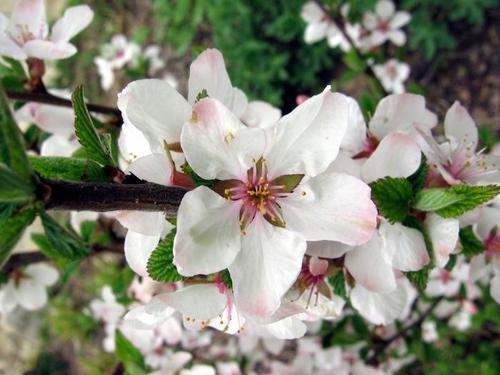
A shrub. It has a stout rootstock. The leaves have 3 leaflets. The leaflets do not have stalks. They are 0.5-3.5 cm long by 0.3-2.5 cm wide. They are oval and with teeth along the edge. Underneath there are hairs along the veins. The flowers are white. They occur on 1 or 2 flowered stalks. The fruit is round and red.
Edible Uses
The fruit is eaten raw but is virtually flavourless. It is globose and can reach up to 2.5cm long by 1.5cm wide.
Traditional Uses
The ripe fruit are eaten fresh.
This uses section is brief — help expand it
Medicinal Uses
The juice of the root is used in the treatment of fevers.
Distribution
A tropical and subtropical plant. In Nepal they grow between 1000-2800 m altitude. They grow in moist, shady, dense forest. In Tibet it grows on mountain summits between 3,300-5,000 m above sea level.
Where It Grows
Asia, Bhutan, China, Himalayas, India, Indochina, Myanmar, Nepal, Northeastern India, SE Asia, Sikkim,
Cultivation
Prefers a fertile, well-drained, moisture retentive soil in a sunny position. Tolerates semi-shade though fruit production will be reduced. A very vigorous plant, spreading by means of runners. Fruits have only been produced occasionally on our trial ground in Cornwall, possibly because all the plants are the same clone.
Propagation
Sow seed in early spring in a greenhouse; germination can take four weeks or more. Seedlings start out small and slow-growing before developing more rapidly. Prick them out into individual pots when large enough and plant out during summer. Divide runners preferably in July or August to allow establishment before the following year's crop, or move them the following spring, though plants should not be allowed to fruit in their first year after a spring division. Runners can go directly into permanent positions.
Other Uses
This species makes a good ground cover plant, spreading rapidly by means of surface stolons.
Synonyms
Also Known As
Bhui aiselu, Salyangsai, Sa-mrep
References (8)
- Ann. Sci. Nat. Bot. ser. 4, 8:204. 1857
- Aryal, K. P. et al, 2009, Uncultivated Plants and Livehood Support - A case study from the Chepang people of Nepal. Ethnobotany Research and Applications. 7:409-422
- Flora of China @ efloras.org Volume 9
- Manandhar, N.P., 2002, Plants and People of Nepal. Timber Press. Portland, Oregon. p 238
- Plants for a Future database, The Field, Penpol, Lostwithiel, Cornwall, PL22 0NG, UK. http://www.scs.leeds.ac.uk/pfaf/
Show all 8 references Hide references
- Polunin, O., & Stainton, A., 2006, Flowers of the Himalaya, Oxford India Paperbacks. p 123
- Tsering, J., et al, 2017, Ethnobotanical appraisal on wild edible plants used by the Monpa community of Arunchal Pradesh. Indian Journal of Traditional Knowledge. Vol 16(4), October 2017, pp 626-637
- www.Efloras.org Annotated checklist of the Flowering Plants of Nepal.