Ficus prolixa
Forst. f.
Native banyan
iNaturalist· cc-by-nc
(c) Sylvie Omnès, some rights reserved (CC BY-NC)
iNaturalist· cc-by-nc
(c) Sylvie Omnès, some rights reserved (CC BY-NC)
iNaturalist· cc-by-nc
(c) Sylvie Omnès, some rights reserved (CC BY-NC)
Description
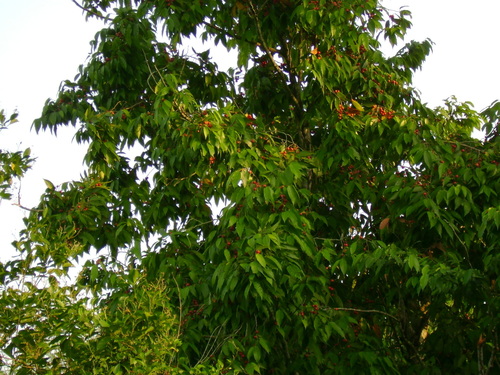
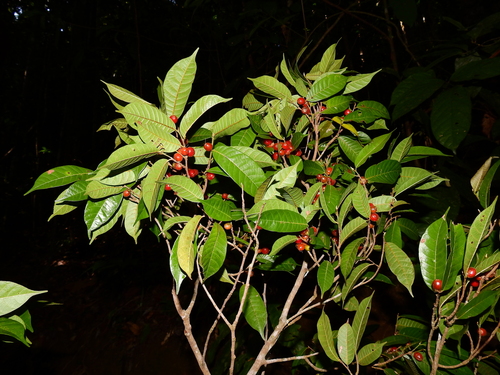
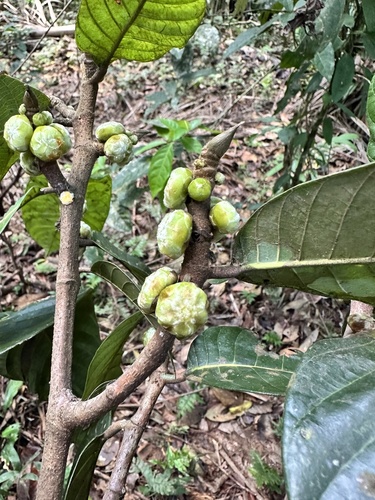
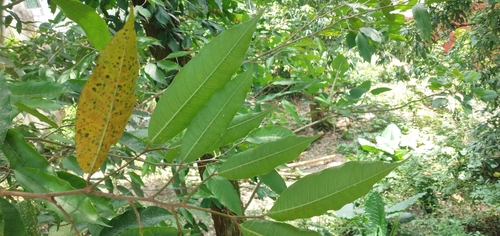
A strangler fig. A large tree with a spreading crown. It grows 20 m high. It has milky sap. It develops hanging roots which form several large trunks. The bark is mottled and grey-brown. The bark is green underneath. The leaves are simple and alternate. The blade is narrowly oval and 5-11 cm long. It is rounded at the base. It narrows at the tip. The leaf is dark glossy green on the upper surface and lighter underneath. The mid vein is yellow. The side veins form loops. The leaf stalk is 1.3-2.3 cm long. The flowers are in a fig receptacle. This fruit like structure has broad bracts that remain on the base. This fruiting structure is 5-7 mm across. It is green to yellow. It has many small seeds.
Edible Uses
The fruits are cooked and eaten with coconut sap, and the sap is chewed.
Traditional Uses
The fruit are cooked and eaten with coconut sap.
This uses section is brief — help expand it
Medicinal Uses
The latex has been used as an abortifacient. This can be very dangerous. Local curers sometimes use the sticky sap in medicinal preparations designed to stop the bleeding of external or internal injuries.
Distribution
A tropical plant. In Samoa it grows between 20 to 400 m above sea level.
Where It Grows
American Samoa, Fiji, Kiribati, Mariana Islands, Marquesas, Micronesia, Nauru, New Caledonia, Niue, Pacific, Pohnpei, Rotuma, Samoa, Tonga, Vanuatu, Wallis and Futuna, Yap,
Cultivation
Fig trees have a unique form of fertilization, each species relying on a single, highly specialized species of wasp that is itself totaly dependant upon that fig species in order to breed. The trees produce three types of flower; male, a long-styled female and a short-styled female flower, often called the gall flower. All three types of flower are contained within the structure we usually think of as the fruit. The female fig wasp enters a fig and lays its eggs on the short styled female flowers while pollinating the long styled female flowers. Wingless male fig wasps emerge first, inseminate the emerging females and then bore exit tunnels out of the fig for the winged females. Females emerge, collect pollen from the male flowers and fly off in search of figs whose female flowers are receptive. In order to support a population of its pollinator, individuals of a Ficus spp. must flower asynchronously. A population must exceed a critical minimum size to ensure that at any time of the year at least some plants have overlap of emmission and reception of fig wasps. Without this temporal overlap the short-lived pollinator wasps will go locally extinct.
Other Uses
A fine-grade tapa cloth is made from the bark of the young stems and aerial roots. The aerial roots are the source of a fibre that is made into cordage. The latex is used for caulking boats and waterproofing. The wood, including the aerial roots, is used locally in light construction, tool making etc. The wood is used for fuel. This species seems to be one of the only species capable of long-term colonization of residual pinnacles in strip-mined areas, and could become dominant in the disclimax vegetation.
Notes
There are about 800-1000 Ficus species. They are mostly in the tropics. There are 120 Ficus species in tropical America.
Synonyms
Also Known As
Aaw, Aiau, Aw, Aw aw, Giliau, Hulio, Ifaluk, Kiliau, Kuliyaw, Lulk, Nunu, Te kiriawa, Yaaw
References (5)
- Fl. ins. austr. 77. 1786
- Franklin, J., Keppel, G., & Whistler, W., 2008, The vegetation and flora of Lakeba, Nayau and Aiwa Islands, Central Lau Group, Fiji. Micronesica 40(1/2): 169–225, 2008
- Thaman, R. R., 1987, Plants of Kiribati: A listing and analysis of vernacular names. Atoll Research Bulletin No. 296
- Thaman, R. R. & Fosberg, Flora Nauru
- Whistler, W.A., 2004, Rainforest Trees of Samoa. Isle Botanica Honolulu, Hawaii. p 106